
Classic Pad Thai with Shrimp
Thailand's most famous street food — stir-fried rice noodles tossed with plump shrimp, crunchy peanuts, and a tangy tamarind sauce. Ready in 30 minutes.
Servings
Ingredients
Nutrition
Per serving
Steps
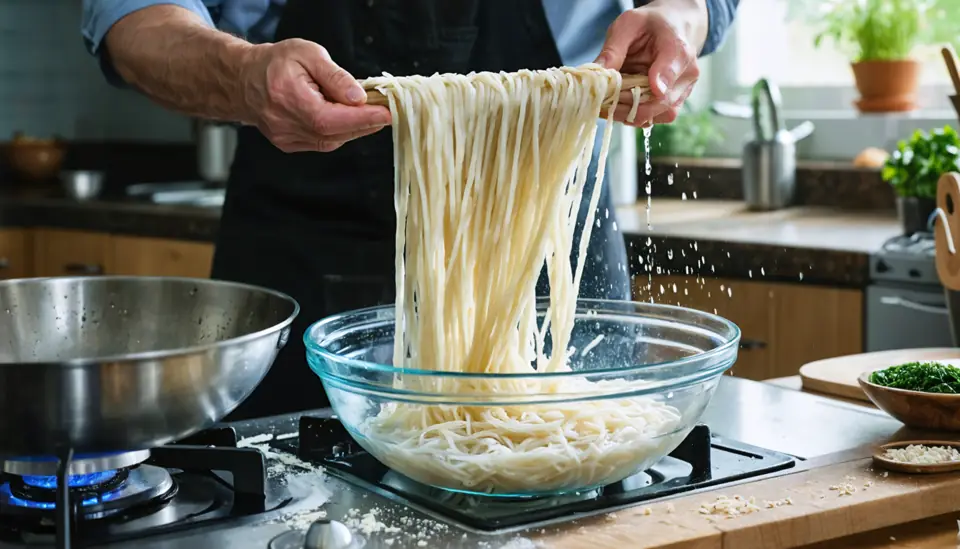
Soak the noodles
Put the rice noodles in a large bowl and cover with 1 liter of room-temperature water. Leave for 20-30 minutes until they bend easily but are still a bit firm, then drain well.
- 200g rice noodles
- 1 L water
✅ Done when: noodles bend easily but still feel slightly firm
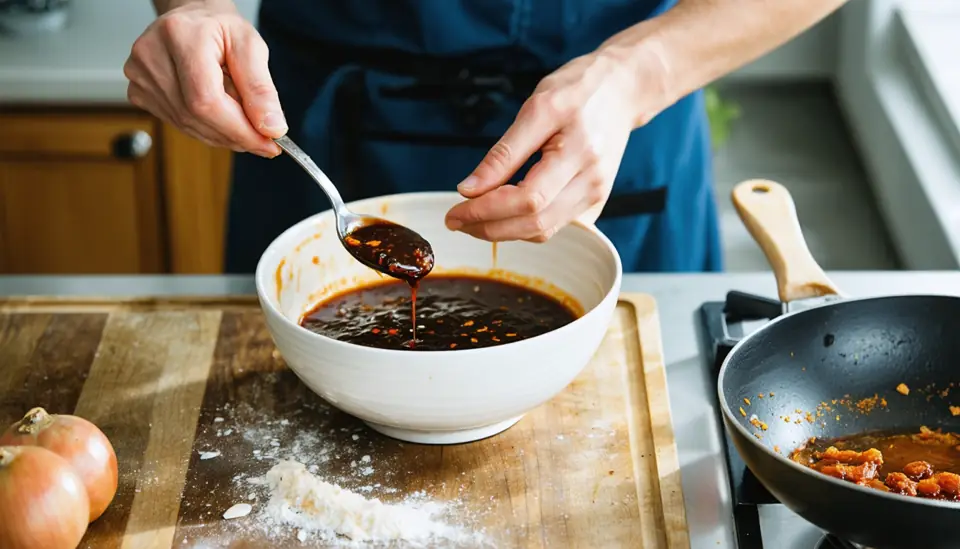
Mix the sauce
In a small bowl, stir the tamarind paste, fish sauce and palm sugar together until the sugar fully dissolves. Taste and adjust so it feels sweet, salty and sour.
- 2 tbsp tamarind paste
- 2 tbsp fish sauce
- 1 tbsp palm sugar
✅ Done when: sugar is dissolved and the taste is sweet, salty and sour
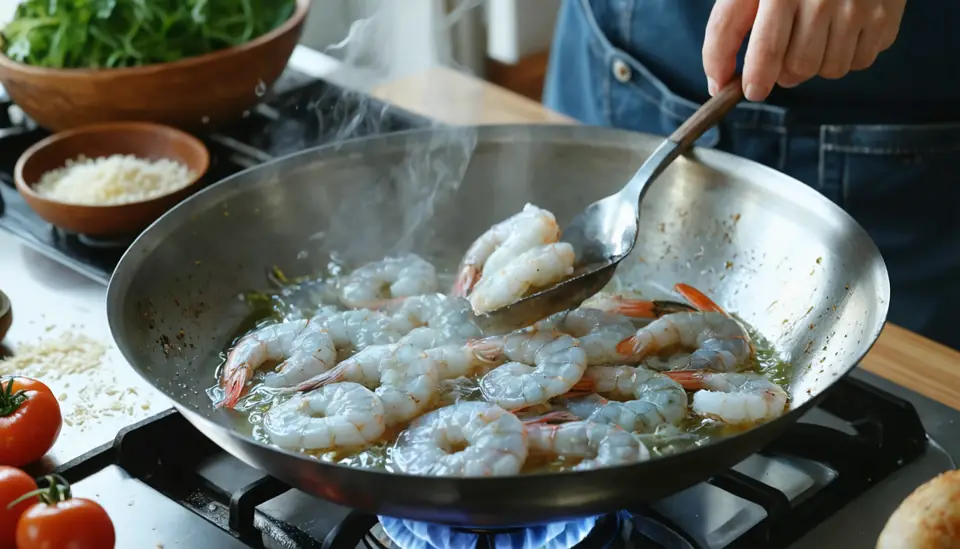
Cook the shrimp
Heat 1 tablespoon of oil in a wok over high heat until it just starts to smoke. Add the shrimp and stir for 1-2 minutes until pink and opaque all the way through, then remove them.
- 1 tbsp vegetable oil
- 250g shrimp
✅ Done when: shrimp are pink and opaque all the way through
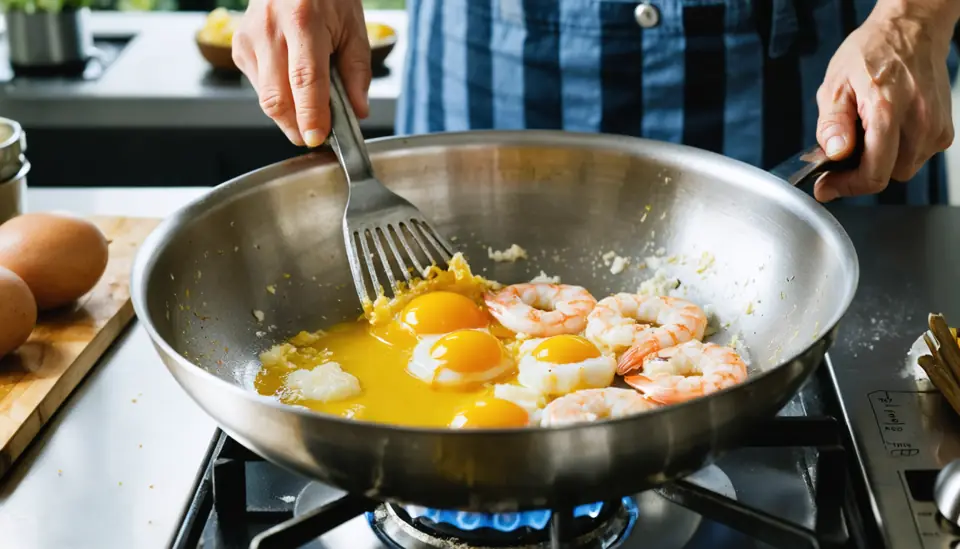
Scramble the eggs
Lower the heat to medium, add another tablespoon of oil, then crack in the eggs and stir quickly until fully set in small pieces with no runny parts. Push them to one side of the wok.
- 1 tbsp vegetable oil
- 2 eggs
✅ Done when: eggs are fully set with no runny parts
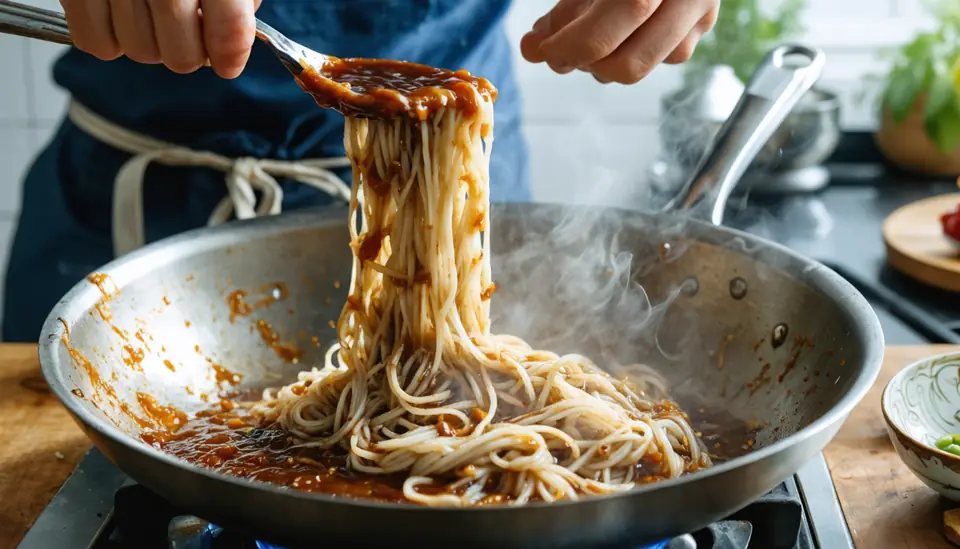
Cook the noodles
Turn the heat back up to high, add the remaining oil and the soaked noodles, then pour the sauce over them. Keep tossing with tongs for 2-3 minutes until they soak up the sauce and turn soft.
- 1 tbsp vegetable oil
- all the noodles from step 1
- all the sauce from step 2
✅ Done when: noodles are soft and have absorbed the sauce
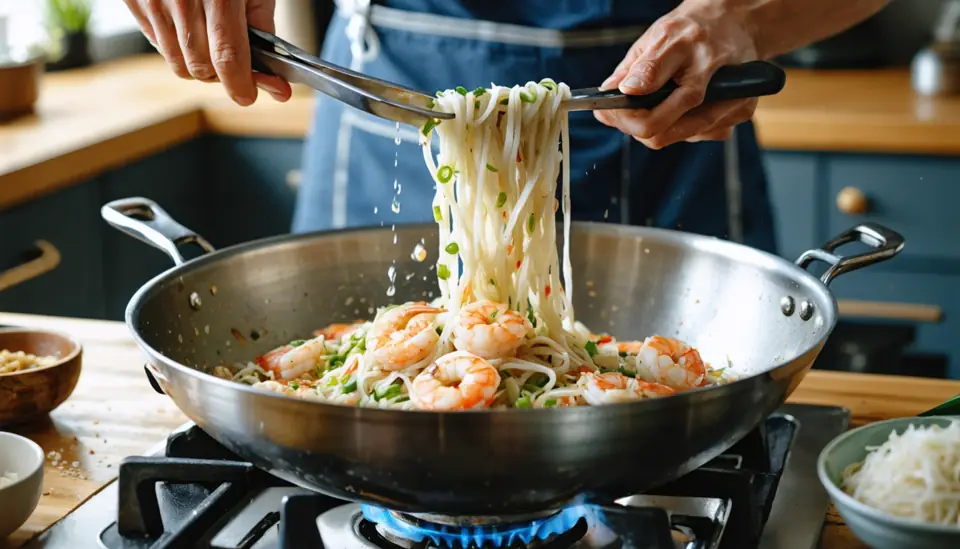
Mix everything
Put the shrimp back in, add 75g of the bean sprouts (save the rest for serving) and the green onions, then toss for about 30 seconds so the sprouts stay crunchy.
- all the shrimp from step 3
- 75g bean sprouts
- 2 green onions
✅ Done when: sprouts are warmed through but still crunchy
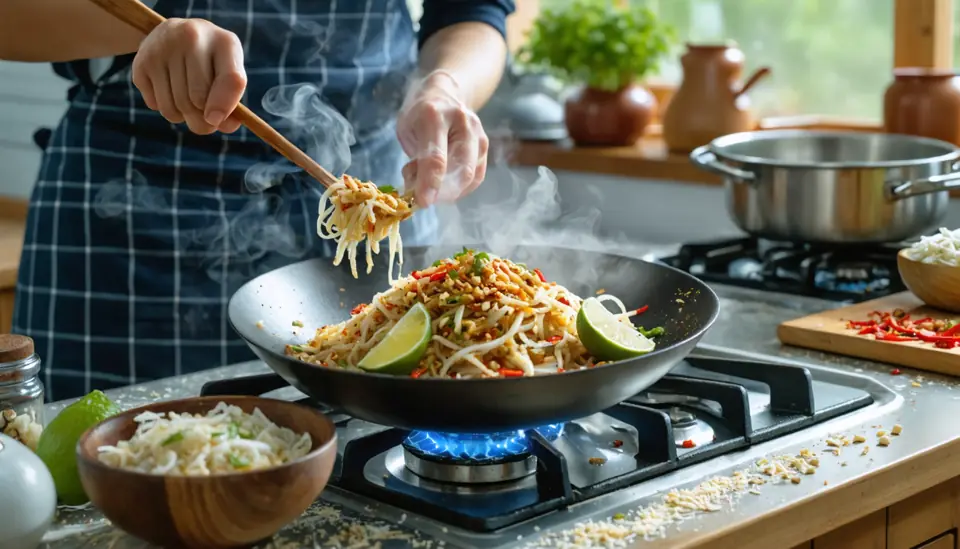
Serve
Plate the noodles and sprinkle with the crushed peanuts. Serve right away topped with the remaining bean sprouts, and lime wedges and chili flakes on the side if you have them.
- 3 tbsp crushed peanuts
- 25g bean sprouts
Soak the noodles
Put the rice noodles in a large bowl and cover with 1 liter of room-temperature water. Leave for 20-30 minutes until they bend easily but are still a bit firm, then drain well.
- 200g rice noodles
- 1 L water
✅ Done when: noodles bend easily but still feel slightly firm
Mix the sauce
In a small bowl, stir the tamarind paste, fish sauce and palm sugar together until the sugar fully dissolves. Taste and adjust so it feels sweet, salty and sour.
- 2 tbsp tamarind paste
- 2 tbsp fish sauce
- 1 tbsp palm sugar
✅ Done when: sugar is dissolved and the taste is sweet, salty and sour
Cook the shrimp
Heat 1 tablespoon of oil in a wok over high heat until it just starts to smoke. Add the shrimp and stir for 1-2 minutes until pink and opaque all the way through, then remove them.
- 1 tbsp vegetable oil
- 250g shrimp
✅ Done when: shrimp are pink and opaque all the way through
Scramble the eggs
Lower the heat to medium, add another tablespoon of oil, then crack in the eggs and stir quickly until fully set in small pieces with no runny parts. Push them to one side of the wok.
- 1 tbsp vegetable oil
- 2 eggs
✅ Done when: eggs are fully set with no runny parts
Cook the noodles
Turn the heat back up to high, add the remaining oil and the soaked noodles, then pour the sauce over them. Keep tossing with tongs for 2-3 minutes until they soak up the sauce and turn soft.
- 1 tbsp vegetable oil
- all the noodles from step 1
- all the sauce from step 2
✅ Done when: noodles are soft and have absorbed the sauce
Mix everything
Put the shrimp back in, add 75g of the bean sprouts (save the rest for serving) and the green onions, then toss for about 30 seconds so the sprouts stay crunchy.
- all the shrimp from step 3
- 75g bean sprouts
- 2 green onions
✅ Done when: sprouts are warmed through but still crunchy
Serve
Plate the noodles and sprinkle with the crushed peanuts. Serve right away topped with the remaining bean sprouts, and lime wedges and chili flakes on the side if you have them.
- 3 tbsp crushed peanuts
- 25g bean sprouts
The Story Behind the Dish
Pad Thai was created during the nation-building era of Prime Minister Plaek Phibunsongkhram in the late 1930s. As part of a campaign to promote Thai nationalism and reduce Chinese cultural influence, the government promoted a new national noodle dish using local rice noodles instead of Chinese wheat noodles.
The government distributed the recipe to street vendors across Bangkok and eventually the entire country. The dish was designed to use ingredients that were abundant in Thailand — tamarind, fish sauce, dried shrimp, and peanuts — creating a uniquely Thai flavor profile that distinguished it from Chinese stir-fried noodles.
What started as political propaganda became one of the most beloved dishes in the world, now found on virtually every Thai restaurant menu from Bangkok to New York.
⭐ Why It's Famous
Pad Thai became Thailand's de facto national dish because it perfectly balances all five Thai flavors — sweet, sour, salty, bitter, and spicy — in a single bite. Its portability as street food and quick cooking time made it the perfect representation of Thai culinary culture abroad.
💡 Fun Fact
The original government recipe didn't include shrimp — it was a simple vegetarian noodle dish. Shrimp was added later by street vendors to make it more appealing and nutritious.
Bangkok, Thailand
13.76°N, 100.50°E
Related recipes
Comments (0)
No comments yet. Be the first to share your thoughts!