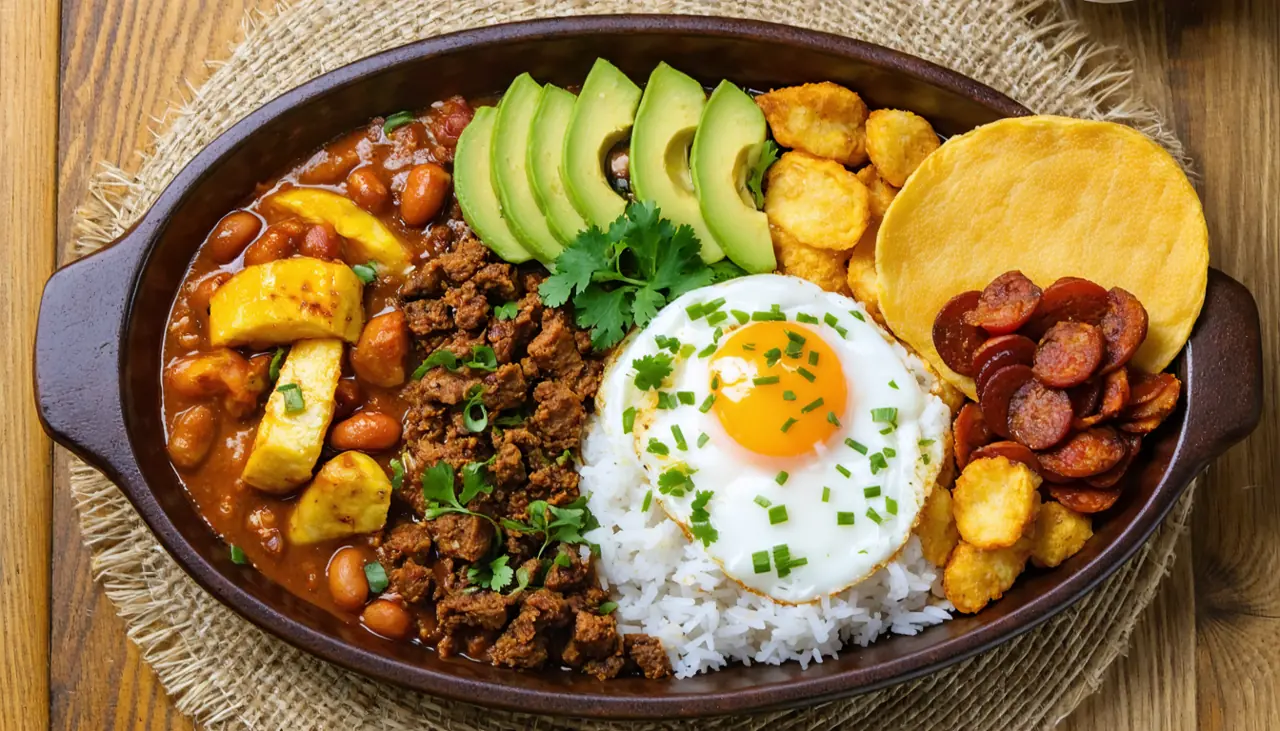
Bandeja Paisa colombienne
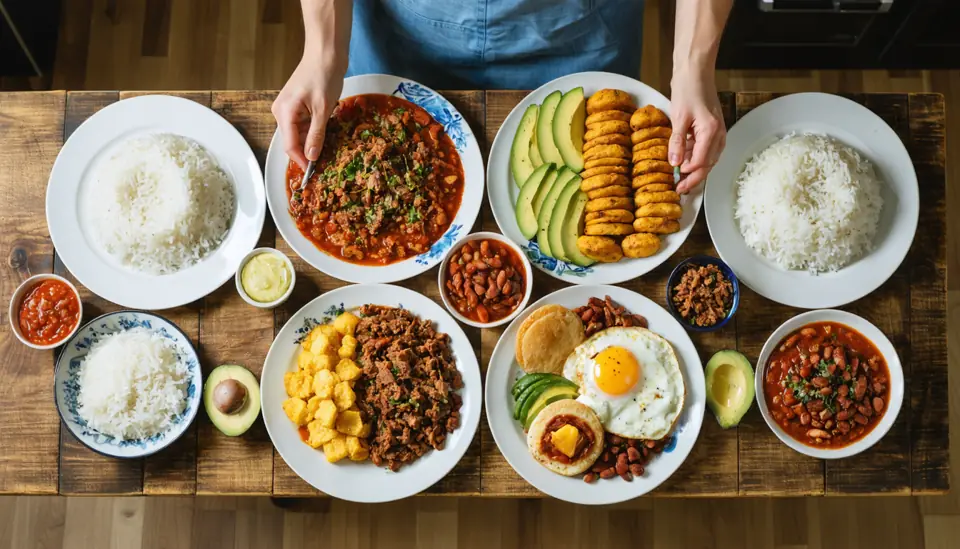
L'immense assiette d'Antioquia: haricots rouges, riz, viande hachée, chicharrón, chorizo, œuf au plat, avocat et arepa.
Portions
Ingrédients
Nutrition
Par portion
Étapes
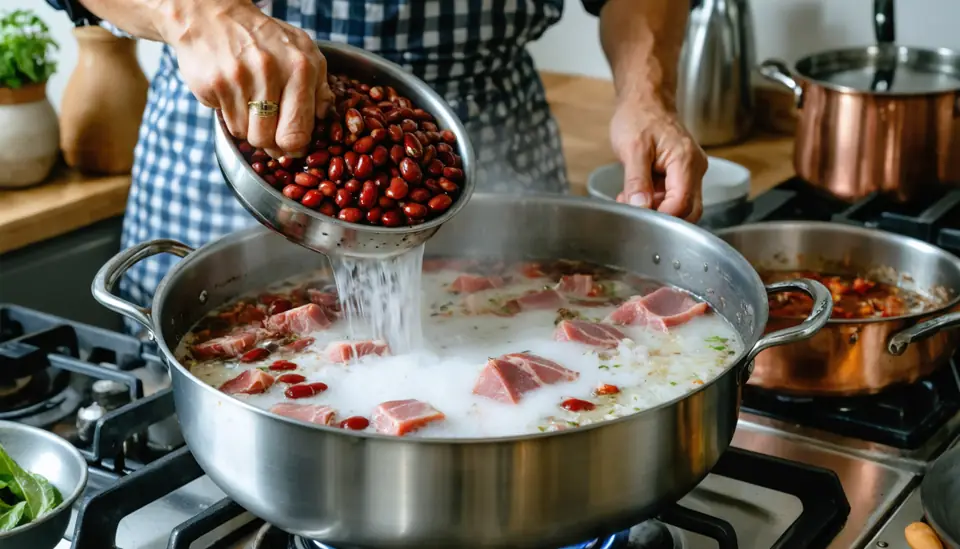
Cook the beans
In a large pot, combine the soaked and drained beans with the pork belly and enough fresh water to cover by about 5 cm (2 in). Bring to a boil, skim off the foam, then lower the heat, cover partly and simmer gently for about 1 hour 30 minutes, topping up with hot water if it gets too thick. About 20 minutes before the beans are done, add the plantain chunks; they soften and partly break down into the broth, which is a classic Antioquian trick for a naturally thick, slightly sweet bean pot.
- 300 g dried red beans
- 200 g pork belly
- 1 plantain chunks
✅ C'est prêt quand : the beans are completely soft and the plantain has nearly dissolved into a thick, creamy broth
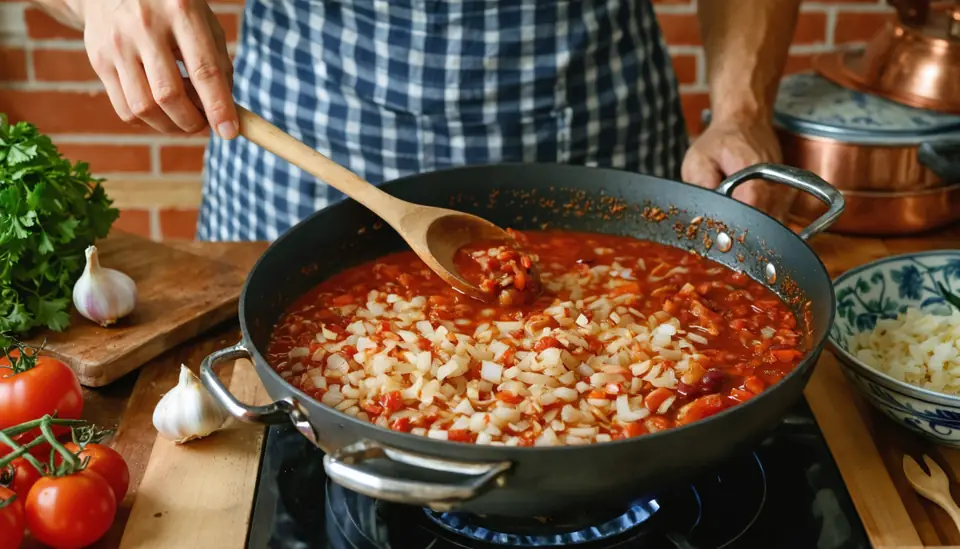
Make the hogao
Heat the oil in a skillet over medium heat and cook the onion and garlic until soft and translucent, about 4 minutes. Add the tomatoes and cumin, season with salt and pepper, and cook, stirring, until the tomatoes break down into a thick sauce, about 10 minutes. Stir the hogao into the cooked beans along with the cilantro and simmer uncovered for 10 more minutes so the flavours blend; taste and adjust the salt.
- 2 tbsp vegetable oil
- 1 onion
- 3 cloves garlic
- 2 tomatoes
- 1 tsp cumin
- to taste salt and pepper
- 2 tbsp cilantro
✅ C'est prêt quand : the beans are deep red-brown, thick enough to hold their shape on a spoon, and well seasoned
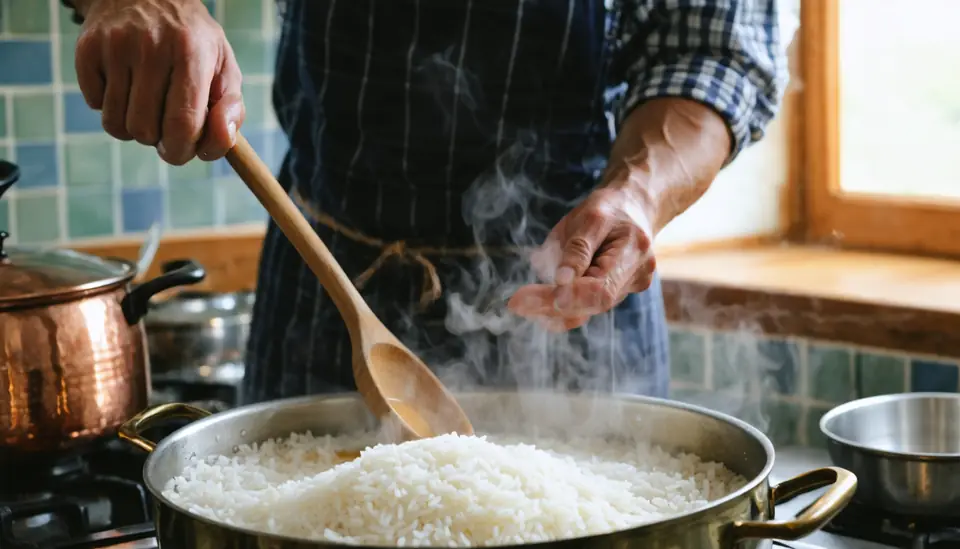
Cook the rice
Rinse the rice under cold water until it runs clear. Heat the oil in a medium pot, add the rice and stir for 1 minute to coat the grains — this keeps them separate once cooked. Add the water and salt, bring to a boil, then cover, turn the heat to the lowest setting and cook for 18 minutes without lifting the lid. Turn off the heat and let it rest, still covered, for 5 minutes before fluffing with a fork.
- 300 g rice
- 600 ml water
- 1 tbsp vegetable oil
- 1/2 tsp salt
✅ C'est prêt quand : all the water has been absorbed and the rice is tender and fluffy
Cook the ground beef
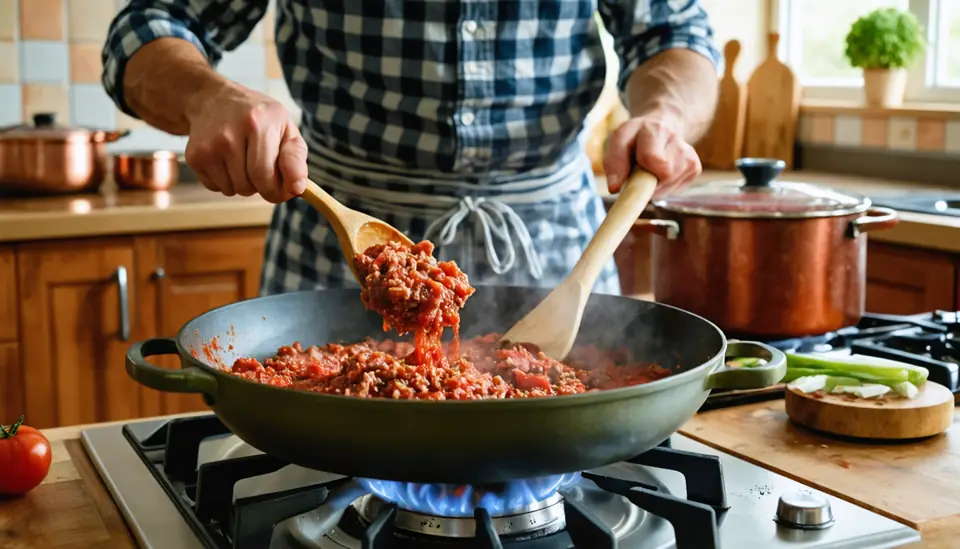
Heat the oil in a skillet over medium heat and cook the onion and garlic until soft, about 4 minutes. Add the tomato and cumin and cook until it breaks down, about 5 minutes. Add the ground beef, breaking it up with a spoon, season with salt and pepper, and cook for about 12 minutes, stirring often, until no pink remains and the beef looks dry and crumbly, not wet.
- 500 g ground beef
- 1 onion
- 2 cloves garlic
- 1 tomato
- 1 tsp cumin
- 2 tbsp vegetable oil
- to taste salt and pepper
✅ C'est prêt quand : the beef is cooked through with no pink remaining and most of the liquid has evaporated
Fry chicharrón and chorizo
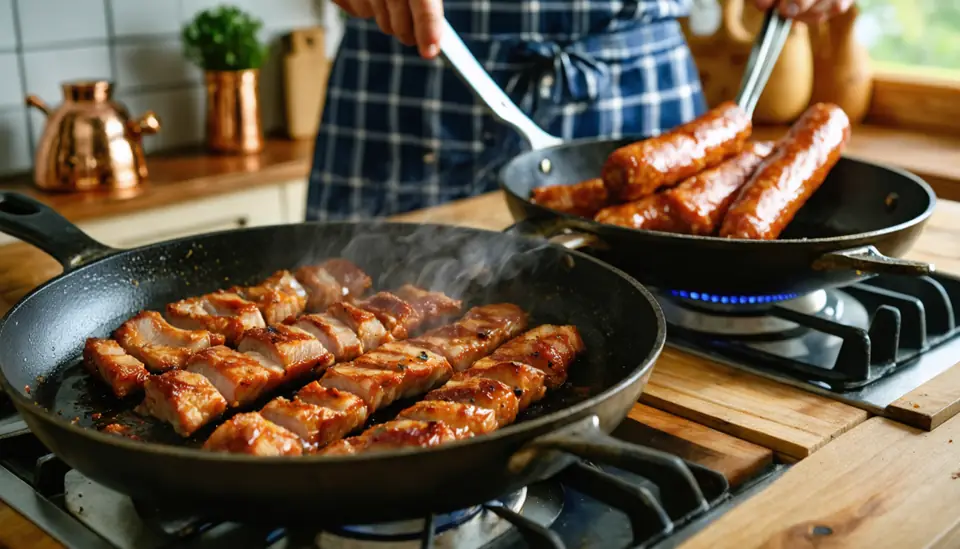
Pat the pork belly pieces dry and season with the salt. Place them skin-side down in a cold, dry heavy skillet — no oil needed, the fat renders on its own — and cook over medium-low heat for about 20 minutes, turning occasionally, until deeply golden, crisp and the skin has crackled. In another skillet, cook the whole chorizos over medium heat for 15–18 minutes, turning often, until browned on all sides and cooked through with no pink inside.
- 400 g pork belly with skin
- 1 tsp salt
- 4 chorizo criollo
✅ C'est prêt quand : the chicharrón is crisp with crackled skin, and the chorizo is browned and firm with no pink inside
Fry eggs and plantain
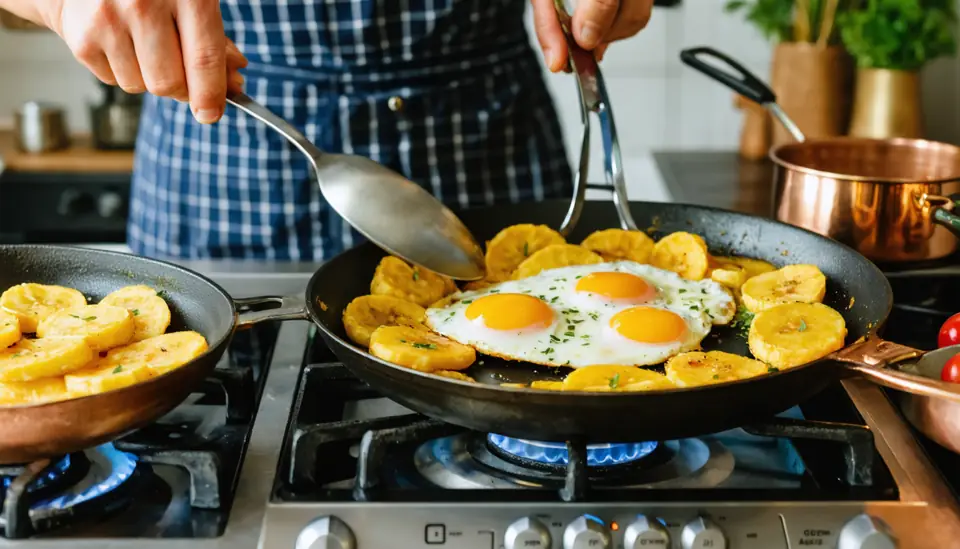
Heat the oil in a skillet over medium heat and fry the plantain slices for about 2 minutes per side, until golden and caramelized at the edges; drain on paper towel. In the same or another skillet, fry the eggs sunny-side up over medium-high heat until the edges turn golden and lacy but the yolk is still soft, about 3 minutes.
- 4 eggs
- 2 plantains
- 2 tbsp vegetable oil
✅ C'est prêt quand : the plantain slices are golden and caramelized, and the egg whites are set with crispy edges while the yolk stays soft
Assemble the platter
Divide the rice and the beans among four large plates or trays. Add a portion of ground beef, a piece of chicharrón, a chorizo, a fried egg and a few slices of avocado to each plate. Finish with the fried plantain and an arepa on the side. Serve immediately, while everything is hot.
- 1 avocado
- 4 arepas
Cook the beans
In a large pot, combine the soaked and drained beans with the pork belly and enough fresh water to cover by about 5 cm (2 in). Bring to a boil, skim off the foam, then lower the heat, cover partly and simmer gently for about 1 hour 30 minutes, topping up with hot water if it gets too thick. About 20 minutes before the beans are done, add the plantain chunks; they soften and partly break down into the broth, which is a classic Antioquian trick for a naturally thick, slightly sweet bean pot.
- 300 g dried red beans
- 200 g pork belly
- 1 plantain chunks
✅ C'est prêt quand : the beans are completely soft and the plantain has nearly dissolved into a thick, creamy broth
Make the hogao
Heat the oil in a skillet over medium heat and cook the onion and garlic until soft and translucent, about 4 minutes. Add the tomatoes and cumin, season with salt and pepper, and cook, stirring, until the tomatoes break down into a thick sauce, about 10 minutes. Stir the hogao into the cooked beans along with the cilantro and simmer uncovered for 10 more minutes so the flavours blend; taste and adjust the salt.
- 2 tbsp vegetable oil
- 1 onion
- 3 cloves garlic
- 2 tomatoes
- 1 tsp cumin
- to taste salt and pepper
- 2 tbsp cilantro
✅ C'est prêt quand : the beans are deep red-brown, thick enough to hold their shape on a spoon, and well seasoned
Cook the rice
Rinse the rice under cold water until it runs clear. Heat the oil in a medium pot, add the rice and stir for 1 minute to coat the grains — this keeps them separate once cooked. Add the water and salt, bring to a boil, then cover, turn the heat to the lowest setting and cook for 18 minutes without lifting the lid. Turn off the heat and let it rest, still covered, for 5 minutes before fluffing with a fork.
- 300 g rice
- 600 ml water
- 1 tbsp vegetable oil
- 1/2 tsp salt
✅ C'est prêt quand : all the water has been absorbed and the rice is tender and fluffy
Cook the ground beef
Heat the oil in a skillet over medium heat and cook the onion and garlic until soft, about 4 minutes. Add the tomato and cumin and cook until it breaks down, about 5 minutes. Add the ground beef, breaking it up with a spoon, season with salt and pepper, and cook for about 12 minutes, stirring often, until no pink remains and the beef looks dry and crumbly, not wet.
- 500 g ground beef
- 1 onion
- 2 cloves garlic
- 1 tomato
- 1 tsp cumin
- 2 tbsp vegetable oil
- to taste salt and pepper
✅ C'est prêt quand : the beef is cooked through with no pink remaining and most of the liquid has evaporated
Fry chicharrón and chorizo
Pat the pork belly pieces dry and season with the salt. Place them skin-side down in a cold, dry heavy skillet — no oil needed, the fat renders on its own — and cook over medium-low heat for about 20 minutes, turning occasionally, until deeply golden, crisp and the skin has crackled. In another skillet, cook the whole chorizos over medium heat for 15–18 minutes, turning often, until browned on all sides and cooked through with no pink inside.
- 400 g pork belly with skin
- 1 tsp salt
- 4 chorizo criollo
✅ C'est prêt quand : the chicharrón is crisp with crackled skin, and the chorizo is browned and firm with no pink inside
Fry eggs and plantain
Heat the oil in a skillet over medium heat and fry the plantain slices for about 2 minutes per side, until golden and caramelized at the edges; drain on paper towel. In the same or another skillet, fry the eggs sunny-side up over medium-high heat until the edges turn golden and lacy but the yolk is still soft, about 3 minutes.
- 4 eggs
- 2 plantains
- 2 tbsp vegetable oil
✅ C'est prêt quand : the plantain slices are golden and caramelized, and the egg whites are set with crispy edges while the yolk stays soft
Assemble the platter
Divide the rice and the beans among four large plates or trays. Add a portion of ground beef, a piece of chicharrón, a chorizo, a fried egg and a few slices of avocado to each plate. Finish with the fried plantain and an arepa on the side. Serve immediately, while everything is hot.
- 1 avocado
- 4 arepas
The Story Behind the Dish
The platter brings together the staples of the Antioquian countryside: beans, rice, pork, corn arepas and plantain, foods that were affordable, filling and easy to produce on a small farm. Over time, cooks added touches like chorizo, fried egg and avocado, turning a simple working man's meal into a true celebration of regional abundance.
As paisas migrated to cities and other parts of Colombia, they carried the dish with them, and it eventually became one of the country's most recognized culinary symbols, served in homes and restaurants far beyond Antioquia.
⭐ Why It's Famous
Bandeja paisa is famous for its sheer abundance: it gathers nearly every staple of Colombian home cooking onto a single large plate, making it the ultimate expression of paisa hospitality and generosity.
💡 Fun Fact
The word 'bandeja' simply means 'tray' or 'platter' in Spanish, a nod to the large plate needed to hold all the components of this dish.
Bandeja paisa comes from Antioquia, the mountainous region of Colombia whose people are known as paisas, centered around the city of Medellín.
6.24°N, -75.58°W
Recettes similaires
Comments (0)
No comments yet. Be the first to share your thoughts!