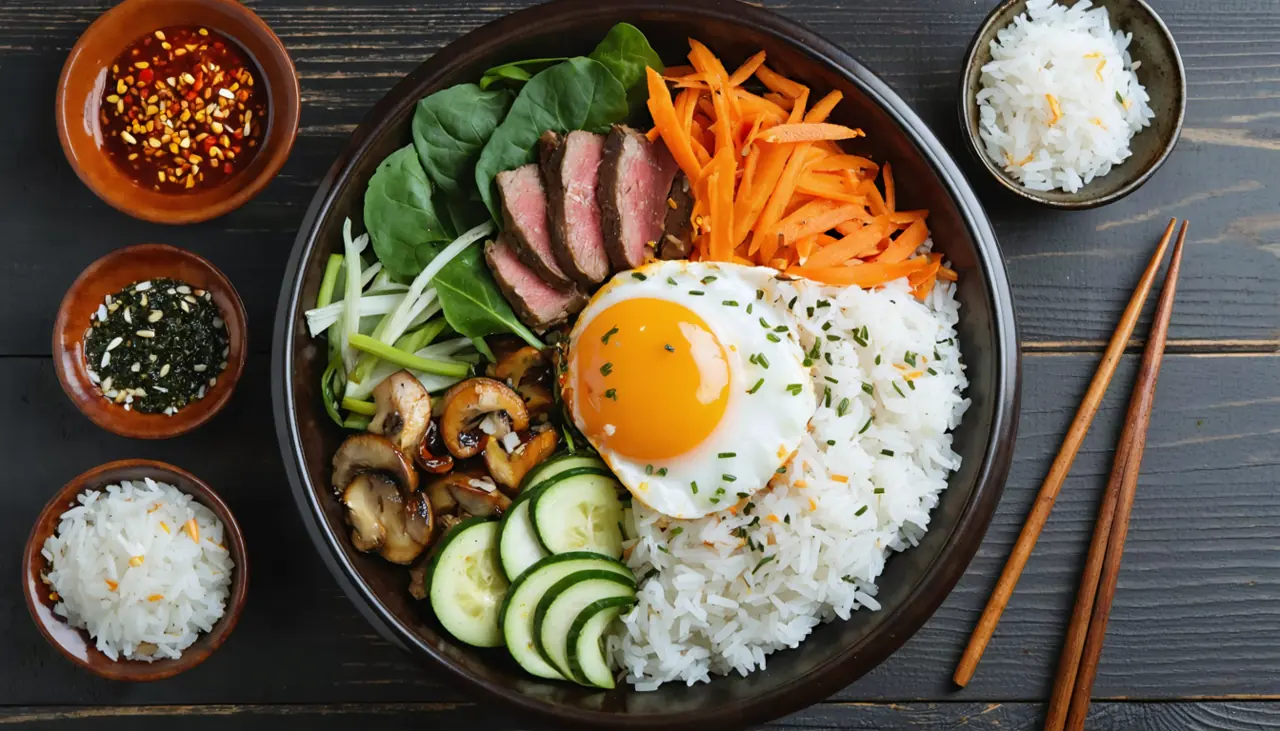
Bibimbap Coréen
Bol de riz mélangé coréen — riz garni de légumes sautés, bœuf, œuf au plat et sauce gochujang épicée. Mélangez et savourez.
Portions
Ingrédients
Nutrition
Par portion
Étapes
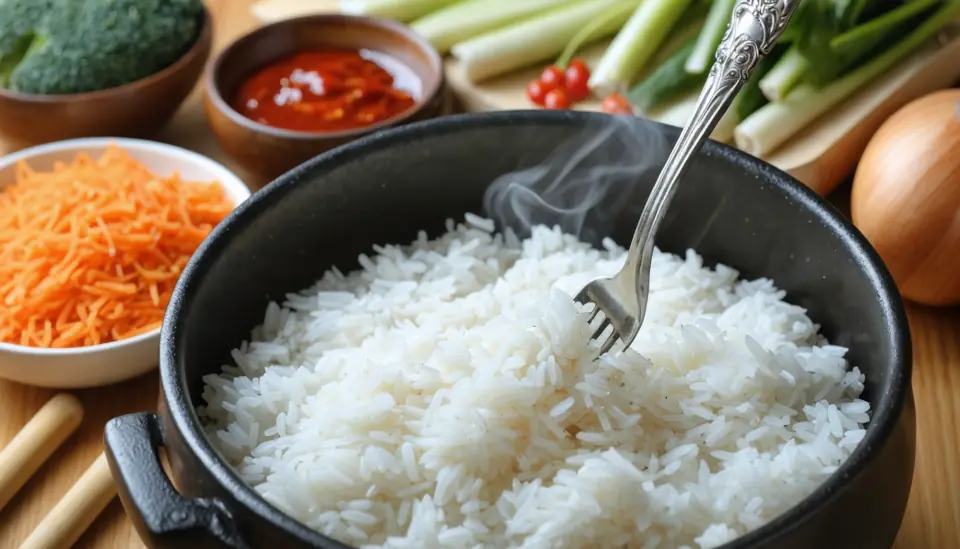
Cook the rice
Rinse the rice in a sieve under cold water until the water runs clear. Put it in a pot with the measured water, bring to a boil, then cover and simmer on low heat following the packet time (usually about 15 minutes). Fluff with a fork and keep covered so it stays warm.
- 400g rice
- 600 ml water
✅ C'est prêt quand : rice is tender and all the water is absorbed
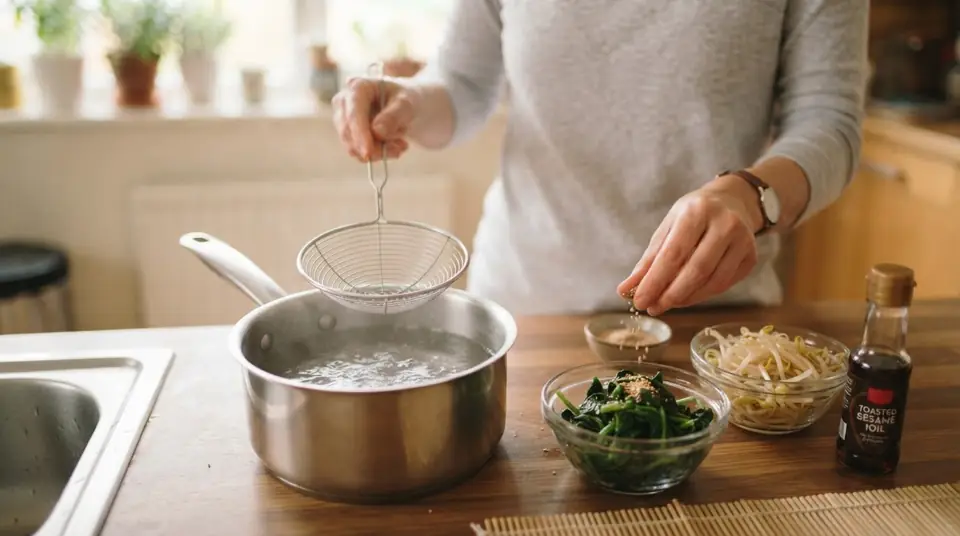
Cook the spinach and sprouts
Bring the water to a boil with the salt. Add the spinach for 30 seconds, then lift it out with tongs; add the bean sprouts for 1 minute, then lift them out. Squeeze out the excess water, then mix the spinach with half the sesame oil and a pinch of salt, and the sprouts with the other half of the oil and another pinch of salt.
- 200g spinach
- 150g bean sprouts
- 2 liters water
- 1 tsp for boiling, plus a pinch each salt
- 1 tsp total sesame oil
✅ C'est prêt quand : spinach is wilted and sprouts are tender-crisp
Fry the carrot and zucchini
This step is part of Foodie Premium. Subscribe to unlock the full method, cooking mode and every recipe in the library.
Cook the mushrooms and beef
This step is part of Foodie Premium. Subscribe to unlock the full method, cooking mode and every recipe in the library.
Fry the eggs
This step is part of Foodie Premium. Subscribe to unlock the full method, cooking mode and every recipe in the library.
Put the bowls together
This step is part of Foodie Premium. Subscribe to unlock the full method, cooking mode and every recipe in the library.
Cook the rice
Rinse the rice in a sieve under cold water until the water runs clear. Put it in a pot with the measured water, bring to a boil, then cover and simmer on low heat following the packet time (usually about 15 minutes). Fluff with a fork and keep covered so it stays warm.
- 400g rice
- 600 ml water
✅ C'est prêt quand : rice is tender and all the water is absorbed
Cook the spinach and sprouts
Bring the water to a boil with the salt. Add the spinach for 30 seconds, then lift it out with tongs; add the bean sprouts for 1 minute, then lift them out. Squeeze out the excess water, then mix the spinach with half the sesame oil and a pinch of salt, and the sprouts with the other half of the oil and another pinch of salt.
- 200g spinach
- 150g bean sprouts
- 2 liters water
- 1 tsp for boiling, plus a pinch each salt
- 1 tsp total sesame oil
✅ C'est prêt quand : spinach is wilted and sprouts are tender-crisp
Fry the carrot and zucchini
This step is part of Foodie Premium. Subscribe to unlock the full method, cooking mode and every recipe in the library.
Cook the mushrooms and beef
This step is part of Foodie Premium. Subscribe to unlock the full method, cooking mode and every recipe in the library.
Fry the eggs
This step is part of Foodie Premium. Subscribe to unlock the full method, cooking mode and every recipe in the library.
Put the bowls together
This step is part of Foodie Premium. Subscribe to unlock the full method, cooking mode and every recipe in the library.
The Story Behind the Dish
Bibimbap (literally 'mixed rice') is believed to have originated in Jeonju, a city in the south-western Jeolla province famous for its royal cuisine traditions. The legend goes that it was once served to King Gojong of the Joseon dynasty, and the royal court's cooks combined the finest seasonal vegetables, beef, and a gochujang (chili paste) sauce.
Another theory ties bibimbap's invention to the practice of farmers combining leftover side dishes (banchan) with rice before eating in the fields. The dish was also traditionally eaten on one day before the ancestral rites ceremonies, when families would mix all the food offerings together.
Bibimbap embodies the Korean philosophy of balance — five colors (white, green, yellow, red, black) representing the five elements that should all be present in a perfect meal.
⭐ Why It's Famous
Bibimbap is Korea's most internationally recognized dish. In 2011, CNN's travel site ranked it among 'The World's 50 Most Delicious Foods'. In 2017 it was served at the UN headquarters on World Environment Day, and Jeonju still hosts an annual international bibimbap festival.
💡 Fun Fact
The oldest known recipe for bibimbap was found in a cookbook published in the late 1800s, called 'SiuiJeonseo.' The original recipe describes containing the dish's mix of ingredients into small side dish bowls called 'jopchae'.
Jeonju, South Korea
35.82°N, 127.15°E
Recettes similaires
Comments (0)
No comments yet. Be the first to share your thoughts!