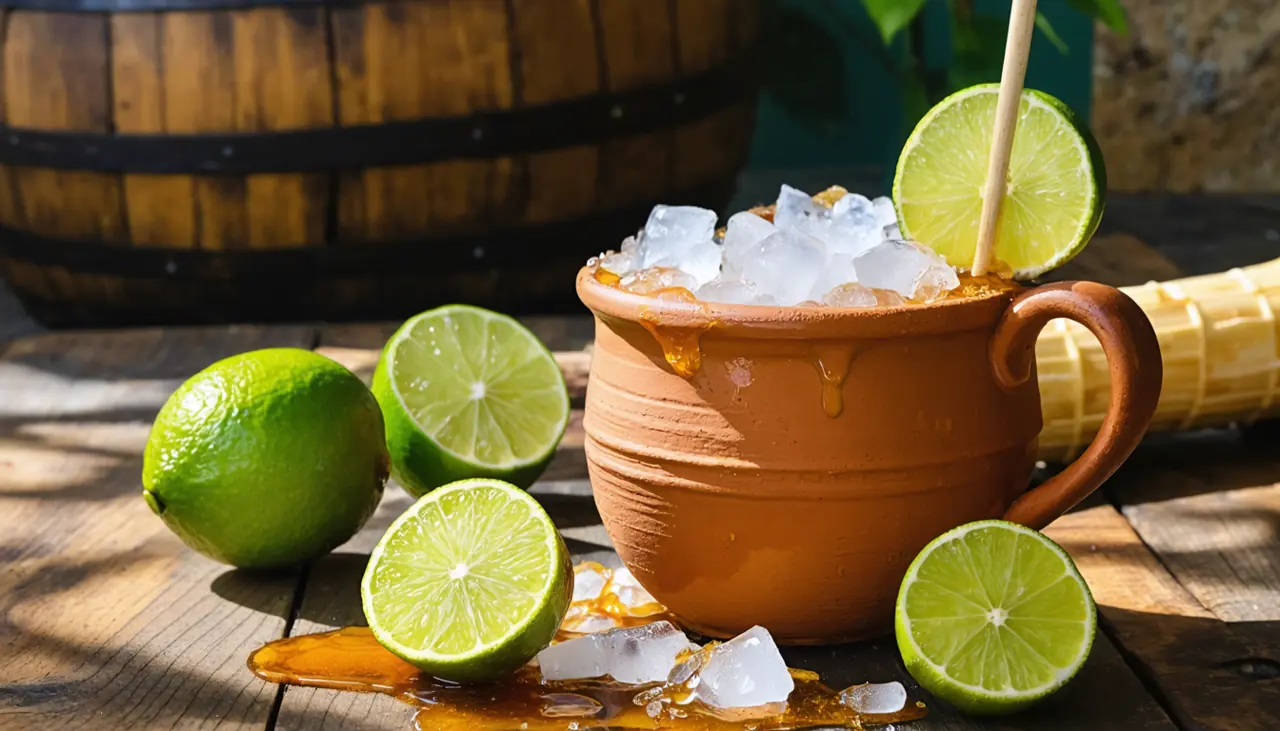
Canchánchara cubain
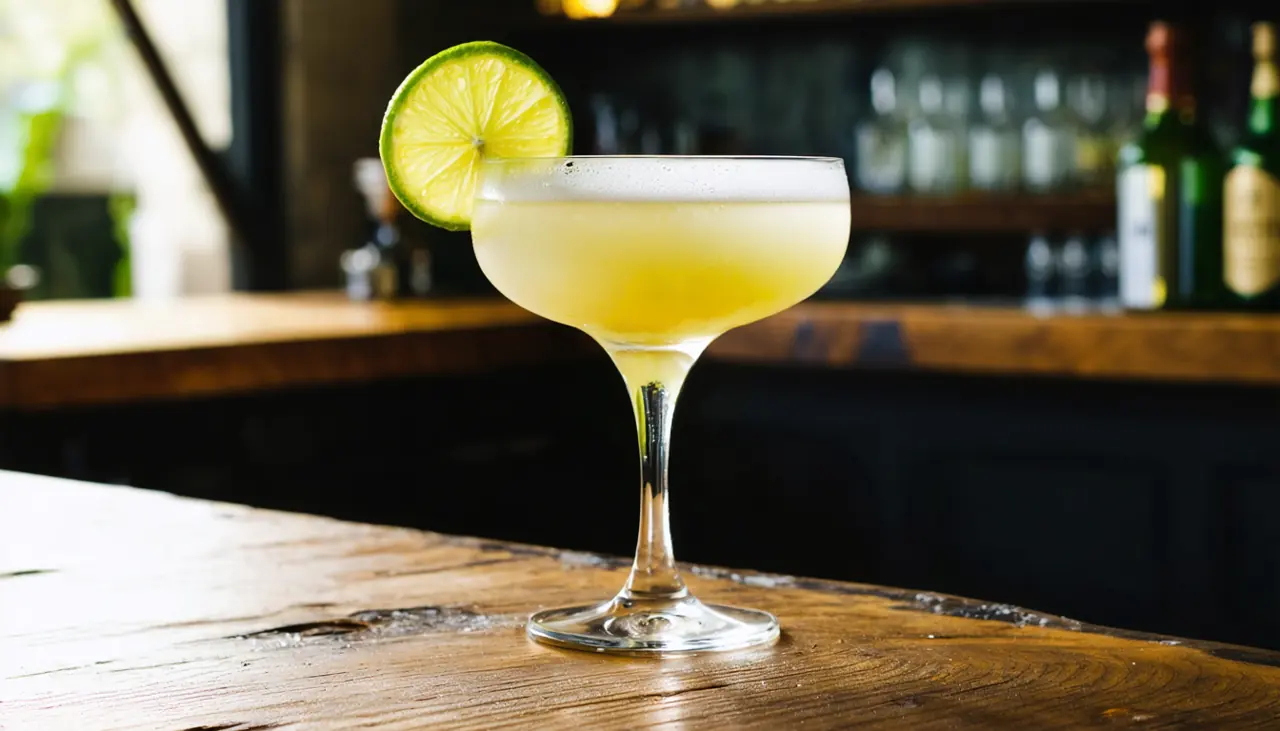
Cocktail rustique cubain au rhum, au miel et au citron vert, servi sur glace pilée.
Portions
Ingrédients
Nutrition
Par portion
Étapes
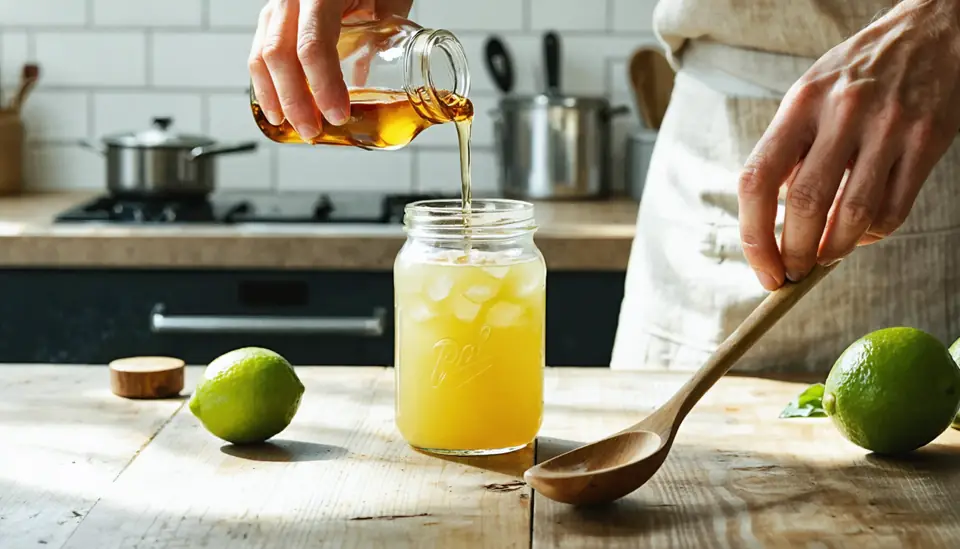
Dissolve the honey
In a small jar or shaker, pour the honey and fresh lime juice together. Stir or shake well until the honey is completely dissolved into the juice; this is the key step, because honey resists mixing once alcohol is added, so it must dissolve in the acid first.
- 60 ml honey
- 120 ml lime juice
✅ C'est prêt quand : the mixture looks smooth and no honey streaks remain at the bottom
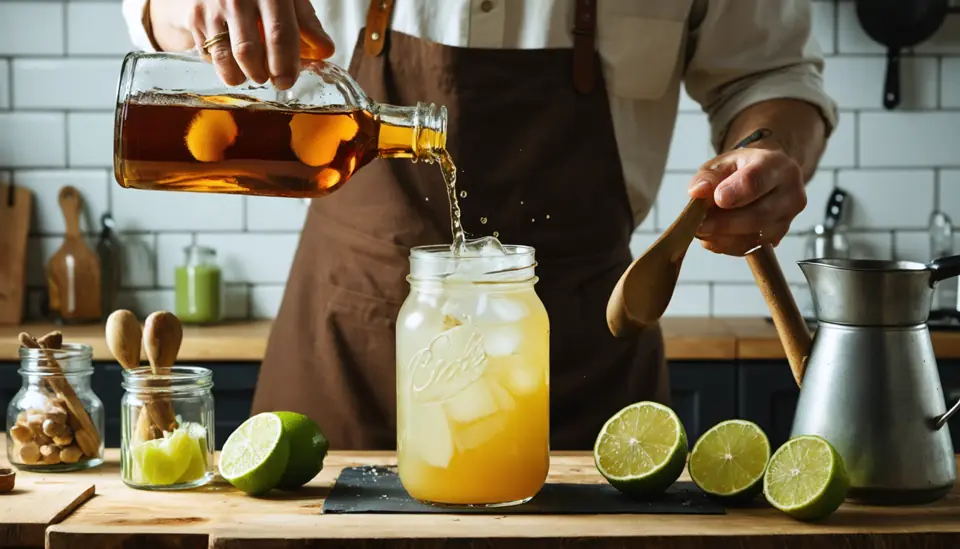
Add the spirit and water
Pour the aguardiente or rum and the cold water into the honey-lime mixture. Stir well so everything blends into one balanced, pale amber mix.
- 240 ml aguardiente or rum
- 120 ml cold water
✅ C'est prêt quand : the liquid is evenly mixed with no cloudy honey streaks
Fill with ice
This step is part of Foodie Premium. Subscribe to unlock the full method, cooking mode and every recipe in the library.
Pour and stir
This step is part of Foodie Premium. Subscribe to unlock the full method, cooking mode and every recipe in the library.
Serve at once
This step is part of Foodie Premium. Subscribe to unlock the full method, cooking mode and every recipe in the library.
Dissolve the honey
In a small jar or shaker, pour the honey and fresh lime juice together. Stir or shake well until the honey is completely dissolved into the juice; this is the key step, because honey resists mixing once alcohol is added, so it must dissolve in the acid first.
- 60 ml honey
- 120 ml lime juice
✅ C'est prêt quand : the mixture looks smooth and no honey streaks remain at the bottom
Add the spirit and water
Pour the aguardiente or rum and the cold water into the honey-lime mixture. Stir well so everything blends into one balanced, pale amber mix.
- 240 ml aguardiente or rum
- 120 ml cold water
✅ C'est prêt quand : the liquid is evenly mixed with no cloudy honey streaks
Fill with ice
This step is part of Foodie Premium. Subscribe to unlock the full method, cooking mode and every recipe in the library.
Pour and stir
This step is part of Foodie Premium. Subscribe to unlock the full method, cooking mode and every recipe in the library.
Serve at once
This step is part of Foodie Premium. Subscribe to unlock the full method, cooking mode and every recipe in the library.
The Story Behind the Dish
Canchánchara is said to have been born among farmers and sugar workers in the hills around Trinidad, who mixed the raw cane spirit distilled on local farms with honey from their own hives and lime from the yard, because that was simply what was on hand. It later became linked to the mambises, Cuba's 19th-century independence fighters, who are said to have drunk it before battle for courage and warmth.
It is still served today in Trinidad's old town, often in small clay cups, as a point of local pride and one of the country's oldest known cocktails.
⭐ Why It's Famous
It's considered one of Cuba's original cocktails, older than the daiquiri or mojito, and tightly tied to the identity of Trinidad as a town.
💡 Fun Fact
The name is thought to echo the clinking sound made by clay cups (vasijas de barro) knocking together during toasts.
Trinidad, Sancti Spíritus province
21.81°N, -79.98°W
Recettes similaires
Comments (0)
No comments yet. Be the first to share your thoughts!