Castella
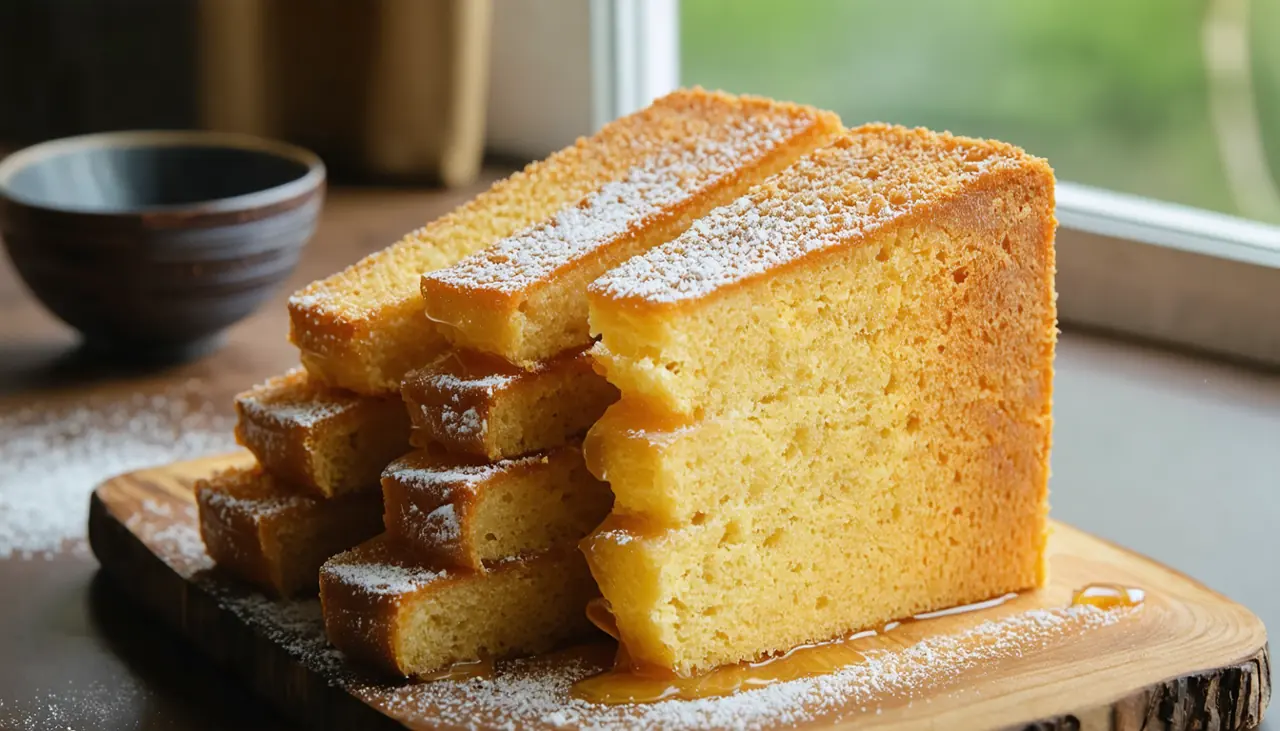
Un gâteau éponge japonais doré, moelleux et parfumé au miel, hérité des marchands portugais.
Portions
Ingrédients
Nutrition
Par portion
Étapes
Line the pan
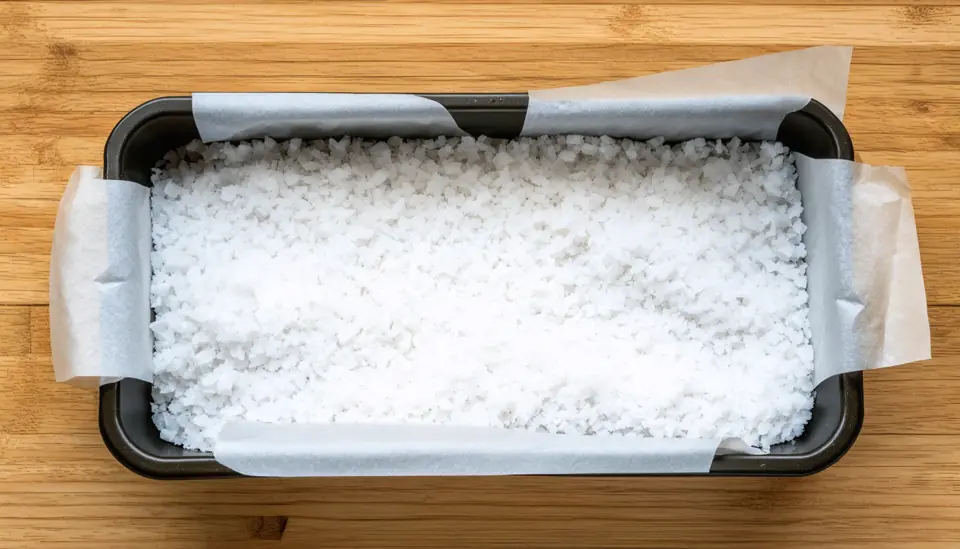
Line a 20 x 8 cm loaf pan (or similar deep pan) with parchment paper, pressing it into the corners so it stands slightly above the rim. Scatter the coarse sugar evenly over the bottom; this gives Castella its traditional faintly crunchy base.
- 20 g coarse sugar
✅ C'est prêt quand : sugar sits in an even layer covering the whole base
Warm the eggs and sugar
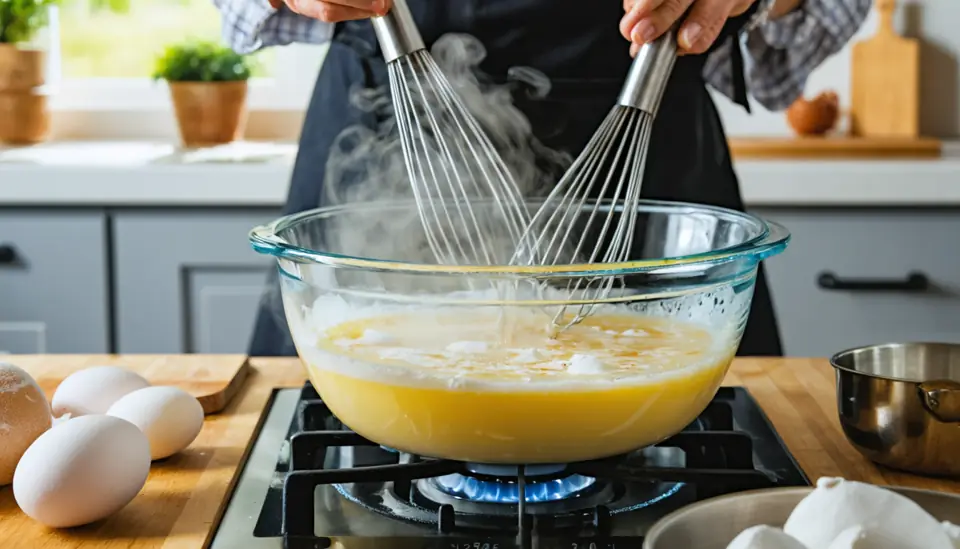
Whisk the eggs and fine sugar together in a large bowl set over a pan of barely simmering water, without letting the bowl touch the water. Whisk gently until the mixture feels just warm, about body temperature (around 37°C/98°F); this fully dissolves the sugar and lets the eggs whip up much fuller afterwards.
- 5 eggs
- 150 g fine sugar
✅ C'est prêt quand : mixture is warm to the touch, not hot, and sugar has dissolved
Whip to ribbons
This step is part of Foodie Premium. Subscribe to unlock the full method, cooking mode and every recipe in the library.
Fold in honey
This step is part of Foodie Premium. Subscribe to unlock the full method, cooking mode and every recipe in the library.
Fold in the flour
This step is part of Foodie Premium. Subscribe to unlock the full method, cooking mode and every recipe in the library.
Remove bubbles and bake
This step is part of Foodie Premium. Subscribe to unlock the full method, cooking mode and every recipe in the library.
Wrap and rest
This step is part of Foodie Premium. Subscribe to unlock the full method, cooking mode and every recipe in the library.
Line the pan
Line a 20 x 8 cm loaf pan (or similar deep pan) with parchment paper, pressing it into the corners so it stands slightly above the rim. Scatter the coarse sugar evenly over the bottom; this gives Castella its traditional faintly crunchy base.
- 20 g coarse sugar
✅ C'est prêt quand : sugar sits in an even layer covering the whole base
Warm the eggs and sugar
Whisk the eggs and fine sugar together in a large bowl set over a pan of barely simmering water, without letting the bowl touch the water. Whisk gently until the mixture feels just warm, about body temperature (around 37°C/98°F); this fully dissolves the sugar and lets the eggs whip up much fuller afterwards.
- 5 eggs
- 150 g fine sugar
✅ C'est prêt quand : mixture is warm to the touch, not hot, and sugar has dissolved
Whip to ribbons
This step is part of Foodie Premium. Subscribe to unlock the full method, cooking mode and every recipe in the library.
Fold in honey
This step is part of Foodie Premium. Subscribe to unlock the full method, cooking mode and every recipe in the library.
Fold in the flour
This step is part of Foodie Premium. Subscribe to unlock the full method, cooking mode and every recipe in the library.
Remove bubbles and bake
This step is part of Foodie Premium. Subscribe to unlock the full method, cooking mode and every recipe in the library.
Wrap and rest
This step is part of Foodie Premium. Subscribe to unlock the full method, cooking mode and every recipe in the library.
The Story Behind the Dish
Castella traces back to a Portuguese bread called pão de Castela, brought to Japan by traders and missionaries who passed through Nagasaki during the Nanban trade era, when Japan's port there was one of the only places open to Western contact. Japanese bakers reworked the recipe with what they had, eggs, sugar, flour and honey, since butter and dairy were not part of the local pantry.
Over generations Nagasaki confectioners refined it into something distinctly Japanese: taller, finer-crumbed and more delicately sweet than its European ancestor. Old shops in the city have made Castella for generations, and it remains the city's signature confection, sold in long wooden-boxed loaves across Japan as a gift.
⭐ Why It's Famous
Its tall, golden sponge is prized for an unusually fine, moist crumb and a faint caramel-honey sweetness, with a slightly sticky base from the sugar baked into the bottom, a texture home bakers chase for years to get right.
💡 Fun Fact
Traditionally Castella was baked in wooden boxes, which breathe just enough to help trap steam and keep the crumb moist; many bakers still wrap the warm cake in plastic overnight to recreate that same effect at home.
Nagasaki
32.75°N, 129.88°E
Recettes similaires
Comments (0)
No comments yet. Be the first to share your thoughts!