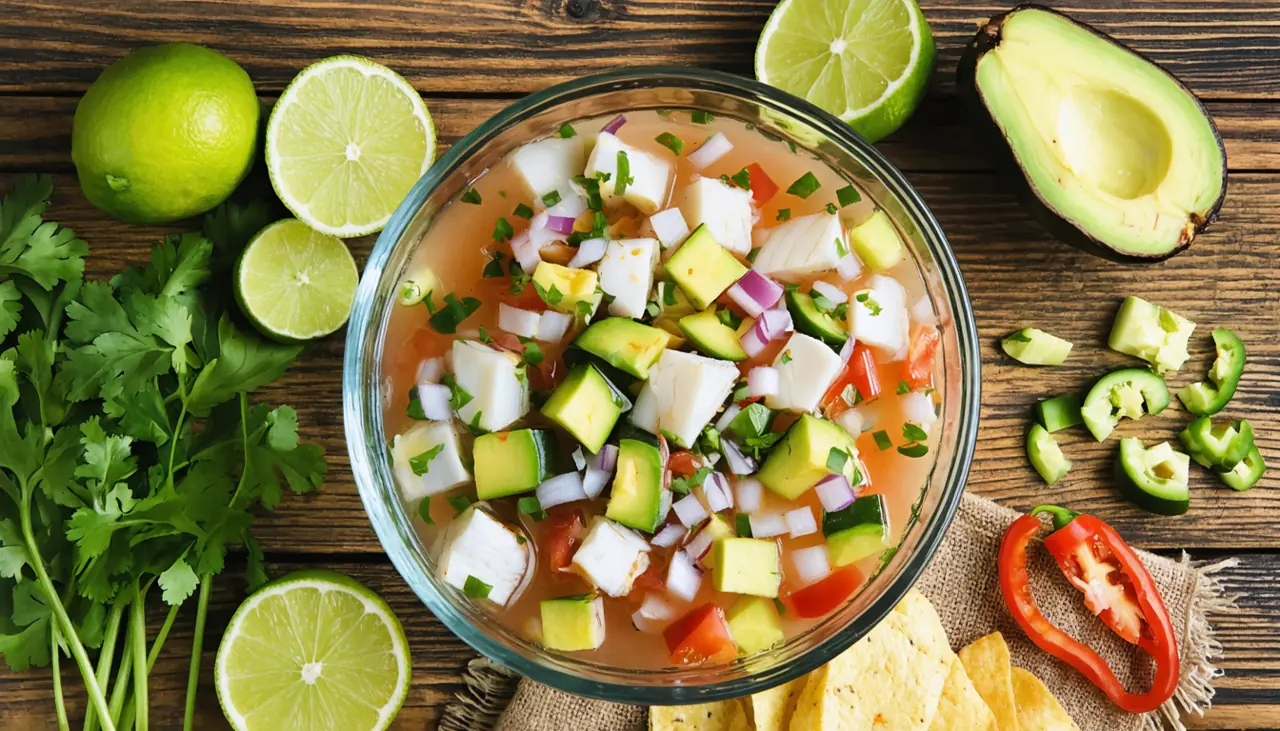
Ceviche de Poisson Frais
Poisson frais mariné dans du jus de citron vert avec coriandre, avocat et piment serrano. Aucune cuisson nécessaire — le citron fait tout.
Portions
Ingrédients
Nutrition
Par portion
Étapes
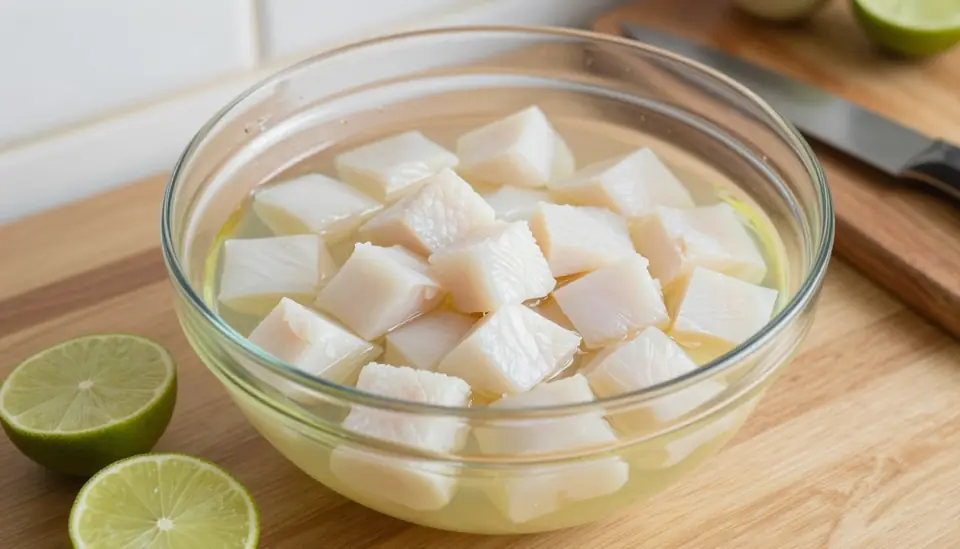
Soak the fish in lime juice
Put the fish cubes in a glass or ceramic bowl (not metal), then pour in all the lime juice so every piece is covered. Cover and chill for 25-35 minutes, stirring once halfway through.
- 500g fish
- 200ml (8 limes) lime juice
✅ C'est prêt quand : the fish turns from translucent to solid opaque white
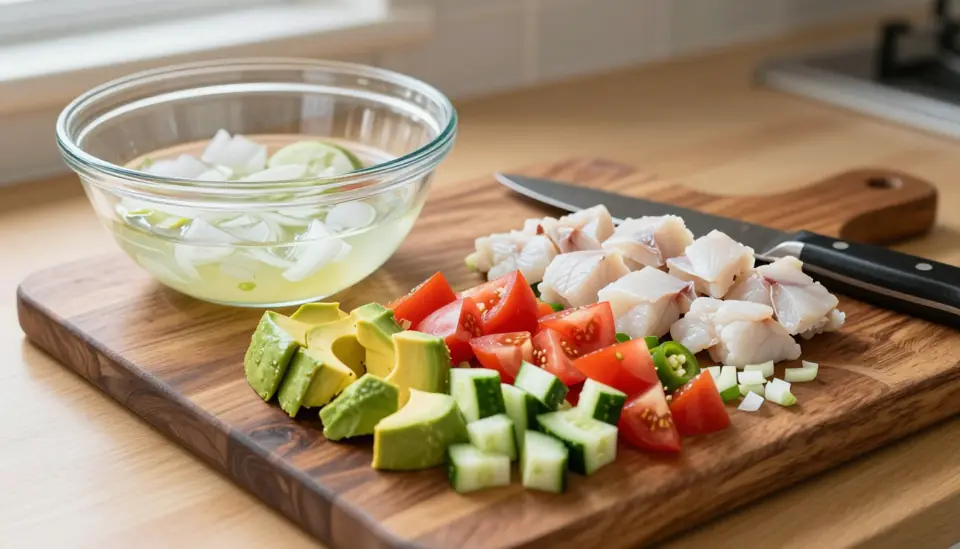
Prepare the vegetables
While the fish chills, dice the avocado, tomatoes and cucumber into pieces about the same size as the fish, then finely chop the onion and the serrano pepper. Soak the chopped onion in the ice water for 5 minutes to soften its bite, then drain well.
- 1 large avocado
- 2 tomatoes
- 1 cucumber
- ½ medium onion
- 1 serrano pepper
- 1 cup ice water
✅ C'est prêt quand : the onion is well drained and smells milder
Pour off some juice
This step is part of Foodie Premium. Subscribe to unlock the full method, cooking mode and every recipe in the library.
Mix it all together
This step is part of Foodie Premium. Subscribe to unlock the full method, cooking mode and every recipe in the library.
Add the avocado and serve
This step is part of Foodie Premium. Subscribe to unlock the full method, cooking mode and every recipe in the library.
Soak the fish in lime juice
Put the fish cubes in a glass or ceramic bowl (not metal), then pour in all the lime juice so every piece is covered. Cover and chill for 25-35 minutes, stirring once halfway through.
- 500g fish
- 200ml (8 limes) lime juice
✅ C'est prêt quand : the fish turns from translucent to solid opaque white
Prepare the vegetables
While the fish chills, dice the avocado, tomatoes and cucumber into pieces about the same size as the fish, then finely chop the onion and the serrano pepper. Soak the chopped onion in the ice water for 5 minutes to soften its bite, then drain well.
- 1 large avocado
- 2 tomatoes
- 1 cucumber
- ½ medium onion
- 1 serrano pepper
- 1 cup ice water
✅ C'est prêt quand : the onion is well drained and smells milder
Pour off some juice
This step is part of Foodie Premium. Subscribe to unlock the full method, cooking mode and every recipe in the library.
Mix it all together
This step is part of Foodie Premium. Subscribe to unlock the full method, cooking mode and every recipe in the library.
Add the avocado and serve
This step is part of Foodie Premium. Subscribe to unlock the full method, cooking mode and every recipe in the library.
The Story Behind the Dish
Ceviche's story begins over 2,000 years ago on the coasts of what is now Peru. The Moche civilization, which flourished along Peru's northern coast, prepared fish that was marinated in fermented juice from the local 'tumbo' (banana passionfruit) plant. When the Spanish conquistadors arrived, they brought with them the citrus fruits — lemons and bitter oranges — that later became the base of the classic ceviche marinade.
The word 'ceviche' has contested origins: some say it comes from the Spanish word 'cebo' (bait), others from the Quechua word 'siwichi' (fresh fish), and some trace it to the Arabic dish 'sibech' brought to Iberia. By the 19th century, lime juice became the standard dressing, and ceviche was sold from small beachside stands along the Peruvian coast.
In 2004, Peru declared ceviche a 'Cultural Heritage of the Nation' and it has grown into a symbol of national pride, with a national Ceviche Day celebrated every June 28.
⭐ Why It's Famous
Ceviche is considered the crown jewel of Peruvian cuisine. Its bright, acidic, fresh flavors represent the meeting of land and sea that defines coastal Latin American identity, winning international acclaim and earning Peru its reputation as one of the world's great culinary destinations.
💡 Fun Fact
The citrus marinade doesn't actually 'cook' the fish in the traditional sense — it denatures the proteins, a chemical process that changes texture while leaving the fish tasting 'raw.' This is why ceviche must be eaten fresh, usually within minutes of preparation.
Peru (coastal regions)
-12.05°S, -77.04°W
Recettes similaires
Comments (0)
No comments yet. Be the first to share your thoughts!