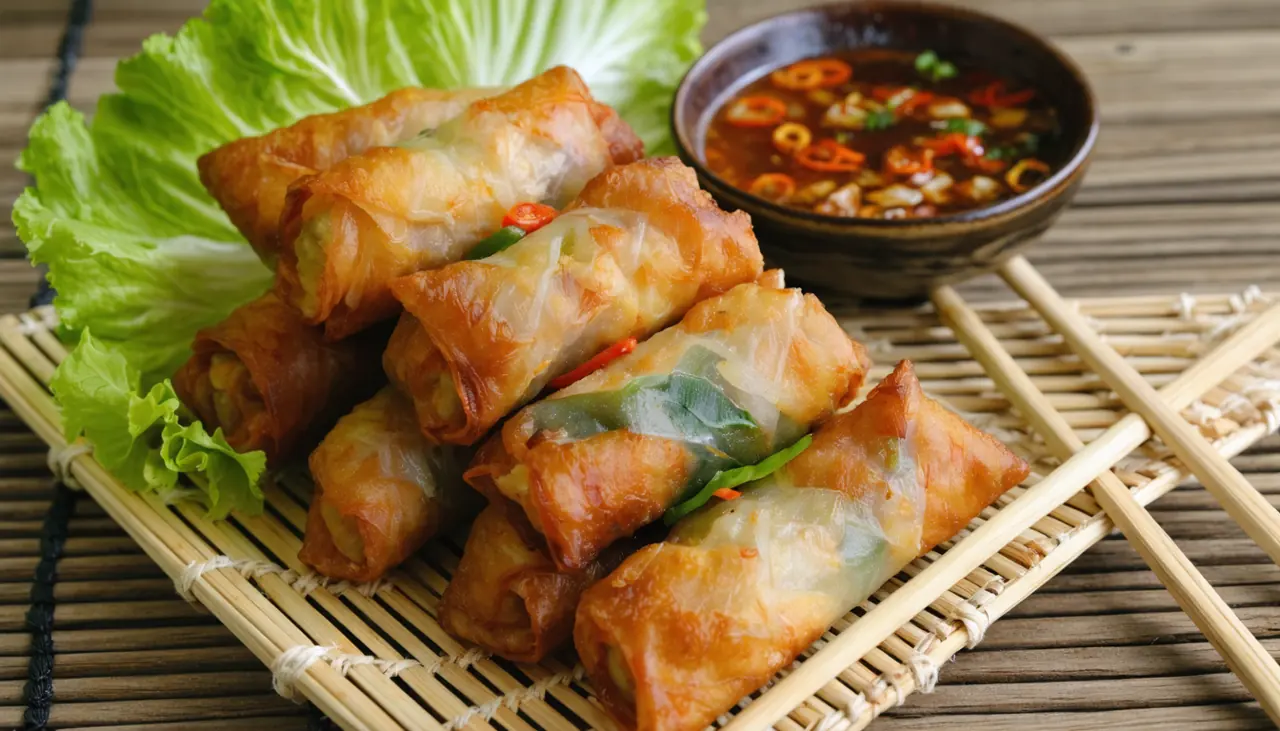
Rouleaux de printemps frits (Chả Giò)
Rouleaux dorés et croustillants farcis de porc, crevettes et légumes, servis avec une sauce aigre-douce.
Portions
Ingrédients
Nutrition
Par portion
Étapes
Soak noodles and mushrooms
Put the dried wood ear mushrooms and glass noodles in separate bowls, cover with warm water and soak for 15–20 minutes until soft and pliable. Drain well, then slice the mushrooms thinly and cut the noodles into short 2 cm lengths with scissors.
- 20 g dried wood ear mushrooms
- 40 g dried glass noodles
✅ C'est prêt quand : mushrooms are soft and rubbery (not stiff) and noodles bend easily without snapping
Prepare the vegetables
Grate the carrot and jicama, sprinkle with a pinch of salt, then squeeze firmly over the sink with your hands to remove as much water as possible — this is the step that keeps the filling from turning watery so the rolls stay crisp instead of going soft. Finely chop the onion and half of the garlic.
- 100 g carrot
- 150 g jicama
- 1 onion
- 1.5 cloves garlic (half)
✅ C'est prêt quand : vegetables feel dry, not wet, when squeezed between your fingers
Mix the filling
This step is part of Foodie Premium. Subscribe to unlock the full method, cooking mode and every recipe in the library.
Roll the spring rolls
This step is part of Foodie Premium. Subscribe to unlock the full method, cooking mode and every recipe in the library.
First fry (par-cook)
This step is part of Foodie Premium. Subscribe to unlock the full method, cooking mode and every recipe in the library.
Second fry (crisp up)
This step is part of Foodie Premium. Subscribe to unlock the full method, cooking mode and every recipe in the library.
Make the sauce and serve
This step is part of Foodie Premium. Subscribe to unlock the full method, cooking mode and every recipe in the library.
The Story Behind the Dish
Fried rolls arrived in Vietnam through centuries of trade and cultural exchange with China, and Vietnamese cooks reshaped the dish with local ingredients, favouring delicate rice paper wrappers and a filling built on pork, shrimp and vegetables rather than cabbage alone.
The dish goes by different names depending on the region: in the south it's called chả giò, while in the north the same style of roll is known as nem rán, each area adding its own small touches to the filling and the dipping sauce. Vietnamese communities abroad later carried the dish around the world, making it one of the most recognized items on Vietnamese restaurant menus everywhere.
⭐ Why It's Famous
It's a centerpiece of Tet (Lunar New Year) feasts and family gatherings, and one of the first Vietnamese dishes to become internationally famous, loved for the contrast between its crackling shell and juicy filling.
💡 Fun Fact
The double-fry method — frying once to cook through, resting, then frying again hotter — is the technique that keeps these rolls crisp for hours instead of going soft within minutes.
Southern Vietnam (Mekong Delta and Saigon)
10.82°N, 106.63°E
Recettes similaires
Comments (0)
No comments yet. Be the first to share your thoughts!