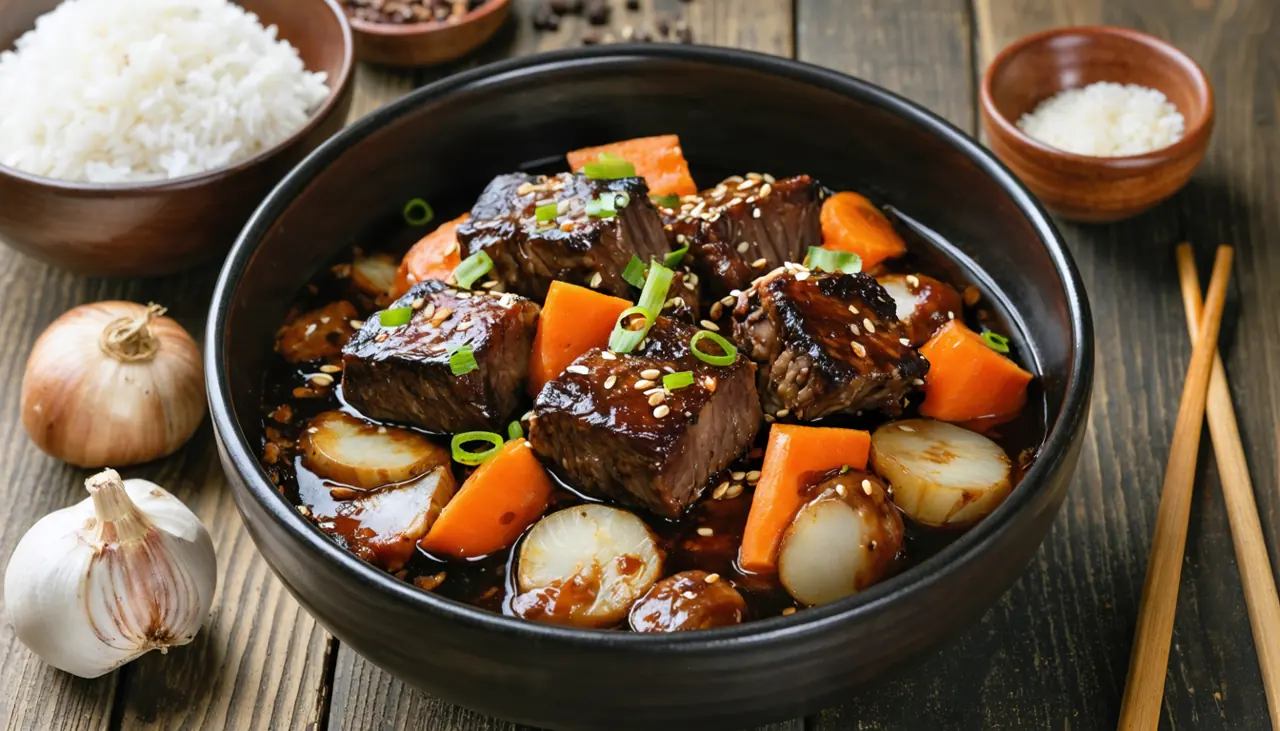
Galbijjim (bœuf braisé coréen)
Travers de bœuf braisés avec sauce soja, poire asiatique, châtaignes et radis daikon jusqu'à devenir fondants et brillants.
Portions
Ingrédients
Nutrition
Par portion
Étapes

Soak the ribs
Place the ribs in a large bowl and cover completely with cold water. Let them soak for 30 minutes, changing the water once if it turns very bloody. This draws blood out of the bone marrow so the braising sauce stays clear and clean-tasting instead of murky.
- 1.5 kg short ribs
- enough to cover cold water
✅ C'est prêt quand : the soaking water looks pink and the ribs look pale instead of dark red

Parboil & rinse
Drain the ribs, put them in a pot, cover with fresh cold water and bring to a boil. Cook for 8 minutes, skimming off the gray foam that rises to the surface, then drain and rinse the ribs under warm water, rubbing off any foam or fat clinging to the bones.
- 1.5 kg short ribs (from step 1)
✅ C'est prêt quand : the ribs look clean and pale, with no foam left in the water
Blend the sauce
This step is part of Foodie Premium. Subscribe to unlock the full method, cooking mode and every recipe in the library.
Braise covered
This step is part of Foodie Premium. Subscribe to unlock the full method, cooking mode and every recipe in the library.
Add vegetables, keep braising
This step is part of Foodie Premium. Subscribe to unlock the full method, cooking mode and every recipe in the library.
Rest & serve
This step is part of Foodie Premium. Subscribe to unlock the full method, cooking mode and every recipe in the library.
Soak the ribs
Place the ribs in a large bowl and cover completely with cold water. Let them soak for 30 minutes, changing the water once if it turns very bloody. This draws blood out of the bone marrow so the braising sauce stays clear and clean-tasting instead of murky.
- 1.5 kg short ribs
- enough to cover cold water
✅ C'est prêt quand : the soaking water looks pink and the ribs look pale instead of dark red
Parboil & rinse
Drain the ribs, put them in a pot, cover with fresh cold water and bring to a boil. Cook for 8 minutes, skimming off the gray foam that rises to the surface, then drain and rinse the ribs under warm water, rubbing off any foam or fat clinging to the bones.
- 1.5 kg short ribs (from step 1)
✅ C'est prêt quand : the ribs look clean and pale, with no foam left in the water
Blend the sauce
This step is part of Foodie Premium. Subscribe to unlock the full method, cooking mode and every recipe in the library.
Braise covered
This step is part of Foodie Premium. Subscribe to unlock the full method, cooking mode and every recipe in the library.
Add vegetables, keep braising
This step is part of Foodie Premium. Subscribe to unlock the full method, cooking mode and every recipe in the library.
Rest & serve
This step is part of Foodie Premium. Subscribe to unlock the full method, cooking mode and every recipe in the library.
The Story Behind the Dish
Galbijjim traces back to the royal court cuisine (gungjung yori) of the Joseon Dynasty, where tender braised beef ribs were considered a luxury worthy of the king's table. Over time the dish moved from palace kitchens into noble and then ordinary households, kept special through its long cooking time and costly cut of meat.
Today it remains a dish for celebration rather than everyday eating. It appears on tables for Lunar New Year (Seollal), Chuseok harvest festival, birthdays and weddings, usually simmered a day ahead so the flavors deepen overnight.
⭐ Why It's Famous
The combination of fall-apart tender beef, a glossy sweet-savory sauce, and festive additions like chestnuts and jujubes makes it the centerpiece dish of Korean holiday tables.
💡 Fun Fact
Chestnuts and jujubes are added not just for flavor but for symbolism: in Korean tradition they represent abundance and good fortune, which is why galbijjim is so often served at celebrations rather than casual meals.
Korea, especially Seoul and the royal court
37.57°N, 126.98°E
Recettes similaires
Comments (0)
No comments yet. Be the first to share your thoughts!