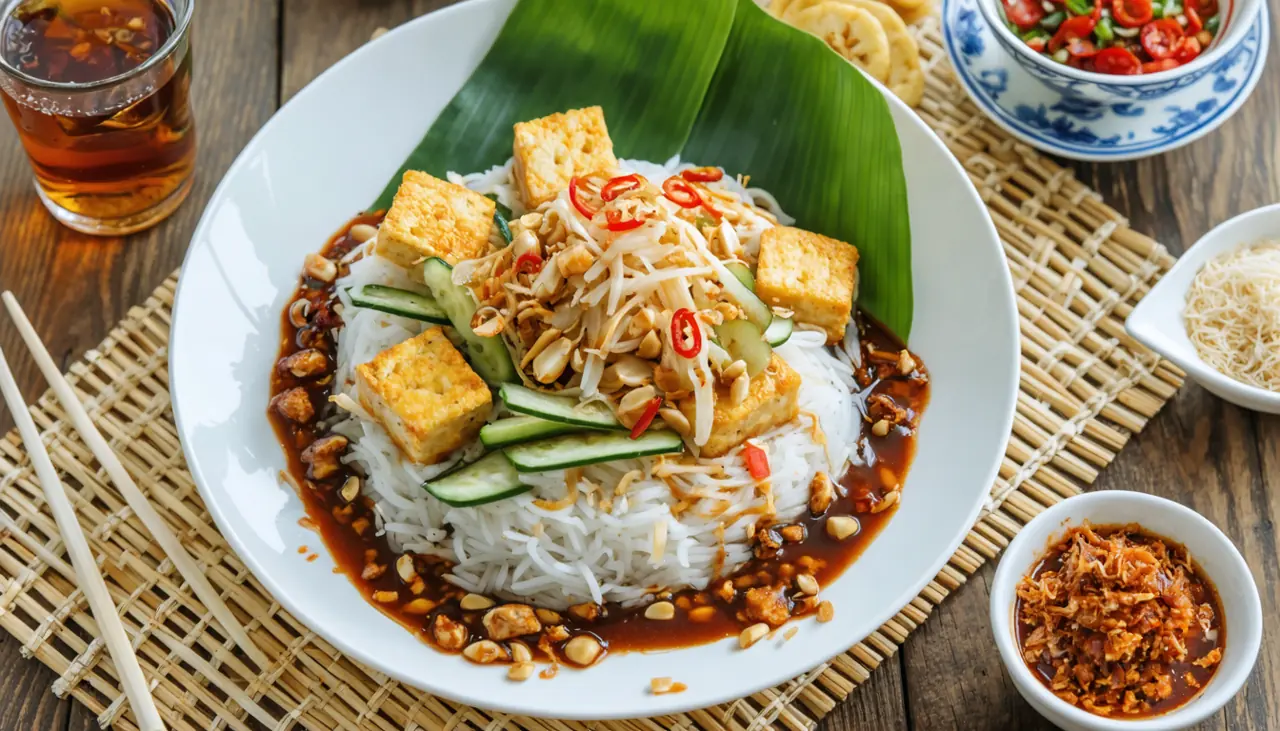
Ketoprak (Salade de nouilles à la cacahuète de Jakarta)
Vermicelles de riz, tofu frit et pousses de soja dans une sauce aux cacahuètes épaisse et relevée, un classique de rue de Jakarta.
Portions
Ingrédients
Nutrition
Par portion
Étapes

Soak the noodles
Put the dried rice vermicelli in a large bowl and cover generously with boiling water. Let it sit off the heat, without stirring too much, until soft. Soaking instead of boiling directly keeps the strands tender without turning them into mush.
- 150 g dried rice vermicelli
✅ C'est prêt quand : the noodles bend easily and have no raw, brittle centre

Blanch the bean sprouts
Bring a small pot of water to a rolling boil, drop in the bean sprouts, and count to 30. Drain at once and plunge into cold water for a few seconds. This brief dip in boiling water cooks off the raw taste while keeping the sprouts crunchy.
- 200 g bean sprouts
✅ C'est prêt quand : the sprouts look just slightly softened but still snap when bitten

Fry the tofu
Pat the tofu cubes dry with paper towel so they don't spit in the oil. Heat the oil in a frying pan over medium-high heat and fry the tofu, turning occasionally, until golden and crisp on every side. Drain on paper towel, then cut each cube into smaller bite-sized pieces.
- 300 g firm tofu
- 3 tbsp vegetable oil
✅ C'est prêt quand : the tofu is deep golden-brown and crisp on the outside, soft inside

Make the peanut sauce
In a mortar, blender or food processor, grind the peanuts, garlic and chilies to a thick, mostly smooth paste. Mix in the kecap manis, tamarind water, palm sugar and salt. Add the warm water a little at a time, stirring, until the sauce falls off a spoon in a thick ribbon rather than a drip. Taste and adjust: more chili for heat, more tamarind for tang, more palm sugar for sweetness.
- 150 g roasted peanuts
- 3 cloves garlic
- 2–3 red chilies
- 3 tbsp kecap manis
- 2 tbsp tamarind water
- 1 tbsp palm sugar
- 1/2 tsp salt
- 100 ml warm water
✅ C'est prêt quand : the sauce is thick, glossy and well balanced between sweet, sour, salty and spicy

Toss it all together
In a large bowl, combine the soaked noodles, blanched bean sprouts, cucumber slices and fried tofu. Pour over the peanut sauce and toss gently with your hands or tongs, lifting from the bottom, until every strand and piece is coated.
- 150 g soaked noodles (from step 1)
- 200 g blanched bean sprouts (from step 2)
- 1 cucumber
- 300 g fried tofu (from step 3)
✅ C'est prêt quand : everything is evenly glossed with sauce, no dry patches of noodle left

Serve the ketoprak
Pile the ketoprak onto plates, scatter fried shallots over the top and tuck the crackers in alongside. Serve right away, while the noodles are soft and the crackers are still crisp.
- 2 tbsp fried shallots
- 4 pieces krupuk
Soak the noodles
Put the dried rice vermicelli in a large bowl and cover generously with boiling water. Let it sit off the heat, without stirring too much, until soft. Soaking instead of boiling directly keeps the strands tender without turning them into mush.
- 150 g dried rice vermicelli
✅ C'est prêt quand : the noodles bend easily and have no raw, brittle centre
Blanch the bean sprouts
Bring a small pot of water to a rolling boil, drop in the bean sprouts, and count to 30. Drain at once and plunge into cold water for a few seconds. This brief dip in boiling water cooks off the raw taste while keeping the sprouts crunchy.
- 200 g bean sprouts
✅ C'est prêt quand : the sprouts look just slightly softened but still snap when bitten
Fry the tofu
Pat the tofu cubes dry with paper towel so they don't spit in the oil. Heat the oil in a frying pan over medium-high heat and fry the tofu, turning occasionally, until golden and crisp on every side. Drain on paper towel, then cut each cube into smaller bite-sized pieces.
- 300 g firm tofu
- 3 tbsp vegetable oil
✅ C'est prêt quand : the tofu is deep golden-brown and crisp on the outside, soft inside
Make the peanut sauce
In a mortar, blender or food processor, grind the peanuts, garlic and chilies to a thick, mostly smooth paste. Mix in the kecap manis, tamarind water, palm sugar and salt. Add the warm water a little at a time, stirring, until the sauce falls off a spoon in a thick ribbon rather than a drip. Taste and adjust: more chili for heat, more tamarind for tang, more palm sugar for sweetness.
- 150 g roasted peanuts
- 3 cloves garlic
- 2–3 red chilies
- 3 tbsp kecap manis
- 2 tbsp tamarind water
- 1 tbsp palm sugar
- 1/2 tsp salt
- 100 ml warm water
✅ C'est prêt quand : the sauce is thick, glossy and well balanced between sweet, sour, salty and spicy
Toss it all together
In a large bowl, combine the soaked noodles, blanched bean sprouts, cucumber slices and fried tofu. Pour over the peanut sauce and toss gently with your hands or tongs, lifting from the bottom, until every strand and piece is coated.
- 150 g soaked noodles (from step 1)
- 200 g blanched bean sprouts (from step 2)
- 1 cucumber
- 300 g fried tofu (from step 3)
✅ C'est prêt quand : everything is evenly glossed with sauce, no dry patches of noodle left
Serve the ketoprak
Pile the ketoprak onto plates, scatter fried shallots over the top and tuck the crackers in alongside. Serve right away, while the noodles are soft and the crackers are still crisp.
- 2 tbsp fried shallots
- 4 pieces krupuk
The Story Behind the Dish
Ketoprak grew out of Jakarta's bustling street food scene, where vendors with pushcarts have long served quick, filling meals to workers and passersby. It belongs to a wider family of Indonesian peanut sauce dishes, sharing its DNA with gado-gado and lotek, but it stands apart for its base of soft rice vermicelli and rice cakes rather than a full spread of mixed vegetables.
The dish's name is said to come from the sound of the wooden mortar and pestle used to grind the peanut sauce, a rhythmic knocking that street vendors used to announce their presence before they even called out. Over the decades it became a fixture of Jakarta's evening food stalls, prized for being cheap, meat-free and satisfying all at once.
⭐ Why It's Famous
Ketoprak is famous as one of Jakarta's defining street snacks, loved for its thick, punchy peanut sauce and the contrast of soft noodles against crisp tofu and crackers.
💡 Fun Fact
Some say the dish's name imitates the clacking sound of the pestle grinding peanuts in a wooden mortar, a sound once used by street vendors to call customers.
Jakarta, Indonesia
-6.21°S, 106.85°E
Recettes similaires
Comments (0)
No comments yet. Be the first to share your thoughts!