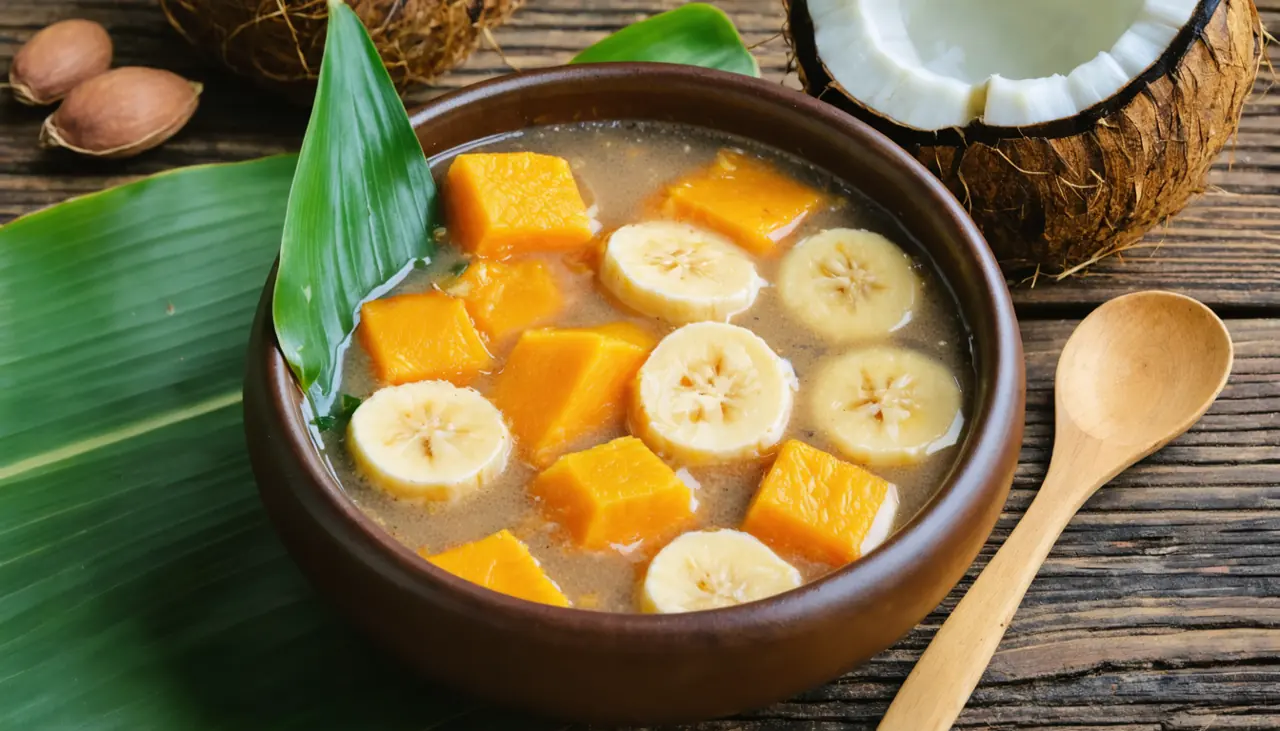
Kolak Pisang (Compote de banane et coco)
Banane et patate douce mijotées dans du lait de coco au sucre de palme et au pandan.
Portions
Ingrédients
Nutrition
Par portion
Étapes

Make the sugar syrup
Put the water, palm sugar and pandan leaves in a medium pot (at least 2 litres). Bring to a gentle simmer over medium heat, stirring now and then until the sugar fully dissolves.
- 500 ml water
- 150 g palm sugar
- 3 pandan leaves
✅ C'est prêt quand : the sugar has dissolved and the liquid looks like clear amber syrup

Cook the sweet potato
Add the sweet potato cubes to the syrup. Simmer, uncovered, over medium-low heat until the pieces are almost tender but still hold their shape when poked with a fork.
- 300 g sweet potato
✅ C'est prêt quand : a fork slides into the sweet potato with just a little resistance

Add the coconut milk
Turn the heat down to low, then stir in the coconut milk and salt. Keep the pot at a gentle simmer, not a hard boil — if coconut milk boils too hard it can split and turn grainy, so stir often and watch for just a few small bubbles.
- 400 ml coconut milk
- ¼ tsp salt
✅ C'est prêt quand : the liquid is smooth, pale and only lightly bubbling at the edges

Add the bananas
Slide the banana slices into the pot. Simmer very gently, stirring only now and then with a light hand so the slices stay whole, until the bananas are tender and have taken on the coconut-sugar flavour.
- 4 (about 500 g) bananas
✅ C'est prêt quand : the bananas are soft but still holding their shape, not mushy

Rest before serving
Turn off the heat and let the kolak sit for 5 minutes. This lets the sweet potato and banana finish soaking up the coconut syrup without overcooking.
✅ C'est prêt quand : the compote has thickened very slightly and smells fully of pandan and palm sugar

Serve
Lift out and discard the pandan leaves. Ladle the kolak warm into bowls, with plenty of the coconut broth over the fruit; it's also good lightly chilled on a hot day.
- 3 pandan leaves (to remove)
Make the sugar syrup
Put the water, palm sugar and pandan leaves in a medium pot (at least 2 litres). Bring to a gentle simmer over medium heat, stirring now and then until the sugar fully dissolves.
- 500 ml water
- 150 g palm sugar
- 3 pandan leaves
✅ C'est prêt quand : the sugar has dissolved and the liquid looks like clear amber syrup
Cook the sweet potato
Add the sweet potato cubes to the syrup. Simmer, uncovered, over medium-low heat until the pieces are almost tender but still hold their shape when poked with a fork.
- 300 g sweet potato
✅ C'est prêt quand : a fork slides into the sweet potato with just a little resistance
Add the coconut milk
Turn the heat down to low, then stir in the coconut milk and salt. Keep the pot at a gentle simmer, not a hard boil — if coconut milk boils too hard it can split and turn grainy, so stir often and watch for just a few small bubbles.
- 400 ml coconut milk
- ¼ tsp salt
✅ C'est prêt quand : the liquid is smooth, pale and only lightly bubbling at the edges
Add the bananas
Slide the banana slices into the pot. Simmer very gently, stirring only now and then with a light hand so the slices stay whole, until the bananas are tender and have taken on the coconut-sugar flavour.
- 4 (about 500 g) bananas
✅ C'est prêt quand : the bananas are soft but still holding their shape, not mushy
Rest before serving
Turn off the heat and let the kolak sit for 5 minutes. This lets the sweet potato and banana finish soaking up the coconut syrup without overcooking.
✅ C'est prêt quand : the compote has thickened very slightly and smells fully of pandan and palm sugar
Serve
Lift out and discard the pandan leaves. Ladle the kolak warm into bowls, with plenty of the coconut broth over the fruit; it's also good lightly chilled on a hot day.
- 3 pandan leaves (to remove)
The Story Behind the Dish
Kolak is a family of warm Indonesian compotes made by simmering fruit and root vegetables in coconut milk sweetened with palm sugar and scented with pandan leaf. Banana and sweet potato or cassava are the most common pairing, a combination found in home kitchens and street-side warung carts across Java and beyond.
The dish is most closely associated with Ramadan, when steaming bowls of kolak pisang are sold outside mosques and markets in the late afternoon, ready for the moment the fast is broken at sunset.
⭐ Why It's Famous
It is comforting, naturally sweet and fragrant, and it carries deep ties to the shared ritual of breaking the fast together.
💡 Fun Fact
Vendors selling kolak during Ramadan often sell it alongside other iftar favourites like es buah and kurma (dates), turning streets into open-air dessert markets each afternoon.
Java and across Indonesia
-7.80°S, 110.37°E
Recettes similaires
Comments (0)
No comments yet. Be the first to share your thoughts!