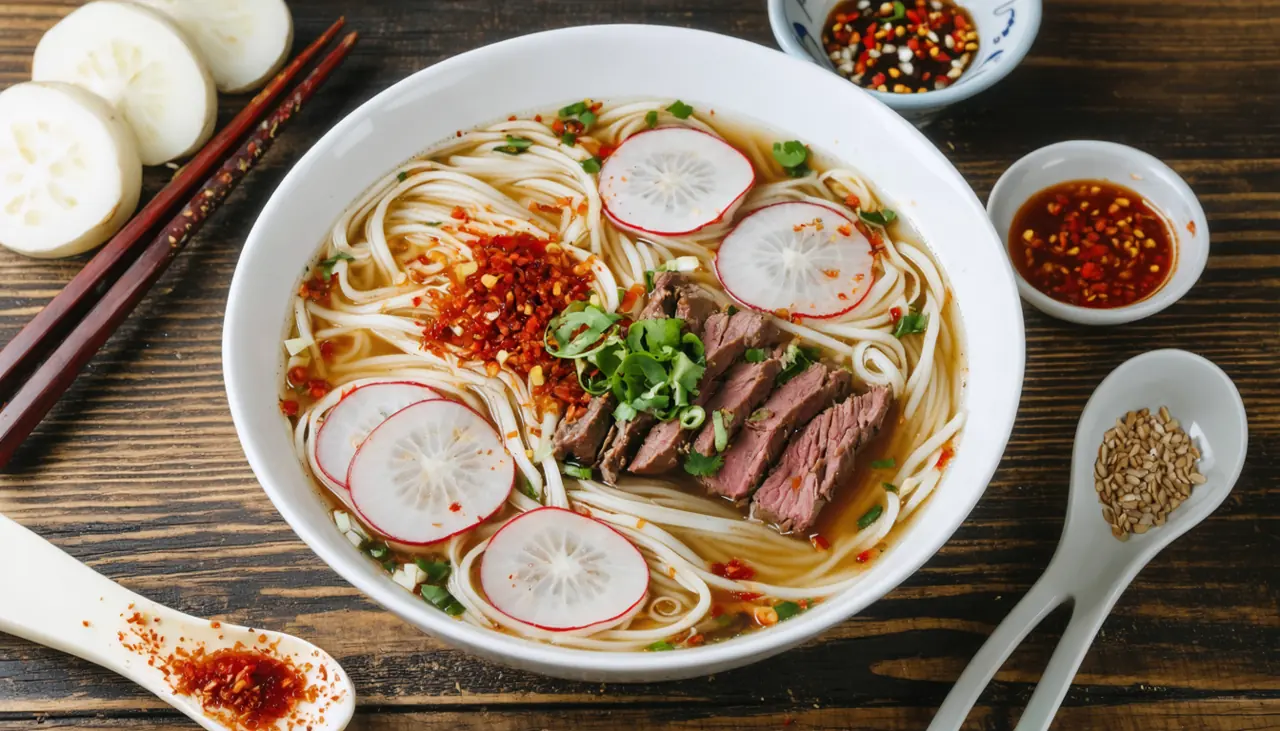
Soupe de nouilles de bœuf de Lanzhou
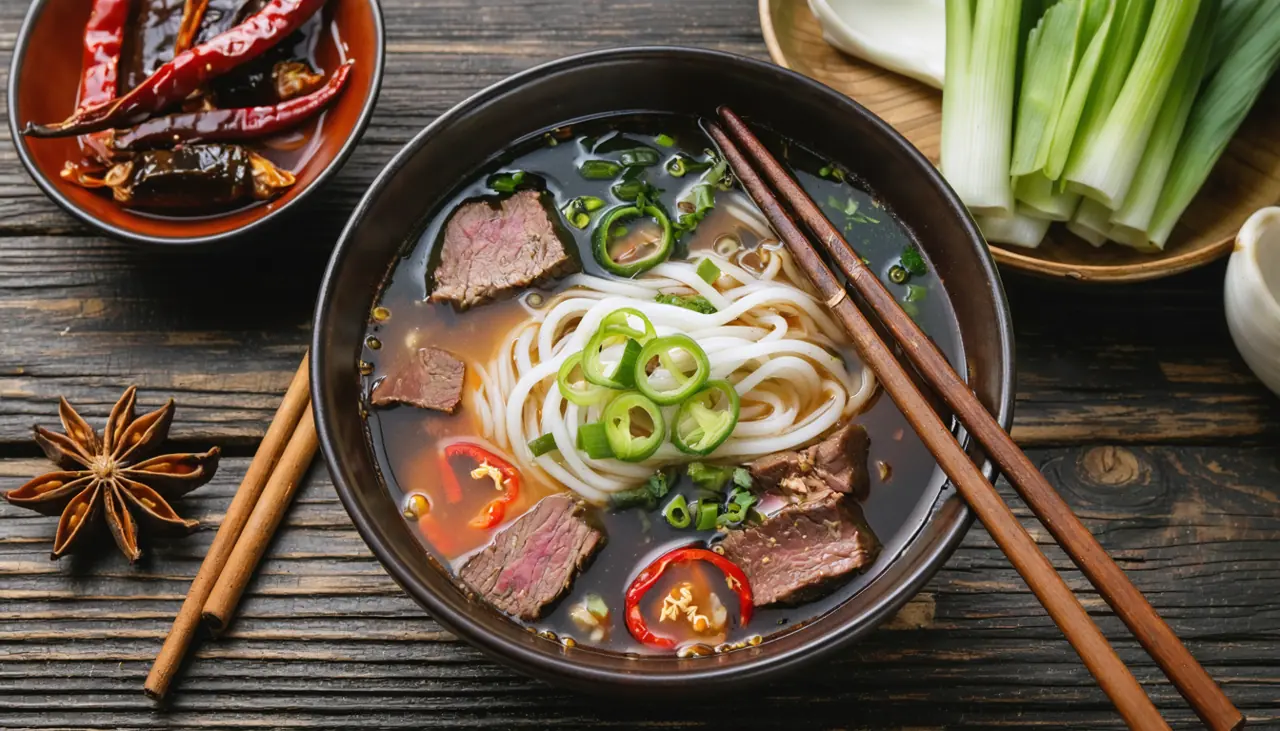
Nouilles de blé étirées à la main dans un bouillon de bœuf clair et épicé, avec huile pimentée, radis et coriandre.
Portions
Ingrédients
Nutrition
Par portion
Étapes
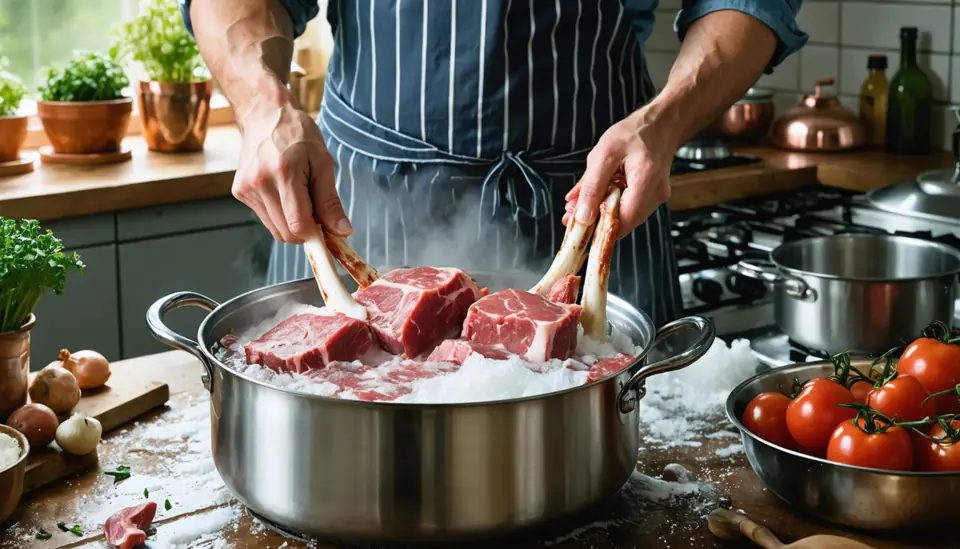
Blanch the beef
Put the beef and bones in a large pot, cover generously with cold water and bring to a boil. Boil hard for 5 minutes so the blood and scum rise to the top, then drain everything in a colander and rinse the meat and bones under cold water until clean. This step is what keeps the final broth clear instead of muddy.
- 1.2 kg beef shank
- 500 g beef bones
✅ C'est prêt quand : the rinsed beef and bones look pale and clean, with no grey foam clinging to them
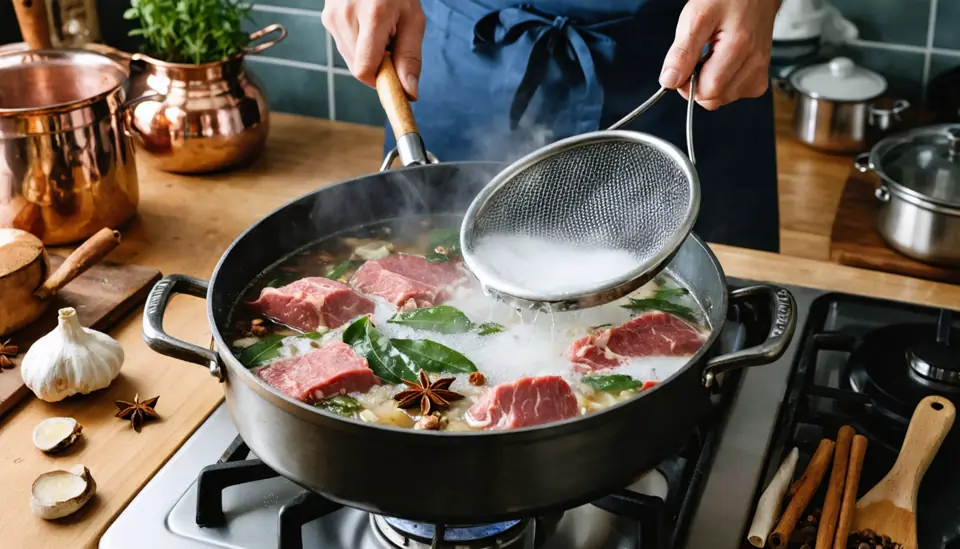
Build the broth
Put the cleaned beef and bones into a clean pot with the 3.5 litres of water, ginger, garlic, spring onion whites, star anise, cinnamon, cardamom, bay leaf, Sichuan peppercorns and fennel seeds. Bring to a boil, then turn the heat down so the broth barely bubbles, around 90–95°C (195–205°F), and simmer uncovered for 2.5–3 hours, skimming off any foam every 20–30 minutes. A gentle simmer, never a hard boil, is the secret to a clear broth.
- 1.2 kg beef shank (from step 1)
- 500 g beef bones (from step 1)
- 3.5 litres water
- 50 g ginger
- 1 whole head of garlic
- 4 spring onion whites
- 2 star anise
- 1 piece cinnamon stick
- 1 black cardamom pod
- 1 bay leaf
- 1 tsp Sichuan peppercorns
- 1 tsp fennel seeds
✅ C'est prêt quand : the beef is fork-tender and the broth smells deeply of beef and warm spice
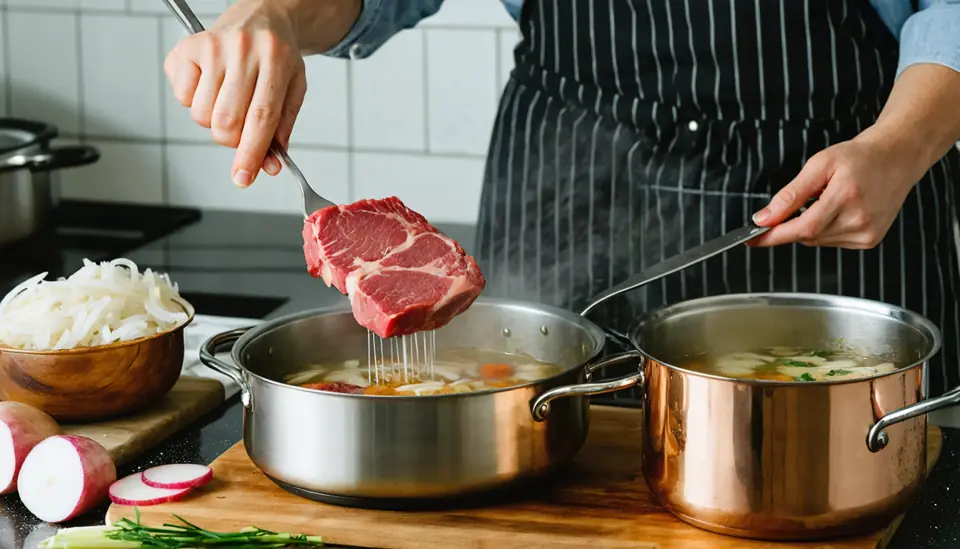
Strain, season and cook the radish
Lift out the beef and set it aside to cool slightly before slicing thinly; it must be fully cooked through, with no pink in the centre. Strain the broth through a sieve, discarding the solids, then return the clear liquid to the pot. Season with the salt and white pepper, add the radish slices and simmer for 8–10 minutes until just tender, then lift the radish out and keep it with the sliced beef.
- 2 tsp salt
- 1/2 tsp ground white pepper
- 200 g daikon radish
✅ C'est prêt quand : the broth tastes well seasoned and the radish is tender but not mushy
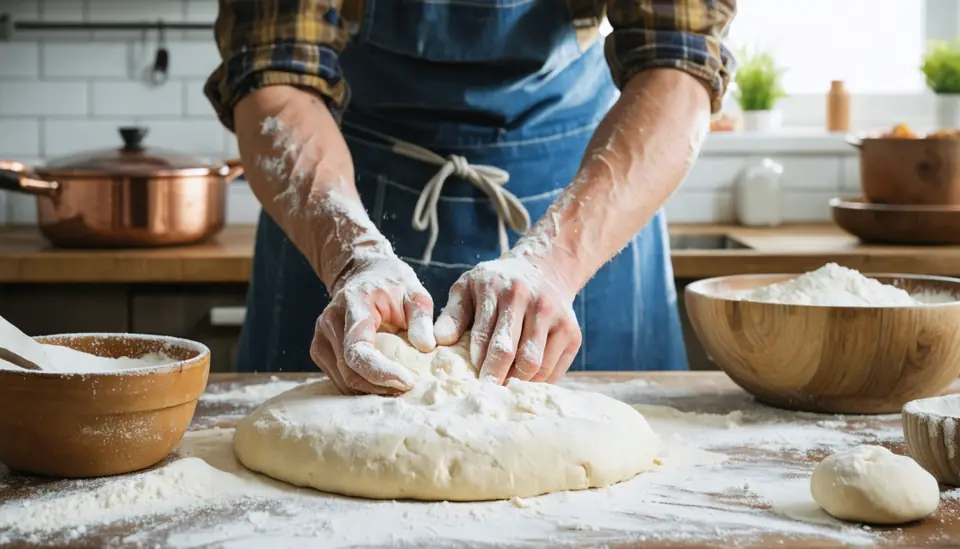
Mix and rest the dough
In a bowl, mix the flour, water and salt into a rough dough, then knead on a lightly floured surface for 8–10 minutes until smooth and elastic. Cover with a damp cloth and let it rest for 40 minutes; this relaxes the gluten so the noodles can stretch instead of snapping back.
- 500 g wheat flour
- 260 ml water
- 5 g salt
✅ C'est prêt quand : the dough feels soft, smooth and slightly springy when poked
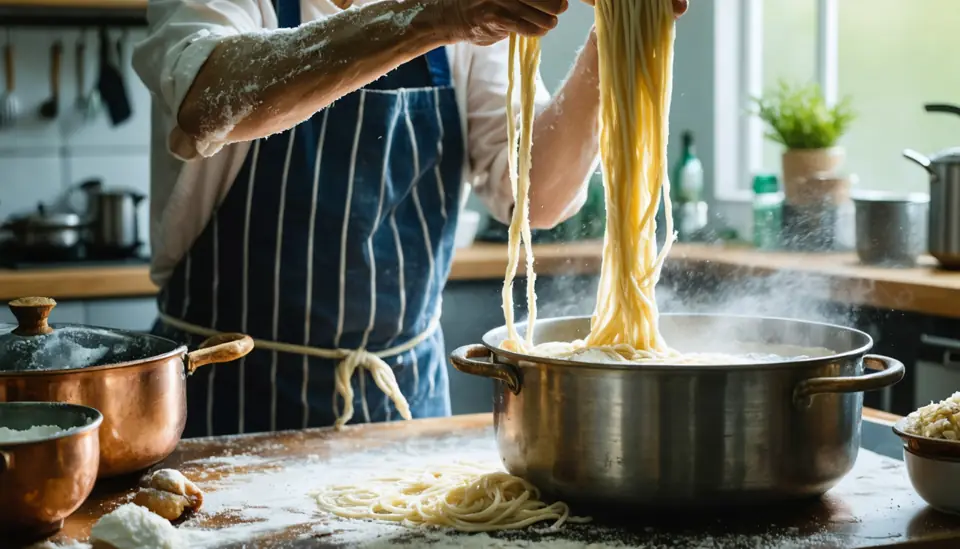
Pull and cook the noodles
Rub the rested dough all over with the oil, then divide it into 4 portions and roll each into a thick rope. Working one at a time, hold both ends and stretch the rope out, folding it in half and stretching again, bouncing it against the counter between pulls, until it becomes one long, even strand (fold and stretch 3–4 times; stop and roll it a bit thicker if it tears). Drop the noodles straight into a large pot of boiling water and cook for 2–3 minutes until they float and taste tender, then lift out with a slotted spoon. If you prefer not to hand-pull, fresh wide wheat noodles from an Asian grocer work well too.
- 2 tbsp oil, for coating the dough
✅ C'est prêt quand : the noodles float to the surface and are tender but still have a slight chew
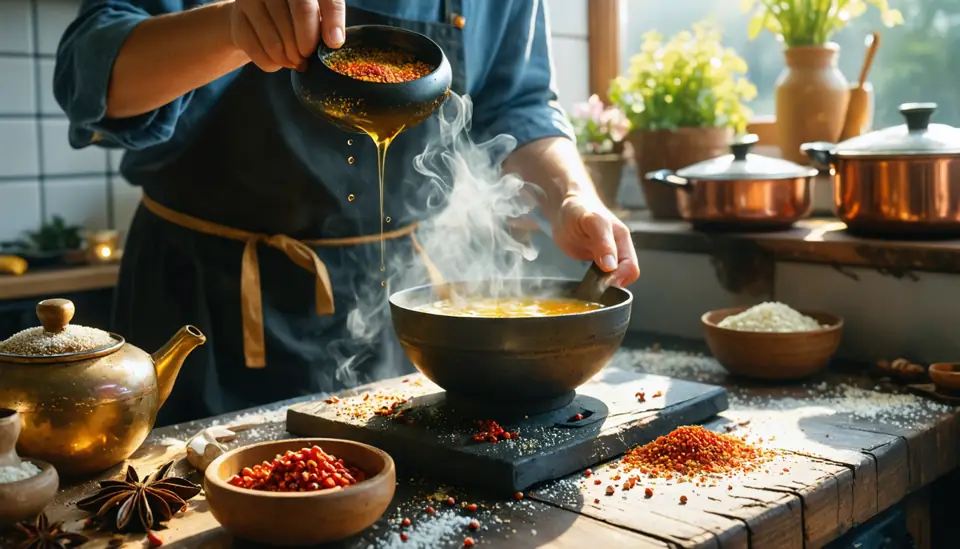
Make the chili oil
Put the chili flakes and sesame seeds in a heatproof bowl. In a small pot, heat the oil with the star anise, cinnamon and Sichuan peppercorns over medium heat until it just starts to shimmer and smoke very lightly, about 170°C (340°F); do not let it smoke heavily or the chili will taste burnt. Fish out the whole spices, then pour the hot oil over the chili flakes in two batches, stirring well; let it sit for 10 minutes so the flavour develops.
- 120 ml oil
- 40 g chili flakes
- 1 star anise
- 1 small piece cinnamon stick
- 1 tsp Sichuan peppercorns
- 1 tsp sesame seeds
✅ C'est prêt quand : the oil turns a deep red and smells toasted and fragrant, not acrid
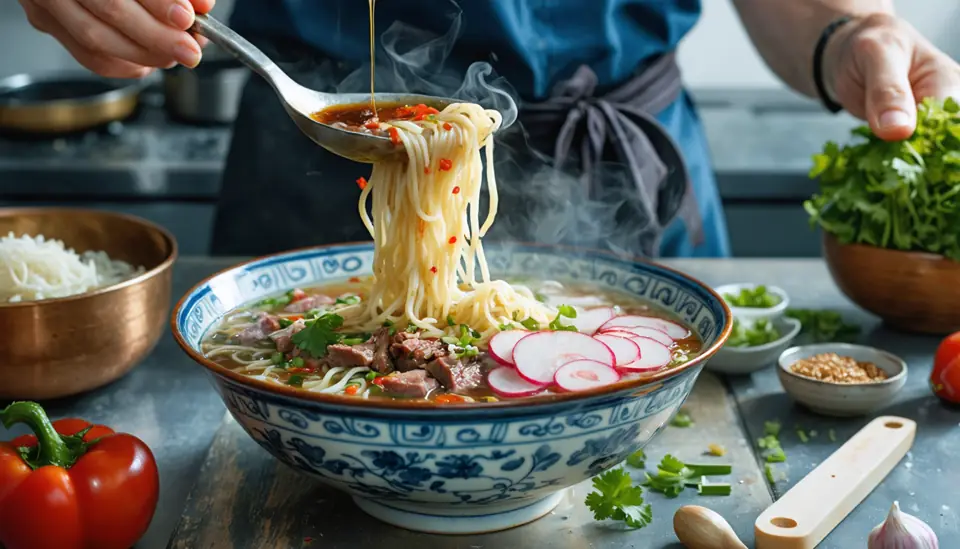
Assemble the bowls
Divide the hot noodles among deep bowls and ladle the hot, well-seasoned broth over them. Top each bowl with sliced beef, the cooked radish, a spoonful of the chili oil, chopped spring onion greens and cilantro, with extra white pepper at the table for anyone who wants it.
- 4 spring onion greens
- 1 handful cilantro
- to taste extra white pepper
Blanch the beef
Put the beef and bones in a large pot, cover generously with cold water and bring to a boil. Boil hard for 5 minutes so the blood and scum rise to the top, then drain everything in a colander and rinse the meat and bones under cold water until clean. This step is what keeps the final broth clear instead of muddy.
- 1.2 kg beef shank
- 500 g beef bones
✅ C'est prêt quand : the rinsed beef and bones look pale and clean, with no grey foam clinging to them
Build the broth
Put the cleaned beef and bones into a clean pot with the 3.5 litres of water, ginger, garlic, spring onion whites, star anise, cinnamon, cardamom, bay leaf, Sichuan peppercorns and fennel seeds. Bring to a boil, then turn the heat down so the broth barely bubbles, around 90–95°C (195–205°F), and simmer uncovered for 2.5–3 hours, skimming off any foam every 20–30 minutes. A gentle simmer, never a hard boil, is the secret to a clear broth.
- 1.2 kg beef shank (from step 1)
- 500 g beef bones (from step 1)
- 3.5 litres water
- 50 g ginger
- 1 whole head of garlic
- 4 spring onion whites
- 2 star anise
- 1 piece cinnamon stick
- 1 black cardamom pod
- 1 bay leaf
- 1 tsp Sichuan peppercorns
- 1 tsp fennel seeds
✅ C'est prêt quand : the beef is fork-tender and the broth smells deeply of beef and warm spice
Strain, season and cook the radish
Lift out the beef and set it aside to cool slightly before slicing thinly; it must be fully cooked through, with no pink in the centre. Strain the broth through a sieve, discarding the solids, then return the clear liquid to the pot. Season with the salt and white pepper, add the radish slices and simmer for 8–10 minutes until just tender, then lift the radish out and keep it with the sliced beef.
- 2 tsp salt
- 1/2 tsp ground white pepper
- 200 g daikon radish
✅ C'est prêt quand : the broth tastes well seasoned and the radish is tender but not mushy
Mix and rest the dough
In a bowl, mix the flour, water and salt into a rough dough, then knead on a lightly floured surface for 8–10 minutes until smooth and elastic. Cover with a damp cloth and let it rest for 40 minutes; this relaxes the gluten so the noodles can stretch instead of snapping back.
- 500 g wheat flour
- 260 ml water
- 5 g salt
✅ C'est prêt quand : the dough feels soft, smooth and slightly springy when poked
Pull and cook the noodles
Rub the rested dough all over with the oil, then divide it into 4 portions and roll each into a thick rope. Working one at a time, hold both ends and stretch the rope out, folding it in half and stretching again, bouncing it against the counter between pulls, until it becomes one long, even strand (fold and stretch 3–4 times; stop and roll it a bit thicker if it tears). Drop the noodles straight into a large pot of boiling water and cook for 2–3 minutes until they float and taste tender, then lift out with a slotted spoon. If you prefer not to hand-pull, fresh wide wheat noodles from an Asian grocer work well too.
- 2 tbsp oil, for coating the dough
✅ C'est prêt quand : the noodles float to the surface and are tender but still have a slight chew
Make the chili oil
Put the chili flakes and sesame seeds in a heatproof bowl. In a small pot, heat the oil with the star anise, cinnamon and Sichuan peppercorns over medium heat until it just starts to shimmer and smoke very lightly, about 170°C (340°F); do not let it smoke heavily or the chili will taste burnt. Fish out the whole spices, then pour the hot oil over the chili flakes in two batches, stirring well; let it sit for 10 minutes so the flavour develops.
- 120 ml oil
- 40 g chili flakes
- 1 star anise
- 1 small piece cinnamon stick
- 1 tsp Sichuan peppercorns
- 1 tsp sesame seeds
✅ C'est prêt quand : the oil turns a deep red and smells toasted and fragrant, not acrid
Assemble the bowls
Divide the hot noodles among deep bowls and ladle the hot, well-seasoned broth over them. Top each bowl with sliced beef, the cooked radish, a spoonful of the chili oil, chopped spring onion greens and cilantro, with extra white pepper at the table for anyone who wants it.
- 4 spring onion greens
- 1 handful cilantro
- to taste extra white pepper
The Story Behind the Dish
Lanzhou sits at a historic crossroads where Han Chinese noodle-making met the beef and lamb cooking traditions of Hui Muslim communities along the old Silk Road trade routes. Over time, local cooks refined a formula of hand-pulled wheat noodles, clear spiced beef broth, radish and chili oil that became the city's signature breakfast.
The soup spread from Lanzhou's street stalls to cities across China and eventually abroad, carried by Hui restaurateurs who kept the method close to its roots. Today it is one of China's most widely eaten noodle dishes, with countless small shops still following the same basic steps their founders learned generations ago.
⭐ Why It's Famous
It is famous for its five classic qualities: a clear broth, a rich beef flavour, a bright red chili oil, soft green herbs, and noodles pulled by hand to order in a huge range of widths.
💡 Fun Fact
Many Lanzhou noodle shops still let customers choose the exact width and shape of their hand-pulled noodles, from flat ribbons to thin round strands, prepared fresh for each bowl.
Lanzhou, the capital of Gansu province in northwest China, along the upper Yellow River.
36.06°N, 103.83°E
Recettes similaires
Comments (0)
No comments yet. Be the first to share your thoughts!