Mandu coréens
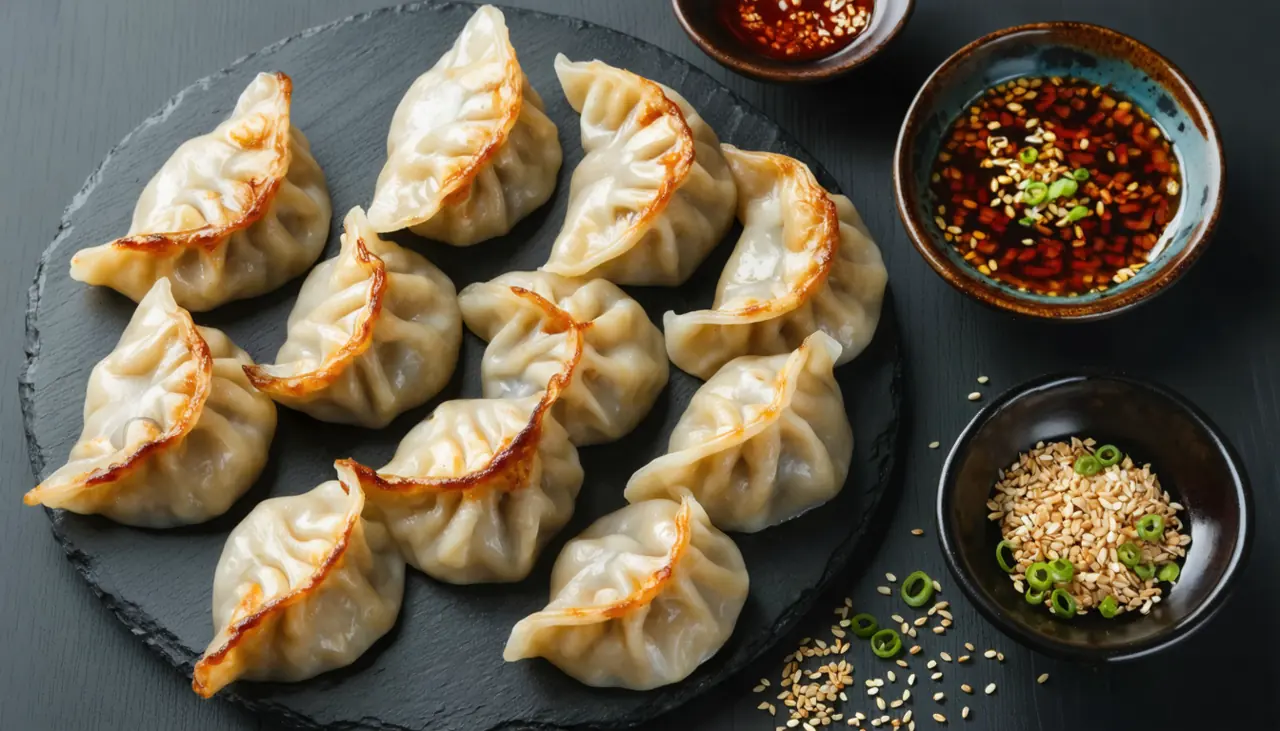
Raviolis coréens au porc, kimchi et légumes, poêlés jusqu'à être bien dorés et croustillants.
Portions
Ingrédients
Nutrition
Par portion
Étapes

Prepare the vegetables
Squeeze the kimchi firmly with your hands over the sink to press out most of its juice, then chop it finely — wet kimchi will make the filling watery and tear the wrappers. Blanch the bean sprouts in boiling water for 30 seconds, drain well, squeeze dry and chop. Finely chop the garlic chives and onion.
- 200 g kimchi
- 100 g mung bean sprouts
- 50 g garlic chives
- 1 small onion
- 3 cloves garlic
- 1 tsp ginger
✅ C'est prêt quand : the kimchi feels mostly dry and everything is finely and evenly chopped

Mix the filling
Wrap the tofu in a clean cloth and squeeze out as much water as you can, then crumble it into a large bowl. Add the pork, the prepared kimchi, bean sprouts, chives, onion, garlic and ginger, soy sauce, sesame oil, sugar, pepper, egg and starch. Mix with your hands for a minute or two until everything is well combined and slightly sticky — this working of the mix is what keeps the dumplings juicy instead of crumbly.
- 300 g ground pork
- 150 g tofu
- 2 tbsp soy sauce
- 1 tbsp toasted sesame oil
- 1 tsp sugar
- 1/2 tsp black pepper
- 1 egg
- 1 tbsp potato starch
✅ C'est prêt quand : the mixture holds together in a sticky mass when pressed with a spoon

Fill and fold
Lay a wrapper flat and spoon about 1 tablespoon of filling into the centre — don't overfill or it will burst. Wet half the edge with a fingertip dipped in water, fold the wrapper in half to make a half-moon, and press the edges together from the centre outward, pushing out any trapped air as you go. Pleat the sealed edge in small folds for a sturdy seal, or simply crimp with a fork; set the finished dumpling on its pleated edge so it stands up slightly, which helps it fry evenly later.
- 40 dumpling wrappers
- a little water, for sealing
✅ C'est prêt quand : the edges are sealed tight with no air pockets and no filling is peeking out

Pan-fry and steam
Heat the vegetable oil in a nonstick pan or well-seasoned skillet over medium heat. Arrange the dumplings in a single layer and fry for 2 minutes, until the bottoms are golden. Pour in the water, cover immediately, and steam over medium-low heat for 6 minutes so the filling cooks through. Uncover and fry for 1–2 minutes more, until the water has evaporated and the bottoms are deep golden and crisp again.
- 2 tbsp vegetable oil
- 120 ml water
✅ C'est prêt quand : the wrappers look slightly translucent, the pork is cooked through with no pink showing, and the bottoms are crisp and golden

Make the dipping sauce
While the dumplings cook, stir together the soy sauce, rice vinegar, sesame oil, sugar, scallion, sesame seeds and chili flakes in a small bowl.
- 3 tbsp soy sauce
- 1 tbsp rice vinegar
- 1 tsp toasted sesame oil
- 1/2 tsp sugar
- 1 tbsp scallion
- 1 tsp sesame seeds
- 1 pinch chili flakes

Serve
Transfer the mandu to a plate, crisp side up, and serve hot with the dipping sauce on the side. Any extra uncooked dumplings freeze beautifully on a tray before being bagged, ready to cook straight from frozen.
Prepare the vegetables
Squeeze the kimchi firmly with your hands over the sink to press out most of its juice, then chop it finely — wet kimchi will make the filling watery and tear the wrappers. Blanch the bean sprouts in boiling water for 30 seconds, drain well, squeeze dry and chop. Finely chop the garlic chives and onion.
- 200 g kimchi
- 100 g mung bean sprouts
- 50 g garlic chives
- 1 small onion
- 3 cloves garlic
- 1 tsp ginger
✅ C'est prêt quand : the kimchi feels mostly dry and everything is finely and evenly chopped
Mix the filling
Wrap the tofu in a clean cloth and squeeze out as much water as you can, then crumble it into a large bowl. Add the pork, the prepared kimchi, bean sprouts, chives, onion, garlic and ginger, soy sauce, sesame oil, sugar, pepper, egg and starch. Mix with your hands for a minute or two until everything is well combined and slightly sticky — this working of the mix is what keeps the dumplings juicy instead of crumbly.
- 300 g ground pork
- 150 g tofu
- 2 tbsp soy sauce
- 1 tbsp toasted sesame oil
- 1 tsp sugar
- 1/2 tsp black pepper
- 1 egg
- 1 tbsp potato starch
✅ C'est prêt quand : the mixture holds together in a sticky mass when pressed with a spoon
Fill and fold
Lay a wrapper flat and spoon about 1 tablespoon of filling into the centre — don't overfill or it will burst. Wet half the edge with a fingertip dipped in water, fold the wrapper in half to make a half-moon, and press the edges together from the centre outward, pushing out any trapped air as you go. Pleat the sealed edge in small folds for a sturdy seal, or simply crimp with a fork; set the finished dumpling on its pleated edge so it stands up slightly, which helps it fry evenly later.
- 40 dumpling wrappers
- a little water, for sealing
✅ C'est prêt quand : the edges are sealed tight with no air pockets and no filling is peeking out
Pan-fry and steam
Heat the vegetable oil in a nonstick pan or well-seasoned skillet over medium heat. Arrange the dumplings in a single layer and fry for 2 minutes, until the bottoms are golden. Pour in the water, cover immediately, and steam over medium-low heat for 6 minutes so the filling cooks through. Uncover and fry for 1–2 minutes more, until the water has evaporated and the bottoms are deep golden and crisp again.
- 2 tbsp vegetable oil
- 120 ml water
✅ C'est prêt quand : the wrappers look slightly translucent, the pork is cooked through with no pink showing, and the bottoms are crisp and golden
Make the dipping sauce
While the dumplings cook, stir together the soy sauce, rice vinegar, sesame oil, sugar, scallion, sesame seeds and chili flakes in a small bowl.
- 3 tbsp soy sauce
- 1 tbsp rice vinegar
- 1 tsp toasted sesame oil
- 1/2 tsp sugar
- 1 tbsp scallion
- 1 tsp sesame seeds
- 1 pinch chili flakes
Serve
Transfer the mandu to a plate, crisp side up, and serve hot with the dipping sauce on the side. Any extra uncooked dumplings freeze beautifully on a tray before being bagged, ready to cook straight from frozen.
The Story Behind the Dish
Dumplings travelled to the Korean peninsula long ago along trade and migration routes from Central Asia and China, and Koreans made the dish their own by filling it with local staples: pork, tofu, bean sprouts and, once it became widespread, the tangy fermented cabbage known as kimchi. Northern regions, where wheat flour was more available, became especially known for their mandu, and refugees from the north carried their family recipes south after the Korean War, shaping how mandu is made across the country today.
Mandu is tied closely to Lunar New Year, when it's often added to tteokguk (rice cake soup) to make mandu-guk, but it is just as at home as an everyday snack, a lunchbox filler or street food sold hot from a steamer.
⭐ Why It's Famous
Mandu is loved for the contrast inside one bite: rich pork, bright sour kimchi, crunchy bean sprouts and soft tofu, wrapped in a thin skin that turns crisp and golden in the pan.
💡 Fun Fact
Korean home cooks traditionally make mandu in big batches with family or neighbours, folding dozens at a time to freeze for later — a tradition still common before holidays.
Korea, nationwide
37.57°N, 126.98°E
Recettes similaires
Comments (0)
No comments yet. Be the first to share your thoughts!