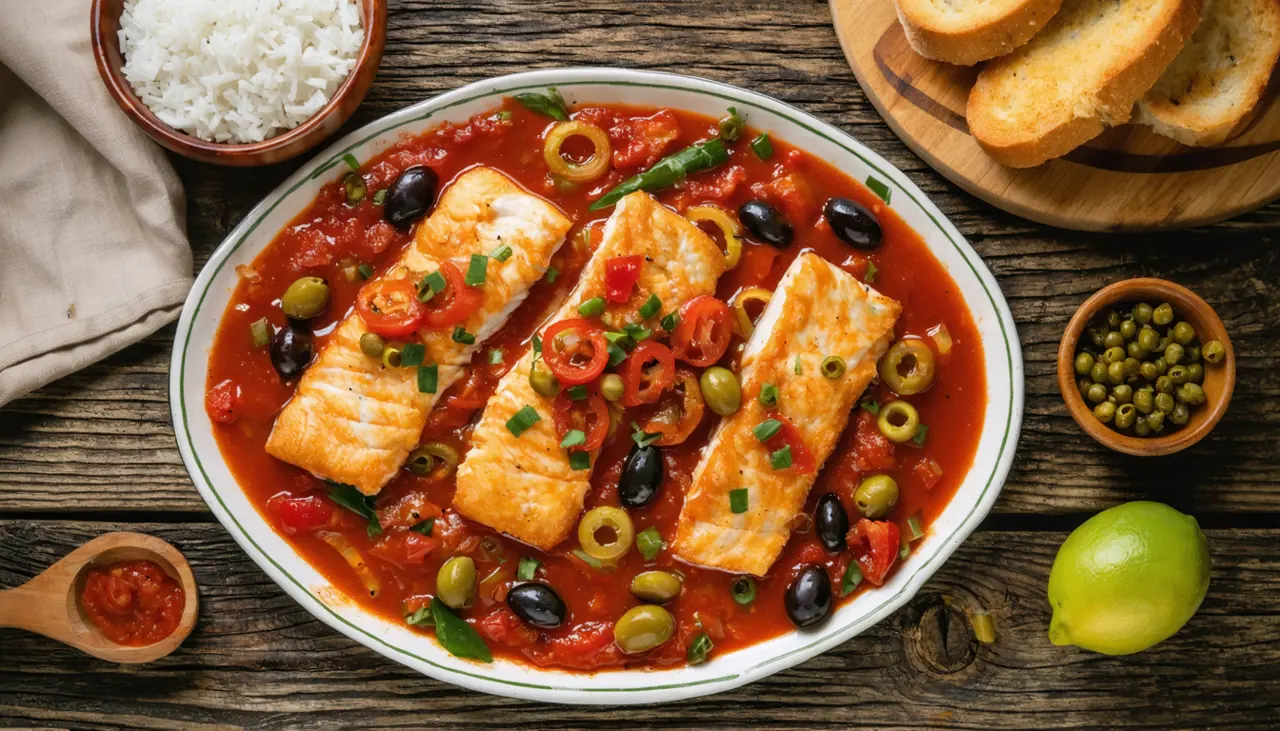
Poisson en sauce créole (Mojo Isleño)
Poisson doré nappé d'une sauce créole portoricaine aux oignons, poivrons, tomate, olives et câpres.
Portions
Ingrédients
Nutrition
Par portion
Étapes

Marinate the fish
Pat the fish fillets dry with paper towels. Rub them with lime juice, salt and pepper and let sit at room temperature for 15 minutes. This firms up the flesh a little and seasons it all the way through, not just on the surface.
- 4 fillets fish
- 1 lime, juiced
- 1 tsp salt
- 1/2 tsp black pepper
✅ C'est prêt quand : the fish feels slightly firmer and smells bright with lime

Fry the fish
Dust the fillets lightly in flour, shaking off any excess. Heat the vegetable oil in a wide skillet over medium-high heat until it shimmers, then fry the fish 3–4 minutes per side until golden outside and just cooked through (63°C (145°F) at the thickest point). Lift onto a plate lined with paper towel. For a steamed version, skip the flour and oil and steam the fish 8–10 minutes until it turns opaque and flakes easily.
- 60 g flour
- 120 ml vegetable oil
- 4 fillets fish (from step 1)
✅ C'est prêt quand : the crust is golden brown and the fish flakes easily with a fork

Build the sofrito
Pour off most of the frying oil, leaving just a thin film, or wipe the skillet and add fresh olive oil. Heat over medium heat, add the onion and both peppers, and cook, stirring now and then, until soft.
- 2 tbsp olive oil
- 1 large onion
- 1 green bell pepper
- 1 red bell pepper
✅ C'est prêt quand : the onions turn translucent and the peppers soften but keep a little bite

Simmer the tomato base
Stir in the garlic and cook for about 30 seconds until fragrant. Add the tomatoes, bay leaves and oregano, and cook, mashing the tomatoes a little with the spoon, until they break down into a light sauce.
- 4 cloves garlic
- 2 medium tomatoes
- 2 bay leaves
- 1 tsp dried oregano
✅ C'est prêt quand : the tomatoes collapse into a thick, fragrant sauce

Add olives and vinegar
Stir in the olives, capers, vinegar, water (or stock) and a pinch of salt. Simmer uncovered over low heat so the flavors blend into the mojo, the briny, tangy Creole sauce this dish is named for.
- 100 g olives
- 2 tbsp capers
- 60 ml vinegar
- 120 ml water or stock
✅ C'est prêt quand : the sauce turns a deep red-gold and smells briny and tangy

Finish and serve
Nestle the fried fish into the sauce and spoon some sauce over the top. Simmer gently for 3–4 minutes just to heat the fish through and let it soak up the flavors, without breaking it apart. Scatter with cilantro and serve hot.
- 4 fillets fish (from step 2)
- 2 tbsp chopped cilantro
✅ C'est prêt quand : the fish is glossy with sauce and heated through
Marinate the fish
Pat the fish fillets dry with paper towels. Rub them with lime juice, salt and pepper and let sit at room temperature for 15 minutes. This firms up the flesh a little and seasons it all the way through, not just on the surface.
- 4 fillets fish
- 1 lime, juiced
- 1 tsp salt
- 1/2 tsp black pepper
✅ C'est prêt quand : the fish feels slightly firmer and smells bright with lime
Fry the fish
Dust the fillets lightly in flour, shaking off any excess. Heat the vegetable oil in a wide skillet over medium-high heat until it shimmers, then fry the fish 3–4 minutes per side until golden outside and just cooked through (63°C (145°F) at the thickest point). Lift onto a plate lined with paper towel. For a steamed version, skip the flour and oil and steam the fish 8–10 minutes until it turns opaque and flakes easily.
- 60 g flour
- 120 ml vegetable oil
- 4 fillets fish (from step 1)
✅ C'est prêt quand : the crust is golden brown and the fish flakes easily with a fork
Build the sofrito
Pour off most of the frying oil, leaving just a thin film, or wipe the skillet and add fresh olive oil. Heat over medium heat, add the onion and both peppers, and cook, stirring now and then, until soft.
- 2 tbsp olive oil
- 1 large onion
- 1 green bell pepper
- 1 red bell pepper
✅ C'est prêt quand : the onions turn translucent and the peppers soften but keep a little bite
Simmer the tomato base
Stir in the garlic and cook for about 30 seconds until fragrant. Add the tomatoes, bay leaves and oregano, and cook, mashing the tomatoes a little with the spoon, until they break down into a light sauce.
- 4 cloves garlic
- 2 medium tomatoes
- 2 bay leaves
- 1 tsp dried oregano
✅ C'est prêt quand : the tomatoes collapse into a thick, fragrant sauce
Add olives and vinegar
Stir in the olives, capers, vinegar, water (or stock) and a pinch of salt. Simmer uncovered over low heat so the flavors blend into the mojo, the briny, tangy Creole sauce this dish is named for.
- 100 g olives
- 2 tbsp capers
- 60 ml vinegar
- 120 ml water or stock
✅ C'est prêt quand : the sauce turns a deep red-gold and smells briny and tangy
Finish and serve
Nestle the fried fish into the sauce and spoon some sauce over the top. Simmer gently for 3–4 minutes just to heat the fish through and let it soak up the flavors, without breaking it apart. Scatter with cilantro and serve hot.
- 4 fillets fish (from step 2)
- 2 tbsp chopped cilantro
✅ C'est prêt quand : the fish is glossy with sauce and heated through
The Story Behind the Dish
Mojo-style sauces of oil, vinegar and aromatics travelled to the Caribbean with Spanish and Canary Island settlers, who had their own tradition of mojos for fish and meat. In Puerto Rico, coastal cooks adapted the idea with local peppers, tomatoes and the Mediterranean olives and capers that arrived through trade, pouring the sauce generously over the day's fresh catch.
The dish became especially linked to Lent and Good Friday, when Catholic households avoided meat and turned to fish, and mojo isleño, with its festive color and briny punch, became a centerpiece worth gathering around.
⭐ Why It's Famous
It turns a simple fried fish into something vibrant and savory, with olives and capers giving every bite a salty, tangy lift that Puerto Ricans consider pure comfort food.
💡 Fun Fact
Because of the Catholic custom of eating fish on Fridays and during Lent, mojo isleño sees its biggest surge in Puerto Rican homes and restaurants around Easter time.
Coastal Puerto Rico
18.22°N, -66.59°W
Recettes similaires
Comments (0)
No comments yet. Be the first to share your thoughts!