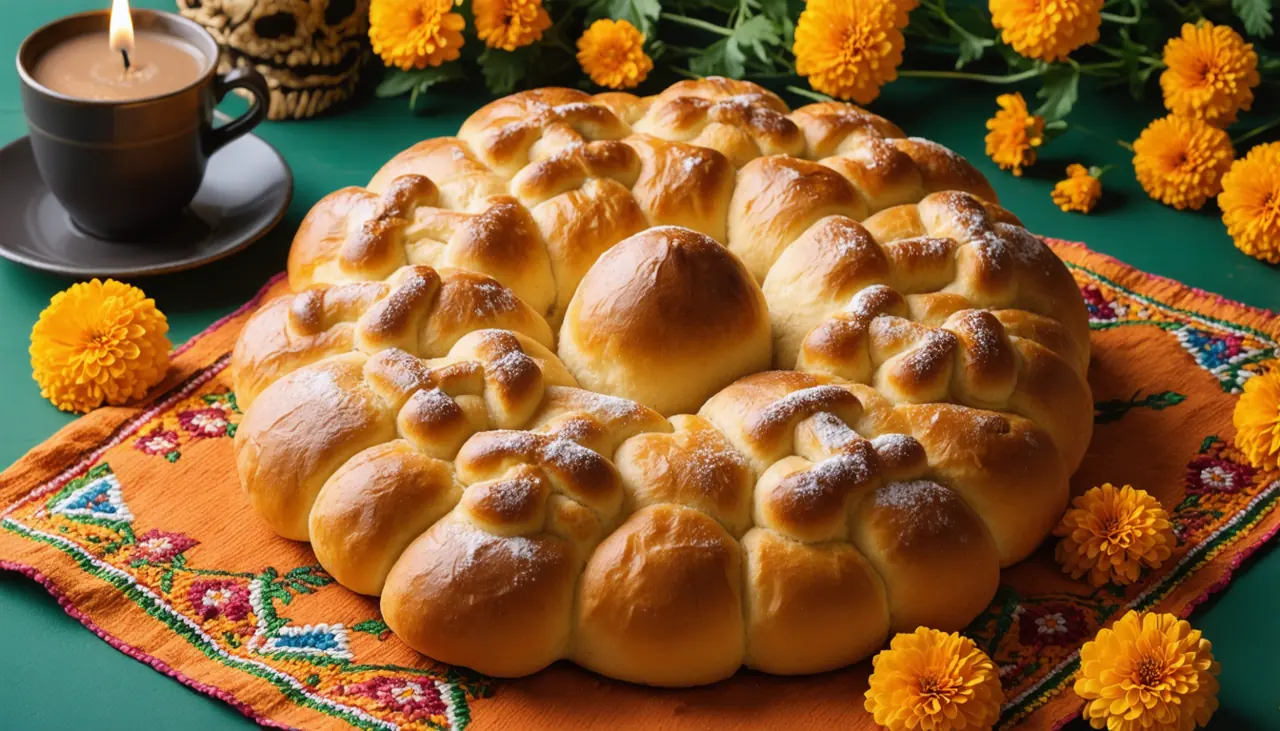
Pain des morts mexicain
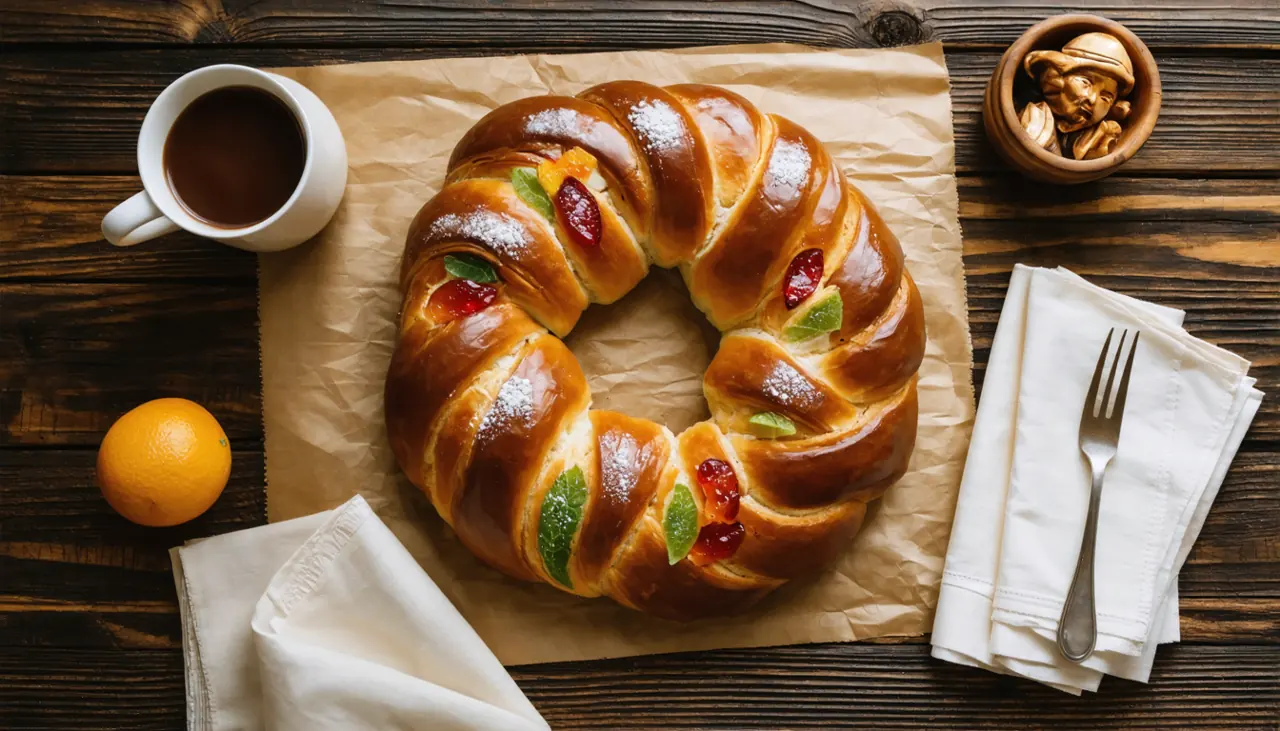
Brioche moelleuse à la fleur d'oranger, décorée de motifs d'os, pour le Jour des Morts.
Portions
Ingrédients
Nutrition
Par portion
Étapes
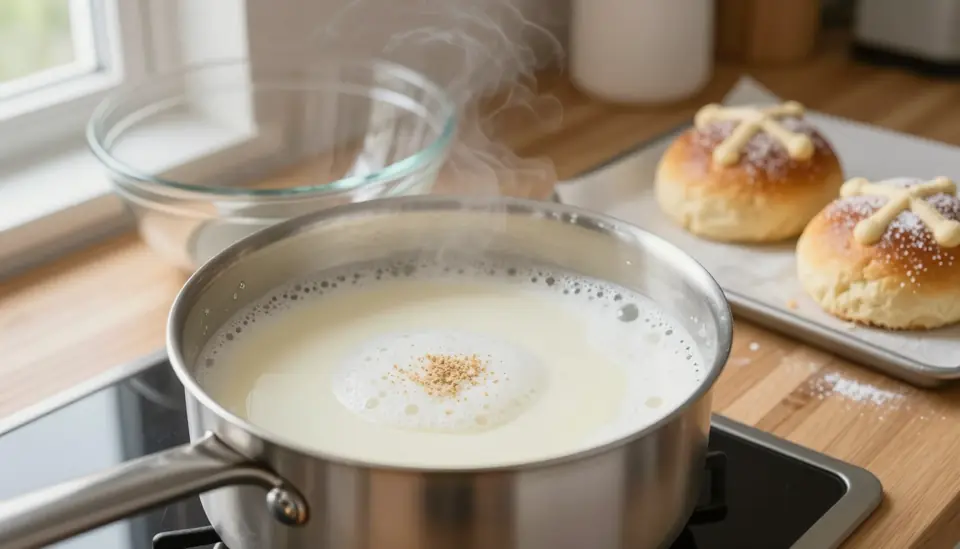
Activate the yeast
Warm the milk in a small saucepan over low heat, or in 20-second microwave bursts, until just lukewarm, about body temperature on your finger (not hot, or it will kill the yeast). Stir in the yeast and a pinch of sugar, then let it sit until foamy on top, about 10 minutes.
- 120 ml warm milk
- 7 g yeast
- a pinch (about 1 tsp) sugar
✅ C'est prêt quand : a foamy, bubbly layer forms on top
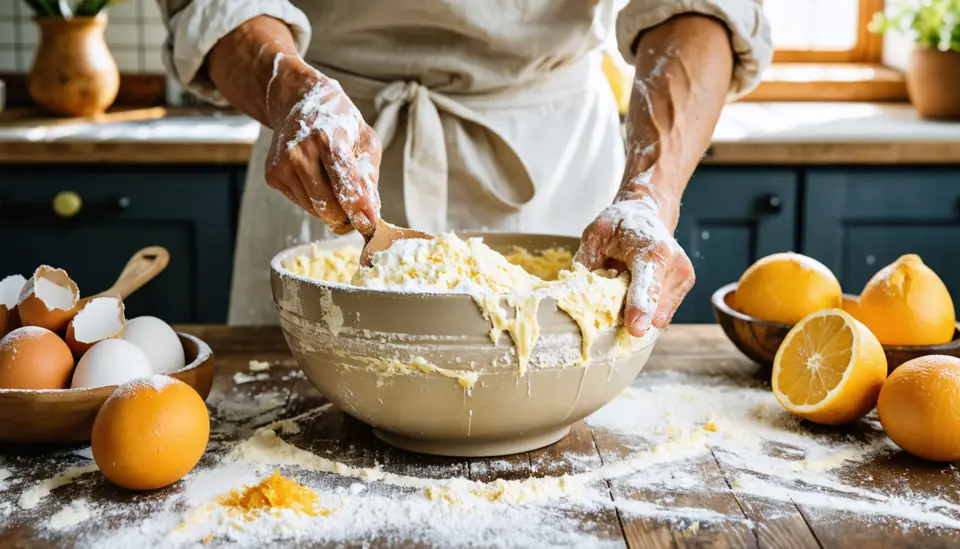
Mix the dough
In a large bowl, combine the flour, remaining sugar, salt and orange zest. Add the eggs, orange blossom water, vanilla and the foamy yeast mixture, then mix with your hand or a wooden spoon until a rough, sticky dough forms.
- 500 g flour
- about 100 g (remaining) sugar
- 1 tsp salt
- zest of 2 oranges orange zest
- 3 eggs
- 2 tbsp orange blossom water
- 1 tsp vanilla extract
- all yeast mixture from step 1
✅ C'est prêt quand : a rough, sticky dough comes together
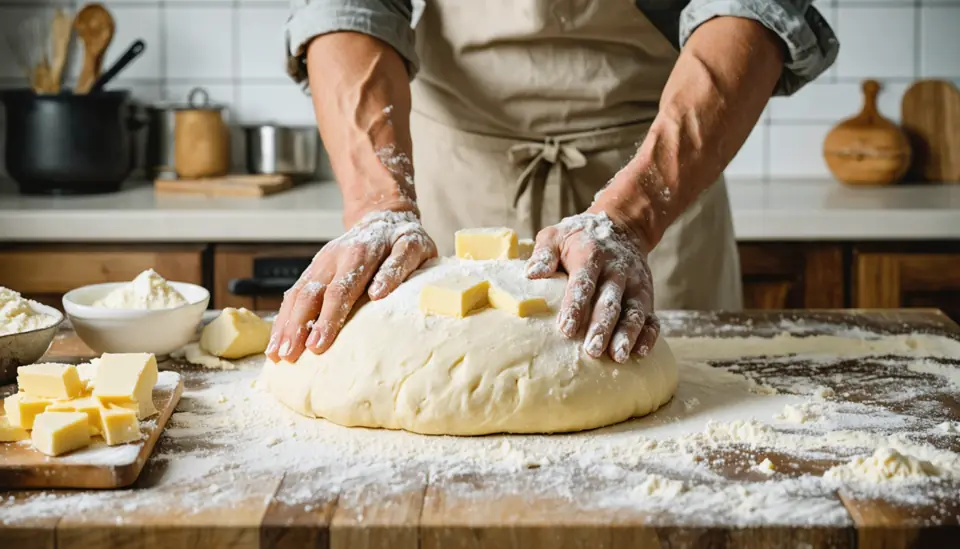
Knead in the butter
Turn the dough onto a lightly floured counter and knead in the softened butter a little at a time. Keep kneading for 10 to 15 minutes: it looks greasy at first, then turns smooth, shiny and elastic; a small piece stretched between your fingers should let light through without tearing.
- 100 g softened butter
- a few tbsp, for dusting flour
✅ C'est prêt quand : dough is smooth, shiny and stretches thin without tearing
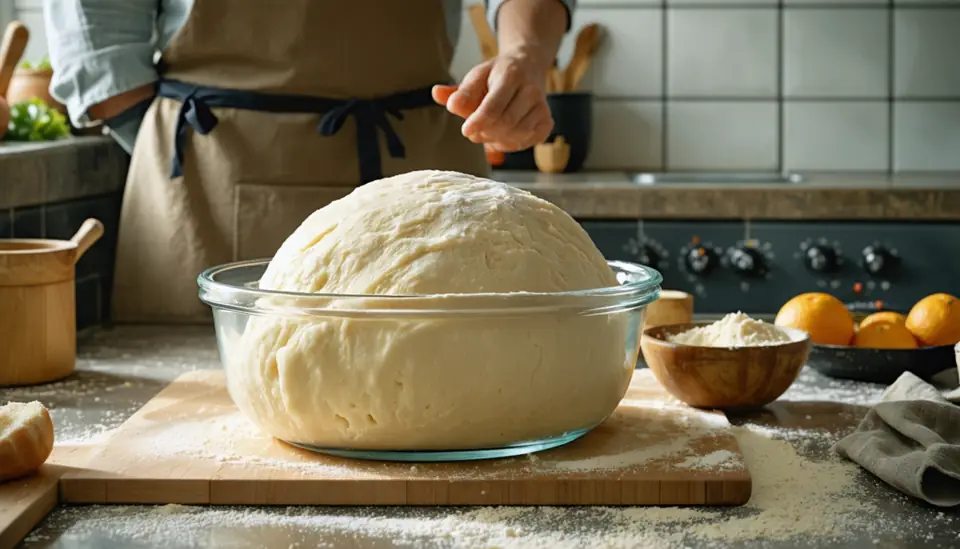
First rise
Shape the dough into a ball, place it in a bowl greased with a little butter or oil, and cover with a damp cloth or plastic wrap. Let it rise in a warm spot until doubled in size, 1.5 to 2 hours; it will take longer in a cool kitchen, so go by size, not the clock.
- a little, for greasing butter or oil
- all kneaded dough from step 3
✅ C'est prêt quand : dough has doubled in size
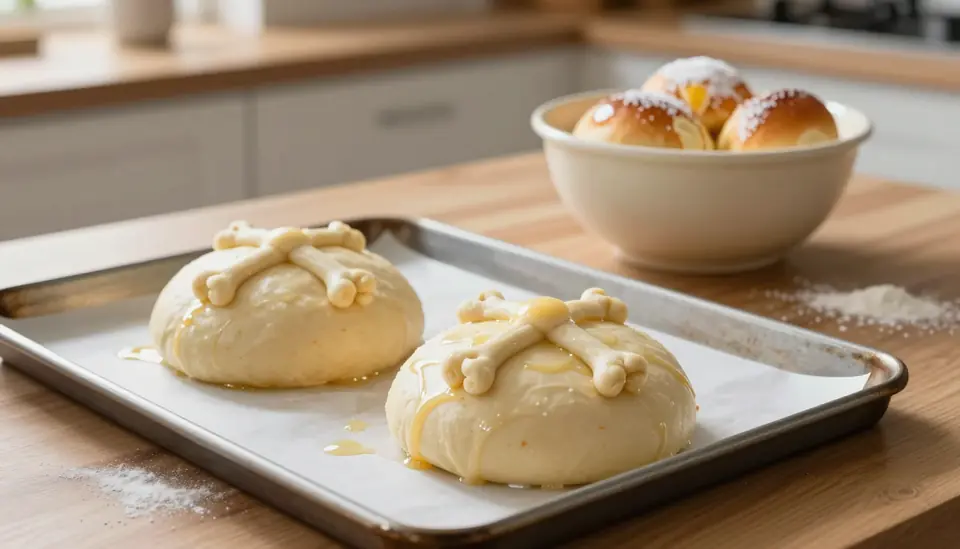
Shape the loaves
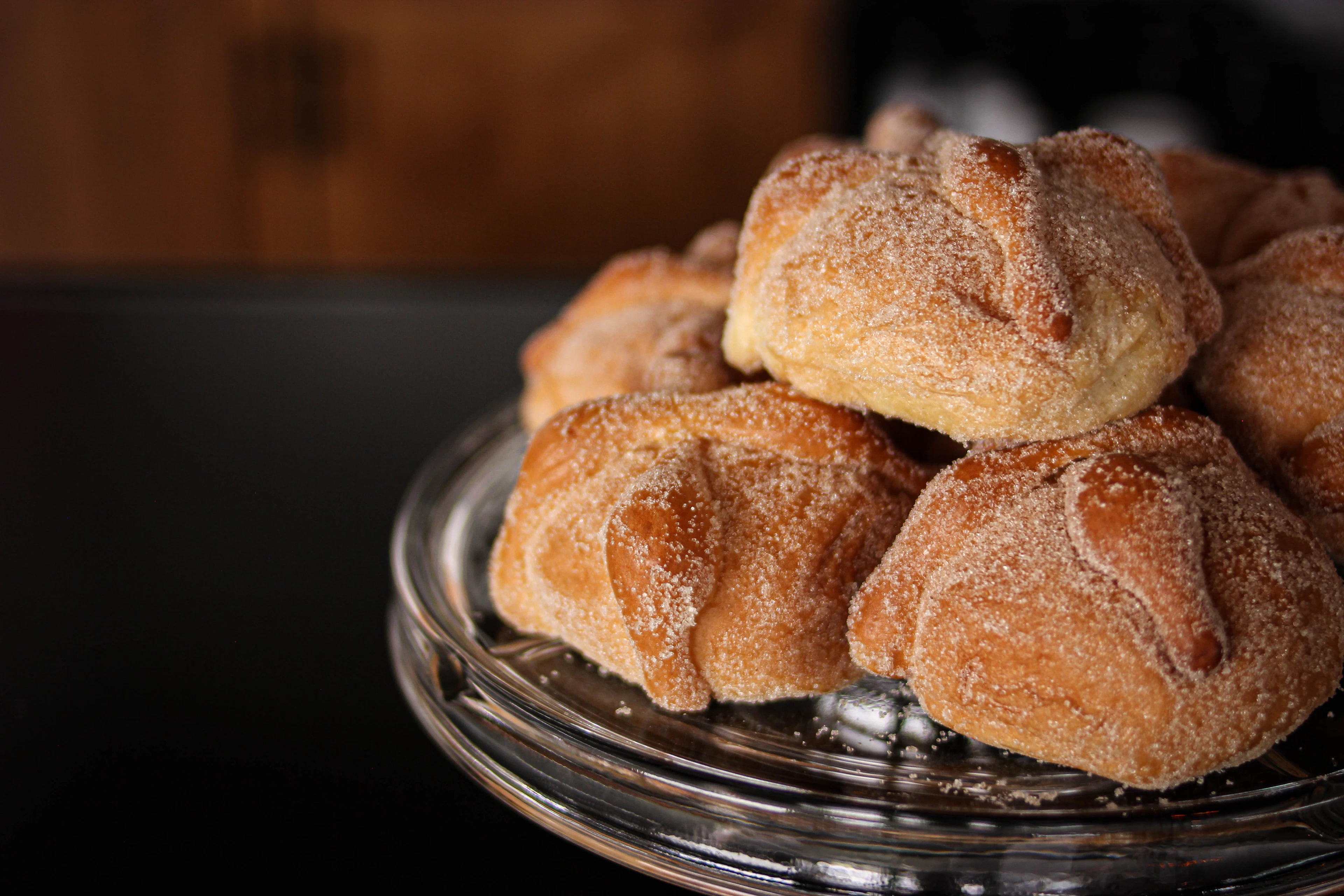
Punch down the dough and set aside one quarter for decoration. Divide the rest into 2 balls and shape each into a smooth, slightly domed loaf on a lined baking tray; from the reserved dough, roll thin ropes to form 4 bones per loaf (with small bumps for knuckles) and a small ball for the top. Brush each loaf lightly with beaten egg and arrange the bones in a cross with the ball in the centre.
- all risen dough from step 4
- a few tsp, for brushing beaten egg
✅ C'est prêt quand : loaves are shaped with a cross of bones and a ball on top
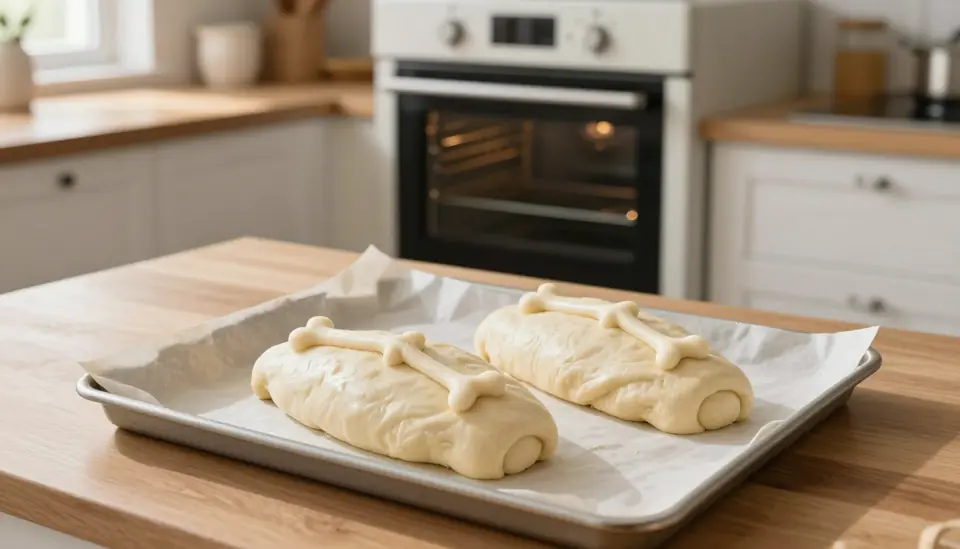
Second rise
Cover the shaped loaves loosely with a cloth and let them rise again until noticeably puffy, 45 minutes to 1 hour. Meanwhile, heat the oven to 180°C (350°F).
- all shaped loaves from step 5
✅ C'est prêt quand : loaves look puffy and visibly larger
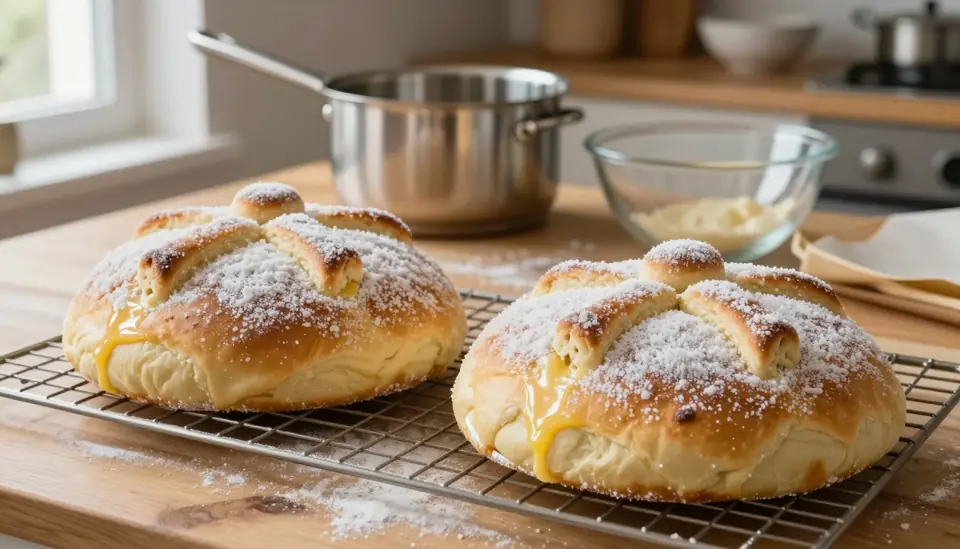
Bake and finish
Brush the loaves all over with the remaining beaten egg, avoiding pooling in the grooves, then bake for 25 to 30 minutes until deep golden and they sound hollow when tapped on the base. While still warm, brush generously with the melted butter and roll in the remaining sugar to coat completely, then cool slightly before slicing.
- remaining beaten egg beaten egg
- 50 g, melted butter
- 80 g sugar, for coating
- all risen loaves from step 6
✅ C'est prêt quand : deep golden crust that sounds hollow when tapped
Activate the yeast
Warm the milk in a small saucepan over low heat, or in 20-second microwave bursts, until just lukewarm, about body temperature on your finger (not hot, or it will kill the yeast). Stir in the yeast and a pinch of sugar, then let it sit until foamy on top, about 10 minutes.
- 120 ml warm milk
- 7 g yeast
- a pinch (about 1 tsp) sugar
✅ C'est prêt quand : a foamy, bubbly layer forms on top
Mix the dough
In a large bowl, combine the flour, remaining sugar, salt and orange zest. Add the eggs, orange blossom water, vanilla and the foamy yeast mixture, then mix with your hand or a wooden spoon until a rough, sticky dough forms.
- 500 g flour
- about 100 g (remaining) sugar
- 1 tsp salt
- zest of 2 oranges orange zest
- 3 eggs
- 2 tbsp orange blossom water
- 1 tsp vanilla extract
- all yeast mixture from step 1
✅ C'est prêt quand : a rough, sticky dough comes together
Knead in the butter
Turn the dough onto a lightly floured counter and knead in the softened butter a little at a time. Keep kneading for 10 to 15 minutes: it looks greasy at first, then turns smooth, shiny and elastic; a small piece stretched between your fingers should let light through without tearing.
- 100 g softened butter
- a few tbsp, for dusting flour
✅ C'est prêt quand : dough is smooth, shiny and stretches thin without tearing
First rise
Shape the dough into a ball, place it in a bowl greased with a little butter or oil, and cover with a damp cloth or plastic wrap. Let it rise in a warm spot until doubled in size, 1.5 to 2 hours; it will take longer in a cool kitchen, so go by size, not the clock.
- a little, for greasing butter or oil
- all kneaded dough from step 3
✅ C'est prêt quand : dough has doubled in size
Shape the loaves
Punch down the dough and set aside one quarter for decoration. Divide the rest into 2 balls and shape each into a smooth, slightly domed loaf on a lined baking tray; from the reserved dough, roll thin ropes to form 4 bones per loaf (with small bumps for knuckles) and a small ball for the top. Brush each loaf lightly with beaten egg and arrange the bones in a cross with the ball in the centre.
- all risen dough from step 4
- a few tsp, for brushing beaten egg
✅ C'est prêt quand : loaves are shaped with a cross of bones and a ball on top
Second rise
Cover the shaped loaves loosely with a cloth and let them rise again until noticeably puffy, 45 minutes to 1 hour. Meanwhile, heat the oven to 180°C (350°F).
- all shaped loaves from step 5
✅ C'est prêt quand : loaves look puffy and visibly larger
Bake and finish
Brush the loaves all over with the remaining beaten egg, avoiding pooling in the grooves, then bake for 25 to 30 minutes until deep golden and they sound hollow when tapped on the base. While still warm, brush generously with the melted butter and roll in the remaining sugar to coat completely, then cool slightly before slicing.
- remaining beaten egg beaten egg
- 50 g, melted butter
- 80 g sugar, for coating
- all risen loaves from step 6
✅ C'est prêt quand : deep golden crust that sounds hollow when tapped
The Story Behind the Dish
Pan de muerto grew out of the meeting of two worlds: Spanish wheat-bread baking, brought over in colonial times, and the older Mesoamerican custom of offering food to honor the dead. Its round shape topped with dough 'bones' arranged in a cross is widely read as a symbol of the cycle of life and death, with the little ball on top standing for a skull.
Bakeries across the country turn out trays of it in the weeks before Día de los Muertos on November 1st and 2nd, when it takes pride of place on home altars (ofrendas) next to marigolds, candles and photographs of loved ones, and is shared with family over hot chocolate or atole.
⭐ Why It's Famous
Its soft, buttery crumb scented with orange and orange blossom, topped with that unmistakable sugar-coated bone decoration, makes it the single most recognizable baked good of Mexican culture, loved well beyond its holiday season.
💡 Fun Fact
Regional versions vary: some bakeries tint the sugar coating pink or red to recall blood, while others shape the dough into little figures, animals or 'muertitos' instead of the classic round, cross-boned loaf.
All over Mexico
19.43°N, -99.13°W
Recettes similaires

Comments (0)
No comments yet. Be the first to share your thoughts!