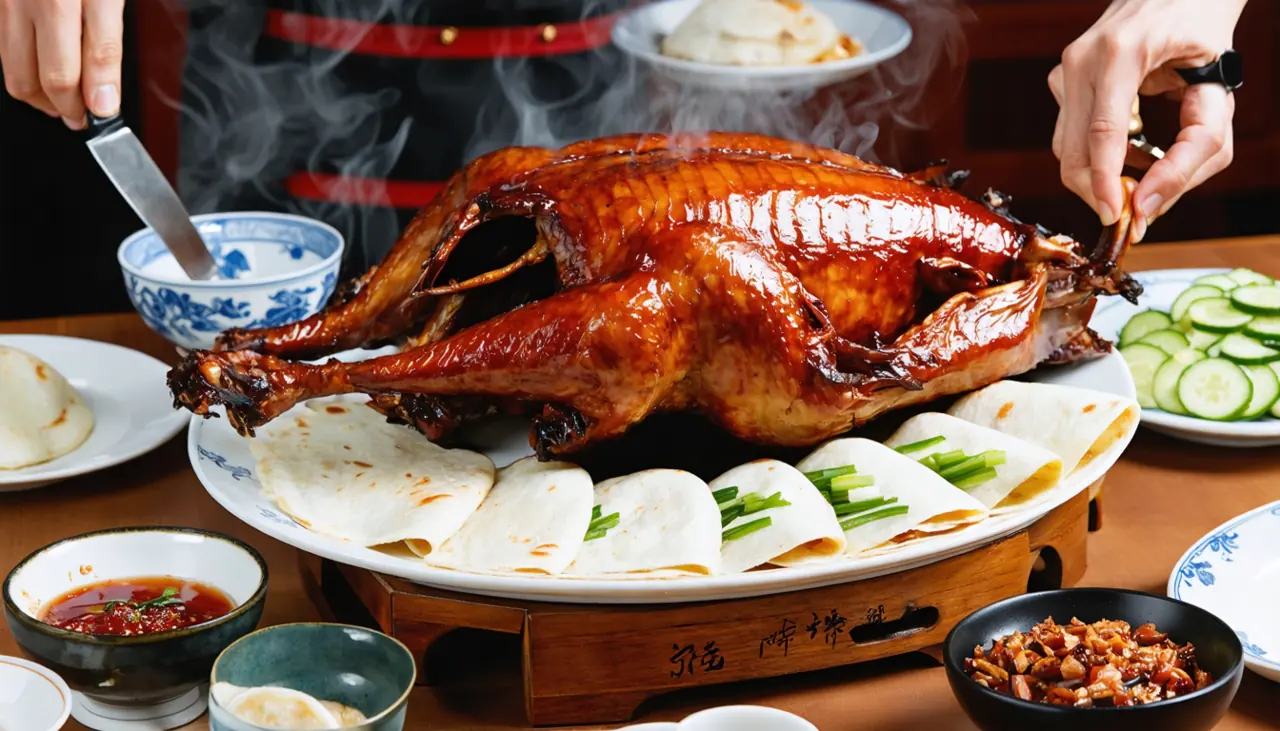
Canard laqué de Pékin
Canard entier séché, glacé au malt et rôti en deux temps jusqu'à ce que la peau soit croustillante et acajou, servi avec crêpes fines, concombre et sauce aux haricots sucrée.
Portions
Ingrédients
Nutrition
Par portion
Étapes
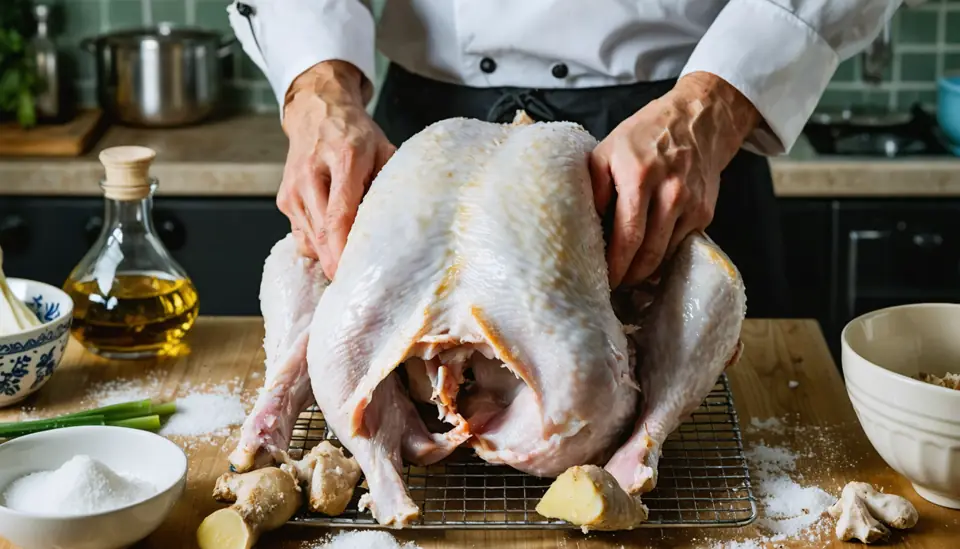
Season and dry the duck
Pat the duck completely dry inside and out with paper towels — any moisture left on the skin will stop it crisping later. Rub the salt all over the skin and inside the cavity, then rub the Shaoxing wine inside the cavity and tuck in the ginger, scallion whites and star anise. Set the duck breast-side up on a wire rack over a tray and refrigerate uncovered for at least 12 hours, ideally 24.
- 1 whole duck
- 1 tbsp salt
- 2 tbsp Shaoxing wine
- 3 slices ginger
- 2 scallion whites
- 1 star anise
✅ C'est prêt quand : the skin feels dry, taut and slightly papery, not damp
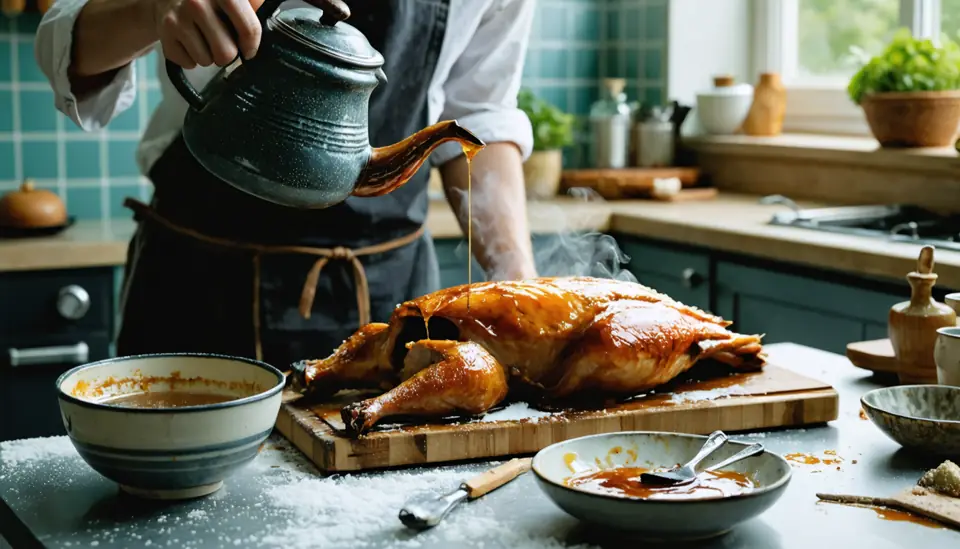
Scald and glaze the skin
Bring the litre of water for scalding to a full boil and slowly pour it all over the duck's skin, working from the neck down — this tightens the skin so the glaze sticks and the fat renders evenly later. Pat the duck dry again. Whisk the maltose with the vinegar, soy sauce and the 250 ml boiling water until the maltose dissolves, then brush this glaze over the skin in two or three thin coats. Return the duck, uncovered, to the fridge for another 4–6 hours, or overnight.
- 1 litre boiling water, for scalding
- 60 g maltose syrup
- 2 tbsp rice vinegar
- 1 tbsp dark soy sauce
- 250 ml boiling water, for glaze
✅ C'est prêt quand : the skin looks shiny, deep amber and is completely dry to the touch, not sticky
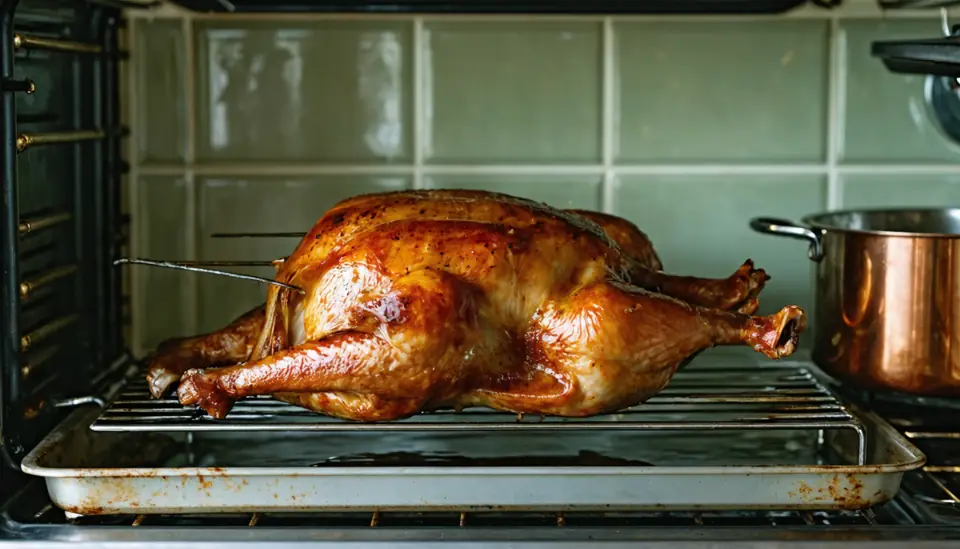
First roast: render the fat
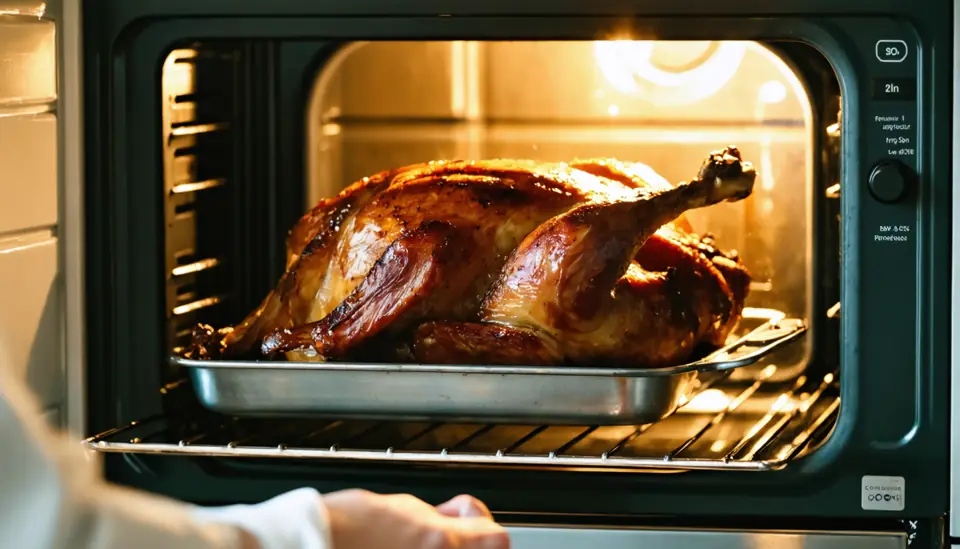
Preheat the oven to 150°C (300°F). Set the duck breast-side up on a rack over a roasting tray with about 2 cm of water in the bottom — the water catches the drips and stops the kitchen filling with smoke. Roast for 45 minutes; this gentle heat slowly melts the fat under the skin without scorching the glaze.
- 500 ml water, for the roasting tray
✅ C'est prêt quand : a layer of fat has collected in the tray and the skin looks tight and glossy
Second roast: crisp the skin
Raise the oven temperature to 220°C (425°F). Return the duck to the oven and roast for a further 25–30 minutes, turning the tray once, until the skin is deep mahogany and crackling crisp. Check that the thickest part of the thigh reaches at least 75°C (165°F) on a meat thermometer so the duck is fully cooked through.
✅ C'est prêt quand : the skin is deep reddish-brown and crisp, and the internal temperature reads at least 75°C (165°F)
Rest the duck
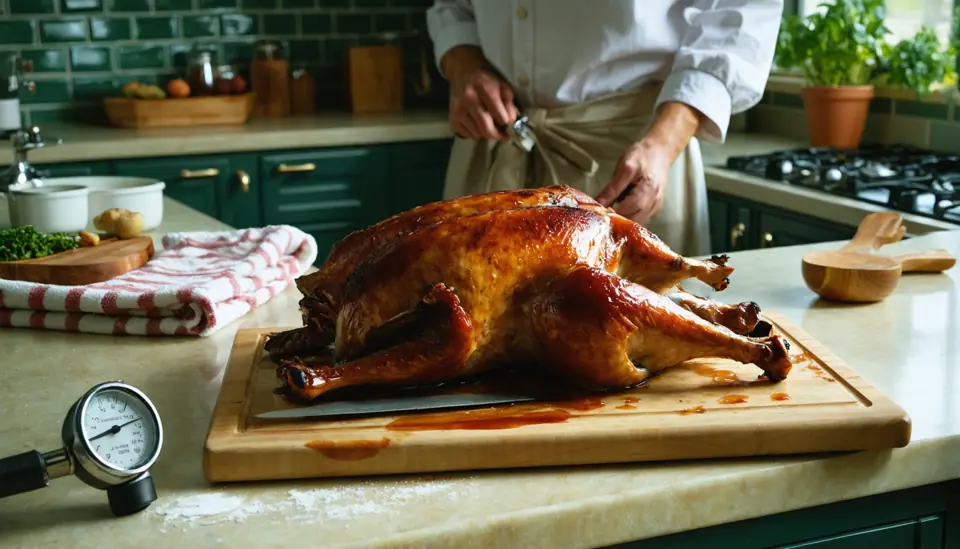
Lift the duck onto a board and let it rest for 10–15 minutes. This settles the juices and makes carving the crisp skin and meat much easier.
✅ C'est prêt quand : the duck has stopped steaming heavily and feels just warm to touch

Carve and serve
While the duck rests, warm the pancakes in a steamer for a few minutes. Carve the duck, keeping the crisp skin and meat together in thin slices. Serve with the warm pancakes, sweet bean sauce, cucumber batons and scallion brushes, letting everyone build their own wraps at the table.
- 20 thin wheat pancakes
- 150 g sweet bean sauce
- 2 small cucumbers
- 6 scallion greens
✅ C'est prêt quand : the pancakes are soft and warm, and the duck is sliced and arranged for serving
Season and dry the duck
Pat the duck completely dry inside and out with paper towels — any moisture left on the skin will stop it crisping later. Rub the salt all over the skin and inside the cavity, then rub the Shaoxing wine inside the cavity and tuck in the ginger, scallion whites and star anise. Set the duck breast-side up on a wire rack over a tray and refrigerate uncovered for at least 12 hours, ideally 24.
- 1 whole duck
- 1 tbsp salt
- 2 tbsp Shaoxing wine
- 3 slices ginger
- 2 scallion whites
- 1 star anise
✅ C'est prêt quand : the skin feels dry, taut and slightly papery, not damp
Scald and glaze the skin
Bring the litre of water for scalding to a full boil and slowly pour it all over the duck's skin, working from the neck down — this tightens the skin so the glaze sticks and the fat renders evenly later. Pat the duck dry again. Whisk the maltose with the vinegar, soy sauce and the 250 ml boiling water until the maltose dissolves, then brush this glaze over the skin in two or three thin coats. Return the duck, uncovered, to the fridge for another 4–6 hours, or overnight.
- 1 litre boiling water, for scalding
- 60 g maltose syrup
- 2 tbsp rice vinegar
- 1 tbsp dark soy sauce
- 250 ml boiling water, for glaze
✅ C'est prêt quand : the skin looks shiny, deep amber and is completely dry to the touch, not sticky
First roast: render the fat
Preheat the oven to 150°C (300°F). Set the duck breast-side up on a rack over a roasting tray with about 2 cm of water in the bottom — the water catches the drips and stops the kitchen filling with smoke. Roast for 45 minutes; this gentle heat slowly melts the fat under the skin without scorching the glaze.
- 500 ml water, for the roasting tray
✅ C'est prêt quand : a layer of fat has collected in the tray and the skin looks tight and glossy
Second roast: crisp the skin
Raise the oven temperature to 220°C (425°F). Return the duck to the oven and roast for a further 25–30 minutes, turning the tray once, until the skin is deep mahogany and crackling crisp. Check that the thickest part of the thigh reaches at least 75°C (165°F) on a meat thermometer so the duck is fully cooked through.
✅ C'est prêt quand : the skin is deep reddish-brown and crisp, and the internal temperature reads at least 75°C (165°F)
Rest the duck
Lift the duck onto a board and let it rest for 10–15 minutes. This settles the juices and makes carving the crisp skin and meat much easier.
✅ C'est prêt quand : the duck has stopped steaming heavily and feels just warm to touch
Carve and serve
While the duck rests, warm the pancakes in a steamer for a few minutes. Carve the duck, keeping the crisp skin and meat together in thin slices. Serve with the warm pancakes, sweet bean sauce, cucumber batons and scallion brushes, letting everyone build their own wraps at the table.
- 20 thin wheat pancakes
- 150 g sweet bean sauce
- 2 small cucumbers
- 6 scallion greens
✅ C'est prêt quand : the pancakes are soft and warm, and the duck is sliced and arranged for serving
The Story Behind the Dish
Peking duck grew out of the imperial kitchens of Beijing, where roasting ducks for the court became a refined art over many generations. Specialist restaurants later brought the dish out of the palace and into the city, where chefs developed closed-oven and open-oven roasting styles that are still used today.
Over time, the dish became closely tied to Beijing's identity, prized for its paper-thin, mahogany-coloured skin and the ceremony of carving the duck at the table. It spread from banquet halls to everyday restaurants, eventually becoming one of the most recognised Chinese dishes around the world.
⭐ Why It's Famous
Peking duck is famous for its lacquered, impossibly crisp skin and the ritual of wrapping thin slices of duck in warm pancakes with scallion, cucumber and sweet bean sauce, a presentation that has come to represent Chinese banquet cooking at its most refined.
💡 Fun Fact
Skilled chefs are traditionally judged by how thinly and evenly they can slice the duck, since an even, thin cut helps every piece carry just the right amount of crisp skin.
Beijing, China
39.90°N, 116.41°E
Recettes similaires
Comments (0)
No comments yet. Be the first to share your thoughts!