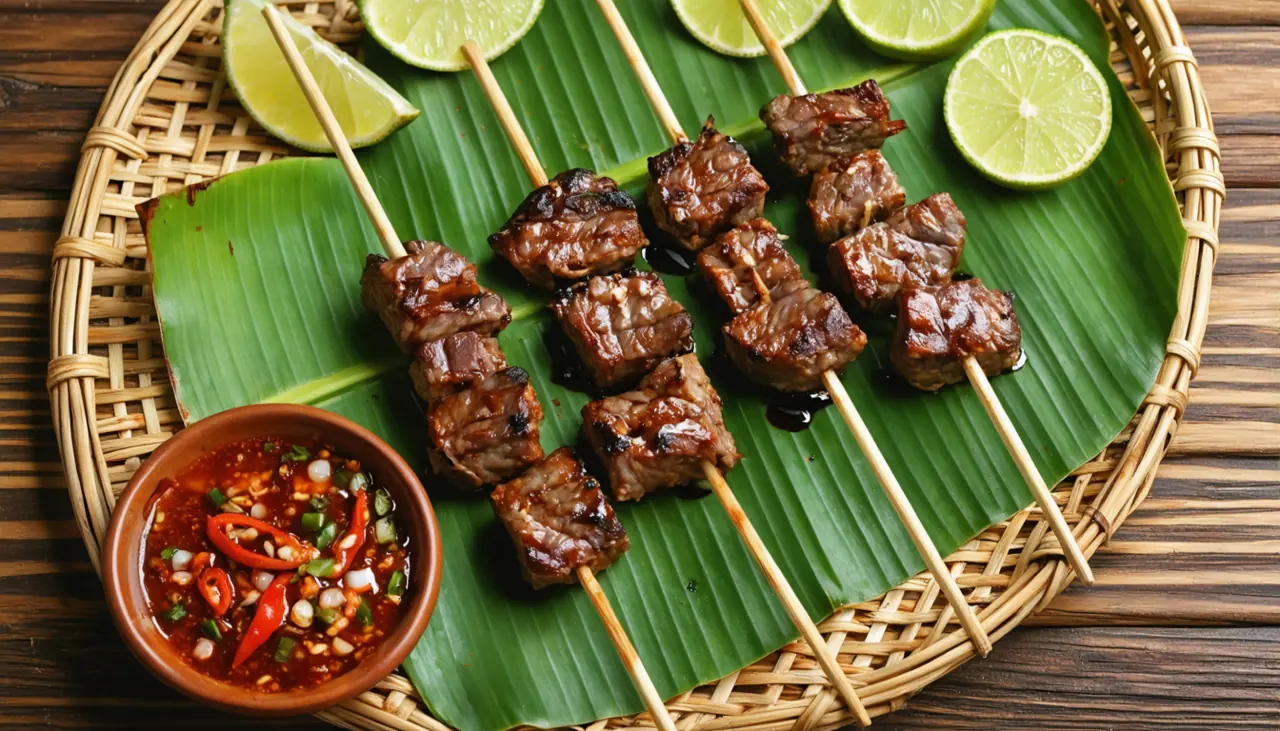
Sate Kambing (Satay de chèvre)
Brochettes de chèvre marinée au soja sucré, grillées au charbon et servies avec un sambal de soja et d'échalote.
Portions
Ingrédients
Nutrition
Par portion
Étapes

Marinate the goat
In a bowl, mix the goat meat (and fat cubes, if using) with the kecap manis, garlic, coriander, cumin, white pepper, oil, lime juice and salt. Massage the marinade into the meat with your hands, cover and refrigerate for at least 2 hours, or overnight for the deepest flavour and the most tender result.
- 600 g goat meat
- 100 g goat or lamb fat
- 4 tbsp kecap manis
- 3 cloves garlic
- 2 tsp ground coriander
- 1 tsp ground cumin
- 1/2 tsp white pepper
- 2 tbsp vegetable oil
- 1 lime juice
- 1 tsp salt
✅ C'est prêt quand : every piece of meat is evenly coated and has darkened slightly in colour

Thread the skewers
Thread 4–5 cubes of marinated goat onto each soaked skewer, alternating with a cube of fat if you are using it. Push the pieces close together so the skewer feels snug, with no gaps where the meat could dry out on the grill.
- 20 bamboo skewers
✅ C'est prêt quand : all the meat is used and each skewer is packed tightly from end to end

Make the sambal kecap
In a small bowl, stir together the kecap manis, shallots, chillies, tomato, lime juice and salt. Let it sit at room temperature while you grill, so the shallots soften slightly and the flavours blend.
- 6 tbsp kecap manis
- 4 shallots
- 3 bird's eye chillies
- 1 small tomato
- 1 lime juice
- 1 pinch salt
✅ C'est prêt quand : the sauce looks glossy and the shallots have softened a little at the edges

Grill over charcoal
Light charcoal and let it burn down until the coals glow red under a thin layer of grey ash, with no open flame (about 200°C (400°F)). Grill the skewers, turning every minute or so and brushing with any leftover marinade, for 8–10 minutes, until the edges are charred and the meat is cooked through but still juicy.
✅ C'est prêt quand : the meat is charred at the edges and no longer pink in the centre (internal temperature at least 71°C (160°F))

Rest and serve
Let the skewers rest for 2 minutes off the heat so the juices settle back into the meat. Serve hot with the sambal kecap, lime wedges, sliced cucumber and extra shallot rings.
- to serve lime wedges
- to serve sliced cucumber and extra shallot rings
✅ C'est prêt quand : the skewers are ready to eat, juicy and aromatic
Marinate the goat
In a bowl, mix the goat meat (and fat cubes, if using) with the kecap manis, garlic, coriander, cumin, white pepper, oil, lime juice and salt. Massage the marinade into the meat with your hands, cover and refrigerate for at least 2 hours, or overnight for the deepest flavour and the most tender result.
- 600 g goat meat
- 100 g goat or lamb fat
- 4 tbsp kecap manis
- 3 cloves garlic
- 2 tsp ground coriander
- 1 tsp ground cumin
- 1/2 tsp white pepper
- 2 tbsp vegetable oil
- 1 lime juice
- 1 tsp salt
✅ C'est prêt quand : every piece of meat is evenly coated and has darkened slightly in colour
Thread the skewers
Thread 4–5 cubes of marinated goat onto each soaked skewer, alternating with a cube of fat if you are using it. Push the pieces close together so the skewer feels snug, with no gaps where the meat could dry out on the grill.
- 20 bamboo skewers
✅ C'est prêt quand : all the meat is used and each skewer is packed tightly from end to end
Make the sambal kecap
In a small bowl, stir together the kecap manis, shallots, chillies, tomato, lime juice and salt. Let it sit at room temperature while you grill, so the shallots soften slightly and the flavours blend.
- 6 tbsp kecap manis
- 4 shallots
- 3 bird's eye chillies
- 1 small tomato
- 1 lime juice
- 1 pinch salt
✅ C'est prêt quand : the sauce looks glossy and the shallots have softened a little at the edges
Grill over charcoal
Light charcoal and let it burn down until the coals glow red under a thin layer of grey ash, with no open flame (about 200°C (400°F)). Grill the skewers, turning every minute or so and brushing with any leftover marinade, for 8–10 minutes, until the edges are charred and the meat is cooked through but still juicy.
✅ C'est prêt quand : the meat is charred at the edges and no longer pink in the centre (internal temperature at least 71°C (160°F))
Rest and serve
Let the skewers rest for 2 minutes off the heat so the juices settle back into the meat. Serve hot with the sambal kecap, lime wedges, sliced cucumber and extra shallot rings.
- to serve lime wedges
- to serve sliced cucumber and extra shallot rings
✅ C'est prêt quand : the skewers are ready to eat, juicy and aromatic
The Story Behind the Dish
Satay is believed to have developed in Java from skewered-meat cooking traditions brought by Arab and Indian traders, which local cooks then made their own with native spices and, later, sweet soy sauce. Goat satay became especially popular because goat meat was prized for feasts and was believed in Javanese and Islamic tradition to be warming for the body.
⭐ Why It's Famous
Sate kambing is loved for the contrast between smoky, charred meat and the dark, sticky-sweet soy sambal, a flavour pairing that defines much of Indonesian grilling.
💡 Fun Fact
In many Indonesian towns, goat satay vendors fan their charcoal grills by hand with a woven palm-leaf fan, a detail credited with giving the meat its distinctive smoky edge.
Java, Indonesia
-7.58°S, 110.82°E
Recettes similaires
Comments (0)
No comments yet. Be the first to share your thoughts!