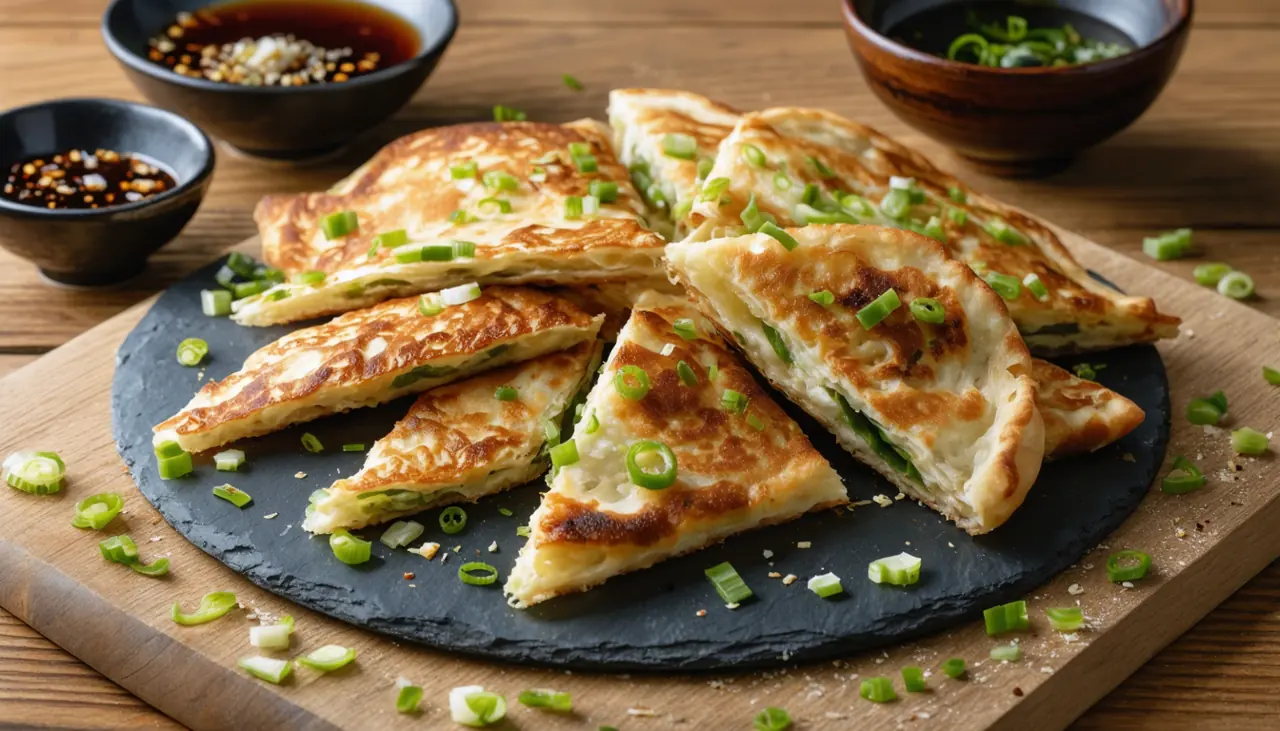
Galette chinoise à la ciboule
Une pâte feuilletée à la ciboule et à l'huile de sésame, poêlée jusqu'à devenir dorée et croustillante.
Portions
Ingrédients
Nutrition
Par portion
Étapes
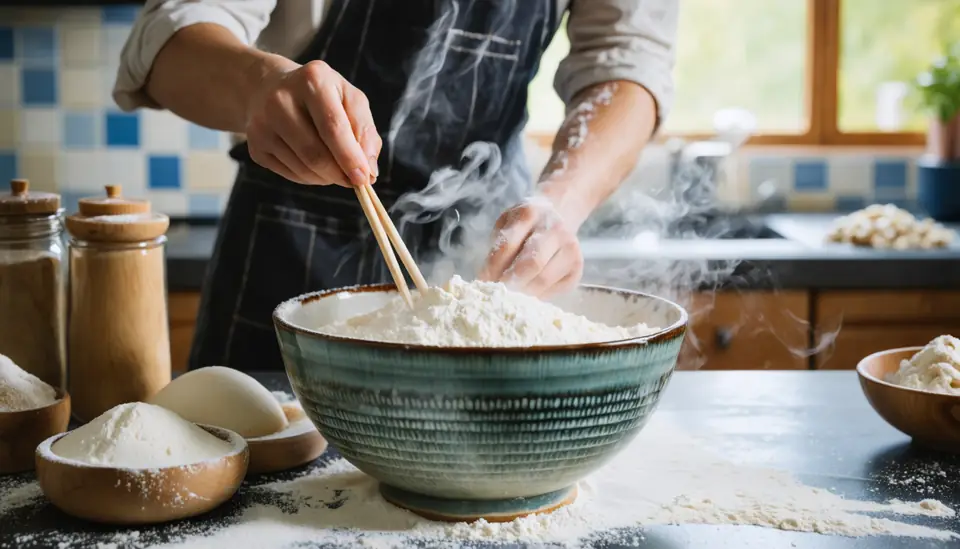
Make the dough
In a large bowl, mix the flour and salt. Pour in the hot water (just boiled and rested a couple of minutes, so it's hot but won't scald you) and stir with chopsticks or a spoon until clumps form. Once cool enough to handle, knead by hand 5–6 minutes until smooth and no longer sticky. Cover with a damp cloth and let rest 30 minutes.
- 300 g flour
- 180 ml hot water
- 1/4 tsp salt
✅ C'est prêt quand : the dough is smooth and soft, and springs back slowly when pressed
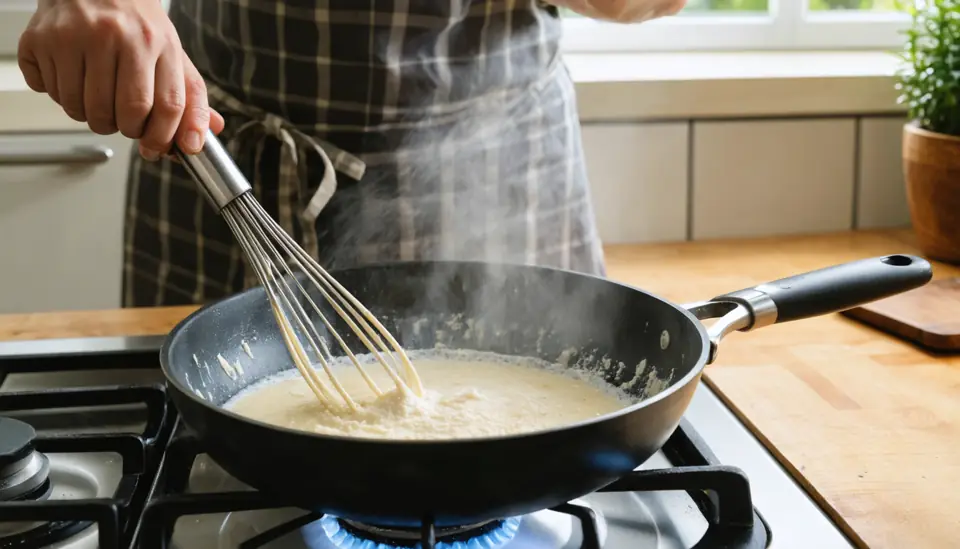
Make the oil paste
Warm the oil in a small saucepan over low heat until it shimmers, then remove from the heat and whisk in the flour until you have a smooth, loose paste. Let it cool to room temperature. Brushed between the layers later, this paste is the trick that keeps them from sticking back together, so the pancake fries up flaky instead of dense.
- 3 tbsp neutral oil
- 2 tbsp flour
✅ C'est prêt quand : the paste is smooth, lump-free and no longer hot to the touch
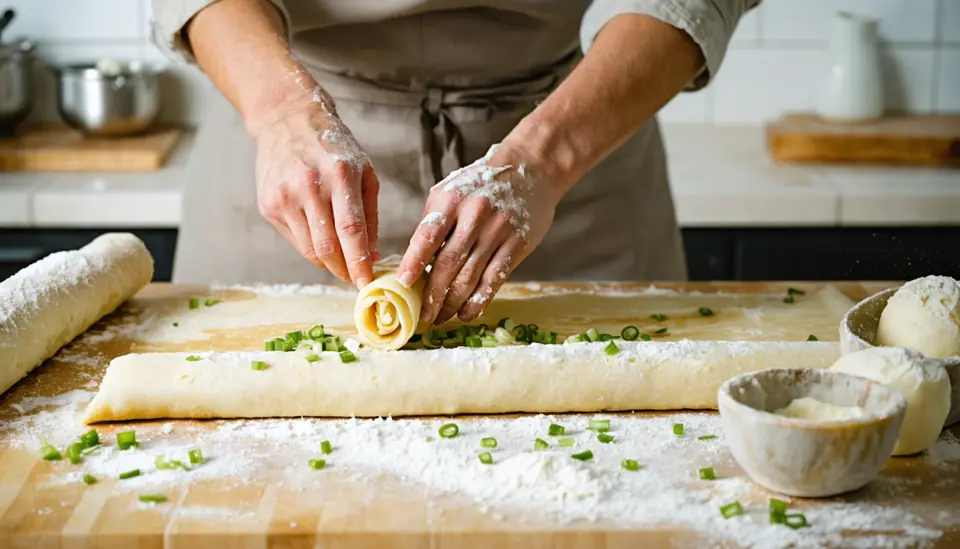
Shape and fill
Divide the rested dough into 4 equal pieces. On a lightly floured surface, roll one piece into a thin rectangle about 3 mm thick. Brush a thin layer of the cooled oil paste over it, drizzle with sesame oil, then scatter a quarter of the scallions and a pinch of salt evenly over the top, leaving a bare border. Roll the rectangle up tightly from one long side into a log, then coil the log into a flat spiral like a snail shell, tucking the end underneath. Repeat with the remaining dough.
- a little, for dusting flour
- 150 g scallions
- 2 tbsp sesame oil
- 1 tsp fine salt
✅ C'est prêt quand : each piece is coiled into a tight, flat spiral with no scallion poking out
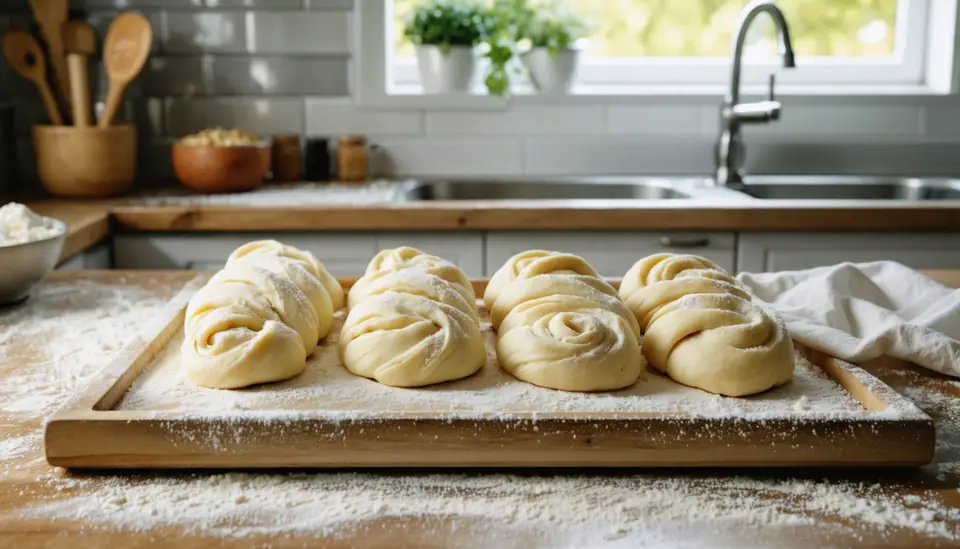
Let the spirals rest
Cover the spirals again with the damp cloth and let them rest 15 minutes at room temperature. This second rest relaxes the gluten so you can roll them out thin later without the dough shrinking back or tearing the scallion layers.
✅ C'est prêt quand : the dough feels relaxed and gives easily when pressed
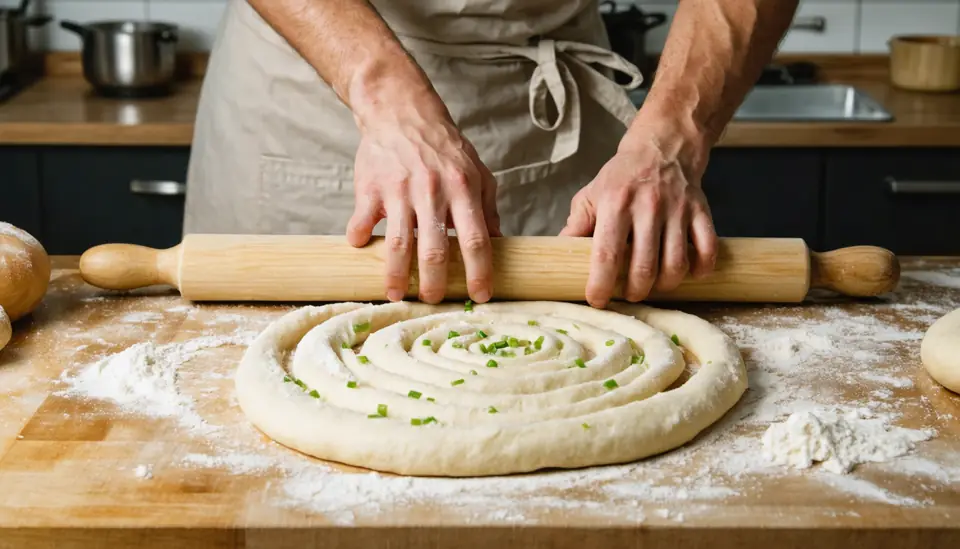
Roll into discs
Flatten each spiral gently with your palm, then roll out into a round disc about 18–20 cm wide and 4–5 mm thick, rolling from the centre outward and turning the disc as you go so it stays even.
✅ C'est prêt quand : each disc is round and even, with faint spiral lines of scallion visible through the dough
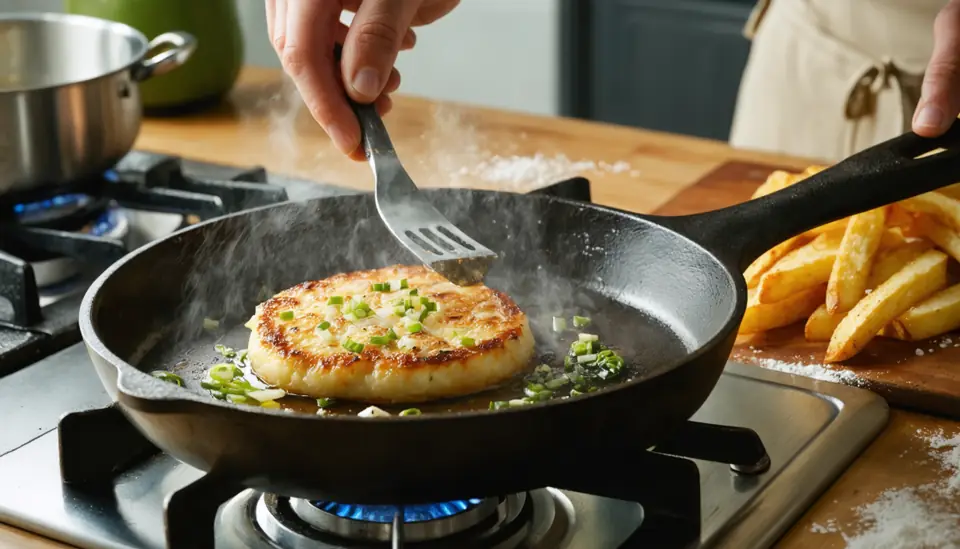
Pan-fry until crisp
Heat 1 tablespoon of oil in a heavy, flat-bottomed skillet over medium heat. Lay in a pancake and fry 2–3 minutes per side, pressing lightly with a spatula, until deep golden and blistered all over; lower the heat if it browns too fast. Add a little more oil and repeat with the remaining pancakes.
- 4 tbsp frying oil
✅ C'est prêt quand : both sides are deep golden brown with crisp, blistered spots and the pancake sounds hollow when tapped
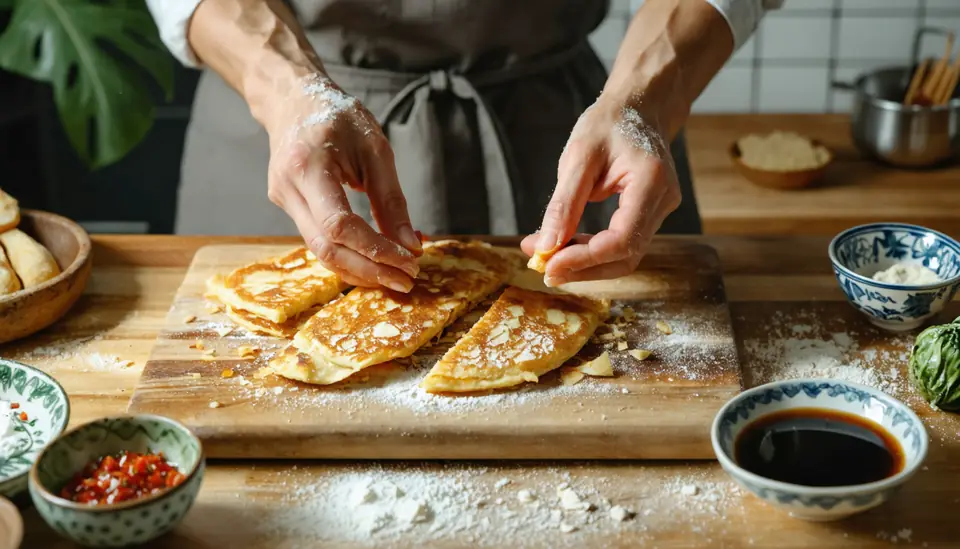
Serve warm
Transfer to a cutting board and clap it between your palms or crack it gently with the back of a knife to loosen the flaky layers inside, then cut into wedges and serve hot, with a dipping sauce of soy sauce and chile oil if you like.
Make the dough
In a large bowl, mix the flour and salt. Pour in the hot water (just boiled and rested a couple of minutes, so it's hot but won't scald you) and stir with chopsticks or a spoon until clumps form. Once cool enough to handle, knead by hand 5–6 minutes until smooth and no longer sticky. Cover with a damp cloth and let rest 30 minutes.
- 300 g flour
- 180 ml hot water
- 1/4 tsp salt
✅ C'est prêt quand : the dough is smooth and soft, and springs back slowly when pressed
Make the oil paste
Warm the oil in a small saucepan over low heat until it shimmers, then remove from the heat and whisk in the flour until you have a smooth, loose paste. Let it cool to room temperature. Brushed between the layers later, this paste is the trick that keeps them from sticking back together, so the pancake fries up flaky instead of dense.
- 3 tbsp neutral oil
- 2 tbsp flour
✅ C'est prêt quand : the paste is smooth, lump-free and no longer hot to the touch
Shape and fill
Divide the rested dough into 4 equal pieces. On a lightly floured surface, roll one piece into a thin rectangle about 3 mm thick. Brush a thin layer of the cooled oil paste over it, drizzle with sesame oil, then scatter a quarter of the scallions and a pinch of salt evenly over the top, leaving a bare border. Roll the rectangle up tightly from one long side into a log, then coil the log into a flat spiral like a snail shell, tucking the end underneath. Repeat with the remaining dough.
- a little, for dusting flour
- 150 g scallions
- 2 tbsp sesame oil
- 1 tsp fine salt
✅ C'est prêt quand : each piece is coiled into a tight, flat spiral with no scallion poking out
Let the spirals rest
Cover the spirals again with the damp cloth and let them rest 15 minutes at room temperature. This second rest relaxes the gluten so you can roll them out thin later without the dough shrinking back or tearing the scallion layers.
✅ C'est prêt quand : the dough feels relaxed and gives easily when pressed
Roll into discs
Flatten each spiral gently with your palm, then roll out into a round disc about 18–20 cm wide and 4–5 mm thick, rolling from the centre outward and turning the disc as you go so it stays even.
✅ C'est prêt quand : each disc is round and even, with faint spiral lines of scallion visible through the dough
Pan-fry until crisp
Heat 1 tablespoon of oil in a heavy, flat-bottomed skillet over medium heat. Lay in a pancake and fry 2–3 minutes per side, pressing lightly with a spatula, until deep golden and blistered all over; lower the heat if it browns too fast. Add a little more oil and repeat with the remaining pancakes.
- 4 tbsp frying oil
✅ C'est prêt quand : both sides are deep golden brown with crisp, blistered spots and the pancake sounds hollow when tapped
Serve warm
Transfer to a cutting board and clap it between your palms or crack it gently with the back of a knife to loosen the flaky layers inside, then cut into wedges and serve hot, with a dipping sauce of soy sauce and chile oil if you like.
The Story Behind the Dish
Scallion pancakes grew out of northern China's long tradition of wheat flatbreads, in a region where wheat, not rice, was the daily staple. Cooks found that laminating a simple hot-water dough with oil and chopped scallions, then coiling and pan-frying it, turned humble ingredients into something crisp, fragrant and deeply satisfying.
The pancake travelled south and eventually overseas with migration, becoming a beloved street food in Shanghai, Taiwan and Hong Kong, where it's often sold hot off a griddle, cut into wedges, from breakfast carts and night markets.
⭐ Why It's Famous
Its flaky, shattering layers and deep scallion aroma, achieved with nothing more than flour, water, oil and scallions, make it a favorite proof that simple ingredients, handled well, can taste extraordinary.
💡 Fun Fact
Some food historians note that the technique of laminating dough with oil, seen in Chinese flatbreads like this one, shows up in different forms across many flaky-pastry traditions, from Middle Eastern breads to French puff pastry.
Northern China, especially Shandong and Tianjin
36.65°N, 117.12°E
Recettes similaires

Comments (0)
No comments yet. Be the first to share your thoughts!