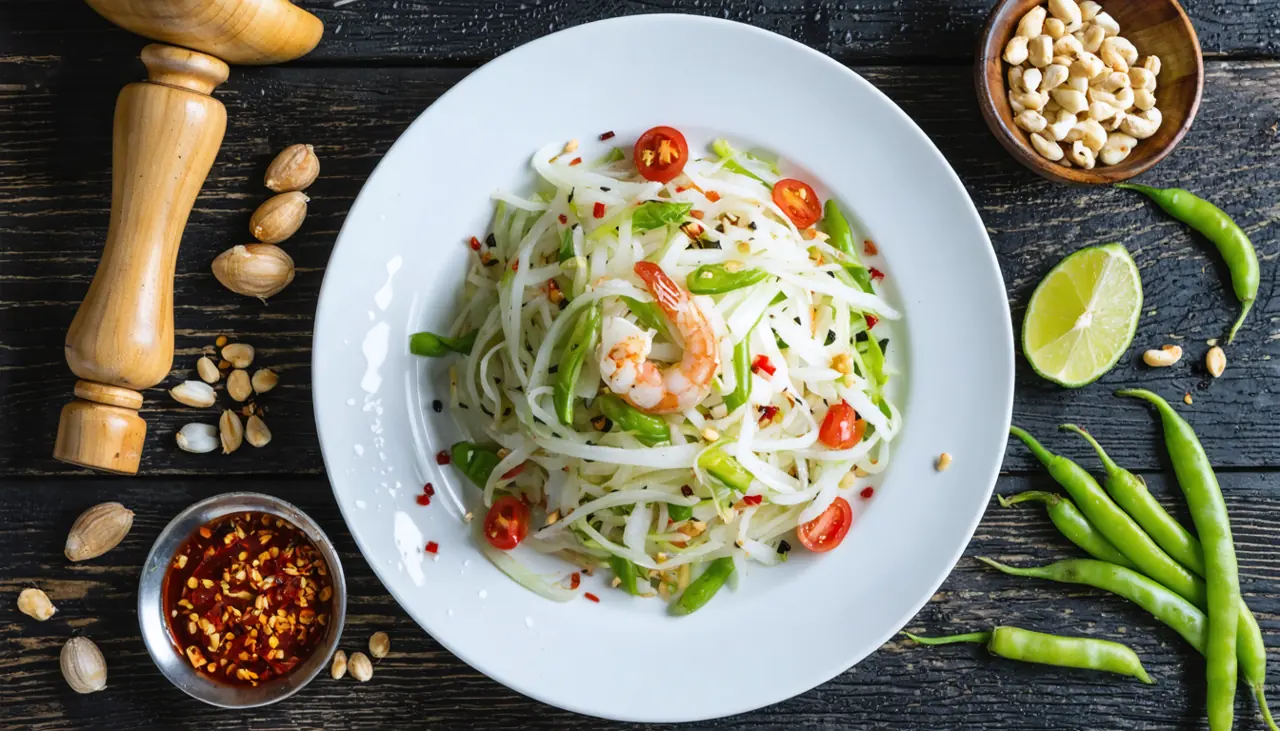
Salade de papaye verte (Som Tam)
Papaye verte râpée pilée avec ail, piments, tomates cerises et haricots longs, assaisonnée de sauce de poisson, citron vert et sucre de palme.
Portions
Ingrédients
Nutrition
Par portion
Étapes
Shred and crisp the papaya
Peel the green papaya and shred it into thin, long strands with a julienne peeler, a mandoline, or a knife. Drop the shreds into a bowl of cold water for 5 minutes, then drain well and pat dry; this keeps them crisp so the salad soaks up the dressing instead of turning watery.
- 300 g green papaya
✅ C'est prêt quand : the papaya is cut into fine, even strands and feels crisp and dry
Pound chilies and garlic
Put the chilies and garlic in the mortar (or a sturdy bowl) and pound a few times with the pestle until just broken down into a coarse, fragrant paste, not a smooth purée. This wakes up the garlic's bite and the chilies' heat right at the base of the dressing.
- 2–3 Thai bird's eye chilies
- 2 cloves garlic
✅ C'est prêt quand : the chilies and garlic are roughly crushed and smell fragrant
Bruise beans and shrimp
Add the long beans and dried shrimp to the mortar. Pound lightly, turning the mixture with a spoon between strikes, just enough to crack the beans and soften the shrimp so they take on the chili-garlic flavor.
- 6 long beans
- 2 tbsp dried shrimp
✅ C'est prêt quand : the beans look lightly crushed and bruised, not pulverized
Bruise the tomatoes
Add the tomato halves and press down with the pestle two or three times, just to split the skins and release their juice. Don't turn them into mush — you want soft, juicy chunks of tomato in the finished salad.
- 6 cherry tomatoes
✅ C'est prêt quand : the tomatoes are split and juicy but still holding their shape
Add papaya and pound
Pile the shredded papaya on top. Pound and toss with the classic alternating motion: one hand taps gently with the pestle while the other turns the salad with a spoon, lifting from the bottom. Keep this up for about a minute, just enough to bruise the strands so they soften slightly and drink in the dressing.
- 300 g green papaya (shredded, from step 1)
✅ C'est prêt quand : the papaya strands look slightly bruised and a little translucent at the edges, but still crunchy
Season to balance
Add the palm sugar, fish sauce and lime juice. Pound and stir gently to dissolve the sugar into the mixture. Taste: it should hit sour, salty, sweet and spicy all at once, with no single flavor taking over. Adjust with more lime for sourness, fish sauce for salt, or sugar for sweetness.
- 2 tbsp palm sugar
- 2–3 tbsp fish sauce
- 2–3 tbsp lime juice
✅ C'est prêt quand : the dressing tastes balanced between sour, salty, sweet and spicy, and the sugar has dissolved
Serve
Transfer the salad to a plate, scraping all the dressing from the mortar over the top. Scatter with the crushed peanuts and serve right away with raw cabbage wedges, extra long beans and lime wedges for scooping and crunching alongside.
- 2 tbsp roasted peanuts
- to serve cabbage, long beans and lime wedges
The Story Behind the Dish
Som tam grew out of the Lao-Isan food culture of northeastern Thailand, where unripe papaya from backyard trees was shredded and pounded with whatever chilies, lime and fermented fish were on hand. It traveled south to Bangkok and the rest of the country over the last century, carried along by Isan workers and migrants, and quickly became a favorite far beyond its home region.
Today it's pounded to order from carts and market stalls all over Thailand, with cooks adjusting the chili heat, saltiness and sourness for each customer right in front of them.
⭐ Why It's Famous
It's the clearest showcase of Thai cooking's central idea: balancing sour, salty, sweet and spicy in a single bite. It's eaten everywhere, from street carts to formal restaurants, and often ordered alongside grilled chicken and sticky rice.
💡 Fun Fact
The word 'tam' simply means 'to pound' — the dish is named for the cooking technique, not for its ingredients.
Isan region, northeastern Thailand
16.43°N, 102.82°E
Recettes similaires
Comments (0)
No comments yet. Be the first to share your thoughts!