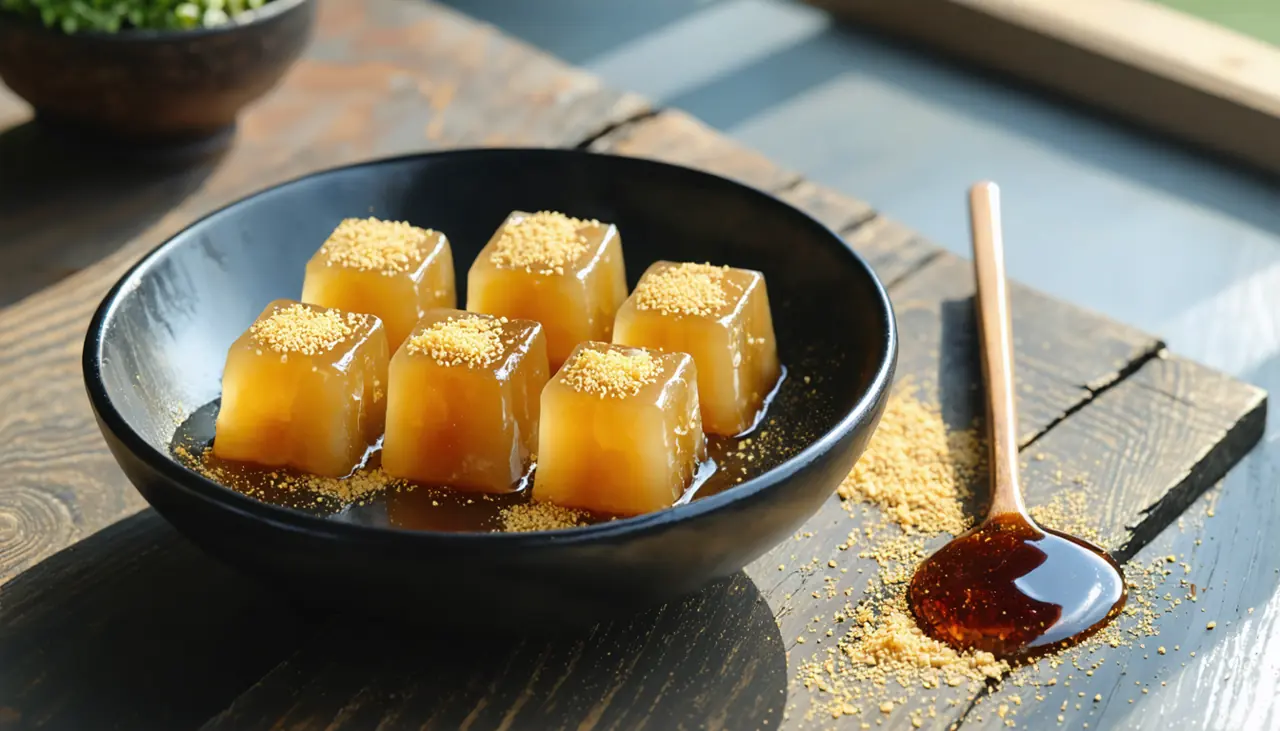
Warabimochi
Petits cubes gélatineux d'amidon de fougère, enrobés de farine de soja grillée et nappés de sirop de sucre brun.
Portions
Ingrédients
Nutrition
Par portion
Étapes
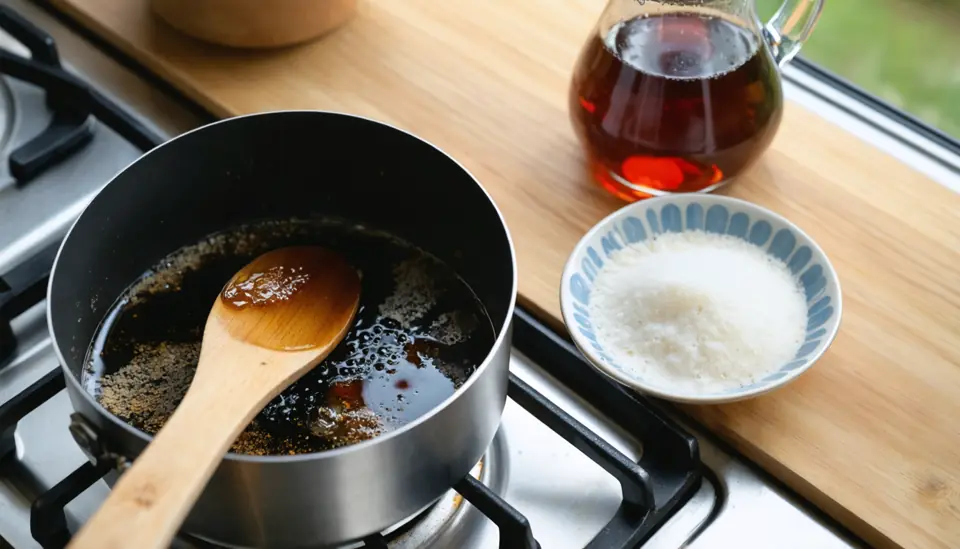
Make brown sugar syrup
In a small pot, warm the 100 g dark brown sugar with the 100 ml water over low heat, stirring until dissolved, then simmer gently for 3-4 minutes until slightly syrupy, keeping the bubbles small, not a hard boil. Pour into a small jug and let it cool; it will thicken a little more as it sits.
- 100 g kurozatou
- 100 ml water
✅ C'est prêt quand : syrup coats the back of a spoon in a thin film
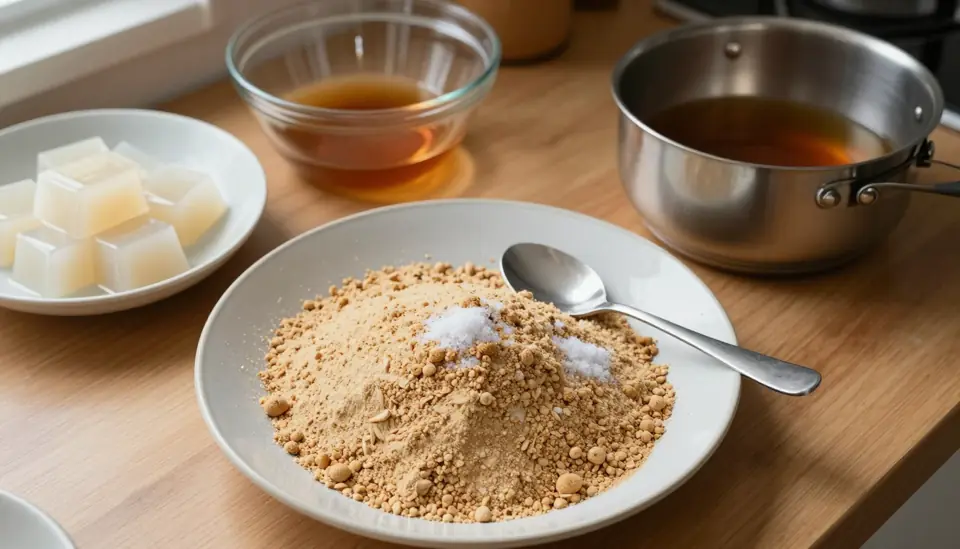
Mix the kinako coating
Stir the 40 g kinako with the 2 tablespoons of sugar and the pinch of salt together in a wide shallow plate. The sugar softens the raw edge of the soy flour and the salt makes the toasty flavor pop.
- 40 g kinako
- 2 tbsp sugar
- 1 small pinch salt
✅ C'est prêt quand : evenly mixed with no dry streaks of flour
Dissolve the starch
This step is part of Foodie Premium. Subscribe to unlock the full method, cooking mode and every recipe in the library.
Cook until glossy
This step is part of Foodie Premium. Subscribe to unlock the full method, cooking mode and every recipe in the library.
Chill in ice water
This step is part of Foodie Premium. Subscribe to unlock the full method, cooking mode and every recipe in the library.
Cut and coat cubes
This step is part of Foodie Premium. Subscribe to unlock the full method, cooking mode and every recipe in the library.
Serve with syrup
This step is part of Foodie Premium. Subscribe to unlock the full method, cooking mode and every recipe in the library.
Make brown sugar syrup
In a small pot, warm the 100 g dark brown sugar with the 100 ml water over low heat, stirring until dissolved, then simmer gently for 3-4 minutes until slightly syrupy, keeping the bubbles small, not a hard boil. Pour into a small jug and let it cool; it will thicken a little more as it sits.
- 100 g kurozatou
- 100 ml water
✅ C'est prêt quand : syrup coats the back of a spoon in a thin film
Mix the kinako coating
Stir the 40 g kinako with the 2 tablespoons of sugar and the pinch of salt together in a wide shallow plate. The sugar softens the raw edge of the soy flour and the salt makes the toasty flavor pop.
- 40 g kinako
- 2 tbsp sugar
- 1 small pinch salt
✅ C'est prêt quand : evenly mixed with no dry streaks of flour
Dissolve the starch
This step is part of Foodie Premium. Subscribe to unlock the full method, cooking mode and every recipe in the library.
Cook until glossy
This step is part of Foodie Premium. Subscribe to unlock the full method, cooking mode and every recipe in the library.
Chill in ice water
This step is part of Foodie Premium. Subscribe to unlock the full method, cooking mode and every recipe in the library.
Cut and coat cubes
This step is part of Foodie Premium. Subscribe to unlock the full method, cooking mode and every recipe in the library.
Serve with syrup
This step is part of Foodie Premium. Subscribe to unlock the full method, cooking mode and every recipe in the library.
The Story Behind the Dish
Bracken starch, laboriously extracted from the rhizomes of wild bracken fern, was once a humble famine food in mountain villages because true fern starch takes an enormous amount of root to yield very little starch. Over time, cooks in Kyoto and the Yoshino area turned this scarce, slightly earthy starch into a refined cold sweet, pairing it with toasted soybean flour and dark sugar syrup to soften its wild flavour.
Because pure bracken starch has always been rare and costly, most warabimochi sold today, even in Japan, uses a blend with sweet potato or tapioca starch, with true all-bracken versions kept as a specialty treat.
⭐ Why It's Famous
It's prized for its cool, delicate, barely-there wobble, so soft it is often eaten with a spoon rather than chopsticks, and for the way the nutty kinako and deep caramel-like kuromitsu balance its mild, grassy flavour.
💡 Fun Fact
Harvesting enough wild bracken root to produce just a small amount of pure starch is so slow and costly that genuine warabiko is one of the most expensive starches in Japanese cooking.
Kyoto and the Nara/Yoshino region
35.01°N, 135.77°E
Recettes similaires
Comments (0)
No comments yet. Be the first to share your thoughts!