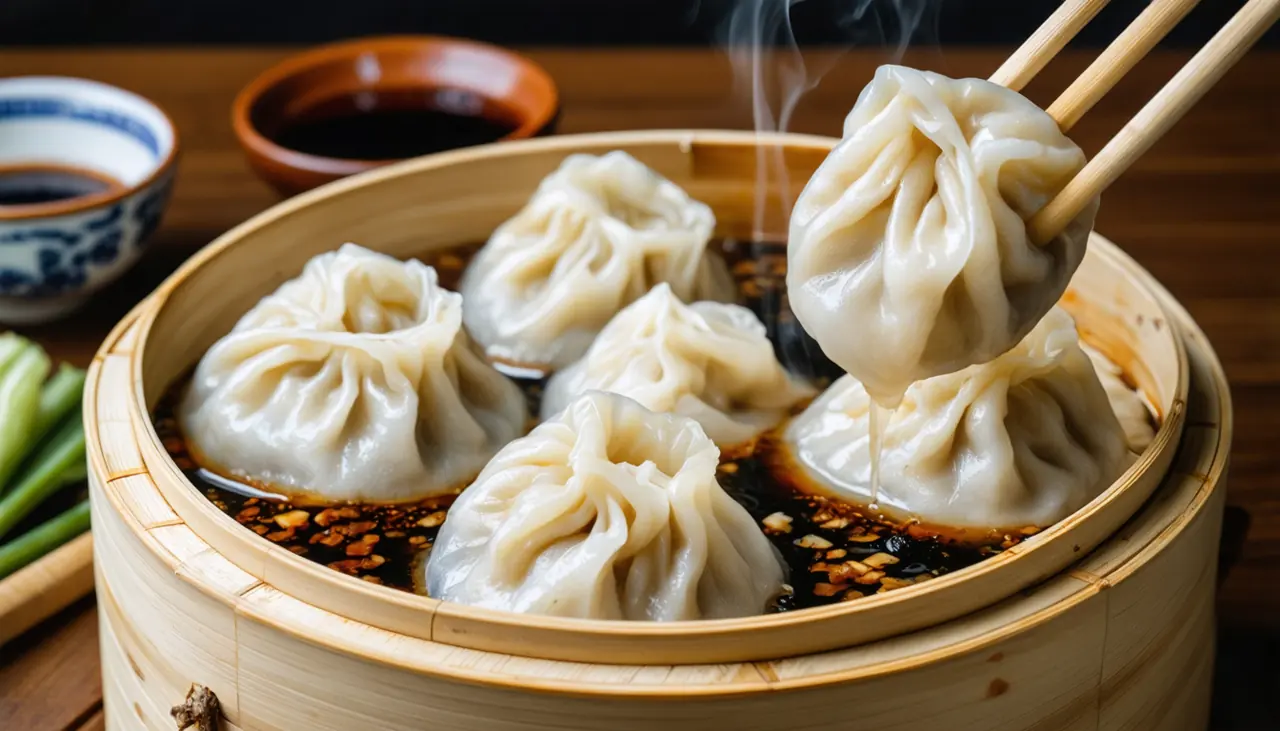
Xiaolongbao de Shanghai
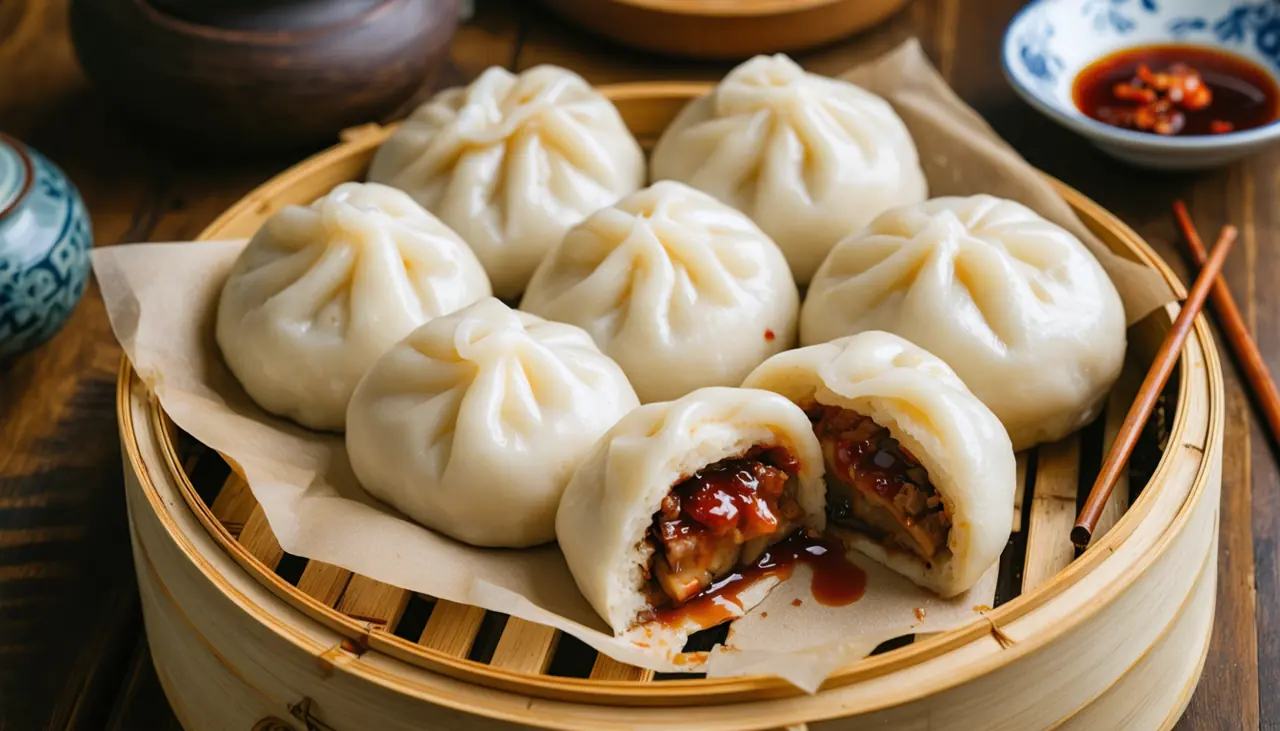
Délicats raviolis plissés farcis de porc, cachant une cuillerée de bouillon chaud qui explose en bouche.
Portions
Ingrédients
Nutrition
Par portion
Étapes
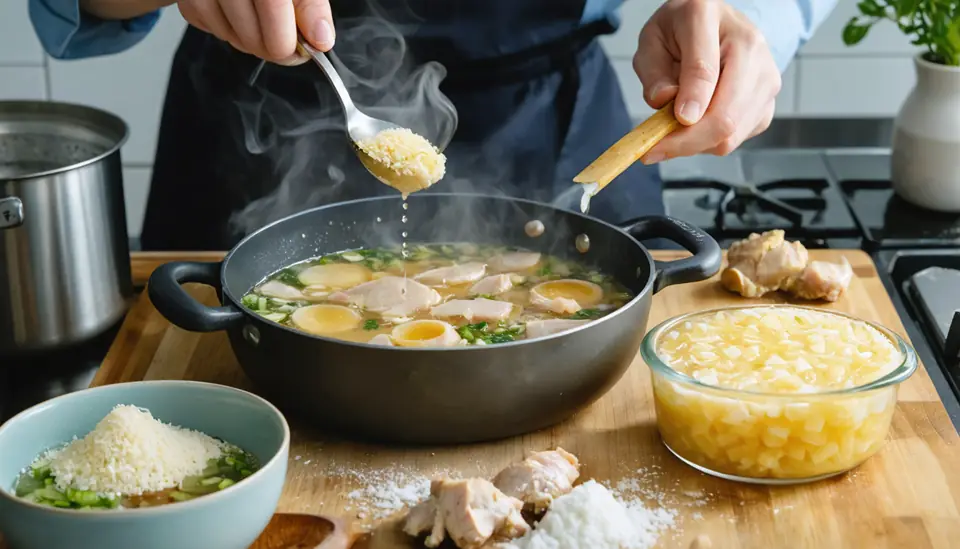
Make the broth jelly
In a small saucepan, combine the chicken stock, gelatin, ginger slices, scallion, Shaoxing wine and light soy sauce. Warm gently over low heat, stirring until the gelatin fully dissolves, then simmer 5 minutes without boiling hard. Strain into a shallow dish and chill until completely set. This jelly is the secret: raw broth would simply run out of the dumpling, but set into a solid it stays put while you fold, then melts back into liquid soup inside the sealed wrapper once it hits the steam.
- 500 ml chicken stock
- 10 g gelatin powder
- 3 slices fresh ginger
- 1 scallion
- 1 tbsp Shaoxing wine
- 1 tsp light soy sauce
✅ C'est prêt quand : the jelly is firm enough to hold its shape when cut into cubes, like a wobbly gelatin dessert
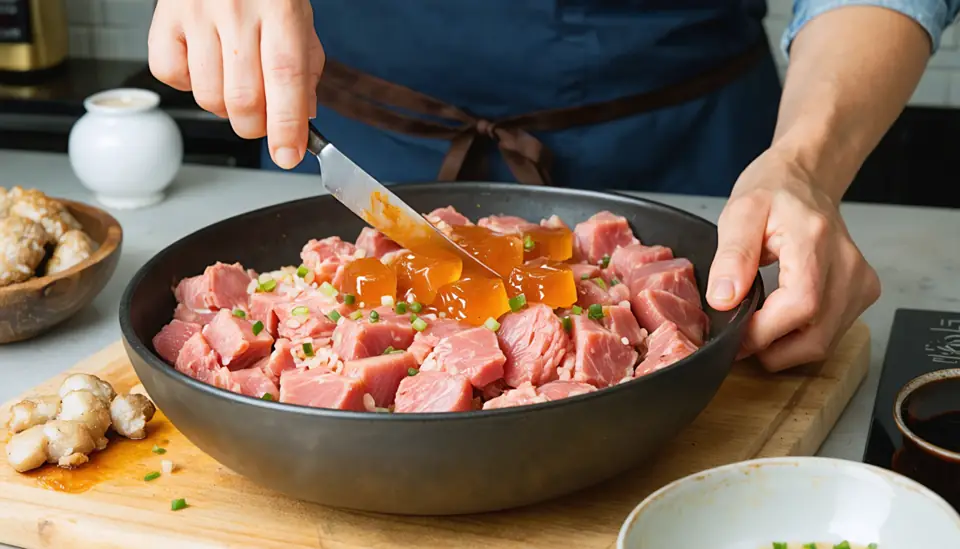
Mix the filling
Chop the chilled jelly into very small cubes. In a bowl, combine the pork with the minced ginger, chopped scallions, light and dark soy sauce, sugar, salt, white pepper and sesame oil. Stir briskly in one direction for a minute or two (this builds a sticky, bouncy texture that holds the broth without leaking), then fold in the chopped jelly. Chill 30 minutes before shaping, which makes the sticky filling much easier to handle.
- 400 g ground pork
- 1 tbsp minced ginger
- 2 scallions
- 1 tbsp light soy sauce
- 1 tsp dark soy sauce
- 1 tsp sugar
- 1/2 tsp salt
- 1/4 tsp white pepper
- 1 tsp sesame oil
✅ C'est prêt quand : the filling is cold, firm and no longer sticks heavily to your hands
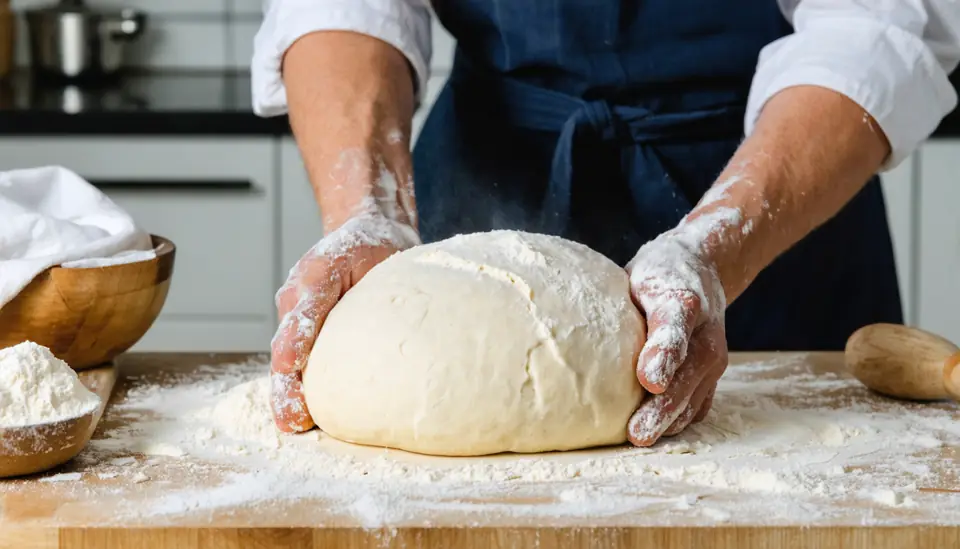
Make the dough
Mix the flour and cold water into a rough dough, then knead on a lightly floured surface for 5–8 minutes until smooth. Cover with a damp cloth and let it rest. Resting relaxes the gluten so the wrapper can be rolled paper-thin later without tearing or springing back.
- 250 g flour
- 120 ml cold water
✅ C'est prêt quand : the dough is smooth and soft, and springs back slowly when you poke it
Roll and pleat
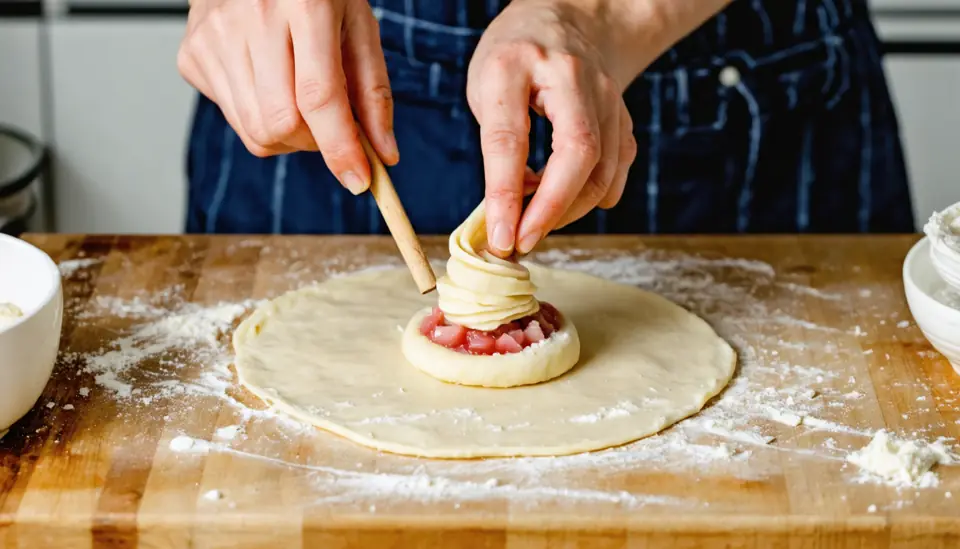
Roll the dough into a log and cut into about 24 small pieces; roll each into a thin disc roughly 7–8 cm wide, keeping the center slightly thicker than the edges (the thin edge pleats easily, while the thicker center holds up under the weight of the filling). Place about 15 g of cold filling in the middle of each disc, then gather the edges into 16–18 small pleats around the top and twist to seal tightly, so no broth can escape.
✅ C'est prêt quand : each dumpling is sealed into a small, pleated purse with no gaps or holes at the top
Steam the dumplings
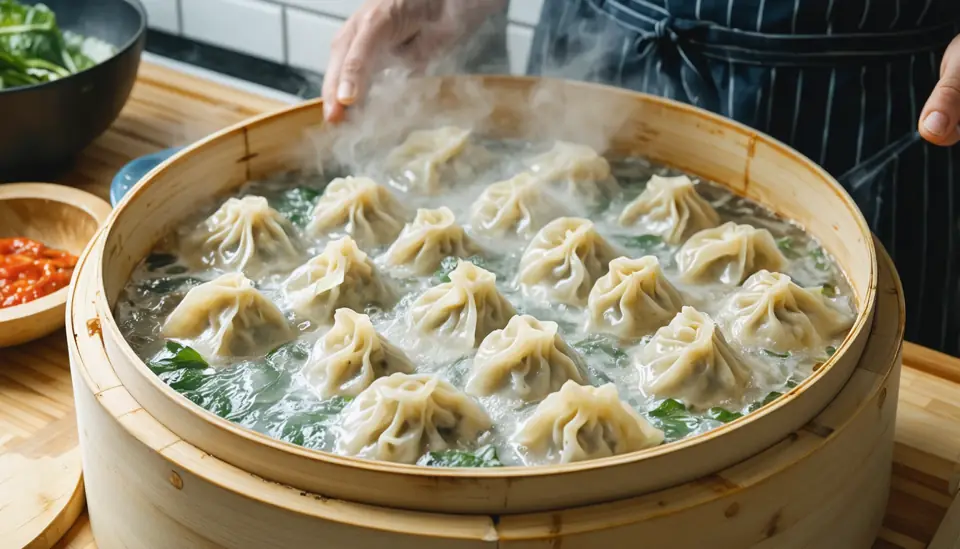
Line a steamer basket with napa cabbage leaves or parchment rounds, lightly oiled, so the dumplings do not stick. Arrange the dumplings with space between them (they will stick together if touching) and steam over briskly boiling water.
- 6 leaves napa cabbage or parchment
✅ C'est prêt quand : the wrappers look slightly translucent and the pork filling is fully cooked through, reaching at least 71°C (160°F)
Serve
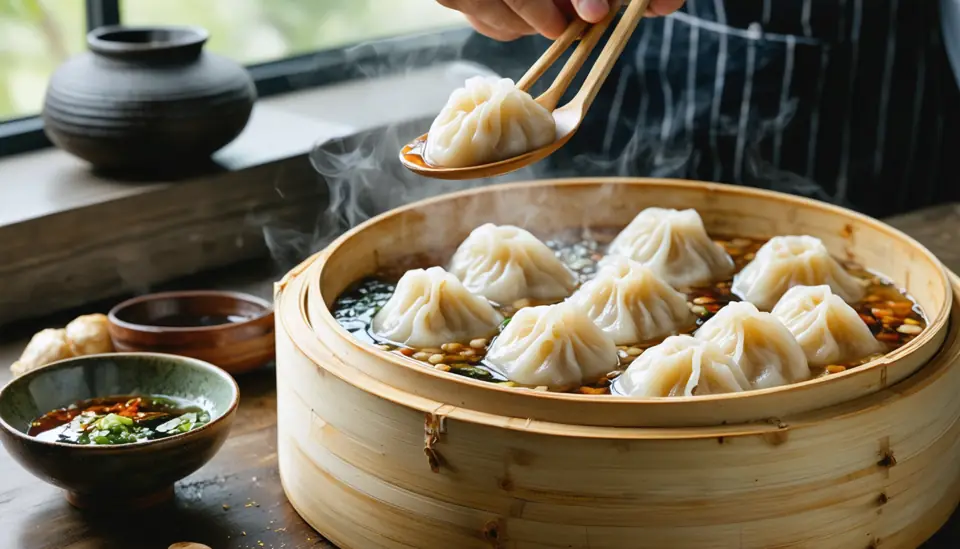
Mix the black vinegar with the julienned ginger in small dishes for dipping. Serve the dumplings immediately, straight from the steamer: lift each one gently with chopsticks onto a spoon, bite a small hole in the side to let the steam escape, sip the hot broth, then eat the rest with a dab of vinegar and ginger.
- 60 ml black vinegar
- 2 tbsp ginger julienne
Make the broth jelly
In a small saucepan, combine the chicken stock, gelatin, ginger slices, scallion, Shaoxing wine and light soy sauce. Warm gently over low heat, stirring until the gelatin fully dissolves, then simmer 5 minutes without boiling hard. Strain into a shallow dish and chill until completely set. This jelly is the secret: raw broth would simply run out of the dumpling, but set into a solid it stays put while you fold, then melts back into liquid soup inside the sealed wrapper once it hits the steam.
- 500 ml chicken stock
- 10 g gelatin powder
- 3 slices fresh ginger
- 1 scallion
- 1 tbsp Shaoxing wine
- 1 tsp light soy sauce
✅ C'est prêt quand : the jelly is firm enough to hold its shape when cut into cubes, like a wobbly gelatin dessert
Mix the filling
Chop the chilled jelly into very small cubes. In a bowl, combine the pork with the minced ginger, chopped scallions, light and dark soy sauce, sugar, salt, white pepper and sesame oil. Stir briskly in one direction for a minute or two (this builds a sticky, bouncy texture that holds the broth without leaking), then fold in the chopped jelly. Chill 30 minutes before shaping, which makes the sticky filling much easier to handle.
- 400 g ground pork
- 1 tbsp minced ginger
- 2 scallions
- 1 tbsp light soy sauce
- 1 tsp dark soy sauce
- 1 tsp sugar
- 1/2 tsp salt
- 1/4 tsp white pepper
- 1 tsp sesame oil
✅ C'est prêt quand : the filling is cold, firm and no longer sticks heavily to your hands
Make the dough
Mix the flour and cold water into a rough dough, then knead on a lightly floured surface for 5–8 minutes until smooth. Cover with a damp cloth and let it rest. Resting relaxes the gluten so the wrapper can be rolled paper-thin later without tearing or springing back.
- 250 g flour
- 120 ml cold water
✅ C'est prêt quand : the dough is smooth and soft, and springs back slowly when you poke it
Roll and pleat
Roll the dough into a log and cut into about 24 small pieces; roll each into a thin disc roughly 7–8 cm wide, keeping the center slightly thicker than the edges (the thin edge pleats easily, while the thicker center holds up under the weight of the filling). Place about 15 g of cold filling in the middle of each disc, then gather the edges into 16–18 small pleats around the top and twist to seal tightly, so no broth can escape.
✅ C'est prêt quand : each dumpling is sealed into a small, pleated purse with no gaps or holes at the top
Steam the dumplings
Line a steamer basket with napa cabbage leaves or parchment rounds, lightly oiled, so the dumplings do not stick. Arrange the dumplings with space between them (they will stick together if touching) and steam over briskly boiling water.
- 6 leaves napa cabbage or parchment
✅ C'est prêt quand : the wrappers look slightly translucent and the pork filling is fully cooked through, reaching at least 71°C (160°F)
Serve
Mix the black vinegar with the julienned ginger in small dishes for dipping. Serve the dumplings immediately, straight from the steamer: lift each one gently with chopsticks onto a spoon, bite a small hole in the side to let the steam escape, sip the hot broth, then eat the rest with a dab of vinegar and ginger.
- 60 ml black vinegar
- 2 tbsp ginger julienne
The Story Behind the Dish
Xiaolongbao are said to have developed in the town of Nanxiang on the outskirts of Shanghai, where bakers of steamed buns began adding gelled broth to pork filling so it would turn into soup once steamed. The technique spread into Shanghai itself, where small, deeply pleated dumplings in bamboo baskets became a signature of the city's teahouses and breakfast stalls.
Today they are one of the most recognized dishes of Shanghainese cuisine, found everywhere from humble street vendors to famous dim sum houses, and copied in Chinese restaurants worldwide.
⭐ Why It's Famous
The thin, barely-there wrapper and the surprise of hot broth inside make it one of the most technically admired dumplings in Chinese cooking, prized as much for the skill of the pleating as for the flavor.
💡 Fun Fact
Despite the name 'soup dumpling,' nothing is boiled in liquid; the broth is hidden as a solid jelly that only becomes soup once the heat of the steamer melts it inside the sealed wrapper.
Nanxiang, near Shanghai
31.32°N, 121.39°E
Recettes similaires
Comments (0)
No comments yet. Be the first to share your thoughts!