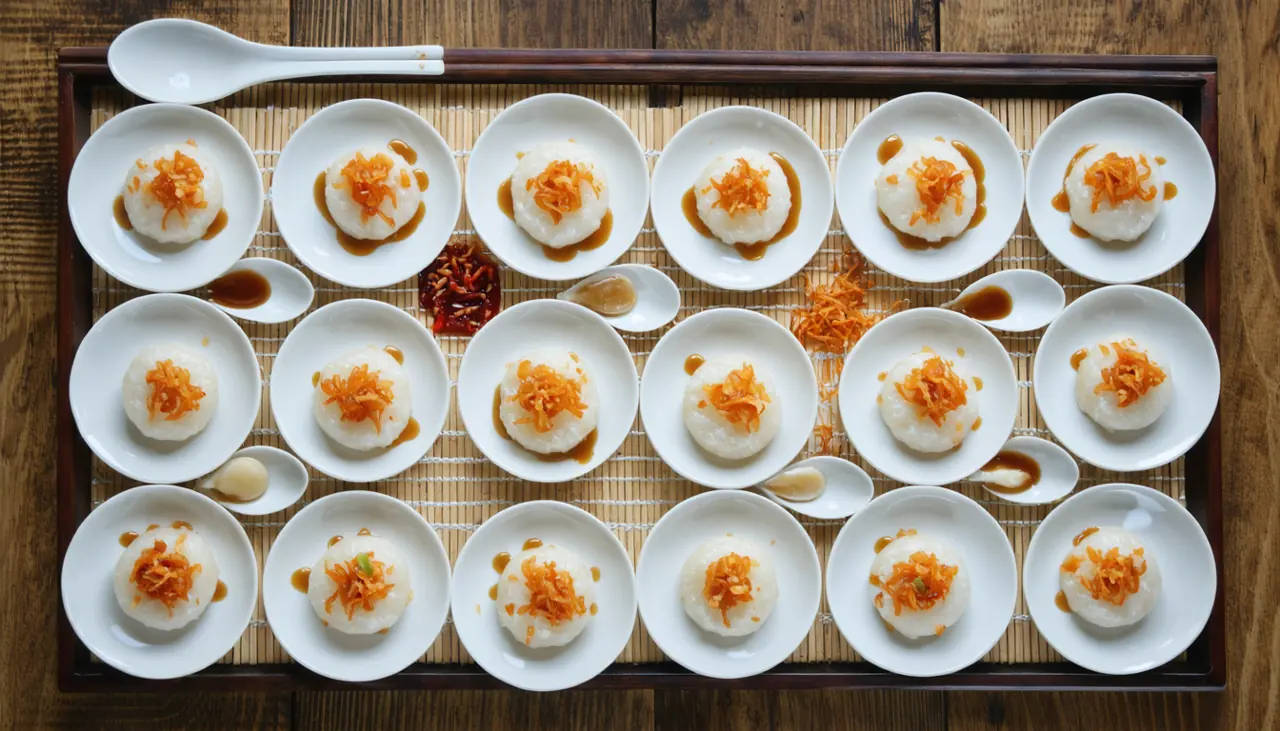
Steamed Rice Cakes with Shrimp (Bánh Bèo)
Small, silky steamed rice flour disks from Huế, topped with fluffy dried shrimp floss, crispy shallots and a sweet-salty-sour fish sauce dressing poured on just before eating.
Servings
Ingredients
Nutrition
Per serving
Steps
Make the batter
Whisk the rice flour, tapioca starch and salt with 300 ml of cold water until completely smooth, with no lumps. Bring the remaining 350 ml water to a full boil, then pour it into the flour mixture while whisking hard and fast; this 'scalds' part of the starch and is the trick that gives its silky, slightly bouncy bite instead of a raw, pasty one. Stir in the oil, strain through a fine sieve, and let the batter rest, covered, for 30 minutes so any air bubbles settle and the cakes steam up smooth.
- 200 g rice flour
- 40 g tapioca starch
- 650 ml water, divided
- 1/2 tsp salt
- 1 tbsp oil
✅ Done when: the batter is completely smooth, pourable, and has rested at least 30 minutes with no visible foam on top
Make the shrimp topping
Soak the dried shrimp in warm water for 15 minutes until softened, then drain well. Pulse in a small blender or pound in a mortar until shredded into fine threads, not a paste. Heat the oil in a pan, add the shrimp, sugar and salt, and stir constantly over low heat for 6–8 minutes until it dries out into a light, fluffy, orange-pink floss; keep the heat low so it dries slowly instead of frying hard and tasting burnt.
- 60 g dried shrimp
- 2 tbsp oil
- 1/4 tsp sugar
- 1/4 tsp salt
✅ Done when: the shrimp looks dry, fluffy and bright orange-pink, not wet or clumped
Fry shallots and scallion oil
Fry the shallots in the oil over medium-low heat, stirring often, for 5–7 minutes until golden and crisp; lift them out with a slotted spoon onto paper towels, keeping the flavoured oil in the pan. Turn off the heat, drop in the scallions and let them sit in the hot oil until wilted and fragrant; this quick infusion makes the glossy scallion oil that gets drizzled over the cakes at the end.
- 6 shallots
- 4 tbsp oil
- 2 scallions
✅ Done when: the shallots are deep golden and crunchy, and the oil smells strongly of toasted shallot and scallion
Make the dressing
Combine the fish sauce, sugar and water in a small pot and bring to a gentle simmer for 2–3 minutes, stirring until the sugar fully dissolves, then take off the heat and let it cool completely. Once cool, stir in the lime juice, garlic and chili; the sauce should taste balanced and a little diluted, light enough to be poured generously over the cakes rather than just dabbed on.
- 60 ml fish sauce
- 60 g sugar
- 180 ml water
- 2 tbsp lime juice
- 1 clove garlic
- 1–2 Thai chilies
✅ Done when: the sauce is cool, clear, and tastes sweet, salty, sour and a little spicy all at once
Steam the rice cakes
Brush small shallow dishes or saucers (about 7 cm wide, the traditional size) with oil and set them in a steamer. Pour a thin layer of batter into each, filling only about halfway; a thin layer is the key detail, since it steams into a slightly concave disk with a natural little dimple in the center that holds the toppings. Steam, covered, over high heat for 5–7 minutes until the cakes turn from cloudy white to translucent and feel set, working in batches if your steamer is small.
- 2 tbsp oil (for greasing)
- all of it rice flour batter (from step 1)
✅ Done when: the cakes look glossy and translucent, not milky, and spring back lightly when touched
Assemble and serve
If using molds, loosen each cake gently with a thin spoon or butter knife. Top every cake with a pinch of shrimp floss, a few crispy shallots and a few drops of scallion oil, then spoon the cooled dressing generously over each one just before serving, enough to pool slightly without drowning the cake. Serve right away while still warm, with extra dressing on the side.
- to taste shrimp topping (from step 2)
- to taste fried shallots and scallion oil (from step 3)
- to taste fish sauce dressing (from step 4)
The Story Behind the Dish
Bánh bèo comes from Huế, the former imperial capital known for its refined, small-portion cuisine that once fed the royal court and still shapes how the city eats today. Steaming the batter in dozens of small individual dishes, rather than one big tray, let cooks control each cake's thinness and let the fish sauce dressing sit right where it belongs, in the little dimple at the center.
From Huế the dish spread south, especially to Saigon, where it is now sold everywhere from street stalls to food courts, usually in stacks of small dishes eaten one after another.
⭐ Why It's Famous
It's loved for the contrast in one small bite: a soft, silky rice cake, dry fluffy shrimp, crunchy fried shallots and a sharp, sweet-salty-sour sauce.
💡 Fun Fact
The name means 'water fern cake' because the little steamed cakes, pale and round with a dip in the middle, were thought to resemble the small floating leaves of water fern plants seen on ponds.
Huế, central Vietnam
16.46°N, 107.59°E
Related recipes
Comments (0)
No comments yet. Be the first to share your thoughts!