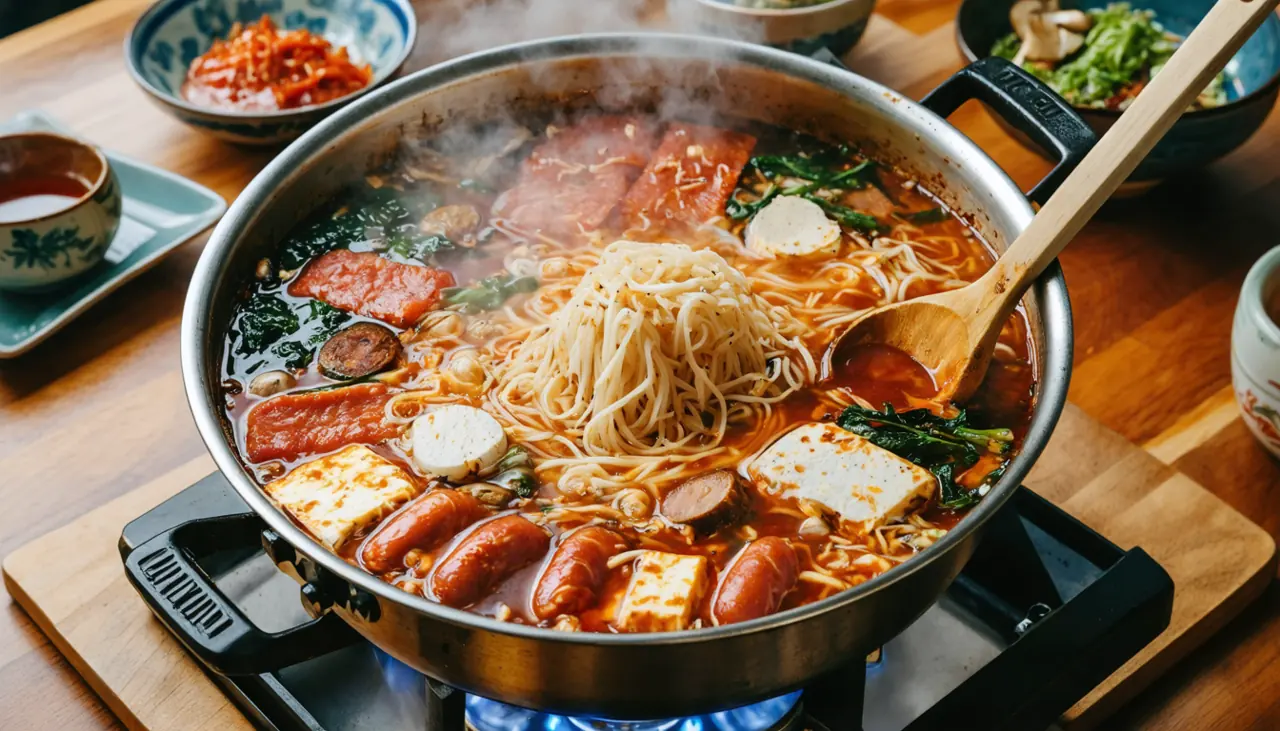
Army Base Stew (Budae-jjigae)
A bubbling, communal pot of kimchi, Spam, sausage, tofu and ramen noodles in a spicy gochujang broth, finished with melted cheese. Born from post-war scarcity, it's now one of Korea's most-loved comfort foods.
Servings
Ingredients
Nutrition
Per serving
Steps

Make the broth
Put the water, dried kelp and dried anchovies in a pot and bring to a boil. Lower the heat and simmer for 10 minutes, then lift out and discard the kelp and anchovies. This light stock is the base that keeps the stew from tasting flat once the spicy sauce goes in.
- 1.2 litres water
- 10 g dried kelp
- 10 g dried anchovies
✅ Done when: the broth is pale golden and smells lightly of the sea, with a savory background note

Mix the spicy sauce
In a small bowl, stir together the , , soy sauce, garlic and sugar with 3 tablespoons of the hot broth until smooth. Making the sauce into a paste first, rather than adding the dry flakes straight to the pot, means the chili blooms evenly instead of clumping.
- 3 tbsp
- 2 tbsp
- 2 tbsp soy sauce
- 1 tbsp minced garlic
- 1 tsp sugar
✅ Done when: the sauce is a smooth, deep red paste with no dry lumps
Arrange everything in the pot
This step is part of Foodie Premium. Subscribe to unlock the full method, cooking mode and every recipe in the library.
Simmer the stew
This step is part of Foodie Premium. Subscribe to unlock the full method, cooking mode and every recipe in the library.
Add the noodles
This step is part of Foodie Premium. Subscribe to unlock the full method, cooking mode and every recipe in the library.
Top with cheese and serve
This step is part of Foodie Premium. Subscribe to unlock the full method, cooking mode and every recipe in the library.
Make the broth
Put the water, dried kelp and dried anchovies in a pot and bring to a boil. Lower the heat and simmer for 10 minutes, then lift out and discard the kelp and anchovies. This light stock is the base that keeps the stew from tasting flat once the spicy sauce goes in.
- 1.2 litres water
- 10 g dried kelp
- 10 g dried anchovies
✅ Done when: the broth is pale golden and smells lightly of the sea, with a savory background note
Mix the spicy sauce
In a small bowl, stir together the , , soy sauce, garlic and sugar with 3 tablespoons of the hot broth until smooth. Making the sauce into a paste first, rather than adding the dry flakes straight to the pot, means the chili blooms evenly instead of clumping.
- 3 tbsp
- 2 tbsp
- 2 tbsp soy sauce
- 1 tbsp minced garlic
- 1 tsp sugar
✅ Done when: the sauce is a smooth, deep red paste with no dry lumps
Arrange everything in the pot
This step is part of Foodie Premium. Subscribe to unlock the full method, cooking mode and every recipe in the library.
Simmer the stew
This step is part of Foodie Premium. Subscribe to unlock the full method, cooking mode and every recipe in the library.
Add the noodles
This step is part of Foodie Premium. Subscribe to unlock the full method, cooking mode and every recipe in the library.
Top with cheese and serve
This step is part of Foodie Premium. Subscribe to unlock the full method, cooking mode and every recipe in the library.
The Story Behind the Dish
In the hungry years right after the Korean War, families living near US army bases in towns like Uijeongbu and Dongducheon stretched scarce rations by cooking surplus American foods, Spam, hot dog sausages, canned baked beans, together with kimchi and gochujang in one shared pot. The dish took its name, army base stew, straight from where its ingredients came from.
What began as a dish of necessity became a beloved comfort food across Korea, especially popular with students and office workers for its communal, help-yourself style and the way the broth gets richer the more goes into it: noodles, cheese, whatever is on hand.
⭐ Why It's Famous
It's loved for turning humble canned goods into a bubbling, spicy, cheesy pot that's meant to be shared straight from the stove at the table.
💡 Fun Fact
Uijeongbu, where the dish is said to have started, still has whole streets lined with restaurants that specialize in budae-jjigae.
Uijeongbu, near a US military base, South Korea
37.74°N, 127.03°E
Related recipes
Comments (0)
No comments yet. Be the first to share your thoughts!