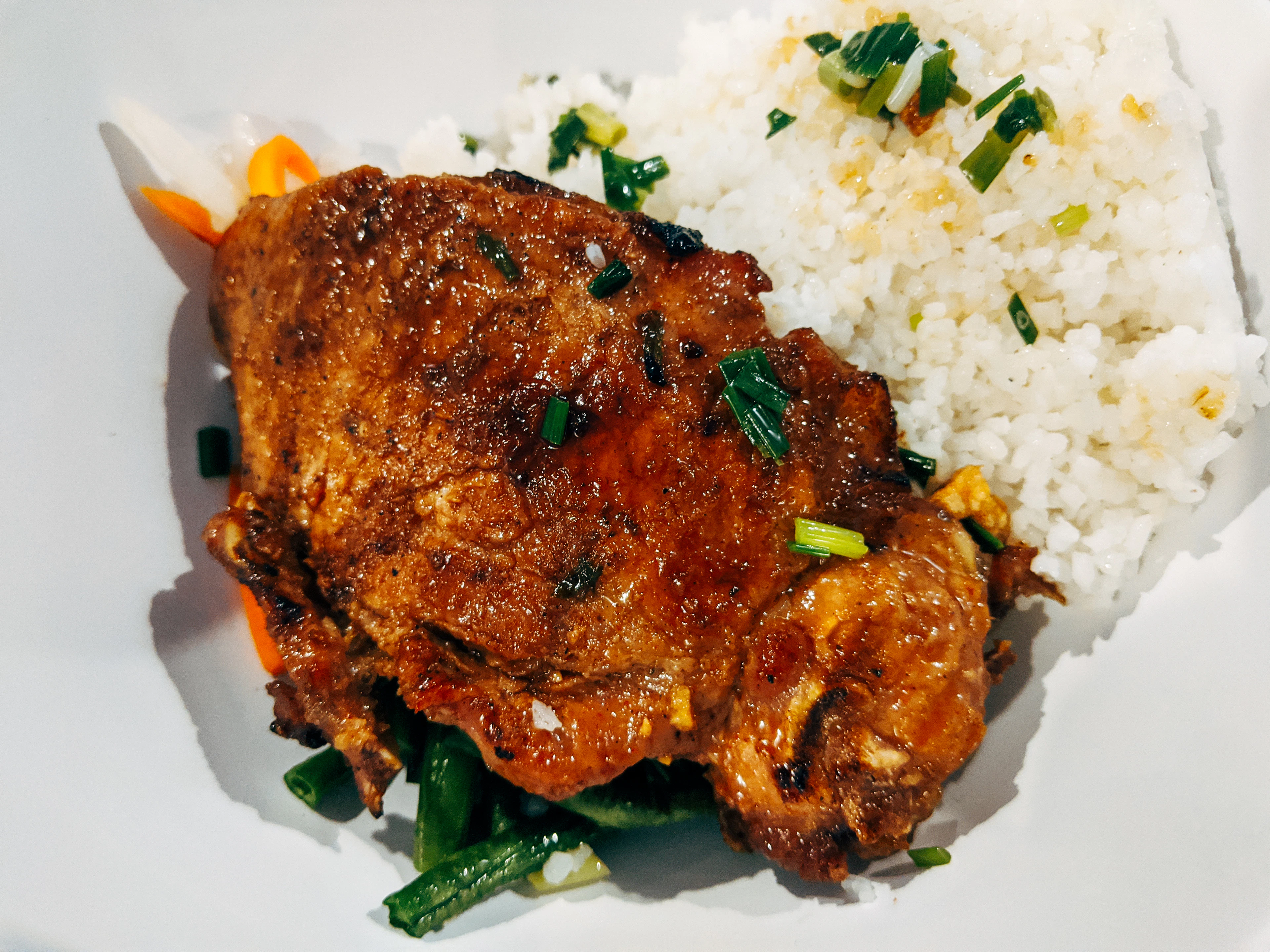
Chicken Adobo
Photo: Markus Winkler / Unsplash
The Philippines' best-loved dish: chicken thighs braised in vinegar, soy sauce, lots of garlic, bay leaves and black peppercorns until tender, then seared until glossy and caramelised and served over garlic rice with the reduced sauce.
Servings
Ingredients
Nutrition
Per serving
Steps
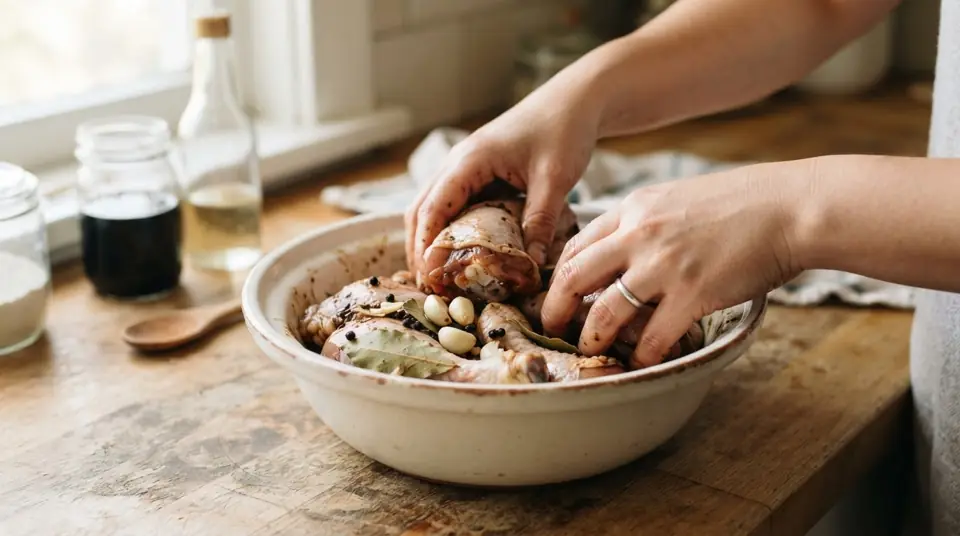
Marinate
In a bowl, combine the chicken, vinegar, soy sauce, garlic, bay leaves and peppercorns. Cover and leave at room temperature for 30 minutes, or in the fridge for up to overnight.
- 8 thighs chicken thighs
- 120ml vinegar
- 80ml soy sauce
- 1 head garlic
- 4 bay leaves
- 1 tsp peppercorns
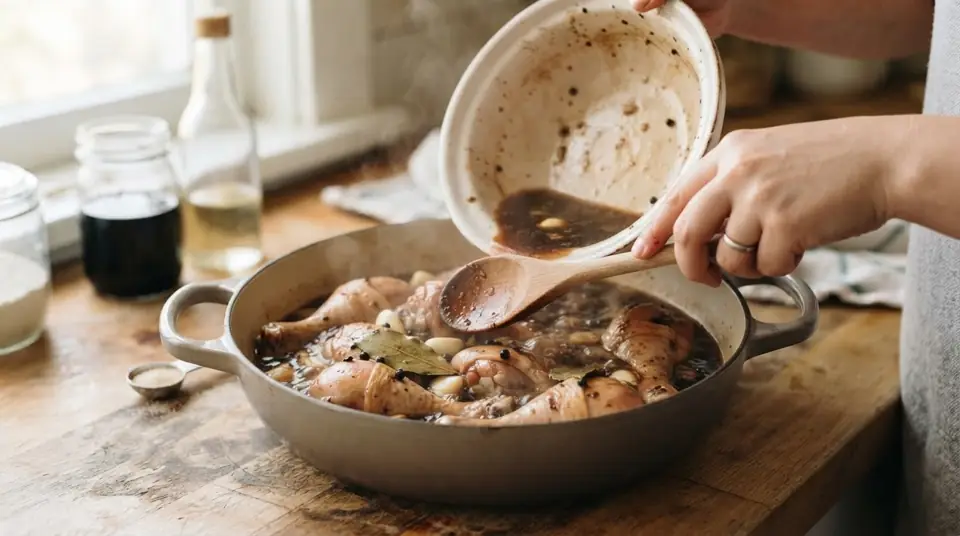
Cook in the sauce
Pour the chicken and marinade into a wide pan (about 28cm). Add the sugar and water, bring to a boil over high heat without stirring for a few minutes, then reduce to low heat, cover and simmer gently for 25-30 minutes.
- all the marinade from step 1
- 1 tbsp brown sugar
- 250ml water
✅ Done when: chicken is very tender and sauce bubbles gently
Thicken the sauce
This step is part of Foodie Premium. Subscribe to unlock the full method, cooking mode and every recipe in the library.
Brown the chicken
This step is part of Foodie Premium. Subscribe to unlock the full method, cooking mode and every recipe in the library.
Coat with sauce
This step is part of Foodie Premium. Subscribe to unlock the full method, cooking mode and every recipe in the library.
Serve
This step is part of Foodie Premium. Subscribe to unlock the full method, cooking mode and every recipe in the library.
Marinate
In a bowl, combine the chicken, vinegar, soy sauce, garlic, bay leaves and peppercorns. Cover and leave at room temperature for 30 minutes, or in the fridge for up to overnight.
- 8 thighs chicken thighs
- 120ml vinegar
- 80ml soy sauce
- 1 head garlic
- 4 bay leaves
- 1 tsp peppercorns
Cook in the sauce
Pour the chicken and marinade into a wide pan (about 28cm). Add the sugar and water, bring to a boil over high heat without stirring for a few minutes, then reduce to low heat, cover and simmer gently for 25-30 minutes.
- all the marinade from step 1
- 1 tbsp brown sugar
- 250ml water
✅ Done when: chicken is very tender and sauce bubbles gently
Thicken the sauce
This step is part of Foodie Premium. Subscribe to unlock the full method, cooking mode and every recipe in the library.
Brown the chicken
This step is part of Foodie Premium. Subscribe to unlock the full method, cooking mode and every recipe in the library.
Coat with sauce
This step is part of Foodie Premium. Subscribe to unlock the full method, cooking mode and every recipe in the library.
Serve
This step is part of Foodie Premium. Subscribe to unlock the full method, cooking mode and every recipe in the library.
The Story Behind the Dish
Long before the Spanish arrived, Filipino cooks preserved meat and fish by cooking it in vinegar and salt — a smart technique in a hot, humid climate. When Spanish colonisers saw it in the 16th century, they called it adobo, after their own word for a marinade, and the name stuck.
Soy sauce, brought by Chinese traders, later joined the vinegar, and today there are as many versions of adobo as there are Filipino families.
⭐ Why It's Famous
It's often called the unofficial national dish of the Philippines: simple, deeply savoury and loved at home and abroad.
💡 Fun Fact
Thanks to the vinegar, adobo keeps well for days without refrigeration — and most Filipinos agree it tastes even better the next day.
The Philippines
14.60°N, 120.98°E
Related recipes
Comments (0)
No comments yet. Be the first to share your thoughts!