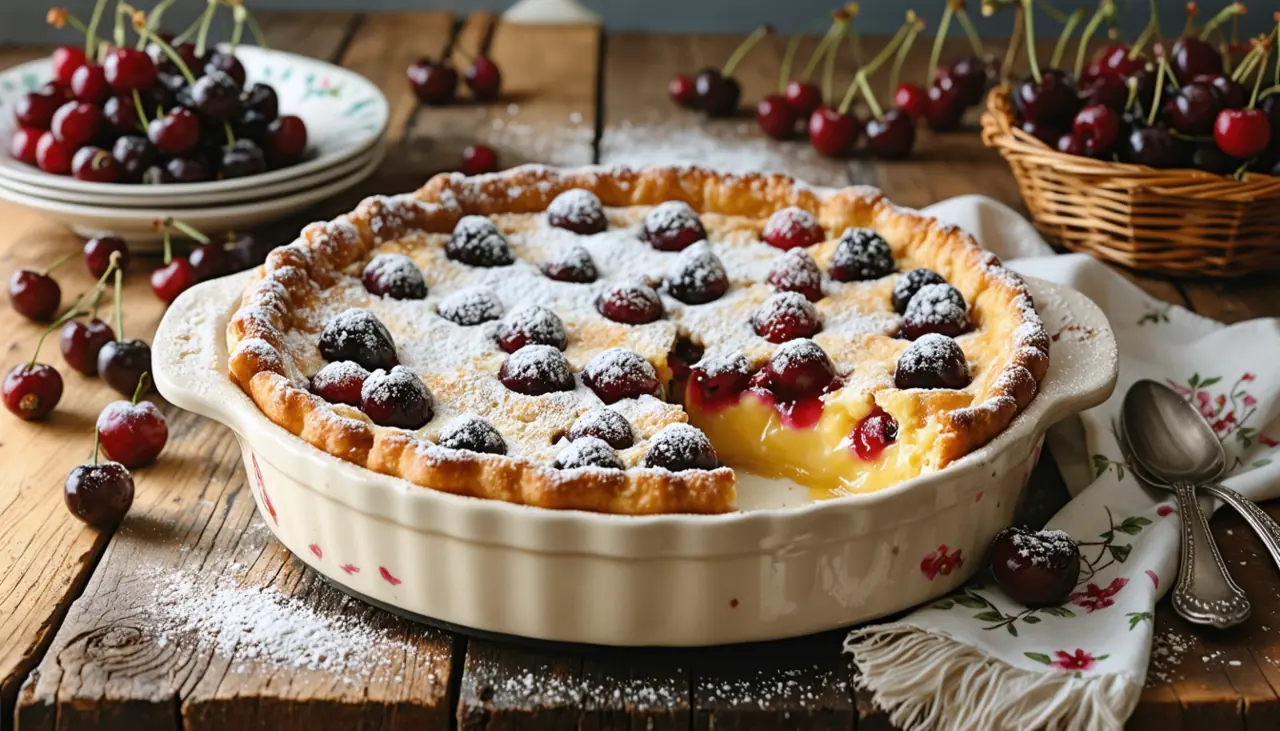
Cherry Clafoutis (Clafoutis aux Cerises)
A rustic Limousin classic: sweet cherries baked under a thin, eggy custard that puffs up golden in the oven. Simple, lightly sweet, and best eaten warm with a dusting of icing sugar.
Servings
Ingredients
Nutrition
Per serving
Steps
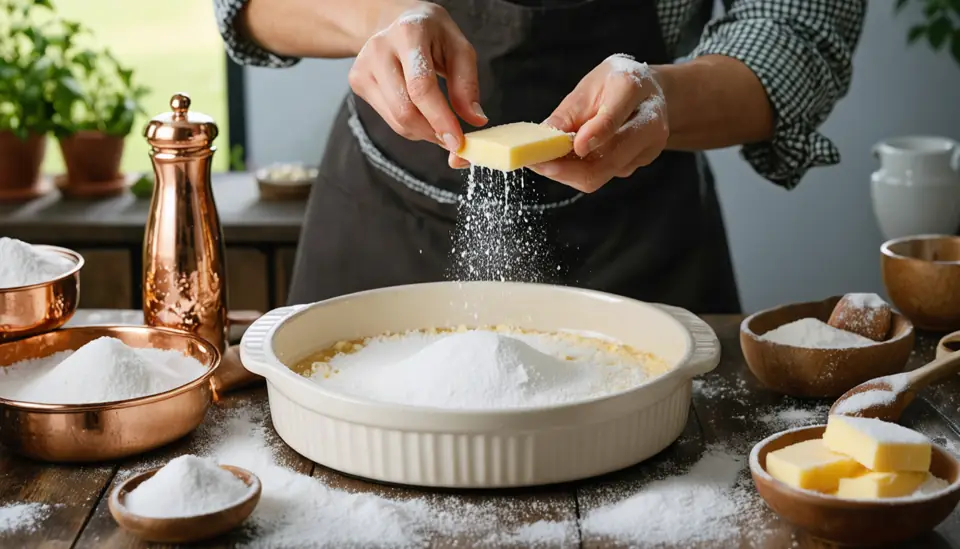
Prepare the dish
Generously butter a 24 cm round baking dish or deep pie dish, then sprinkle in 1 tbsp sugar, tilting the dish so it coats the base and sides evenly; tip out any excess. This thin sugar crust keeps the from sticking and gives the edge a faint caramelised crunch.
- 20 g butter
- 1 tbsp sugar (from the total amount)
✅ Done when: the dish is evenly coated with butter and a fine sugar crust, with no bare patches
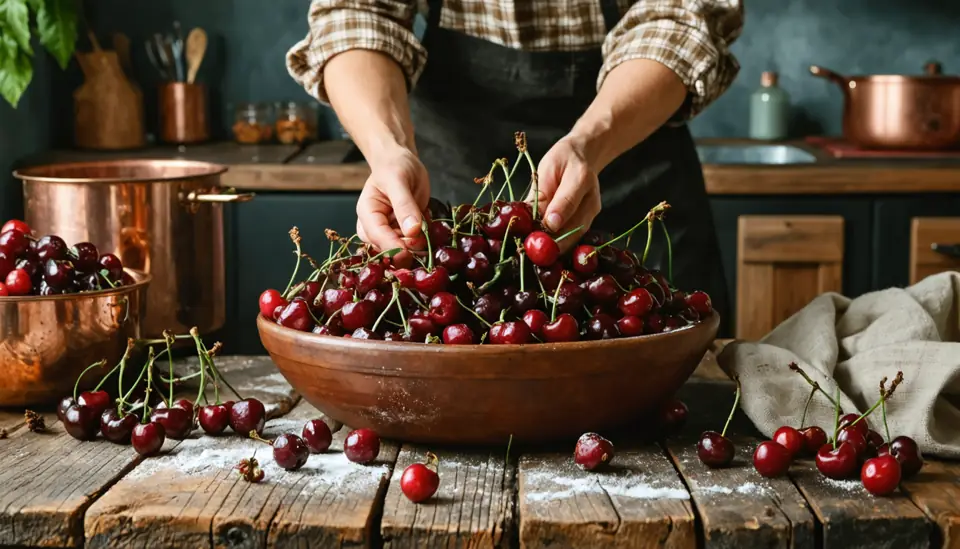
Prepare the cherries
Rinse the cherries and pat them completely dry, then pull off the stems. In Limousin they are traditionally left unpitted, since the pits release a faint almond flavour into the custard as it bakes and keep the fruit from leaking too much juice; pit them first if you prefer a dessert that is easier to eat, just let your guests know.
- 600 g cherries
✅ Done when: the cherries are dry, stemmed and ready to use, pitted or not as you prefer
Whisk the batter
This step is part of Foodie Premium. Subscribe to unlock the full method, cooking mode and every recipe in the library.
Fill the dish
This step is part of Foodie Premium. Subscribe to unlock the full method, cooking mode and every recipe in the library.
Bake
This step is part of Foodie Premium. Subscribe to unlock the full method, cooking mode and every recipe in the library.
Rest and serve
This step is part of Foodie Premium. Subscribe to unlock the full method, cooking mode and every recipe in the library.
Prepare the dish
Generously butter a 24 cm round baking dish or deep pie dish, then sprinkle in 1 tbsp sugar, tilting the dish so it coats the base and sides evenly; tip out any excess. This thin sugar crust keeps the from sticking and gives the edge a faint caramelised crunch.
- 20 g butter
- 1 tbsp sugar (from the total amount)
✅ Done when: the dish is evenly coated with butter and a fine sugar crust, with no bare patches
Prepare the cherries
Rinse the cherries and pat them completely dry, then pull off the stems. In Limousin they are traditionally left unpitted, since the pits release a faint almond flavour into the custard as it bakes and keep the fruit from leaking too much juice; pit them first if you prefer a dessert that is easier to eat, just let your guests know.
- 600 g cherries
✅ Done when: the cherries are dry, stemmed and ready to use, pitted or not as you prefer
Whisk the batter
This step is part of Foodie Premium. Subscribe to unlock the full method, cooking mode and every recipe in the library.
Fill the dish
This step is part of Foodie Premium. Subscribe to unlock the full method, cooking mode and every recipe in the library.
Bake
This step is part of Foodie Premium. Subscribe to unlock the full method, cooking mode and every recipe in the library.
Rest and serve
This step is part of Foodie Premium. Subscribe to unlock the full method, cooking mode and every recipe in the library.
The Story Behind the Dish
Clafoutis comes from the Limousin region in central France, where cherry orchards have long been part of the countryside. Its name likely comes from the Occitan word "clafir", meaning to fill or to nail down, a nod to how the cherries are studded through the batter before it is baked.
It began as a simple farmhouse dessert, made in late spring and early summer when cherries were plentiful, using little more than eggs, milk, flour and whatever fruit was at hand. Over time it travelled beyond Limousin and became one of France's most beloved home desserts, served in bistros and family kitchens alike.
⭐ Why It's Famous
It is loved for being humble yet elegant: a thin, custardy batter that puffs around the fruit, lightly sweet, and far simpler to make than most French pastries, which is exactly why generations of home cooks have kept making it.
💡 Fun Fact
French culinary tradition holds that a true clafoutis is made with the cherry pits left in; when made with other fruit, such as pears or apples, it is technically called a "flaugnarde" instead.
Limousin, France
45.83°N, 1.26°E
Related recipes
Comments (0)
No comments yet. Be the first to share your thoughts!