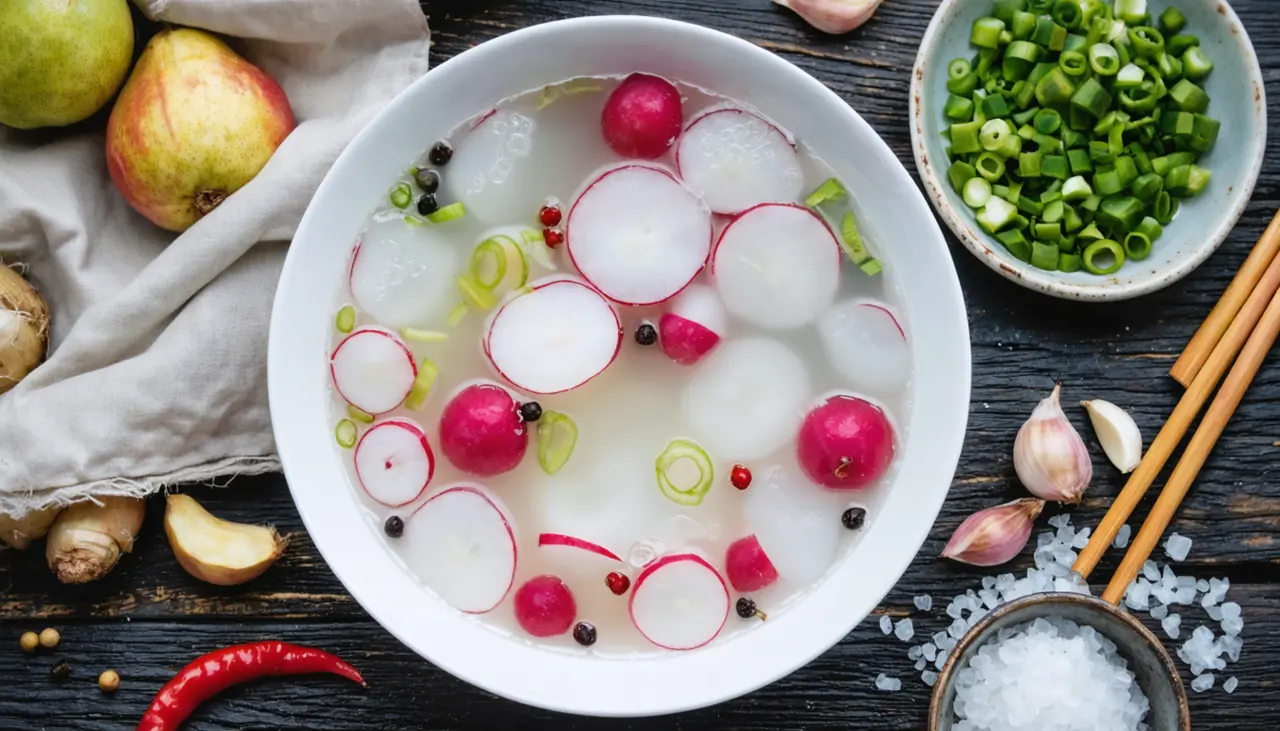
Watery Radish Kimchi (Dongchimi)
Whole small radishes ferment slowly in a lightly salted, faintly sweet brine scented with pear, garlic and ginger, turning tangy and gently fizzy. Serve the radish cold and sip the icy brine alongside rich winter food.
Servings
Ingredients
Nutrition
Per serving
Steps

Salt the radishes
Scrub the radishes well (no need to peel if the skin is thin) and cut into large bite-size wedges, or leave small ones whole with a few shallow scores. Toss with 1 tablespoon of the salt in a big bowl and let sit for 1 hour, tossing once or twice.
- 1.3 kg radishes
- 1 tbsp salt (from the 3 tbsp)
✅ Done when: the radish pieces feel slightly firmer and have released a little liquid at the bottom of the bowl

Cook a rice flour slurry
Whisk the rice flour into 200 ml of the water until smooth, then warm it in a small pot over low heat, stirring constantly, until it turns slightly thick and translucent like a thin porridge. Let it cool completely. This small step is a traditional trick: the starch feeds the fermentation and gives the brine a faint, silky body without making it heavy.
- 2 tbsp rice flour
- 200 ml water (from the 2 litres)
✅ Done when: the slurry has thickened just slightly and no longer looks like plain cloudy water
Mix the brine
This step is part of Foodie Premium. Subscribe to unlock the full method, cooking mode and every recipe in the library.
Tie up the aromatics
This step is part of Foodie Premium. Subscribe to unlock the full method, cooking mode and every recipe in the library.
Pack the jar
This step is part of Foodie Premium. Subscribe to unlock the full method, cooking mode and every recipe in the library.
Ferment at room temperature
This step is part of Foodie Premium. Subscribe to unlock the full method, cooking mode and every recipe in the library.
Chill and let it mature
This step is part of Foodie Premium. Subscribe to unlock the full method, cooking mode and every recipe in the library.
Salt the radishes
Scrub the radishes well (no need to peel if the skin is thin) and cut into large bite-size wedges, or leave small ones whole with a few shallow scores. Toss with 1 tablespoon of the salt in a big bowl and let sit for 1 hour, tossing once or twice.
- 1.3 kg radishes
- 1 tbsp salt (from the 3 tbsp)
✅ Done when: the radish pieces feel slightly firmer and have released a little liquid at the bottom of the bowl
Cook a rice flour slurry
Whisk the rice flour into 200 ml of the water until smooth, then warm it in a small pot over low heat, stirring constantly, until it turns slightly thick and translucent like a thin porridge. Let it cool completely. This small step is a traditional trick: the starch feeds the fermentation and gives the brine a faint, silky body without making it heavy.
- 2 tbsp rice flour
- 200 ml water (from the 2 litres)
✅ Done when: the slurry has thickened just slightly and no longer looks like plain cloudy water
Mix the brine
This step is part of Foodie Premium. Subscribe to unlock the full method, cooking mode and every recipe in the library.
Tie up the aromatics
This step is part of Foodie Premium. Subscribe to unlock the full method, cooking mode and every recipe in the library.
Pack the jar
This step is part of Foodie Premium. Subscribe to unlock the full method, cooking mode and every recipe in the library.
Ferment at room temperature
This step is part of Foodie Premium. Subscribe to unlock the full method, cooking mode and every recipe in the library.
Chill and let it mature
This step is part of Foodie Premium. Subscribe to unlock the full method, cooking mode and every recipe in the library.
The Story Behind the Dish
Dongchimi means roughly 'winter radish kimchi,' and it is one of the oldest styles of kimchi in Korea, made before chili pepper became a kitchen staple. Instead of heat, it relies on garlic, ginger, pear and a gentle fermentation to turn plain salted radish into something tangy, sweet and lightly fizzy.
Families traditionally packed radishes into large earthenware onggi jars in late autumn and buried them in the ground or kept them in a cold shed, letting the cold slow the fermentation so the kimchi stayed fresh and crisp through the whole winter.
⭐ Why It's Famous
It is loved for its clear, almost sparkling brine, which is drunk on its own or used as a cold noodle broth, offering relief alongside heavier, spicier winter dishes.
💡 Fun Fact
A classic winter pairing in Korea is a bowl of icy dongchimi brine served alongside hot roasted sweet potatoes, the cold tangy liquid balancing the warm starchy sweetness.
Korea, especially the colder northern regions
39.04°N, 125.76°E
Related recipes
Comments (0)
No comments yet. Be the first to share your thoughts!