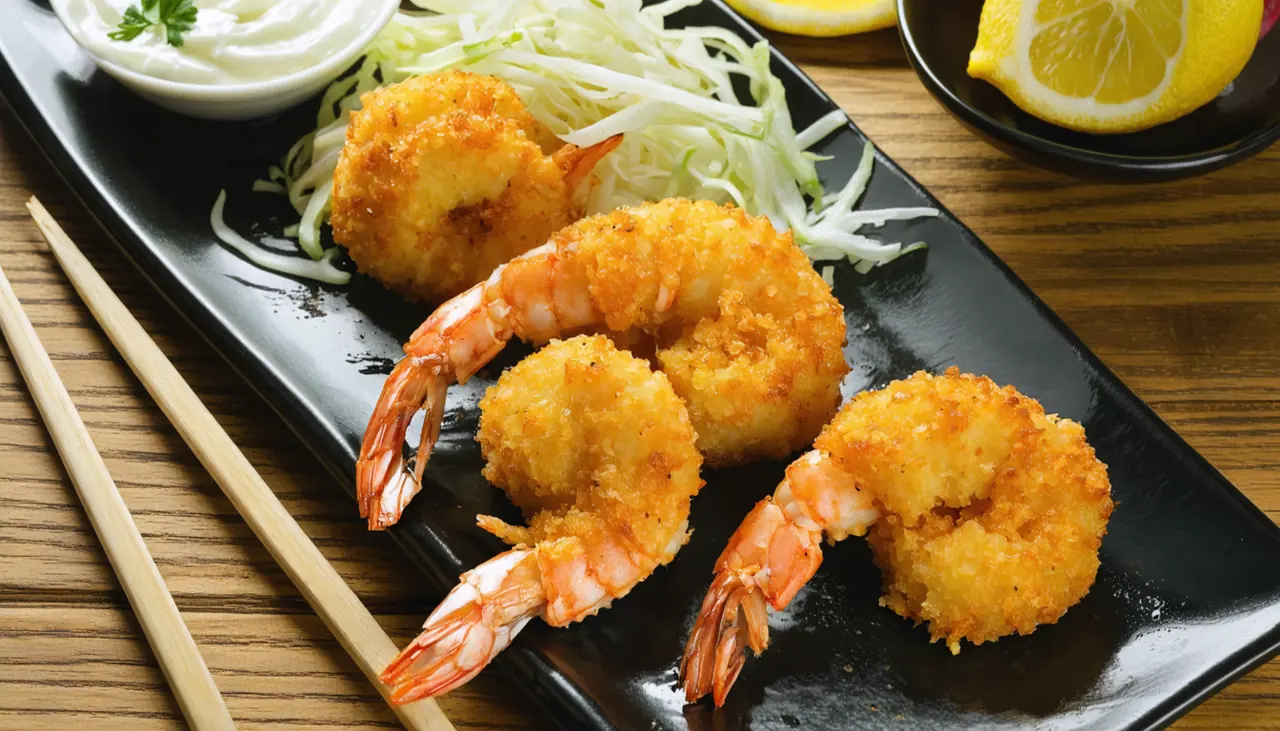
Japanese Fried Shrimp (Ebi Fry)
Large shrimp straightened, breaded in airy panko and fried to a crisp golden shell, served with shredded cabbage and a quick homemade tartar sauce. A beloved yōshoku classic that's crunchy outside, juicy and sweet inside.
Servings
Ingredients
Nutrition
Per serving
Steps
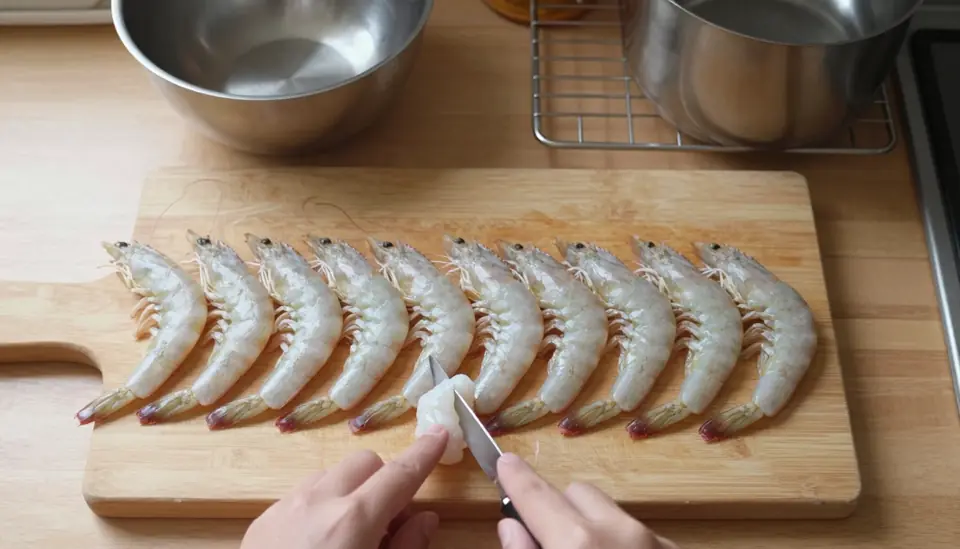
Peel and straighten shrimp
Peel off the shell but leave the last tail segment on, then devein. On the curved belly side, make 3–4 shallow cuts between the segments, just deep enough to nick the tendon, then press the shrimp flat on the counter until it stays straight.
- 12 (about 300 g) shrimp
✅ Done when: shrimp lies flat and straight, not curled
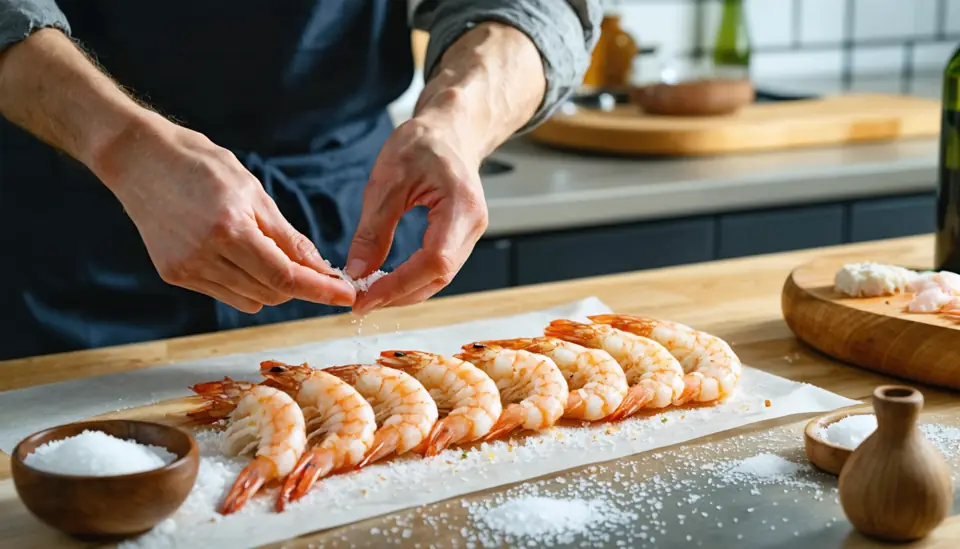
Season and dry
Pat the shrimp dry, sprinkle with the salt, and pepper, and rub gently; the rinses away any fishy smell. Let sit for 5 minutes, then pat dry again with paper towel so the breading sticks well.
- 12 (about 300 g) shrimp
- 1/2 tsp salt
- 1 tbsp
- pinch black pepper
✅ Done when: shrimp surface feels dry to the touch
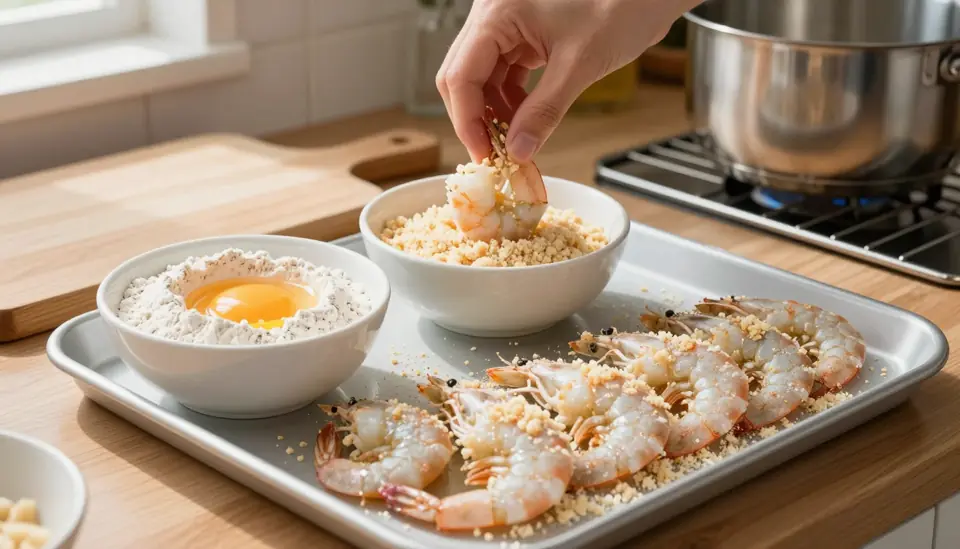
Bread in panko
Holding each shrimp by the tail, dust it in flour, dip in beaten egg, then press firmly into the so it is coated all over in an even, fluffy crust. Set the breaded shrimp on a tray without stacking.
- 12 seasoned shrimp from step 2
- 60 g flour
- 2 beaten eggs
- 150 g
✅ Done when: each shrimp is evenly coated with a fluffy panko crust
Make the tartar sauce
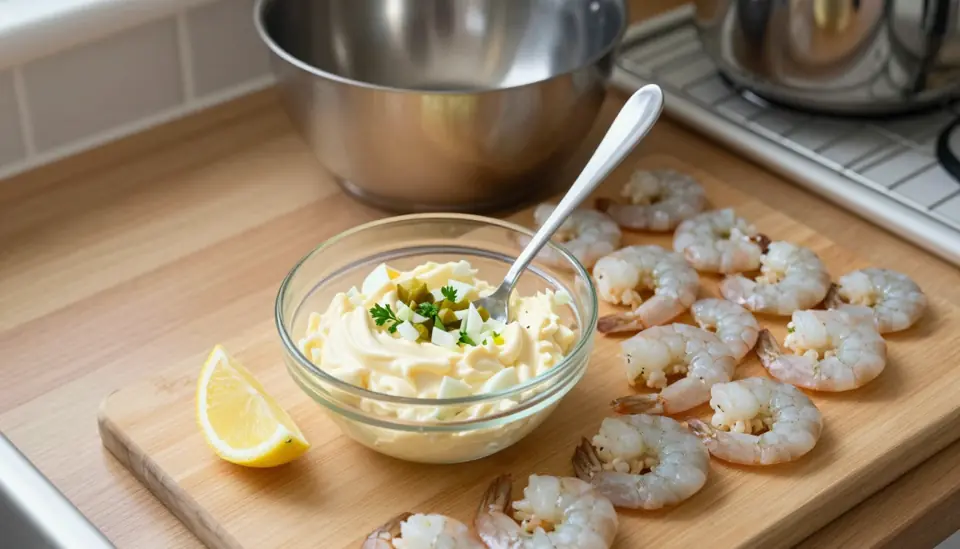
Mix the mayonnaise, chopped boiled egg, onion, gherkins, lemon juice and parsley in a small bowl. Season with a little salt and pepper and set aside; it tastes even better after a short rest in the fridge.
- 4 tbsp mayonnaise
- 1 hard-boiled egg
- 2 tbsp onion
- 2 tbsp gherkins
- 1 tsp lemon juice
- 1 tbsp parsley
- to taste salt and pepper
✅ Done when: sauce is evenly mixed and smooth
Fry until golden
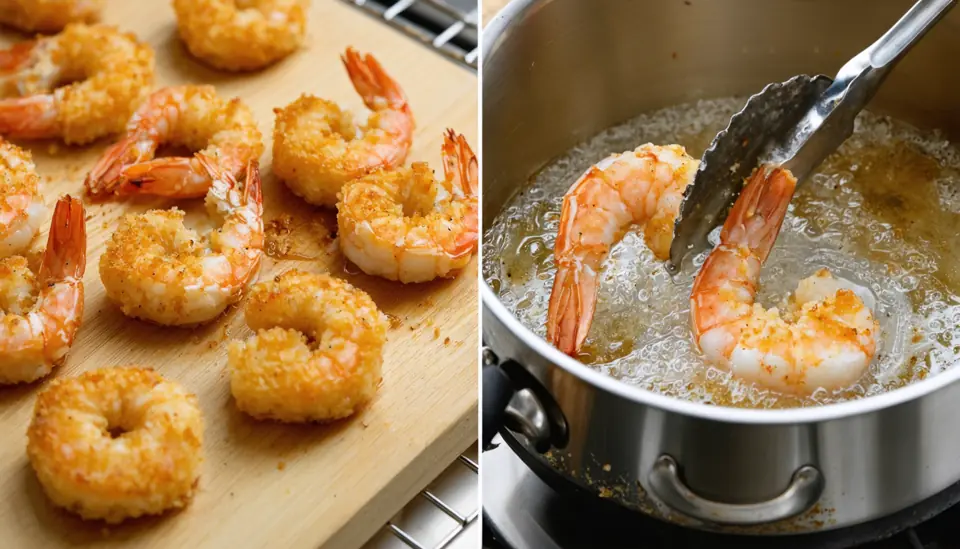
Pour the oil into a medium pot (about 20 cm / 8 in across) deep enough that the oil comes about 5 cm up the side, and heat it to 170–180°C (340–355°F). Fry the shrimp in batches of 3–4 for 2–3 minutes, turning once, until deep golden and crisp; do not crowd the pot or the oil temperature will drop.
- 1 litre oil
- 12 breaded shrimp from step 3
✅ Done when: coating is deep golden brown and crisp
Drain and serve
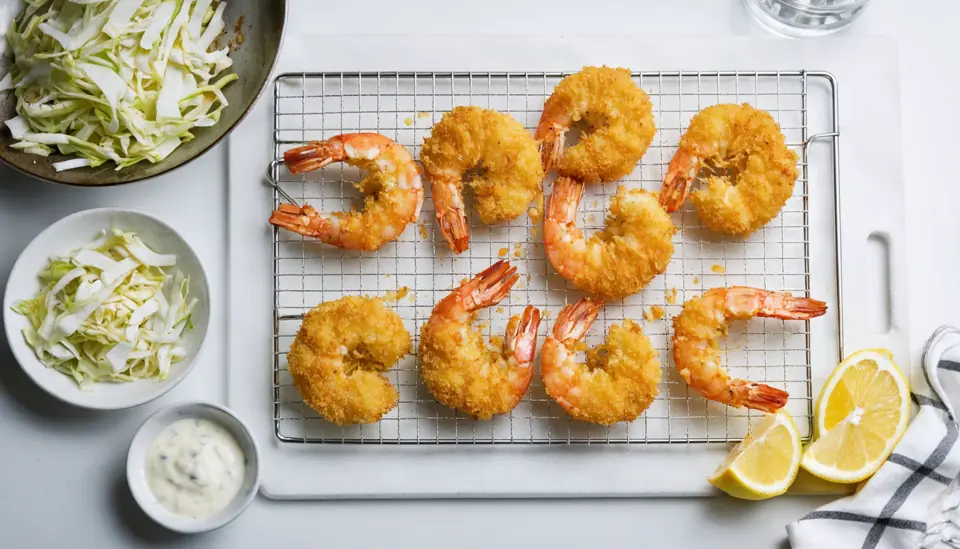
Lift the shrimp onto a rack or paper towel to drain for a minute. Serve hot with the shredded cabbage, lemon wedges and the tartar sauce for dipping.
- 12 fried shrimp from step 5
- 1/4 head cabbage
- 4 wedges lemon
- all of it tartar sauce from step 4
Peel and straighten shrimp
Peel off the shell but leave the last tail segment on, then devein. On the curved belly side, make 3–4 shallow cuts between the segments, just deep enough to nick the tendon, then press the shrimp flat on the counter until it stays straight.
- 12 (about 300 g) shrimp
✅ Done when: shrimp lies flat and straight, not curled
Season and dry
Pat the shrimp dry, sprinkle with the salt, and pepper, and rub gently; the rinses away any fishy smell. Let sit for 5 minutes, then pat dry again with paper towel so the breading sticks well.
- 12 (about 300 g) shrimp
- 1/2 tsp salt
- 1 tbsp
- pinch black pepper
✅ Done when: shrimp surface feels dry to the touch
Bread in panko
Holding each shrimp by the tail, dust it in flour, dip in beaten egg, then press firmly into the so it is coated all over in an even, fluffy crust. Set the breaded shrimp on a tray without stacking.
- 12 seasoned shrimp from step 2
- 60 g flour
- 2 beaten eggs
- 150 g
✅ Done when: each shrimp is evenly coated with a fluffy panko crust
Make the tartar sauce
Mix the mayonnaise, chopped boiled egg, onion, gherkins, lemon juice and parsley in a small bowl. Season with a little salt and pepper and set aside; it tastes even better after a short rest in the fridge.
- 4 tbsp mayonnaise
- 1 hard-boiled egg
- 2 tbsp onion
- 2 tbsp gherkins
- 1 tsp lemon juice
- 1 tbsp parsley
- to taste salt and pepper
✅ Done when: sauce is evenly mixed and smooth
Fry until golden
Pour the oil into a medium pot (about 20 cm / 8 in across) deep enough that the oil comes about 5 cm up the side, and heat it to 170–180°C (340–355°F). Fry the shrimp in batches of 3–4 for 2–3 minutes, turning once, until deep golden and crisp; do not crowd the pot or the oil temperature will drop.
- 1 litre oil
- 12 breaded shrimp from step 3
✅ Done when: coating is deep golden brown and crisp
Drain and serve
Lift the shrimp onto a rack or paper towel to drain for a minute. Serve hot with the shredded cabbage, lemon wedges and the tartar sauce for dipping.
- 12 fried shrimp from step 5
- 1/4 head cabbage
- 4 wedges lemon
- all of it tartar sauce from step 4
The Story Behind the Dish
Ebi fry belongs to yōshoku, the family of Western-inspired dishes that Japanese cooks developed from the Meiji era onward, when the country opened to foreign trade and ideas. Breaded, deep-fried foods arrived from European cooking and were adapted to Japanese taste using panko and local frying oils, becoming dishes like tonkatsu, korokke and ebi fry.
Ebi fry became a star of Western-style restaurants (yōshokuya) and department store dining halls, prized because shrimp was a treat and the dish looked impressive straightened and lined up on the plate. It remains a favourite for celebrations, bento boxes and family dinners.
⭐ Why It's Famous
The contrast between the crisp, airy panko shell and the sweet, juicy shrimp inside, plus the neat trick of straightening the shrimp before frying, makes it a dish people request by name.
💡 Fun Fact
Scoring the shrimp's belly so it fries perfectly straight is a small technique that home cooks and professional kitchens alike use specifically for this dish.
Yokohama / Tokyo
35.44°N, 139.64°E
Related recipes
Comments (0)
No comments yet. Be the first to share your thoughts!