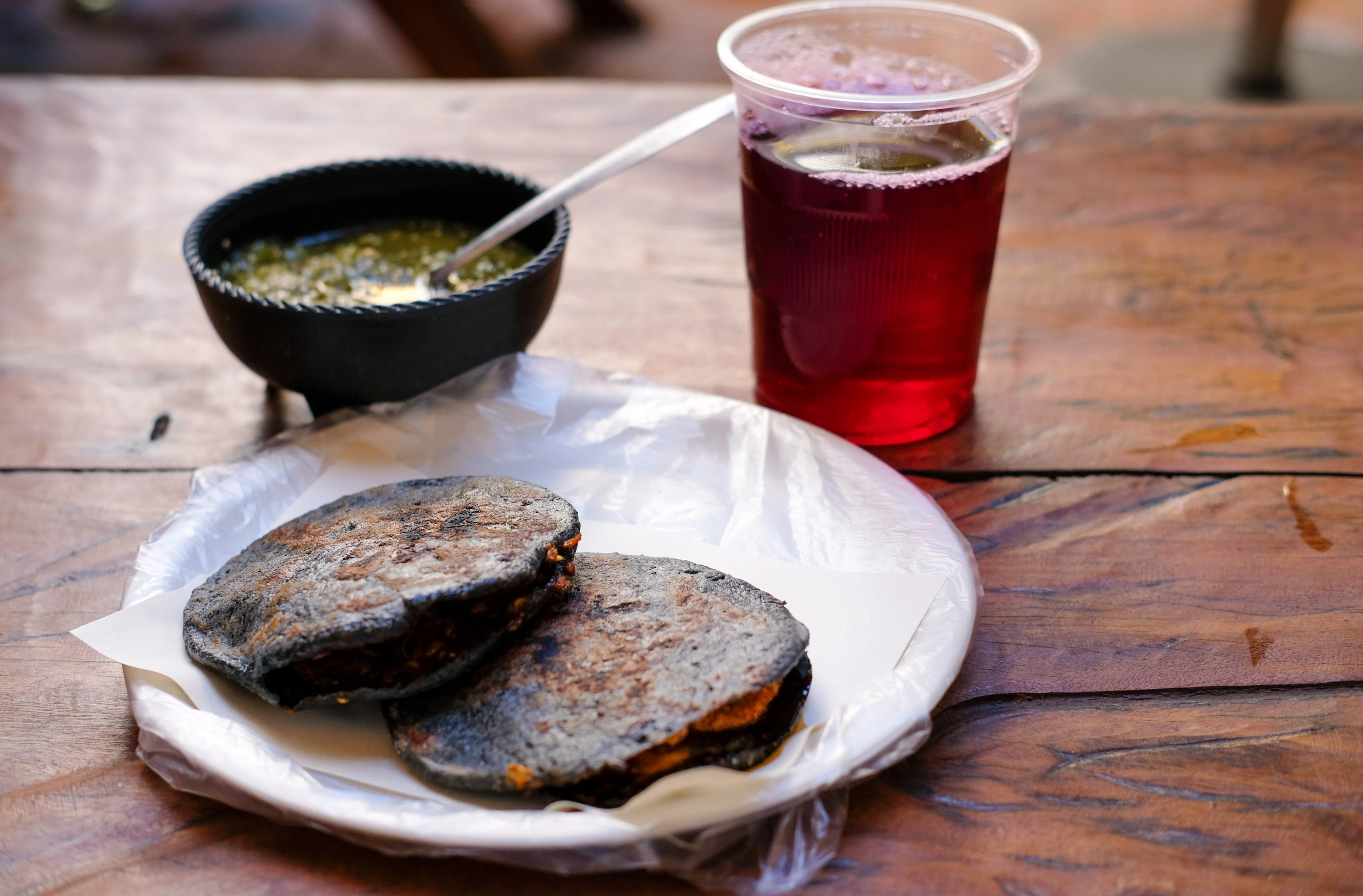
Gorditas (Stuffed Masa Pockets)
Photo: Edgar Cavazos / Unsplash
Thick little corn cakes cooked on the comal until set, then fried until they puff up, split open while hot and stuffed with warm refried beans, crumbled queso fresco, lettuce, crema and salsa.
Servings
Ingredients
Nutrition
Per serving
Steps
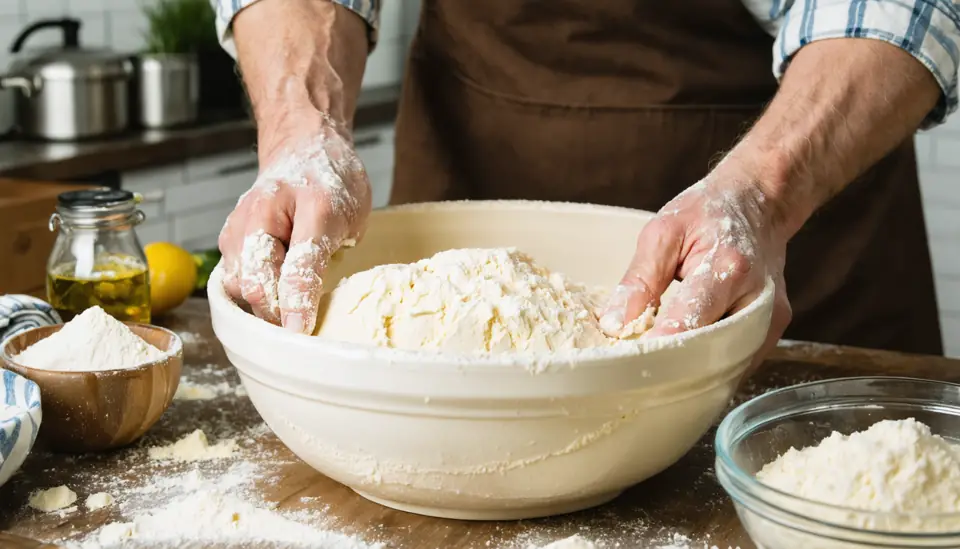
Mix the masa
In a bowl, mix the , salt and oil, then add warm water a little at a time, kneading with your hands until the dough is soft and smooth and does not crack at the edges, like soft play-dough. Cover with a damp cloth and let rest 10 minutes so the water is fully absorbed.
- 500 g
- 1 tsp salt
- 2 tbsp vegetable oil
- 550-600 ml warm water
✅ Done when: dough is soft, smooth and holds together without cracking
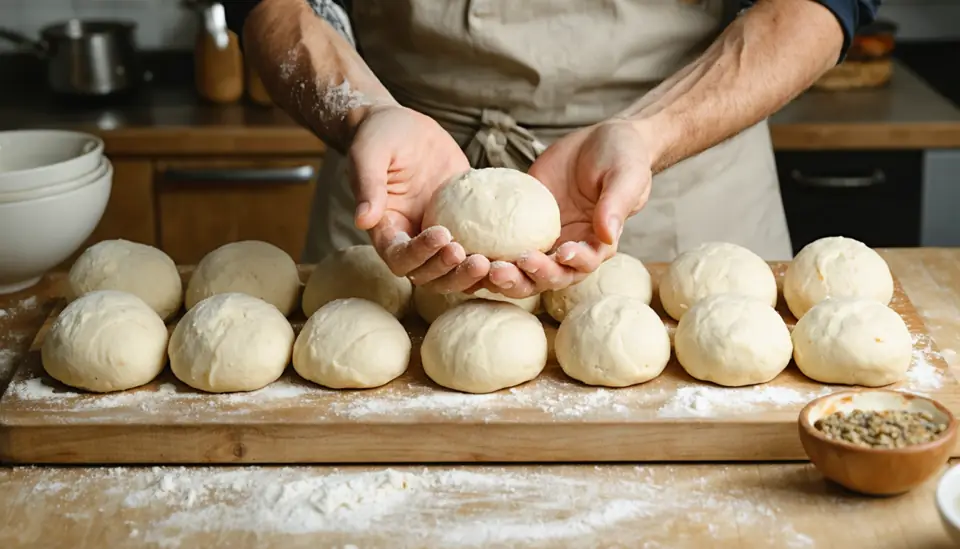
Shape thick cakes
Divide the dough into 12 balls of about 90 g each, then pat each one between your palms, or in a tortilla press lined with plastic, into a thick disc about 1.5 cm thick and 8 cm wide, thicker than a tortilla so it can hold a pocket. Smooth the edges with wet fingers so they do not crack later.
- all of it the dough from step 1
✅ Done when: 12 even discs, about 1.5 cm thick, with smooth, uncracked edges
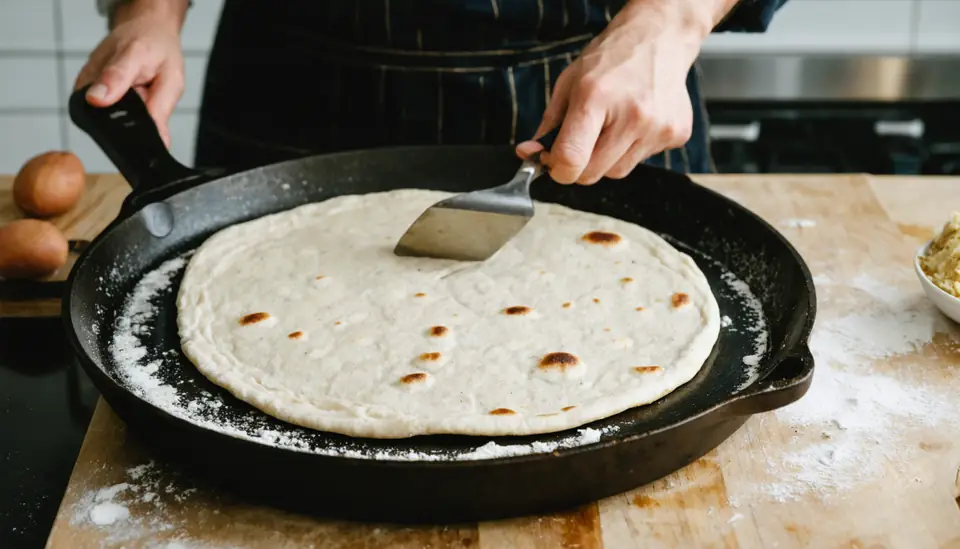
Cook on the comal
Cook the discs on a dry or heavy skillet over medium-high heat, with no oil, about 4 minutes per side, until a dry, lightly speckled crust forms while the dough stays pale and set. This dry cooking sets the shape so the gorditas hold together in the oil.
- all of them the 12 shaped discs from step 2
✅ Done when: dry, lightly speckled crust, dough still pale but firm
Fry until puffed
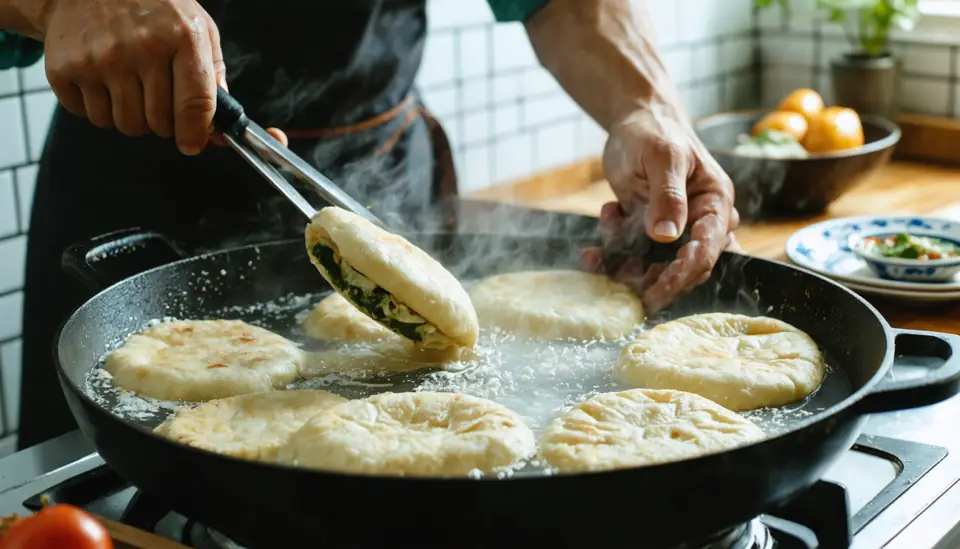
Heat the oil in a wide pan to about 170°C (340°F) and fry the gorditas in batches, 3-4 minutes per side, until golden, cooked through and visibly puffed in the middle; that puff is steam pushing the layers apart to form the pocket. Drain on paper towels.
- 500 ml vegetable oil
- all of them the 12 -cooked discs from step 3
✅ Done when: golden all over and puffed up in the center
Split and fill
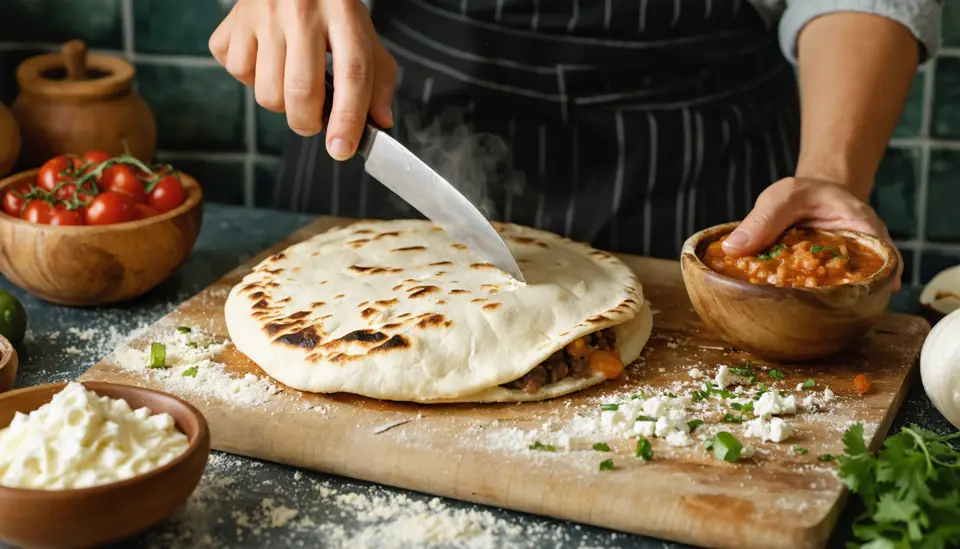
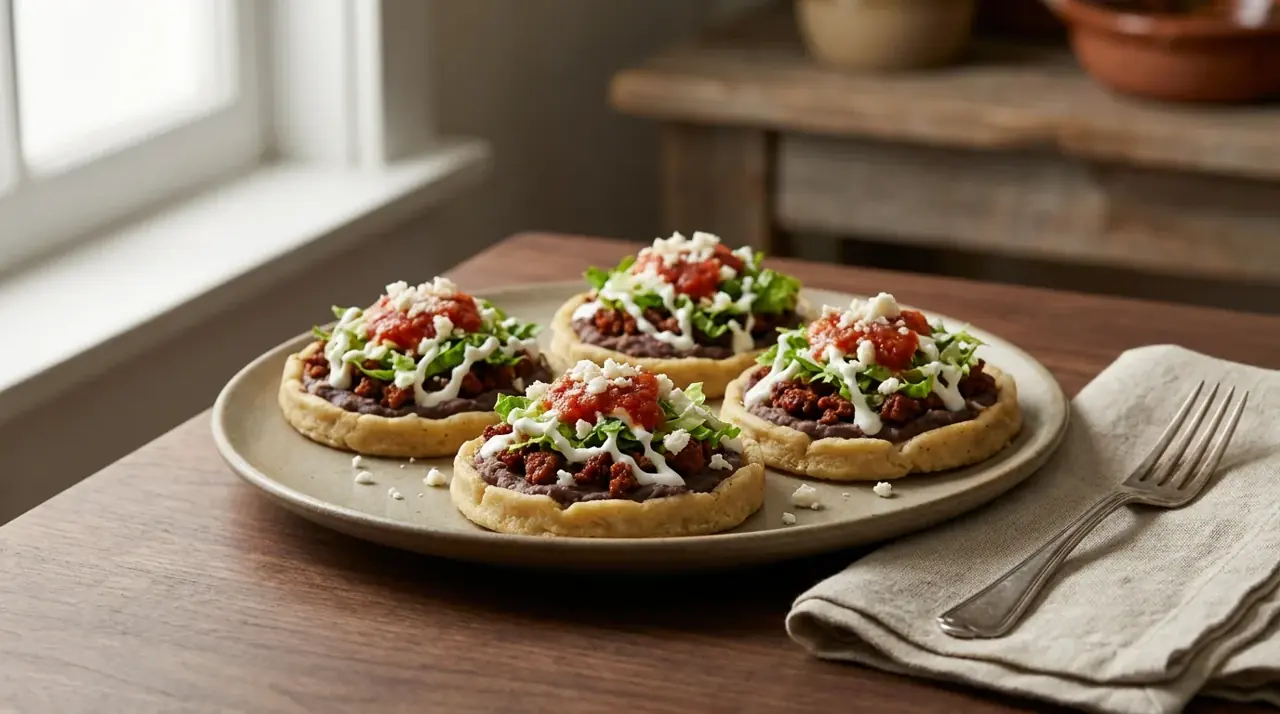
While still warm, use a small knife to cut a slit about three-quarters of the way around the edge of each gordita, like opening a pita, without cutting all the way through. Spoon in warm refried beans and crumbled so the cheese softens against the hot masa.
- all of them the 12 fried gorditas from step 4
- 400 g refried beans
- 200 g
Finish and serve
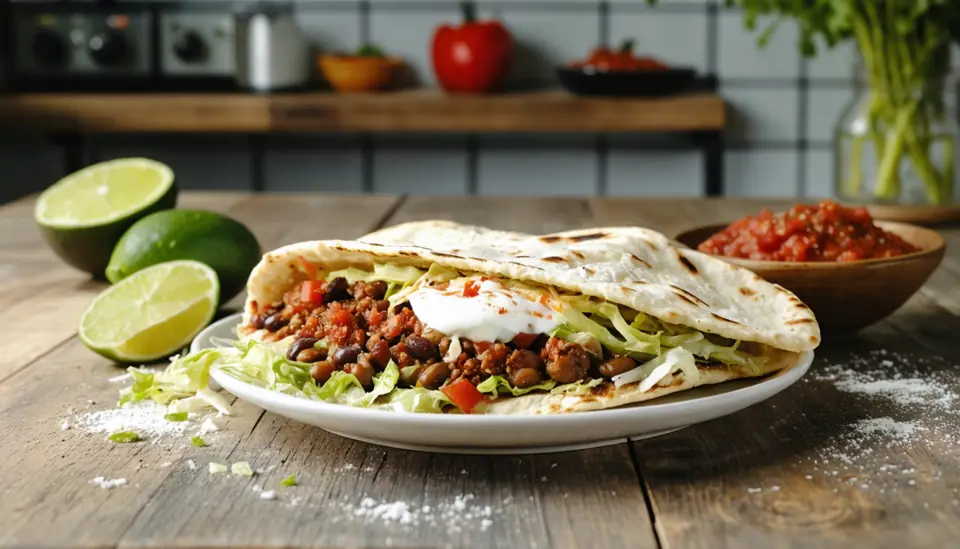
Tuck a little shredded lettuce into each gordita, then add a drizzle of crema and a spoonful of salsa. Serve right away while the shell is still crisp and the filling is warm.
- all of them the filled gorditas from step 5
- 80 g shredded lettuce
- 100 ml Mexican crema
- 200 ml salsa, to taste
Mix the masa
In a bowl, mix the , salt and oil, then add warm water a little at a time, kneading with your hands until the dough is soft and smooth and does not crack at the edges, like soft play-dough. Cover with a damp cloth and let rest 10 minutes so the water is fully absorbed.
- 500 g
- 1 tsp salt
- 2 tbsp vegetable oil
- 550-600 ml warm water
✅ Done when: dough is soft, smooth and holds together without cracking
Shape thick cakes
Divide the dough into 12 balls of about 90 g each, then pat each one between your palms, or in a tortilla press lined with plastic, into a thick disc about 1.5 cm thick and 8 cm wide, thicker than a tortilla so it can hold a pocket. Smooth the edges with wet fingers so they do not crack later.
- all of it the dough from step 1
✅ Done when: 12 even discs, about 1.5 cm thick, with smooth, uncracked edges
Cook on the comal
Cook the discs on a dry or heavy skillet over medium-high heat, with no oil, about 4 minutes per side, until a dry, lightly speckled crust forms while the dough stays pale and set. This dry cooking sets the shape so the gorditas hold together in the oil.
- all of them the 12 shaped discs from step 2
✅ Done when: dry, lightly speckled crust, dough still pale but firm
Fry until puffed
Heat the oil in a wide pan to about 170°C (340°F) and fry the gorditas in batches, 3-4 minutes per side, until golden, cooked through and visibly puffed in the middle; that puff is steam pushing the layers apart to form the pocket. Drain on paper towels.
- 500 ml vegetable oil
- all of them the 12 -cooked discs from step 3
✅ Done when: golden all over and puffed up in the center
Split and fill
While still warm, use a small knife to cut a slit about three-quarters of the way around the edge of each gordita, like opening a pita, without cutting all the way through. Spoon in warm refried beans and crumbled so the cheese softens against the hot masa.
- all of them the 12 fried gorditas from step 4
- 400 g refried beans
- 200 g
Finish and serve
Tuck a little shredded lettuce into each gordita, then add a drizzle of crema and a spoonful of salsa. Serve right away while the shell is still crisp and the filling is warm.
- all of them the filled gorditas from step 5
- 80 g shredded lettuce
- 100 ml Mexican crema
- 200 ml salsa, to taste
The Story Behind the Dish
Gorditas belong to the long family of nixtamalized corn cakes that have fed Mexico since before the Spanish arrived. Pressing masa into thick discs and cooking it on a clay or metal comal is one of the oldest techniques in the Mexican kitchen, long used for everyday tortillas and thicker, heartier cakes alike.
Frying the cooked disc so it puffs, then slitting it open to make a pocket, turned a simple corn cake into a handheld meal. Street vendors and market stalls across central Mexico made gorditas their own, each region filling them with whatever was at hand: beans, cheese, chicharrón prensado, mole, or shredded meat.
⭐ Why It's Famous
The contrast of a crisp, golden masa shell against a warm, soft filling makes gorditas endlessly satisfying, and endlessly adaptable to whatever is in the pot that day.
💡 Fun Fact
The name 'gordita' means 'little fat one', a nod to their plump, puffed-up shape once they come out of the oil.
Central Mexico (Mexico City, Puebla, Tlaxcala, Hidalgo)
19.43°N, -99.13°W
Related recipes
Comments (0)
No comments yet. Be the first to share your thoughts!