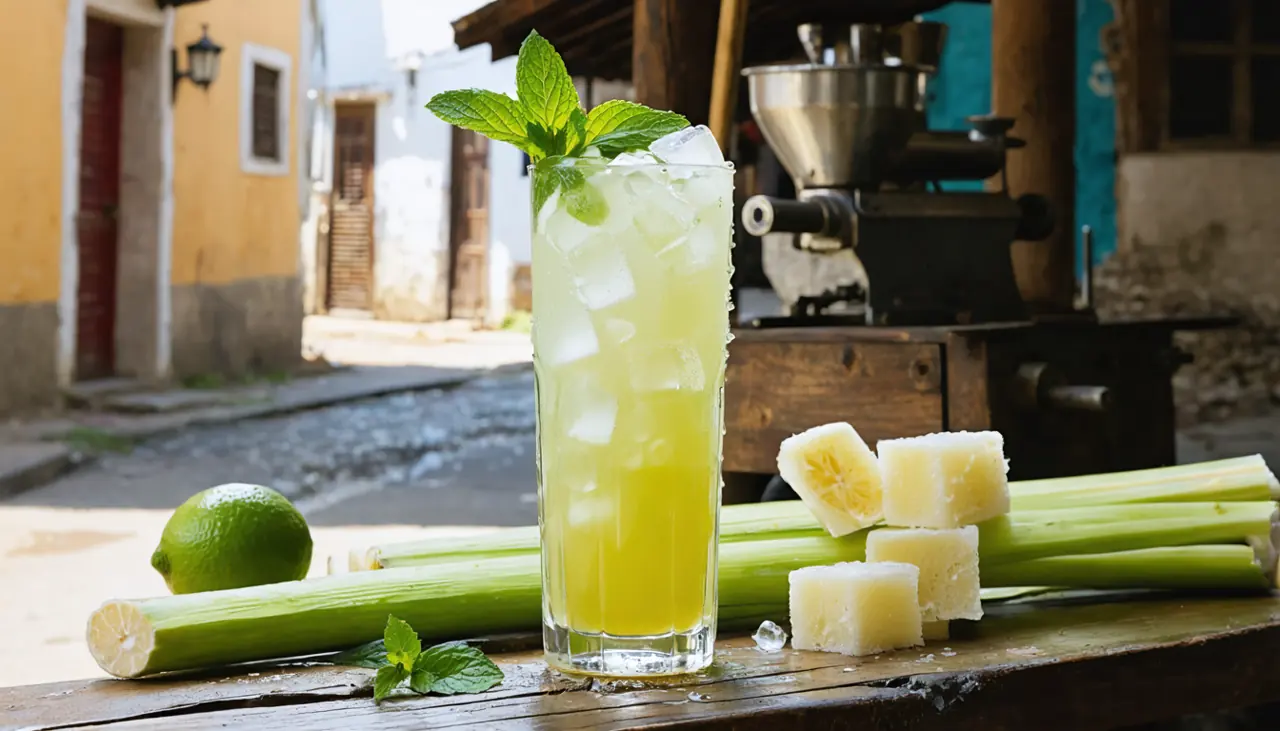
Sugarcane Juice (Guarapo)
Fresh sugarcane stalks pressed into a pale green, grassy-sweet juice, served ice-cold with a squeeze of lime. The classic thirst-quencher of Cuban street corners and sugar mill towns.
Servings
Ingredients
Nutrition
Per serving
Steps
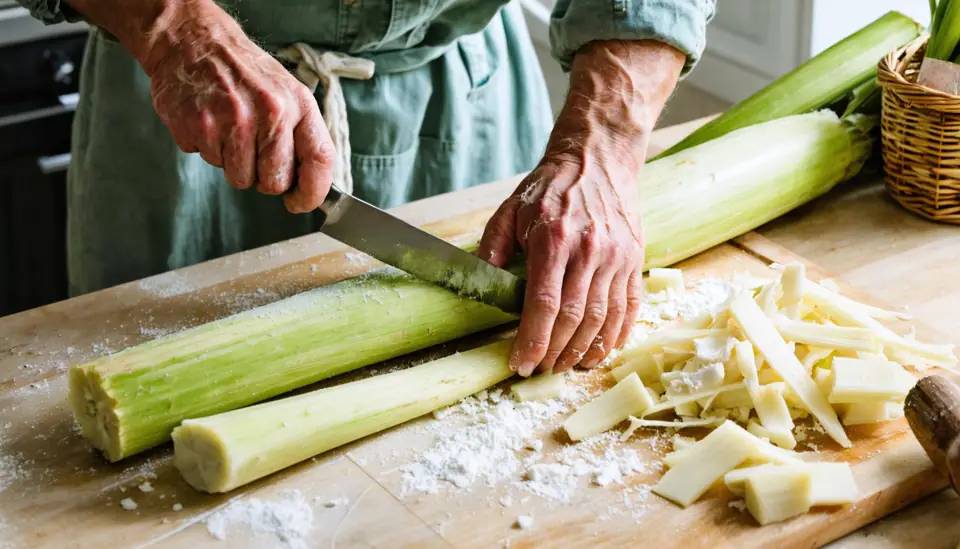
Prepare the cane
Peel the sugarcane stalks with a sharp knife or peeler until no green or brown bark remains, leaving only the pale, fibrous flesh. Cut the peeled stalks into pieces about 8–10 cm long, cutting across the grain so each piece is short enough to fit your press or blender jar.
- 1.2 kg sugarcane stalks, peeled
✅ Done when: all the bark is gone and the cane pieces are short and manageable
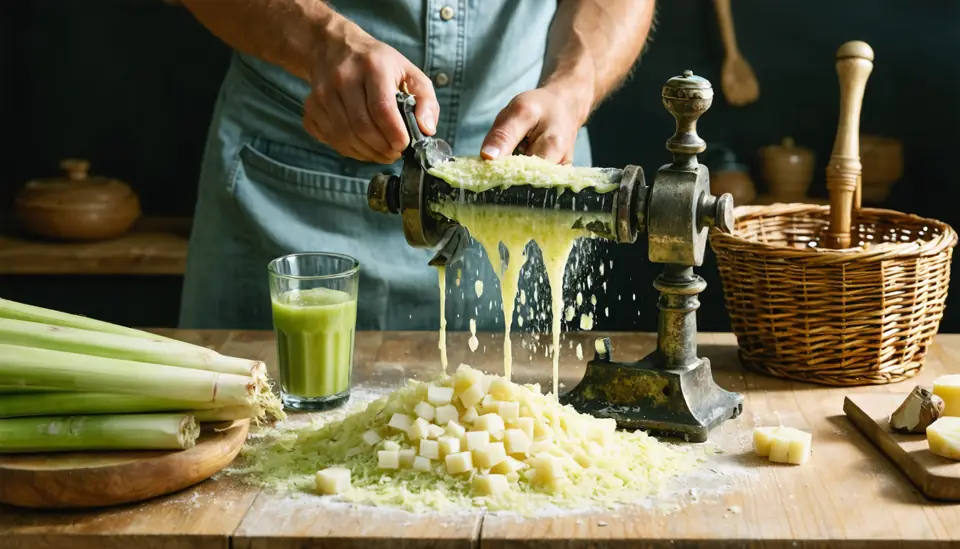
Press or blend the cane
If you have a or sugarcane press, feed the pieces through two or three times, turning them a quarter-turn each pass, so every fibre gets crushed and gives up its juice. Without a press, pulse the cane pieces in a strong blender with the cold water in small batches until the fibres break down into a wet, shredded pulp — this takes longer but still releases plenty of juice.
- 1.2 kg sugarcane (from step 1)
- 250 ml cold water (if blending)
✅ Done when: the cane looks pale, dry and shredded, with no juice left to squeeze out
Strain well
This step is part of Foodie Premium. Subscribe to unlock the full method, cooking mode and every recipe in the library.
Season and chill
This step is part of Foodie Premium. Subscribe to unlock the full method, cooking mode and every recipe in the library.
Serve right away
This step is part of Foodie Premium. Subscribe to unlock the full method, cooking mode and every recipe in the library.
Prepare the cane
Peel the sugarcane stalks with a sharp knife or peeler until no green or brown bark remains, leaving only the pale, fibrous flesh. Cut the peeled stalks into pieces about 8–10 cm long, cutting across the grain so each piece is short enough to fit your press or blender jar.
- 1.2 kg sugarcane stalks, peeled
✅ Done when: all the bark is gone and the cane pieces are short and manageable
Press or blend the cane
If you have a or sugarcane press, feed the pieces through two or three times, turning them a quarter-turn each pass, so every fibre gets crushed and gives up its juice. Without a press, pulse the cane pieces in a strong blender with the cold water in small batches until the fibres break down into a wet, shredded pulp — this takes longer but still releases plenty of juice.
- 1.2 kg sugarcane (from step 1)
- 250 ml cold water (if blending)
✅ Done when: the cane looks pale, dry and shredded, with no juice left to squeeze out
Strain well
This step is part of Foodie Premium. Subscribe to unlock the full method, cooking mode and every recipe in the library.
Season and chill
This step is part of Foodie Premium. Subscribe to unlock the full method, cooking mode and every recipe in the library.
Serve right away
This step is part of Foodie Premium. Subscribe to unlock the full method, cooking mode and every recipe in the library.
The Story Behind the Dish
Sugarcane arrived in Cuba with the first Spanish settlers and, within a few generations, had reshaped the island's economy and landscape around the ingenio, or sugar mill. Long before cane was boiled down into sugar or distilled into rum, workers and villagers simply crushed the stalks for their sweet juice, a quick and refreshing reward in the tropical heat.
Today guarapo is sold from hand carts and roadside stands all over Cuba, where a hand-cranked or motor-driven trapiche presses stalks to order in front of the customer, the juice caught in a glass and drunk on the spot.
⭐ Why It's Famous
It is the purest taste of raw sugarcane: grassy, delicately sweet and nothing like refined sugar, best drunk fresh and ice-cold within minutes of pressing.
💡 Fun Fact
Left to sit in the heat, guarapo starts to ferment naturally within a day, which is part of how early sugar workers discovered the process that eventually led to rum.
Cuba, countryside and sugar mill towns
23.11°N, -82.37°W
Related recipes


Comments (0)
No comments yet. Be the first to share your thoughts!