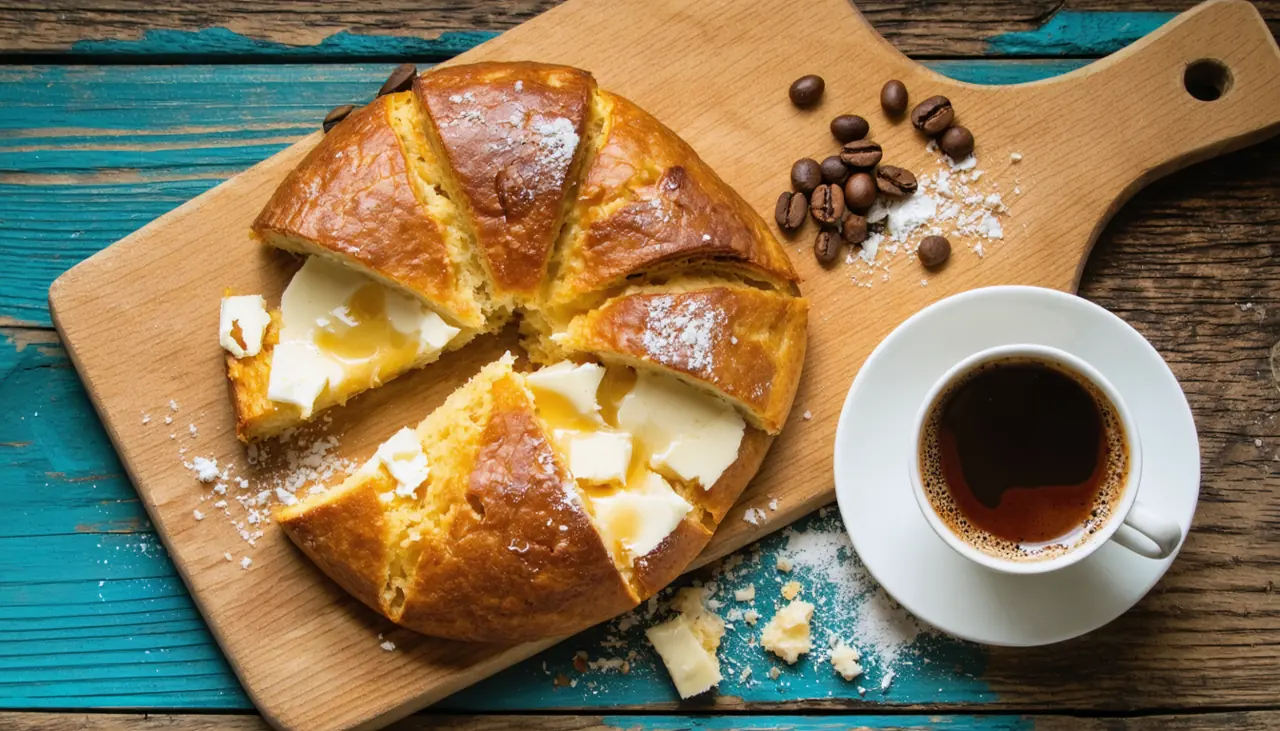
Dominican Johnny Cake
A soft, golden round bread made from a simple dough of flour, cold butter and milk, cooked low and slow in a skillet until tender inside and lightly crisp outside. The classic Dominican breakfast, split warm and filled with cheese alongside a cup of coffee.
Servings
Ingredients
Nutrition
Per serving
Steps
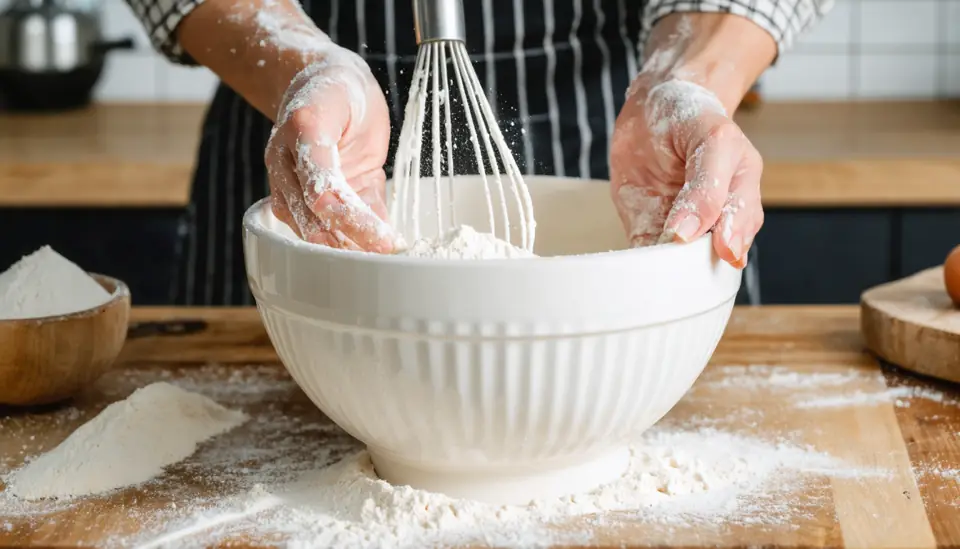
Mix the dry ingredients
In a large bowl, whisk together the flour, baking powder, salt and sugar until evenly combined.
- 300 g flour
- 1 tbsp baking powder
- 1/2 tsp salt
- 1 tbsp sugar
✅ Done when: there are no streaks of baking powder left and everything looks uniform
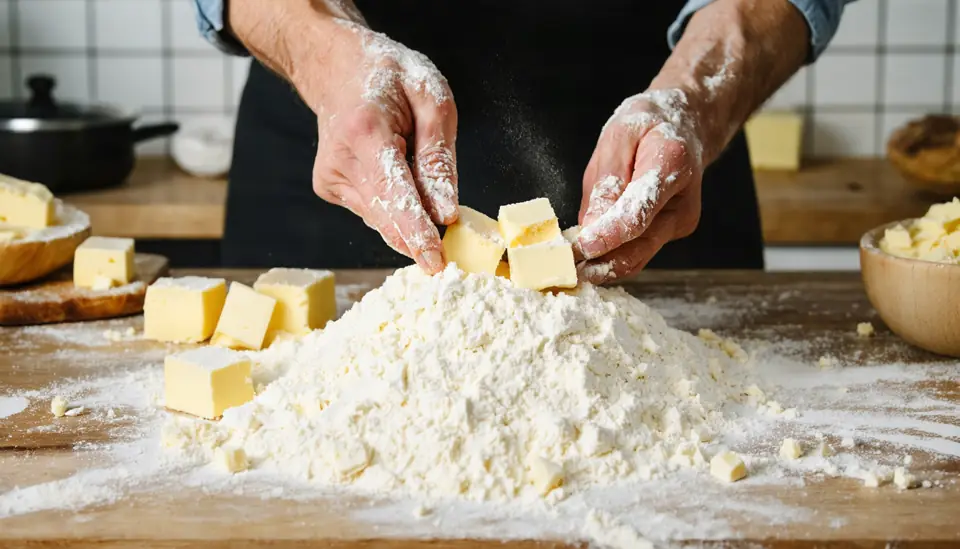
Cut in the butter
Add the cold butter cubes to the flour mixture and rub them in quickly with your fingertips until it looks like coarse breadcrumbs with a few pea-sized lumps. Keeping the butter cold is the small secret that makes the johnny cake tender and a little flaky instead of tough.
- 40 g cold butter
✅ Done when: the mixture looks sandy and crumbly, with no large chunks of butter left

Add the milk and knead
Pour in the cold milk and stir with a fork until the dough starts to come together, then bring it in with your hands and knead gently for about 1 minute, just until smooth. Do not overwork the dough, or the cakes will bake up dense instead of light.
- 180 ml milk
✅ Done when: the dough is smooth, soft and only slightly tacky, not sticky

Rest the dough
Cover the bowl with a kitchen towel and let the dough rest at room temperature for 10 minutes. This relaxes the dough so it is easier to shape and cooks up tender in the middle.
✅ Done when: the dough feels relaxed and a little softer than before

Shape the rounds
Divide the dough into 4 equal pieces and roll each into a ball, then flatten with your palms or a rolling pin into rounds about 12 cm wide and 1 cm thick, dusting lightly with flour if it sticks.
✅ Done when: all 4 rounds are an even thickness, so they cook through without burning on the outside

Cook low and slow
Melt a little butter in a wide, heavy skillet over low to medium heat (about 150°C (300°F) on an electric griddle). Add the rounds, in batches if needed, cover with a lid, and cook for about 6 minutes per side, until deep golden. Low heat is the key technique here: these cakes are thick, so high heat browns the outside before the inside is fully cooked.
- 30 g butter for cooking
✅ Done when: both sides are golden brown and a skewer inserted in the center comes out clean, with no raw dough sticking to it

Serve warm
Split the warm johnny cakes open while they're still hot, tuck in slices of cheese so they soften, and serve right away with a cup of hot coffee.
- to serve cheese
- to serve coffee
Mix the dry ingredients
In a large bowl, whisk together the flour, baking powder, salt and sugar until evenly combined.
- 300 g flour
- 1 tbsp baking powder
- 1/2 tsp salt
- 1 tbsp sugar
✅ Done when: there are no streaks of baking powder left and everything looks uniform
Cut in the butter
Add the cold butter cubes to the flour mixture and rub them in quickly with your fingertips until it looks like coarse breadcrumbs with a few pea-sized lumps. Keeping the butter cold is the small secret that makes the johnny cake tender and a little flaky instead of tough.
- 40 g cold butter
✅ Done when: the mixture looks sandy and crumbly, with no large chunks of butter left
Add the milk and knead
Pour in the cold milk and stir with a fork until the dough starts to come together, then bring it in with your hands and knead gently for about 1 minute, just until smooth. Do not overwork the dough, or the cakes will bake up dense instead of light.
- 180 ml milk
✅ Done when: the dough is smooth, soft and only slightly tacky, not sticky
Rest the dough
Cover the bowl with a kitchen towel and let the dough rest at room temperature for 10 minutes. This relaxes the dough so it is easier to shape and cooks up tender in the middle.
✅ Done when: the dough feels relaxed and a little softer than before
Shape the rounds
Divide the dough into 4 equal pieces and roll each into a ball, then flatten with your palms or a rolling pin into rounds about 12 cm wide and 1 cm thick, dusting lightly with flour if it sticks.
✅ Done when: all 4 rounds are an even thickness, so they cook through without burning on the outside
Cook low and slow
Melt a little butter in a wide, heavy skillet over low to medium heat (about 150°C (300°F) on an electric griddle). Add the rounds, in batches if needed, cover with a lid, and cook for about 6 minutes per side, until deep golden. Low heat is the key technique here: these cakes are thick, so high heat browns the outside before the inside is fully cooked.
- 30 g butter for cooking
✅ Done when: both sides are golden brown and a skewer inserted in the center comes out clean, with no raw dough sticking to it
Serve warm
Split the warm johnny cakes open while they're still hot, tuck in slices of cheese so they soften, and serve right away with a cup of hot coffee.
- to serve cheese
- to serve coffee
The Story Behind the Dish
Johnny cake came to the Dominican Republic with the Cocolos, English-speaking Afro-Caribbean workers who migrated from islands like the British Virgin Islands, Turks and Caicos and other parts of the Lesser Antilles to work in the sugar industry. They brought their own version of the simple flour, butter and milk bread already common across the English Caribbean, and it slowly became part of Dominican home cooking.
Over generations, Dominican families adapted it to local ingredients and tastes, and it settled into its place as a warm, filling breakfast, split open and eaten with cheese and coffee before the day's work begins.
⭐ Why It's Famous
It is simple, comforting and endlessly adaptable, the kind of bread every Dominican grandmother knows how to make from memory.
💡 Fun Fact
The name 'johnny cake' is believed to come from 'journey cake,' a portable bread that English-speaking Caribbean travelers carried with them, and the Dominican version keeps that same practical, everyday spirit.
San Pedro de Macorís and the sugar towns of eastern Dominican Republic
18.46°N, -69.31°W
Related recipes


Comments (0)
No comments yet. Be the first to share your thoughts!