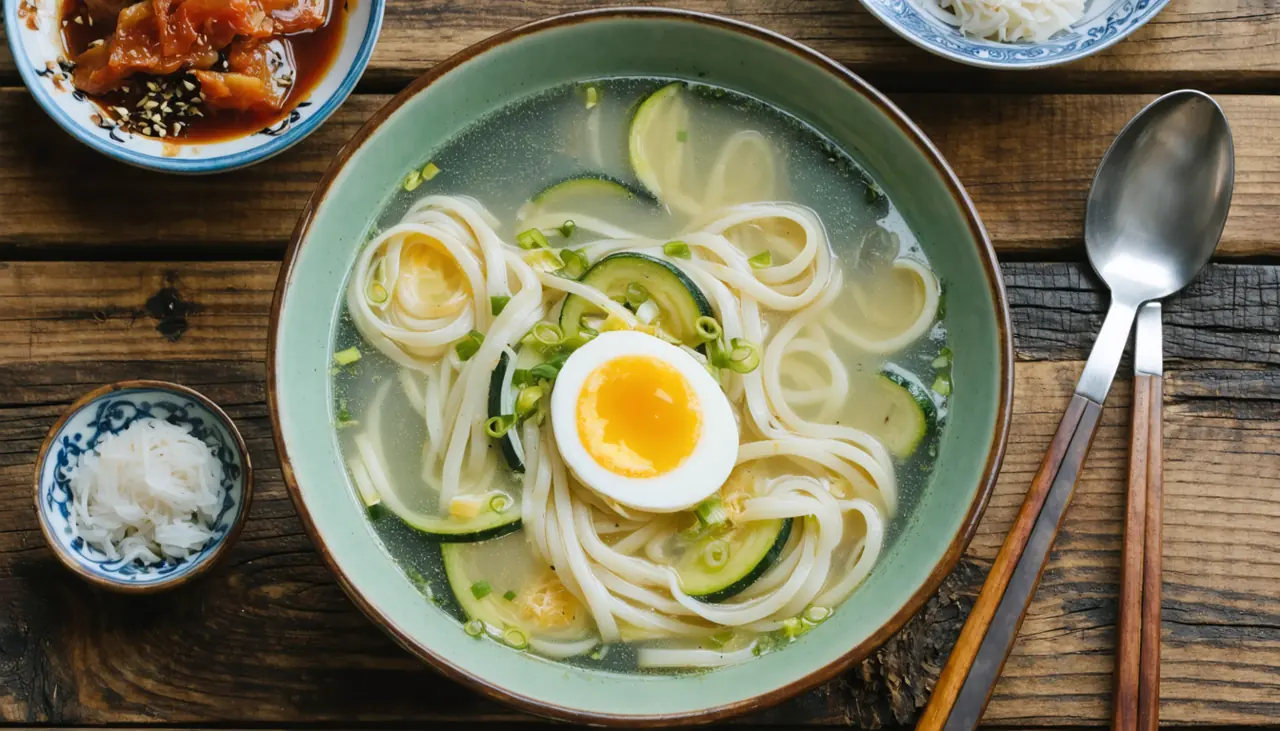
Hand-cut Noodle Soup (Kalguksu)
Soft, chewy wheat noodles cut by hand and simmered in a clean anchovy-kelp broth with tender zucchini and silky ribbons of egg. A bowl of this is Korea's everyday comfort food, best eaten right after it leaves the pot.
Servings
Ingredients
Nutrition
Per serving
Steps

Make and rest the dough
In a bowl, mix the flour and salt, then add the cold water and bring it together with your hands. Knead on a lightly floured surface for 5–8 minutes until smooth and no longer sticky, then wrap tightly in plastic and rest at room temperature.
- 400 g flour
- 200 ml water
- 1 tsp salt
✅ Done when: the dough is smooth and elastic; resting relaxes the gluten so it rolls out easily and the cooked noodles are tender, not tough

Make the broth
In a pot, combine the water, kelp, onion and garlic and bring to a boil. As soon as it boils, pull out the kelp (leaving it in longer turns the broth bitter and slimy), then add the dried anchovies and simmer gently.
- 1.5 litres water
- 15 g dried anchovies
- 1 piece (10 g) dried kelp
- 1/2 onion
- 2 cloves garlic
✅ Done when: the broth smells deeply savory and has turned a light golden color

Roll and cut the noodles
Dust the work surface generously with flour and roll the dough out into a thin sheet, about 3 mm thick. Dust the top with more flour, fold the sheet loosely a few times, then slice crosswise into noodles about 5 mm wide; unfold and toss them with a little extra flour so they don't clump.
- extra flour, for dusting
✅ Done when: the sheet is thin and even, and the cut noodles are separated and lightly floured

Cook noodles and zucchini
Strain the broth, discard the solids, and season it with the soy sauce and salt. Bring it back to a strong boil, shake the excess flour off the noodles (too much flour clouds and thickens the broth), then add the noodles along with the zucchini and simmer, stirring now and then so they don't stick together.
- 2 tbsp soup soy sauce
- 1 tsp salt
- 1 (about 200 g) zucchini
✅ Done when: the noodles are tender and floating, and the zucchini is just soft

Swirl in the egg
Lower the heat so the soup is at a gentle simmer, not a hard boil. Drizzle the beaten egg in slowly in a thin stream while gently stirring the broth in one direction, then stop and let it set for a few seconds before stirring again, so it forms silky ribbons instead of cloudy bits and cooks through.
- 2 eggs
✅ Done when: soft, fully cooked egg ribbons float through the clear broth

Serve
Ladle the soup and noodles into deep bowls, scatter the scallions over the top, and finish with a drizzle of sesame oil and a sprinkle of sesame seeds. Serve hot, with gochugaru and extra soy sauce on the table for anyone who wants more heat or seasoning.
- 2 scallions
- 1 tsp sesame oil
- 1 tbsp sesame seeds
- to taste gochugaru
Make and rest the dough
In a bowl, mix the flour and salt, then add the cold water and bring it together with your hands. Knead on a lightly floured surface for 5–8 minutes until smooth and no longer sticky, then wrap tightly in plastic and rest at room temperature.
- 400 g flour
- 200 ml water
- 1 tsp salt
✅ Done when: the dough is smooth and elastic; resting relaxes the gluten so it rolls out easily and the cooked noodles are tender, not tough
Make the broth
In a pot, combine the water, kelp, onion and garlic and bring to a boil. As soon as it boils, pull out the kelp (leaving it in longer turns the broth bitter and slimy), then add the dried anchovies and simmer gently.
- 1.5 litres water
- 15 g dried anchovies
- 1 piece (10 g) dried kelp
- 1/2 onion
- 2 cloves garlic
✅ Done when: the broth smells deeply savory and has turned a light golden color
Roll and cut the noodles
Dust the work surface generously with flour and roll the dough out into a thin sheet, about 3 mm thick. Dust the top with more flour, fold the sheet loosely a few times, then slice crosswise into noodles about 5 mm wide; unfold and toss them with a little extra flour so they don't clump.
- extra flour, for dusting
✅ Done when: the sheet is thin and even, and the cut noodles are separated and lightly floured
Cook noodles and zucchini
Strain the broth, discard the solids, and season it with the soy sauce and salt. Bring it back to a strong boil, shake the excess flour off the noodles (too much flour clouds and thickens the broth), then add the noodles along with the zucchini and simmer, stirring now and then so they don't stick together.
- 2 tbsp soup soy sauce
- 1 tsp salt
- 1 (about 200 g) zucchini
✅ Done when: the noodles are tender and floating, and the zucchini is just soft
Swirl in the egg
Lower the heat so the soup is at a gentle simmer, not a hard boil. Drizzle the beaten egg in slowly in a thin stream while gently stirring the broth in one direction, then stop and let it set for a few seconds before stirring again, so it forms silky ribbons instead of cloudy bits and cooks through.
- 2 eggs
✅ Done when: soft, fully cooked egg ribbons float through the clear broth
Serve
Ladle the soup and noodles into deep bowls, scatter the scallions over the top, and finish with a drizzle of sesame oil and a sprinkle of sesame seeds. Serve hot, with gochugaru and extra soy sauce on the table for anyone who wants more heat or seasoning.
- 2 scallions
- 1 tsp sesame oil
- 1 tbsp sesame seeds
- to taste gochugaru
The Story Behind the Dish
Kalguksu, literally 'knife noodles,' grew out of simple farmhouse kitchens where wheat dough was rolled thin and cut by hand because there was no other tool for it. Coastal regions simmered the noodles in anchovy and kelp broth from the sea, while inland cooks often used chicken or beef broth instead.
It became, and remains, one of Korea's most common home-cooked lunches, sold everywhere from small family restaurants to roadside stalls, each with its own broth and toppings.
⭐ Why It's Famous
It is loved for its simplicity: a clear, deeply savory broth, tender hand-cut noodles with real bite, and humble vegetables and egg that let the broth shine.
💡 Fun Fact
The chewy, slightly irregular texture of hand-cut noodles is considered part of the dish's charm; machine-cut noodles are seen as a different, lesser experience by many home cooks.
Korea, nationwide, with notable regional versions along the coasts and in Jeju
37.57°N, 126.98°E
Related recipes
Comments (0)
No comments yet. Be the first to share your thoughts!