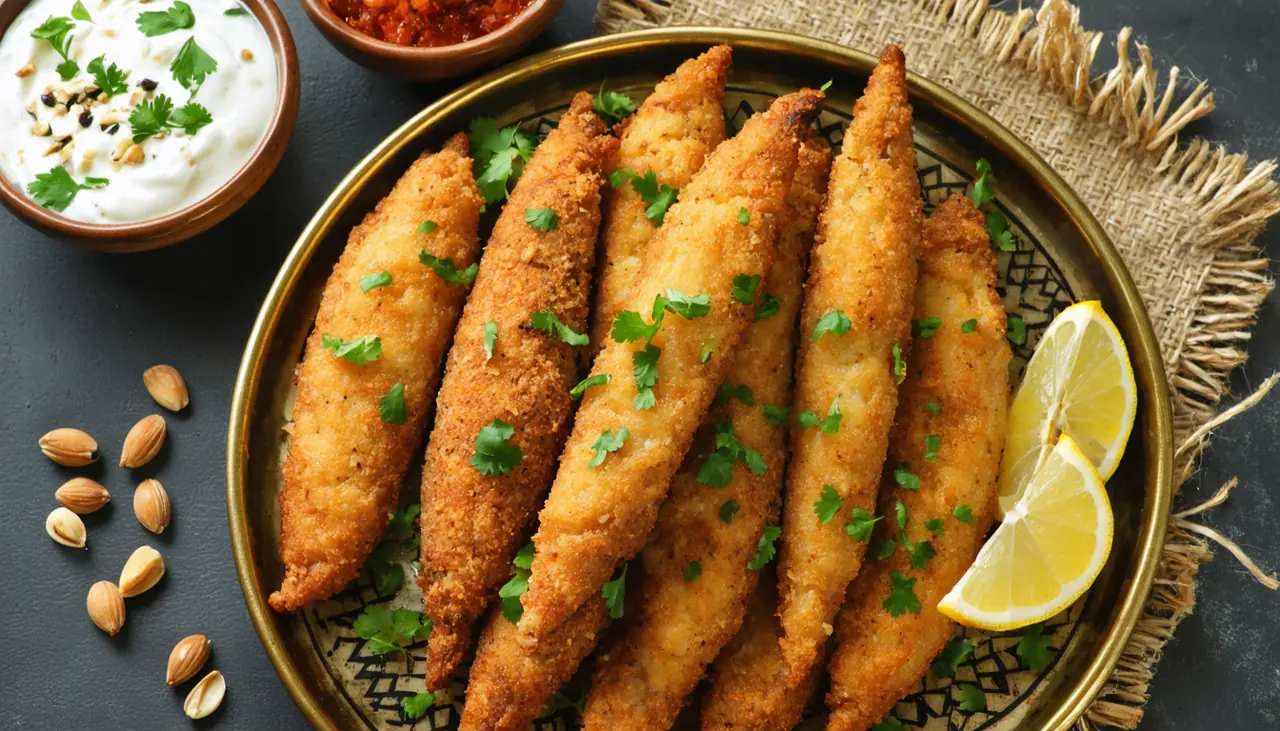
Fried Kibbeh (Kibbeh Mi'liyeh)
Torpedo-shaped shells of fine bulgur and lean meat, filled with spiced minced lamb, onion and toasted pine nuts, then deep-fried until deep golden and crackling-crisp outside, juicy inside.
Servings
Ingredients
Nutrition
Per serving
Steps

Soak the bulgur
Put the fine bulgur in a bowl and cover with the cold water. Let it sit until the grains soften and swell, then drain in a fine sieve and squeeze firmly with your hands to remove as much water as possible — it should feel just damp, not wet.
- 300 g fine bulgur
- 500 ml cold water
✅ Done when: the bulgur is soft, swollen, and squeezed almost dry

Cook the filling
Melt the butter in a pan over medium heat and cook the chopped onion until soft and golden. Add the ground lamb and break it up with a spoon, cooking until no pink remains, then stir in the pine nuts, allspice, cinnamon, salt and pepper. Keep cooking until the pine nuts turn golden and the mixture looks fairly dry, then let it cool completely — warm filling will melt the raw shell and make it impossible to shape.
- 2 tbsp butter or ghee
- 1 chopped onion
- 300 g ground lamb
- 60 g pine nuts
- 1/2 tsp allspice
- 1/4 tsp cinnamon
- to taste salt and pepper
✅ Done when: the lamb is fully cooked and browned, the pine nuts are golden, and the filling has cooled to room temperature

Make the shell paste
In a food processor, blitz the squeezed bulgur with the raw minced meat, grated onion, salt, pepper, allspice and cinnamon until it forms a smooth, sticky, almost paste-like dough — this takes a few minutes of pulsing and scraping down the sides. If it feels dry or crumbly, add the ice-cold water a tablespoon at a time; it should hold together easily when pressed between your fingers. Work quickly and keep everything cold, as cold meat blends smoother and is safer to handle, then cover and chill the paste for 15 minutes to firm up.
- soaked and squeezed, from step 1 bulgur
- 350 g minced lamb or beef
- 1 grated onion
- 1 tsp salt
- 1/2 tsp black pepper
- 1 tsp allspice
- 1/2 tsp cinnamon
- 2–3 tbsp ice-cold water
✅ Done when: the paste is smooth, elastic and holds its shape without cracking

Shape the kibbeh
Wet your hands with cold water so the paste doesn't stick. Take a piece of shell paste about the size of a small egg, roll it into a ball, then push your index finger into the center to open a pocket, turning the ball in your palm to thin the walls evenly to about 5 mm. Spoon in about a teaspoon of filling, pinch the opening closed, and shape the ends into points so you get a smooth torpedo. Set each one on a tray and repeat, keeping both paste and filling cold as you work.
- all of it, shaped from step 3 shell paste
- all of it, from step 2 lamb and pine nut filling
✅ Done when: all the kibbeh are shaped into smooth, evenly thin torpedoes with no cracks or filling showing through

Fry until golden
Heat the oil in a deep, heavy pot to 180°C (350°F) — a small piece of bread dropped in should turn golden in under a minute. Fry the in batches of 4–6, without crowding the pot, for about 5 minutes, turning them now and then, until deep golden brown and crisp all over. Lift out with a slotted spoon, drain on paper towels, and cut one open to check the center is fully cooked with no raw meat visible.
- 1 litre oil for frying
✅ Done when: deep golden brown and crisp outside, fully cooked with no pink meat inside

Serve the kibbeh
Pile the fried onto a platter while still hot and serve right away with lemon wedges, plain yogurt or tahini sauce, and pickled vegetables alongside.
- to serve lemon, yogurt or tahini, pickles
Soak the bulgur
Put the fine bulgur in a bowl and cover with the cold water. Let it sit until the grains soften and swell, then drain in a fine sieve and squeeze firmly with your hands to remove as much water as possible — it should feel just damp, not wet.
- 300 g fine bulgur
- 500 ml cold water
✅ Done when: the bulgur is soft, swollen, and squeezed almost dry
Cook the filling
Melt the butter in a pan over medium heat and cook the chopped onion until soft and golden. Add the ground lamb and break it up with a spoon, cooking until no pink remains, then stir in the pine nuts, allspice, cinnamon, salt and pepper. Keep cooking until the pine nuts turn golden and the mixture looks fairly dry, then let it cool completely — warm filling will melt the raw shell and make it impossible to shape.
- 2 tbsp butter or ghee
- 1 chopped onion
- 300 g ground lamb
- 60 g pine nuts
- 1/2 tsp allspice
- 1/4 tsp cinnamon
- to taste salt and pepper
✅ Done when: the lamb is fully cooked and browned, the pine nuts are golden, and the filling has cooled to room temperature
Make the shell paste
In a food processor, blitz the squeezed bulgur with the raw minced meat, grated onion, salt, pepper, allspice and cinnamon until it forms a smooth, sticky, almost paste-like dough — this takes a few minutes of pulsing and scraping down the sides. If it feels dry or crumbly, add the ice-cold water a tablespoon at a time; it should hold together easily when pressed between your fingers. Work quickly and keep everything cold, as cold meat blends smoother and is safer to handle, then cover and chill the paste for 15 minutes to firm up.
- soaked and squeezed, from step 1 bulgur
- 350 g minced lamb or beef
- 1 grated onion
- 1 tsp salt
- 1/2 tsp black pepper
- 1 tsp allspice
- 1/2 tsp cinnamon
- 2–3 tbsp ice-cold water
✅ Done when: the paste is smooth, elastic and holds its shape without cracking
Shape the kibbeh
Wet your hands with cold water so the paste doesn't stick. Take a piece of shell paste about the size of a small egg, roll it into a ball, then push your index finger into the center to open a pocket, turning the ball in your palm to thin the walls evenly to about 5 mm. Spoon in about a teaspoon of filling, pinch the opening closed, and shape the ends into points so you get a smooth torpedo. Set each one on a tray and repeat, keeping both paste and filling cold as you work.
- all of it, shaped from step 3 shell paste
- all of it, from step 2 lamb and pine nut filling
✅ Done when: all the kibbeh are shaped into smooth, evenly thin torpedoes with no cracks or filling showing through
Fry until golden
Heat the oil in a deep, heavy pot to 180°C (350°F) — a small piece of bread dropped in should turn golden in under a minute. Fry the in batches of 4–6, without crowding the pot, for about 5 minutes, turning them now and then, until deep golden brown and crisp all over. Lift out with a slotted spoon, drain on paper towels, and cut one open to check the center is fully cooked with no raw meat visible.
- 1 litre oil for frying
✅ Done when: deep golden brown and crisp outside, fully cooked with no pink meat inside
Serve the kibbeh
Pile the fried onto a platter while still hot and serve right away with lemon wedges, plain yogurt or tahini sauce, and pickled vegetables alongside.
- to serve lemon, yogurt or tahini, pickles
The Story Behind the Dish
Kibbeh is often called Lebanon's national dish, with versions found across the Levant. The oldest form is eaten raw, like a seasoned tartare, but over generations cooks developed baked and fried shapes for feasts, Ramadan tables and weddings, where a platter of neat little torpedoes signals real effort and skill.
Every family has its own baharat, the warm spice mix of allspice, cinnamon and pepper that goes into both the shell and the filling, and its own trick for keeping the walls thin and the meat tender.
⭐ Why It's Famous
The contrast is what makes it unforgettable: a thin, crackling bulgur shell giving way to juicy spiced lamb and toasted pine nuts inside, eaten hot off the platter with lemon or yogurt.
💡 Fun Fact
Shaping the kibbeh by hand, with no cracks and an even wall, is considered a mark of a good cook, and many Lebanese grandmothers still judge a kitchen by how well the torpedoes hold together in the oil.
Lebanon, across the mountain villages and cities
33.89°N, 35.50°E
Related recipes
Comments (0)
No comments yet. Be the first to share your thoughts!