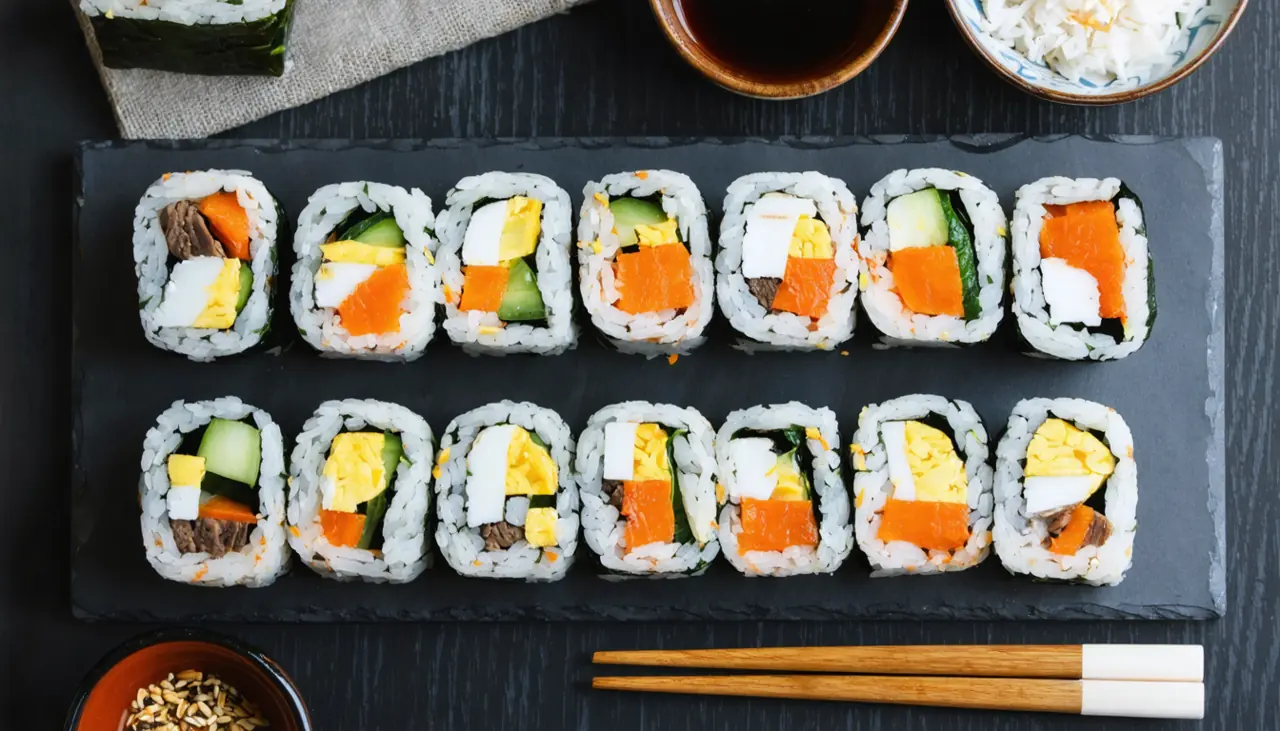
Seaweed Rice Rolls (Kimbap)
Glossy sesame-seasoned rice rolled in roasted seaweed with sweet marinated beef, carrot, spinach, egg and crunchy pickled radish, then sliced into neat bite-sized rounds. The classic Korean picnic food, best eaten the same day while the rice is still soft.
Servings
Ingredients
Nutrition
Per serving
Steps

Cook and season the rice
Put the rinsed rice and water in a pot, bring to a boil, cover, lower the heat and simmer gently for 12 minutes, then turn off the heat and let it rest, covered, for 10 minutes without opening the lid so the steam finishes the cooking. While still warm, fold in the sesame oil and salt with a flat spoon using a gentle slicing motion, not stirring hard, so the grains stay whole and glossy.
- 300 g rice
- 350 ml water
- 1 tbsp sesame oil
- 1/2 tsp salt
✅ Done when: the grains are tender, slightly sticky and glossy, with no raw bite left

Marinate and cook the beef
Mix the beef strips with soy sauce, sugar, garlic, sesame oil and black pepper, and let it marinate for at least 10 minutes so the flavour goes all the way through, not just on the surface. Cook in a dry hot pan over medium heat for 3–4 minutes, stirring, until no pink remains and the juices have mostly cooked away so the filling stays firm, not watery, inside the roll.
- 150 g beef
- 1 tbsp soy sauce
- 1 tsp sugar
- 1 clove garlic
- 1 tsp sesame oil
- 1 pinch black pepper
✅ Done when: the beef is fully browned and cooked through, with no liquid pooling in the pan

Prepare the vegetables
Drop the spinach into boiling water for about 30 seconds just until it wilts, then plunge it into cold water, squeeze out all the water with your hands, and toss with sesame oil and salt. In the same pan used for the beef, stir-fry the carrot with a little vegetable oil and salt for 2–3 minutes until just soft but still a bit crisp, so it keeps its colour and crunch inside the roll. Set the strips aside ready to use straight from the package.
- 100 g spinach
- 1 tsp sesame oil
- 1 pinch salt
- 1 medium carrot
- 1 tsp vegetable oil
- 1 pinch salt
- 4 strips
✅ Done when: the spinach is bright green and well drained, and the carrot is tender-crisp

Make the egg sheet
Beat the eggs with a pinch of salt. Heat a lightly oiled nonstick pan over low heat and pour in the egg, tilting the pan to spread it into one thin, even sheet. Cook for about 2–3 minutes, flipping once, until just set with no runny egg left, then slide it out and cut into long strips.
- 2 eggs
- 1 pinch salt
- 1 tsp vegetable oil
✅ Done when: the egg sheet is fully set, pale yellow and holds together without tearing

Assemble the rolls
Lay a sheet of gim shiny-side down on a bamboo mat, rough side up. Spread a thin, even layer of rice over about two-thirds of the sheet, leaving the top edge bare so the roll seals properly, and press the rice down lightly so it won't fall out later. Arrange a little of the beef, spinach, carrot, and egg strips in a neat line across the middle, keeping the pile loose, not mounded, so the roll stays round instead of bursting.
- 4 sheets gim
- 300 g seasoned rice (from step 1)
- 150 g cooked beef (from step 2)
- 100 g seasoned spinach (from step 3)
- 1 medium cooked carrot (from step 3)
- 4 strips (from step 3)
- 2 egg strips (from step 4)
✅ Done when: the fillings are lined up evenly across the rice with the bare seaweed edge visible at the top

Roll, brush and slice
Lift the edge of the mat closest to you and roll it forward over the fillings, pressing firmly and evenly along the whole length as you go so the roll comes out tight with no gaps inside, then press the bare top edge down to seal it. Brush the outside lightly with sesame oil and sprinkle with sesame seeds. Slice with a sharp knife into rounds about 1.5 cm thick, wiping the blade with a damp cloth between cuts for clean, neat slices, and serve right away.
- 1 tbsp sesame oil
- 1 tsp toasted sesame seeds
✅ Done when: each roll holds together firmly when cut and the slices show neat rings of filling
Cook and season the rice
Put the rinsed rice and water in a pot, bring to a boil, cover, lower the heat and simmer gently for 12 minutes, then turn off the heat and let it rest, covered, for 10 minutes without opening the lid so the steam finishes the cooking. While still warm, fold in the sesame oil and salt with a flat spoon using a gentle slicing motion, not stirring hard, so the grains stay whole and glossy.
- 300 g rice
- 350 ml water
- 1 tbsp sesame oil
- 1/2 tsp salt
✅ Done when: the grains are tender, slightly sticky and glossy, with no raw bite left
Marinate and cook the beef
Mix the beef strips with soy sauce, sugar, garlic, sesame oil and black pepper, and let it marinate for at least 10 minutes so the flavour goes all the way through, not just on the surface. Cook in a dry hot pan over medium heat for 3–4 minutes, stirring, until no pink remains and the juices have mostly cooked away so the filling stays firm, not watery, inside the roll.
- 150 g beef
- 1 tbsp soy sauce
- 1 tsp sugar
- 1 clove garlic
- 1 tsp sesame oil
- 1 pinch black pepper
✅ Done when: the beef is fully browned and cooked through, with no liquid pooling in the pan
Prepare the vegetables
Drop the spinach into boiling water for about 30 seconds just until it wilts, then plunge it into cold water, squeeze out all the water with your hands, and toss with sesame oil and salt. In the same pan used for the beef, stir-fry the carrot with a little vegetable oil and salt for 2–3 minutes until just soft but still a bit crisp, so it keeps its colour and crunch inside the roll. Set the strips aside ready to use straight from the package.
- 100 g spinach
- 1 tsp sesame oil
- 1 pinch salt
- 1 medium carrot
- 1 tsp vegetable oil
- 1 pinch salt
- 4 strips
✅ Done when: the spinach is bright green and well drained, and the carrot is tender-crisp
Make the egg sheet
Beat the eggs with a pinch of salt. Heat a lightly oiled nonstick pan over low heat and pour in the egg, tilting the pan to spread it into one thin, even sheet. Cook for about 2–3 minutes, flipping once, until just set with no runny egg left, then slide it out and cut into long strips.
- 2 eggs
- 1 pinch salt
- 1 tsp vegetable oil
✅ Done when: the egg sheet is fully set, pale yellow and holds together without tearing
Assemble the rolls
Lay a sheet of gim shiny-side down on a bamboo mat, rough side up. Spread a thin, even layer of rice over about two-thirds of the sheet, leaving the top edge bare so the roll seals properly, and press the rice down lightly so it won't fall out later. Arrange a little of the beef, spinach, carrot, and egg strips in a neat line across the middle, keeping the pile loose, not mounded, so the roll stays round instead of bursting.
- 4 sheets gim
- 300 g seasoned rice (from step 1)
- 150 g cooked beef (from step 2)
- 100 g seasoned spinach (from step 3)
- 1 medium cooked carrot (from step 3)
- 4 strips (from step 3)
- 2 egg strips (from step 4)
✅ Done when: the fillings are lined up evenly across the rice with the bare seaweed edge visible at the top
Roll, brush and slice
Lift the edge of the mat closest to you and roll it forward over the fillings, pressing firmly and evenly along the whole length as you go so the roll comes out tight with no gaps inside, then press the bare top edge down to seal it. Brush the outside lightly with sesame oil and sprinkle with sesame seeds. Slice with a sharp knife into rounds about 1.5 cm thick, wiping the blade with a damp cloth between cuts for clean, neat slices, and serve right away.
- 1 tbsp sesame oil
- 1 tsp toasted sesame seeds
✅ Done when: each roll holds together firmly when cut and the slices show neat rings of filling
The Story Behind the Dish
Kimbap grew out of Korea's own long tradition of wrapping rice in seaweed and vegetables, a practical way to carry a full meal without plates or utensils. Over the twentieth century it became a familiar sight at school picnics, sports days and family outings, with home cooks developing their own favorite mix of fillings passed down through the family.
Today kimbap is sold everywhere from neighborhood kimbap shops to convenience stores, but the homemade version, rolled by hand with whatever vegetables, egg and meat are on hand, remains the one most Koreans grew up with.
⭐ Why It's Famous
It's the dish every Korean associates with picnics, school lunches and road trips, loved for being portable, colorful and endlessly adaptable to whatever filling you have.
💡 Fun Fact
Each roll typically holds five or more different fillings, so every slice shows a little rainbow of colors when you cut it.
Korea
37.57°N, 126.98°E
Related recipes
Comments (0)
No comments yet. Be the first to share your thoughts!