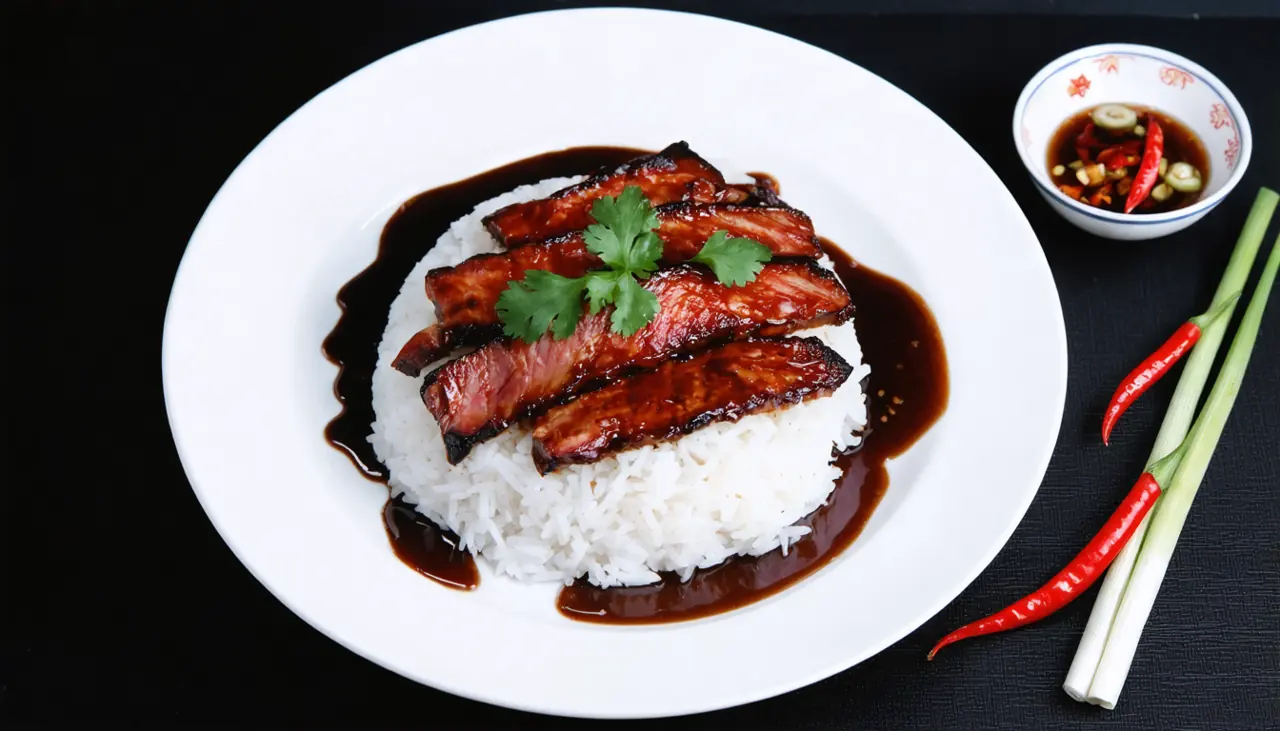
Thai Red Barbecue Pork (Moo Daeng)
Pork marinated in garlic, cilantro root and five-spice, roasted until deep mahogany red and glossy, then sliced over rice with a sweet, savory gravy. The Chinese-Thai street food classic that turns weeknight pork into something worth saving.
Servings
Ingredients
Nutrition
Per serving
Steps

Marinate the pork
In a bowl, mix the garlic, , light soy sauce, dark soy sauce, oyster sauce, , sugar, five-spice, white pepper and the red fermented bean curd (or food coloring) into a paste. Rub it all over the pork strips, massaging it in well, then cover and refrigerate for at least 4 hours, ideally overnight so the flavor and red color go all the way through.
- 700 g pork
- 3 cloves garlic
- 2 cilantro roots
- 2 tbsp light soy sauce
- 1 tbsp dark soy sauce
- 2 tbsp oyster sauce
- 2 tbsp
- 3 tbsp sugar
- 1/2 tsp five-spice powder
- 1/4 tsp white pepper
- 1 tbsp red fermented bean curd or food coloring
✅ Done when: the pork has turned a deep reddish color and smells fragrant with garlic and spice

Roast until glossy
Preheat the oven to 200°C (400°F). Set the pork on a wire rack over a roasting tray with a little water underneath (this keeps the meat moist and catches the drippings for the gravy). Roast for 15 minutes, then brush with half the honey, flip the pieces, and roast another 15 minutes, brushing with the rest of the honey, until the pork is deeply caramelized at the edges and cooked through to at least 71°C (160°F) inside.
- 700 g marinated pork
- 2 tbsp honey
✅ Done when: the pork is glossy mahogany red at the edges and no longer pink inside

Rest the meat
Lift the pork onto a plate, tent loosely with foil, and let it rest for 10 minutes. This lets the juices settle back into the meat so it slices clean instead of leaking out. Save the drippings from the tray underneath for the gravy.
✅ Done when: the pork feels relaxed, not tight, when pressed

Make the gravy
Pour the reserved roasting drippings into a small saucepan with the stock, dark soy sauce, oyster sauce and sugar. Bring to a gentle simmer, then stir in the cornstarch slurry a little at a time until the gravy turns glossy and lightly thickened, like a thin syrup that coats a spoon.
- 250 ml stock
- 1 tbsp dark soy sauce
- 1 tbsp oyster sauce
- 2 tbsp sugar
- 1 tbsp cornstarch slurry
✅ Done when: the gravy is glossy, pours easily and coats a spoon without running off instantly

Slice and serve
Slice the pork against the grain into pieces about 1 cm thick. Pile the slices over bowls of steamed rice, spoon the warm gravy generously on top, and serve with cucumber slices, halved eggs, cilantro leaves and spring onion alongside.
- 700 g roasted pork, sliced
- 4 bowls rice
- 1 cucumber
- 2 eggs
- to garnish cilantro and spring onion
✅ Done when: the pork slices hold together but are tender enough to pull apart easily with chopsticks
Marinate the pork
In a bowl, mix the garlic, , light soy sauce, dark soy sauce, oyster sauce, , sugar, five-spice, white pepper and the red fermented bean curd (or food coloring) into a paste. Rub it all over the pork strips, massaging it in well, then cover and refrigerate for at least 4 hours, ideally overnight so the flavor and red color go all the way through.
- 700 g pork
- 3 cloves garlic
- 2 cilantro roots
- 2 tbsp light soy sauce
- 1 tbsp dark soy sauce
- 2 tbsp oyster sauce
- 2 tbsp
- 3 tbsp sugar
- 1/2 tsp five-spice powder
- 1/4 tsp white pepper
- 1 tbsp red fermented bean curd or food coloring
✅ Done when: the pork has turned a deep reddish color and smells fragrant with garlic and spice
Roast until glossy
Preheat the oven to 200°C (400°F). Set the pork on a wire rack over a roasting tray with a little water underneath (this keeps the meat moist and catches the drippings for the gravy). Roast for 15 minutes, then brush with half the honey, flip the pieces, and roast another 15 minutes, brushing with the rest of the honey, until the pork is deeply caramelized at the edges and cooked through to at least 71°C (160°F) inside.
- 700 g marinated pork
- 2 tbsp honey
✅ Done when: the pork is glossy mahogany red at the edges and no longer pink inside
Rest the meat
Lift the pork onto a plate, tent loosely with foil, and let it rest for 10 minutes. This lets the juices settle back into the meat so it slices clean instead of leaking out. Save the drippings from the tray underneath for the gravy.
✅ Done when: the pork feels relaxed, not tight, when pressed
Make the gravy
Pour the reserved roasting drippings into a small saucepan with the stock, dark soy sauce, oyster sauce and sugar. Bring to a gentle simmer, then stir in the cornstarch slurry a little at a time until the gravy turns glossy and lightly thickened, like a thin syrup that coats a spoon.
- 250 ml stock
- 1 tbsp dark soy sauce
- 1 tbsp oyster sauce
- 2 tbsp sugar
- 1 tbsp cornstarch slurry
✅ Done when: the gravy is glossy, pours easily and coats a spoon without running off instantly
Slice and serve
Slice the pork against the grain into pieces about 1 cm thick. Pile the slices over bowls of steamed rice, spoon the warm gravy generously on top, and serve with cucumber slices, halved eggs, cilantro leaves and spring onion alongside.
- 700 g roasted pork, sliced
- 4 bowls rice
- 1 cucumber
- 2 eggs
- to garnish cilantro and spring onion
✅ Done when: the pork slices hold together but are tender enough to pull apart easily with chopsticks
The Story Behind the Dish
Moo daeng, meaning simply "red pork," grew out of the Chinese-style barbecued meats brought to Thailand by Cantonese and other Chinese immigrants, who set up stalls selling roasted pork and duck in cities like Bangkok. Over time, the dish took on Thai touches, served over rice with a glossy gravy and the bright red color that gives it its name, becoming a fixture of the Chinese-Thai food stalls found all over the country.
Today it is usually sold alongside its cousins, moo grob (crispy pork) and kai palo, from the same carts and shophouse kitchens, often as part of a mixed plate called khao kha moo or khao moo daeng. It remains a beloved everyday meal rather than a special-occasion dish, prized for being quick to eat and deeply satisfying.
⭐ Why It's Famous
Moo daeng is famous for its glossy mahogany color, tender slow-roasted pork and the rich sweet-savory gravy ladled over rice, making it one of the most recognizable Chinese-Thai street food dishes.
💡 Fun Fact
The red color traditionally comes from red fermented bean curd rather than artificial dye, a technique shared with Chinese char siu pork.
Thailand, with roots in Chinese-Thai immigrant cooking
13.76°N, 100.50°E
Related recipes
Comments (0)
No comments yet. Be the first to share your thoughts!