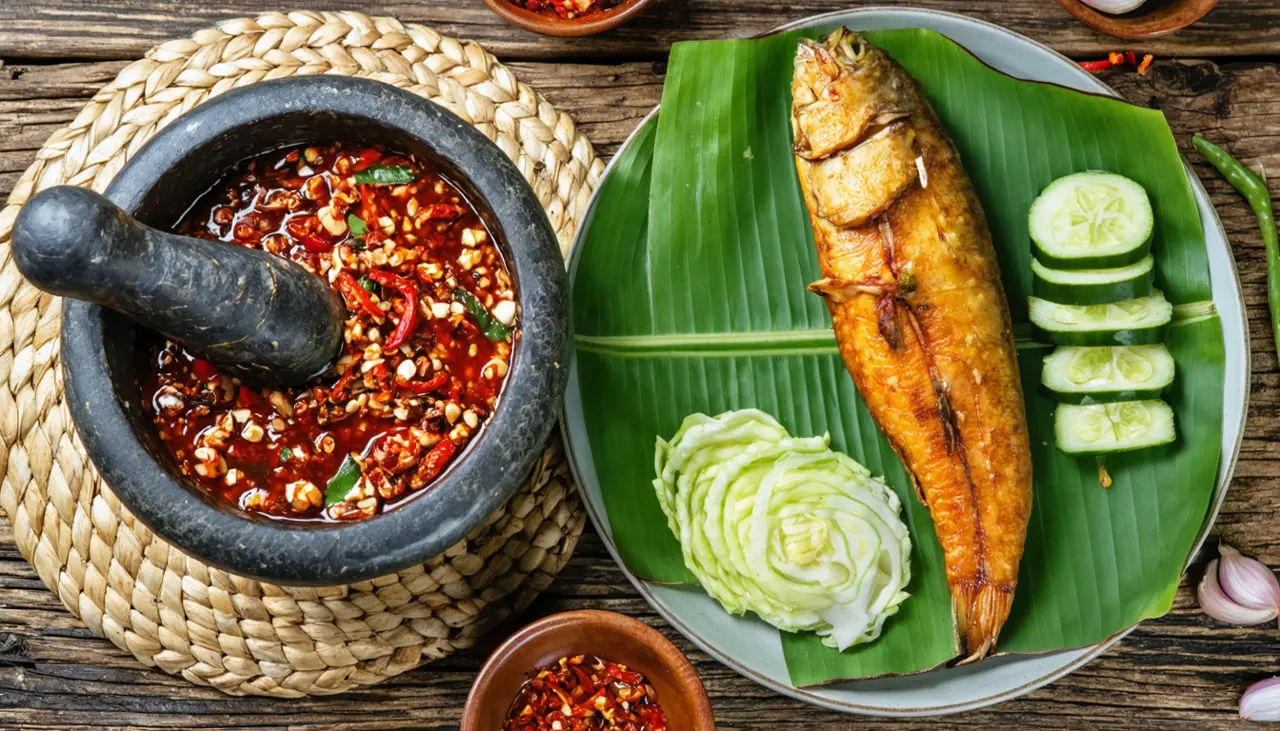
Shrimp Paste Chili Dip (Nam Prik Kapi)
A pungent, punchy central Thai relish of toasted shrimp paste pounded with chilies, garlic, lime and palm sugar, scooped up with crisp-fried mackerel and raw or blanched vegetables.
Servings
Ingredients
Nutrition
Per serving
Steps

Toast the shrimp paste
Wrap the shrimp paste tightly in a small piece of foil and press it into a flat disc. Toast it in a dry pan over medium heat, turning once, for about 2–3 minutes per side. This mellows the sharp raw smell and brings out a deep, nutty flavor — never use shrimp paste raw in this dish.
- 45 g (3 tbsp) shrimp paste
✅ Done when: the paste smells toasted and savory rather than sharp and fishy

Pound chilies and garlic
In a mortar, pound the chilies and garlic together until broken down into a coarse, slightly wet paste. A stone mortar gives better texture than a blender here — you want some rough bits, not a smooth puree.
- 8–10 fresh Thai chilies
- 4 cloves garlic
✅ Done when: the chilies and garlic are crushed into a rough, fragrant paste
Add shrimp and shrimp paste
This step is part of Foodie Premium. Subscribe to unlock the full method, cooking mode and every recipe in the library.
Season to balance
This step is part of Foodie Premium. Subscribe to unlock the full method, cooking mode and every recipe in the library.
Fold in eggplant and beans
This step is part of Foodie Premium. Subscribe to unlock the full method, cooking mode and every recipe in the library.
Fry the fish
This step is part of Foodie Premium. Subscribe to unlock the full method, cooking mode and every recipe in the library.
Serve
This step is part of Foodie Premium. Subscribe to unlock the full method, cooking mode and every recipe in the library.
Toast the shrimp paste
Wrap the shrimp paste tightly in a small piece of foil and press it into a flat disc. Toast it in a dry pan over medium heat, turning once, for about 2–3 minutes per side. This mellows the sharp raw smell and brings out a deep, nutty flavor — never use shrimp paste raw in this dish.
- 45 g (3 tbsp) shrimp paste
✅ Done when: the paste smells toasted and savory rather than sharp and fishy
Pound chilies and garlic
In a mortar, pound the chilies and garlic together until broken down into a coarse, slightly wet paste. A stone mortar gives better texture than a blender here — you want some rough bits, not a smooth puree.
- 8–10 fresh Thai chilies
- 4 cloves garlic
✅ Done when: the chilies and garlic are crushed into a rough, fragrant paste
Add shrimp and shrimp paste
This step is part of Foodie Premium. Subscribe to unlock the full method, cooking mode and every recipe in the library.
Season to balance
This step is part of Foodie Premium. Subscribe to unlock the full method, cooking mode and every recipe in the library.
Fold in eggplant and beans
This step is part of Foodie Premium. Subscribe to unlock the full method, cooking mode and every recipe in the library.
Fry the fish
This step is part of Foodie Premium. Subscribe to unlock the full method, cooking mode and every recipe in the library.
Serve
This step is part of Foodie Premium. Subscribe to unlock the full method, cooking mode and every recipe in the library.
The Story Behind the Dish
Nam prik, pounded chili relishes eaten with rice, are among the oldest dishes in Thai home cooking, and nam prik kapi, built on fermented shrimp paste, is considered the most essential of them in the central plains. It grew out of a rice-and-fish-sauce food culture where a small bowl of intensely flavored paste could season a whole simple meal of rice, vegetables and fish.
It remains an everyday family dish rather than a restaurant showpiece, traditionally pounded fresh in a stone mortar and eaten with fried fish and whatever vegetables, raw or just blanched, are at hand.
⭐ Why It's Famous
It is the dish most Thais would call the taste of home: pungent, hot, sour and sweet in one spoonful, and every family has its own exact balance.
💡 Fun Fact
Thailand has hundreds of regional nam prik, and almost every province claims its own signature version, but nam prik kapi is often considered the oldest and most central to the cuisine.
Central Thailand
13.76°N, 100.50°E
Related recipes
Comments (0)
No comments yet. Be the first to share your thoughts!