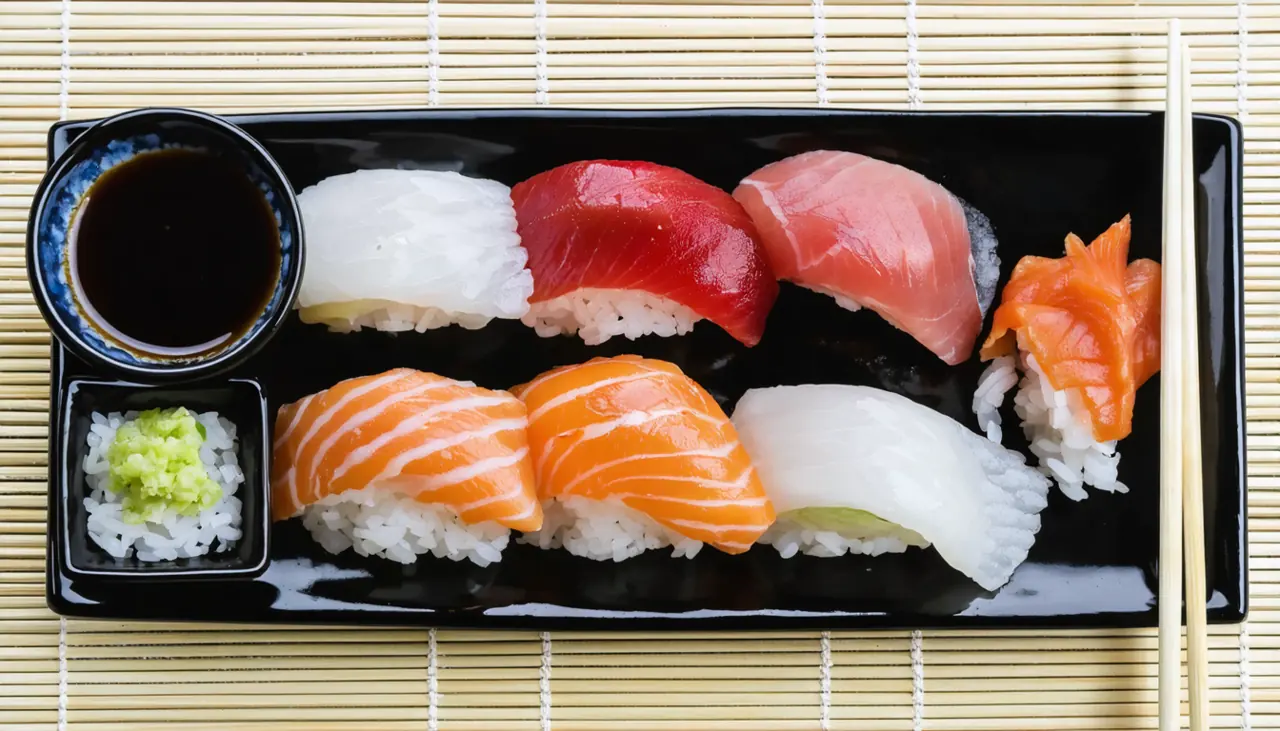
Nigiri Zushi (Hand-Pressed Sushi)
Warm, vinegared rice pressed by hand into neat little mounds and draped with slices of sashimi-grade fish. Simple, precise, and endlessly satisfying when the small details are right.
Servings
Ingredients
Nutrition
Per serving
Steps
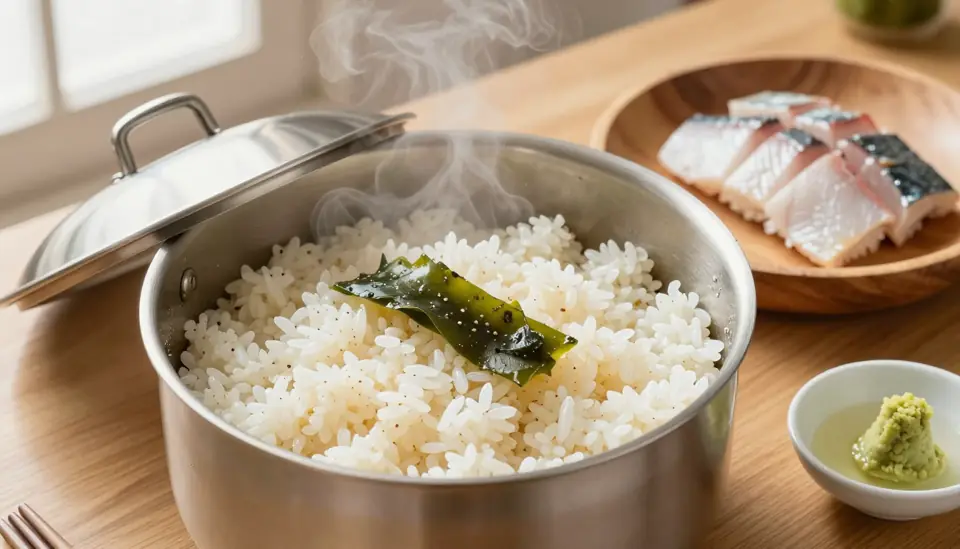
Rinse and cook the rice
Rinse the rice in cold water, swirling and draining, until the water runs mostly clear, then drain for 15 minutes. Put the rice, water and in a medium (3-liter) heavy pot, cover, bring to a boil over high heat, then lower to the lowest heat and cook 12 minutes without lifting the lid; turn off the heat and let it rest, covered, 10 minutes.
- 400 g sushi rice
- 480 ml water
- 1 piece
✅ Done when: all the water is absorbed and the rice is tender
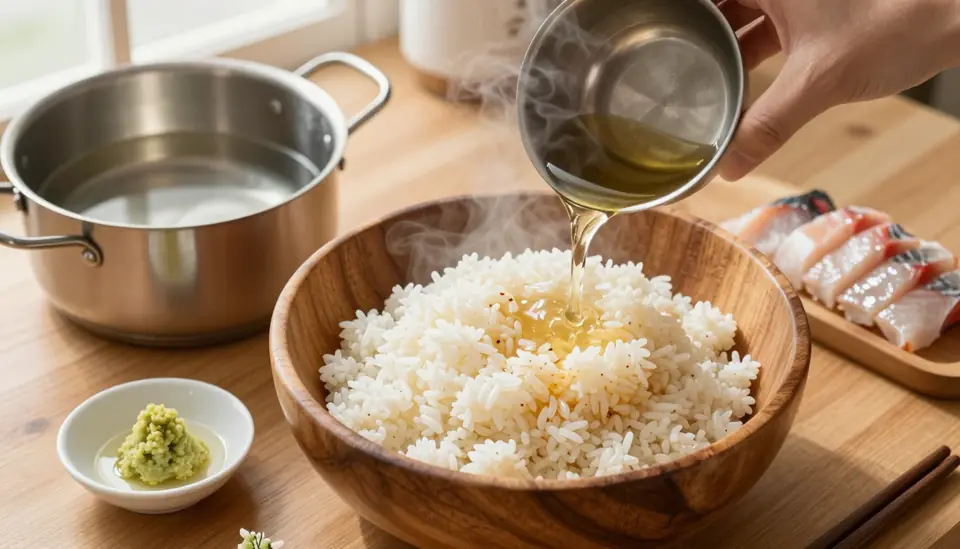
Season the rice
While the rice cooks, warm the vinegar, sugar and salt in a small pan over low heat, stirring just until dissolved, then let it cool. Tip the hot cooked rice into a wide, shallow bowl, pour the vinegar mix over it, and cut it in with slicing, folding strokes rather than stirring, so the grains stay whole.
- all cooked rice from step 1
- 60 ml rice vinegar
- 2 tbsp sugar
- 1 tsp fine salt
✅ Done when: sugar and salt are fully dissolved and the rice is evenly coated
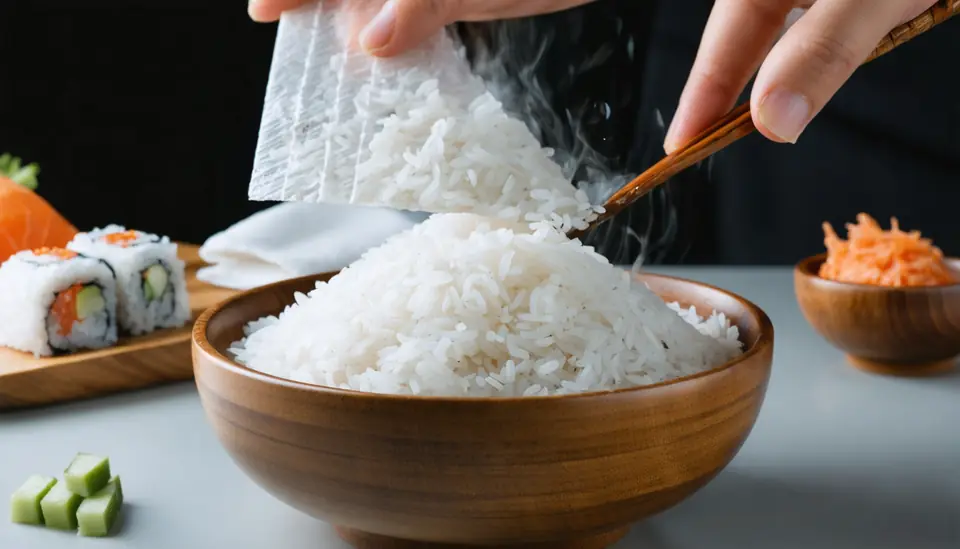
Fan the rice cool
Fan the rice as you fold it, or wave a folded piece of card over it, for 5 to 10 minutes until it cools to body temperature and looks glossy. Cover with a damp cloth and use within a couple of hours, at room temperature, not chilled.
- all seasoned rice from step 2
✅ Done when: rice looks glossy and feels about body temperature, not hot
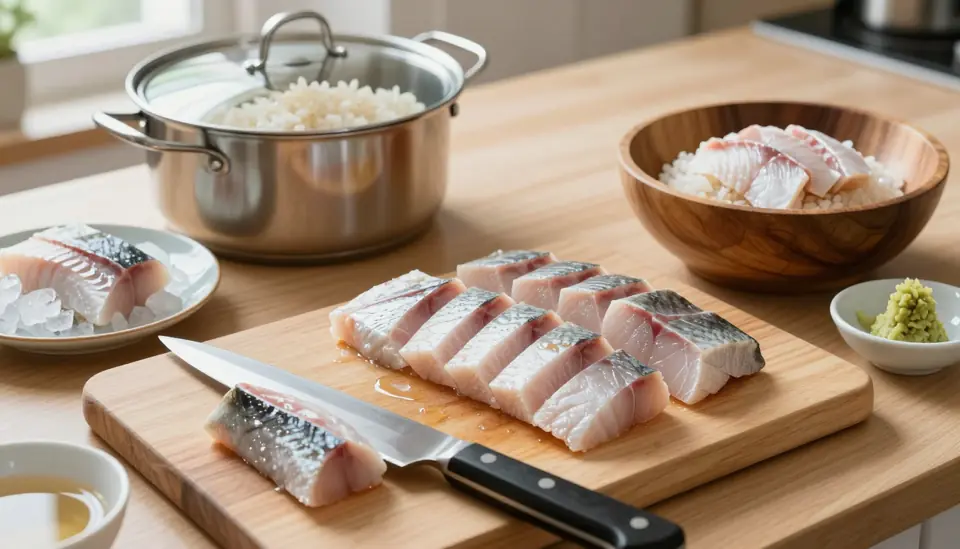
Slice the fish
With a sharp knife, cut the chilled fish into slices about 7 cm long, 3 cm wide and 5 mm thick, slicing on a slight diagonal against the grain for a clean, glossy surface. Keep the fish cold on a plate over ice until you are ready to shape, since warm fish is the main thing that spoils good .
- 400 g sashimi-grade fish
- a few handfuls ice
✅ Done when: slices are even, about 5 mm thick, with a smooth glossy surface
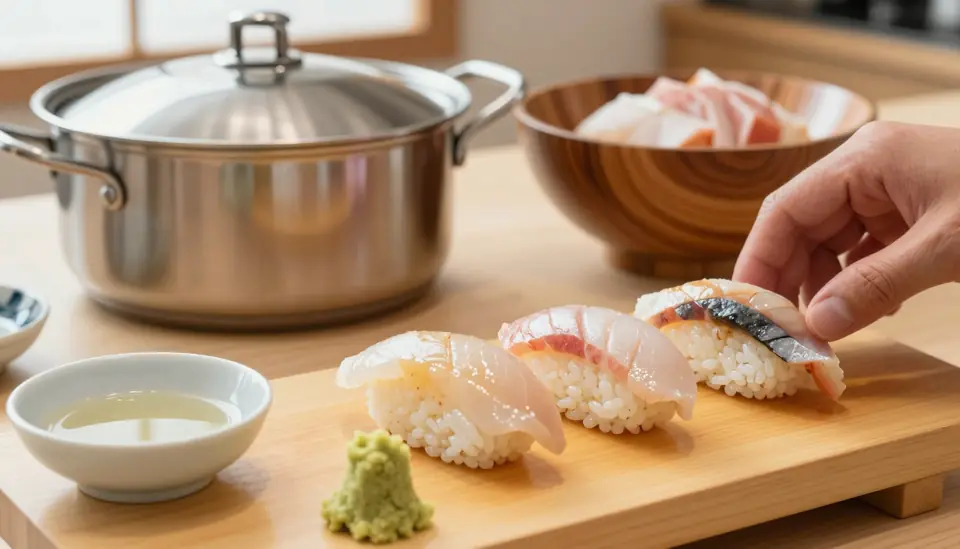
Shape the nigiri
Dip your fingers in the vinegar-water () so the rice will not stick, then scoop up about 20 g of rice per piece and press it gently into a short, rounded block the length of a fish slice; do not pack it hard. Dab a tiny smear of on the underside of a fish slice, lay it over the rice, and press lightly with your index and middle fingers so the fish curves over the top and the base stays flat.
- all (about 20 g per piece) cooled seasoned rice from step 3
- all sliced fish from step 4
- 1 tbsp paste
- 1 tbsp (vinegar water)
✅ Done when: each piece holds together but presses apart easily between your fingers
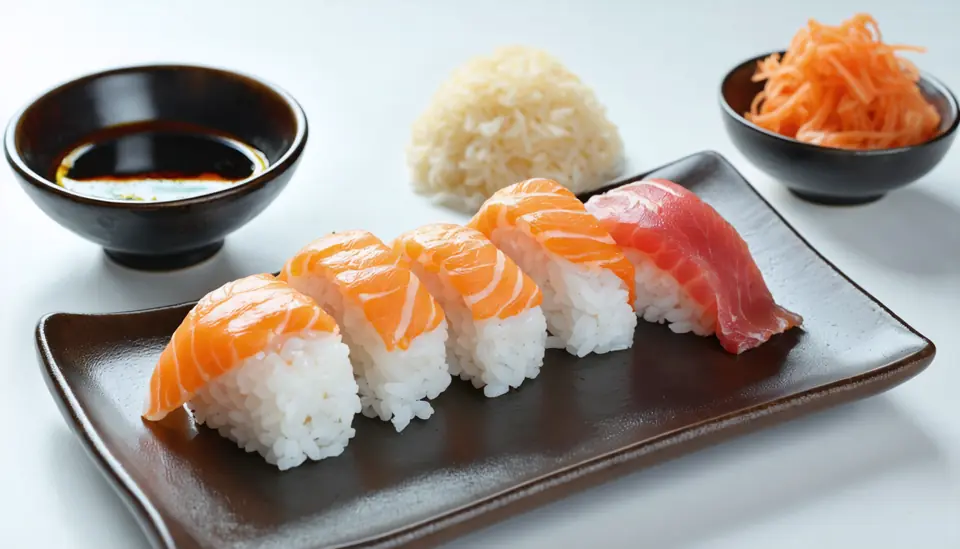
Serve
Arrange the on a plate as you make them, fish-side up, and serve right away while the rice is still just warm. Offer soy sauce for dipping fish-side down, not rice-side, with pickled ginger alongside to cleanse the palate between bites.
- all shaped from step 5
- to serve soy sauce
- to serve pickled ginger
Rinse and cook the rice
Rinse the rice in cold water, swirling and draining, until the water runs mostly clear, then drain for 15 minutes. Put the rice, water and in a medium (3-liter) heavy pot, cover, bring to a boil over high heat, then lower to the lowest heat and cook 12 minutes without lifting the lid; turn off the heat and let it rest, covered, 10 minutes.
- 400 g sushi rice
- 480 ml water
- 1 piece
✅ Done when: all the water is absorbed and the rice is tender
Season the rice
While the rice cooks, warm the vinegar, sugar and salt in a small pan over low heat, stirring just until dissolved, then let it cool. Tip the hot cooked rice into a wide, shallow bowl, pour the vinegar mix over it, and cut it in with slicing, folding strokes rather than stirring, so the grains stay whole.
- all cooked rice from step 1
- 60 ml rice vinegar
- 2 tbsp sugar
- 1 tsp fine salt
✅ Done when: sugar and salt are fully dissolved and the rice is evenly coated
Fan the rice cool
Fan the rice as you fold it, or wave a folded piece of card over it, for 5 to 10 minutes until it cools to body temperature and looks glossy. Cover with a damp cloth and use within a couple of hours, at room temperature, not chilled.
- all seasoned rice from step 2
✅ Done when: rice looks glossy and feels about body temperature, not hot
Slice the fish
With a sharp knife, cut the chilled fish into slices about 7 cm long, 3 cm wide and 5 mm thick, slicing on a slight diagonal against the grain for a clean, glossy surface. Keep the fish cold on a plate over ice until you are ready to shape, since warm fish is the main thing that spoils good .
- 400 g sashimi-grade fish
- a few handfuls ice
✅ Done when: slices are even, about 5 mm thick, with a smooth glossy surface
Shape the nigiri
Dip your fingers in the vinegar-water () so the rice will not stick, then scoop up about 20 g of rice per piece and press it gently into a short, rounded block the length of a fish slice; do not pack it hard. Dab a tiny smear of on the underside of a fish slice, lay it over the rice, and press lightly with your index and middle fingers so the fish curves over the top and the base stays flat.
- all (about 20 g per piece) cooled seasoned rice from step 3
- all sliced fish from step 4
- 1 tbsp paste
- 1 tbsp (vinegar water)
✅ Done when: each piece holds together but presses apart easily between your fingers
Serve
Arrange the on a plate as you make them, fish-side up, and serve right away while the rice is still just warm. Offer soy sauce for dipping fish-side down, not rice-side, with pickled ginger alongside to cleanse the palate between bites.
- all shaped from step 5
- to serve soy sauce
- to serve pickled ginger
The Story Behind the Dish
Nigiri sushi as we know it developed in Edo as a quick, satisfying bite sold from street stalls, a faster alternative to the older, slow-fermented styles of sushi. Vinegared rice meant the fish no longer needed days of fermentation to stay safe and flavourful, so a vendor could press a piece of rice, lay on a slice of fresh fish, and hand it over in seconds.
Over the following century the pieces shrank from the hearty, almost onigiri-sized originals to the two-bite portions eaten today, and sushi moved from street stalls into the counters of dedicated restaurants.
⭐ Why It's Famous
It distills Japanese cooking into two ingredients and almost no cooking at all: the quality of the rice, the quality of the fish, and the hands that bring them together.
💡 Fun Fact
Traditional sushi etiquette says nigiri is best eaten in one bite, with fingers, fish-side down into the soy sauce.
Edo (modern-day Tokyo)
35.69°N, 139.69°E
Related recipes
Comments (0)
No comments yet. Be the first to share your thoughts!