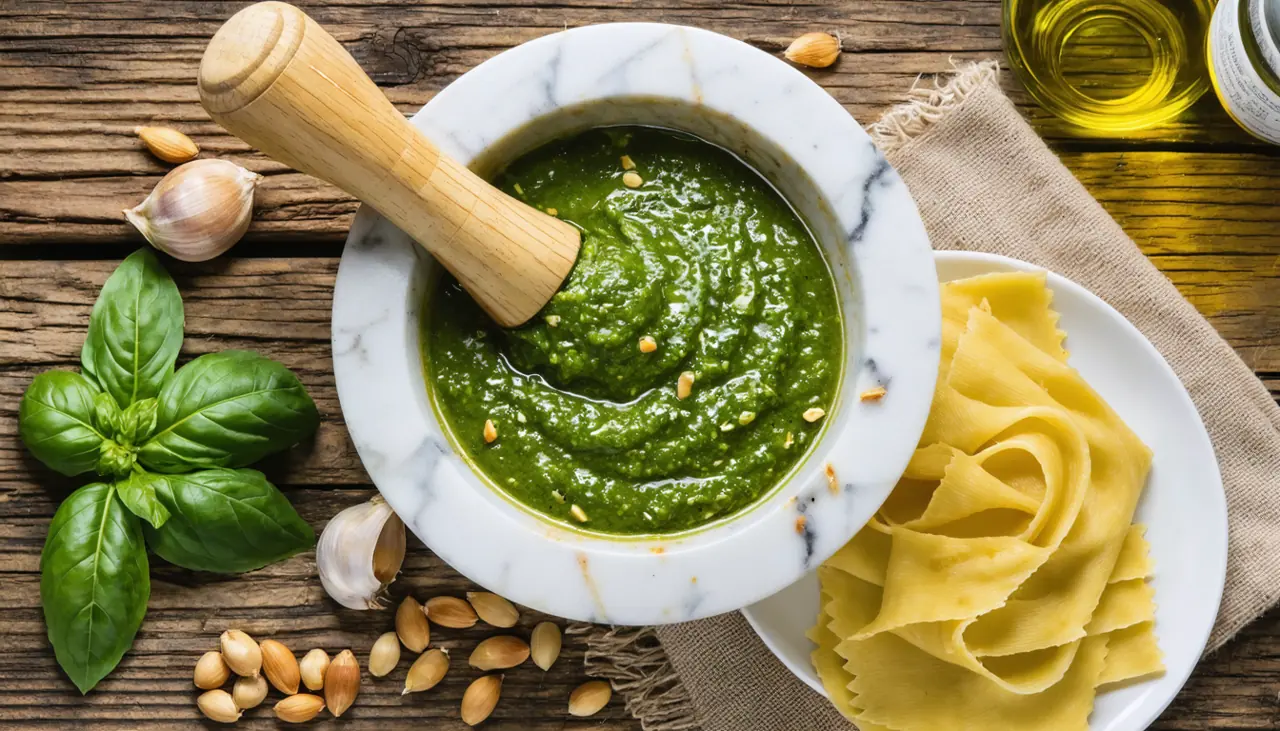
Basil Pesto Sauce (Pesto alla Genovese)
A fragrant, vivid green paste from Liguria made by crushing fresh basil with pine nuts, garlic, Parmesan and olive oil. Tossed with pasta, spread on bread or stirred into soup, it tastes like summer in a spoonful.
Servings
Ingredients
Nutrition
Per serving
Steps

Dry the basil
Pick only the small, tender basil leaves and discard thick stems. Wash gently in cold water, then dry the leaves very thoroughly with a clean kitchen towel or salad spinner — any leftover water will water down the pesto and dull its bright colour.
- 60 g basil leaves
✅ Done when: the leaves are completely dry to the touch with no shine of water

Crush garlic and pine nuts
Put the garlic, pine nuts and coarse salt into a mortar (or a small food processor). Crush with the pestle in a circular, grinding motion until smooth — the salt acts like sandpaper and helps break the garlic down quickly and evenly.
- 2 cloves garlic
- 30 g pine nuts
- 1/2 tsp coarse salt
✅ Done when: the mixture turns into a smooth, pale, creamy paste with no visible chunks

Pound in the basil
Add the basil a handful at a time, crushing it against the side of the mortar with the pestle (or pulsing briefly if using a processor). Work in short bursts with pauses rather than one long run — a hot blade turns basil dark and bitter, while gentle pounding keeps it bright green.
- 60 g basil leaves (dried, from step 1)
✅ Done when: the basil is fully broken down into a rough, vivid green paste

Fold in the cheeses
Scrape the paste into a bowl and stir in the Parmigiano Reggiano and Pecorino with a wooden spoon, mixing just until combined. Stirring gently rather than beating keeps the cheese from turning rubbery or clumping.
- 50 g Parmigiano Reggiano
- 20 g Pecorino
✅ Done when: the cheeses are evenly worked in and the mixture looks like a thick, grainy paste

Add the olive oil
Pour in the olive oil in a slow, steady stream, stirring constantly with the spoon — not whisking — until the pesto turns smooth, glossy and creamy. Taste and add a little more salt if needed.
- 150 ml extra-virgin olive oil
✅ Done when: the sauce is thick but pourable, bright green, with no oil separating on top

Serve or store
Toss the pesto with warm, just-drained pasta right away, loosening it with a spoonful of the pasta's starchy cooking water so it coats the strands evenly. To store, spoon it into a jar, press a thin layer of olive oil on top to seal out air, and refrigerate for up to a week.
Dry the basil
Pick only the small, tender basil leaves and discard thick stems. Wash gently in cold water, then dry the leaves very thoroughly with a clean kitchen towel or salad spinner — any leftover water will water down the pesto and dull its bright colour.
- 60 g basil leaves
✅ Done when: the leaves are completely dry to the touch with no shine of water
Crush garlic and pine nuts
Put the garlic, pine nuts and coarse salt into a mortar (or a small food processor). Crush with the pestle in a circular, grinding motion until smooth — the salt acts like sandpaper and helps break the garlic down quickly and evenly.
- 2 cloves garlic
- 30 g pine nuts
- 1/2 tsp coarse salt
✅ Done when: the mixture turns into a smooth, pale, creamy paste with no visible chunks
Pound in the basil
Add the basil a handful at a time, crushing it against the side of the mortar with the pestle (or pulsing briefly if using a processor). Work in short bursts with pauses rather than one long run — a hot blade turns basil dark and bitter, while gentle pounding keeps it bright green.
- 60 g basil leaves (dried, from step 1)
✅ Done when: the basil is fully broken down into a rough, vivid green paste
Fold in the cheeses
Scrape the paste into a bowl and stir in the Parmigiano Reggiano and Pecorino with a wooden spoon, mixing just until combined. Stirring gently rather than beating keeps the cheese from turning rubbery or clumping.
- 50 g Parmigiano Reggiano
- 20 g Pecorino
✅ Done when: the cheeses are evenly worked in and the mixture looks like a thick, grainy paste
Add the olive oil
Pour in the olive oil in a slow, steady stream, stirring constantly with the spoon — not whisking — until the pesto turns smooth, glossy and creamy. Taste and add a little more salt if needed.
- 150 ml extra-virgin olive oil
✅ Done when: the sauce is thick but pourable, bright green, with no oil separating on top
Serve or store
Toss the pesto with warm, just-drained pasta right away, loosening it with a spoonful of the pasta's starchy cooking water so it coats the strands evenly. To store, spoon it into a jar, press a thin layer of olive oil on top to seal out air, and refrigerate for up to a week.
The Story Behind the Dish
Pesto alla Genovese comes from Genoa, capital of Liguria, where the mild coastal climate is ideal for growing fragrant, sweet basil. Its name comes from the Italian verb pestare, "to crush" or "to pound," a reference to the traditional method of working the ingredients in a marble mortar with a wooden pestle rather than cutting or heating them.
The sauce became the signature flavour of Ligurian cooking, tossed with trofie or trenette pasta, often cooked in the same pot as potatoes and green beans, and also used to enrich minestrone or spread on warm focaccia.
⭐ Why It's Famous
Its intense aroma, bright green colour and the simplicity of pounding raw ingredients into a smooth paste made it one of Italy's most beloved and widely copied sauces.
💡 Fun Fact
Genoa hosts a biennial World Pesto Championship, where competitors must prepare their sauce by hand with a mortar and pestle — no blenders allowed.
Genoa, Liguria
44.41°N, 8.95°E
Related recipes
Comments (0)
No comments yet. Be the first to share your thoughts!