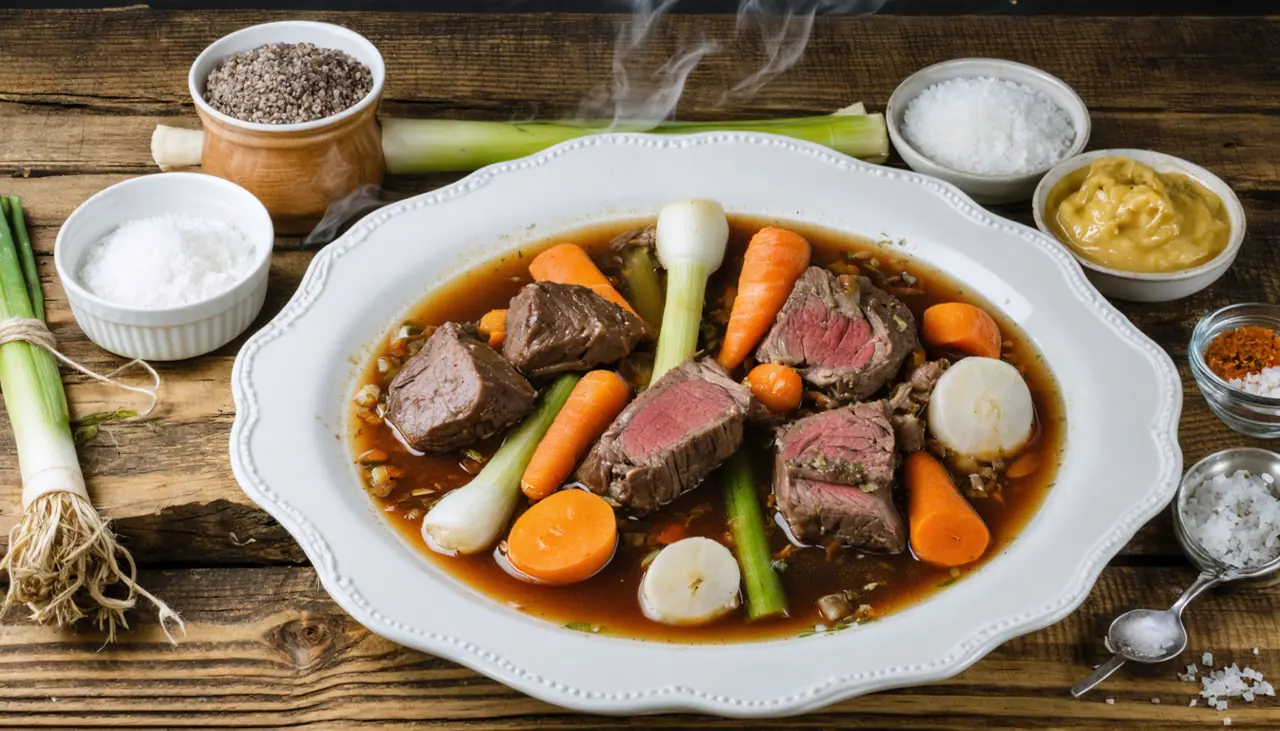
French Beef and Vegetable Stew (Pot-au-Feu)
Beef and marrow bones simmered low and slow with carrots, turnips and leeks until the broth turns clear and deeply savoury. Served the traditional way, with coarse salt, Dijon mustard and cornichons on the side.
Servings
Ingredients
Nutrition
Per serving
Steps
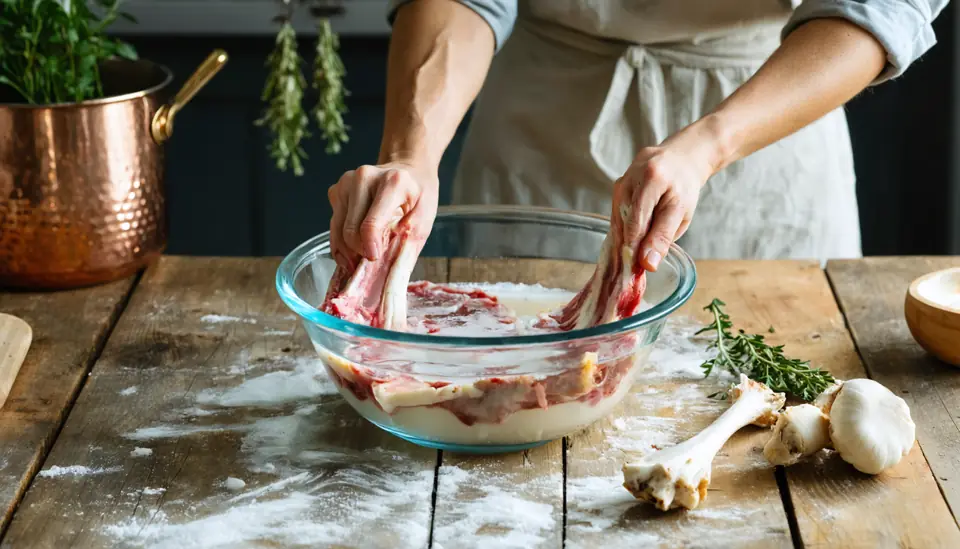
Soak the marrow bones
Put the in a bowl of cold water and leave them in the fridge while you prepare everything else. This draws out any blood so the broth stays clear instead of cloudy.
- 4 pieces (about 800 g)
✅ Done when: the soaking water has turned pink and the bones look pale
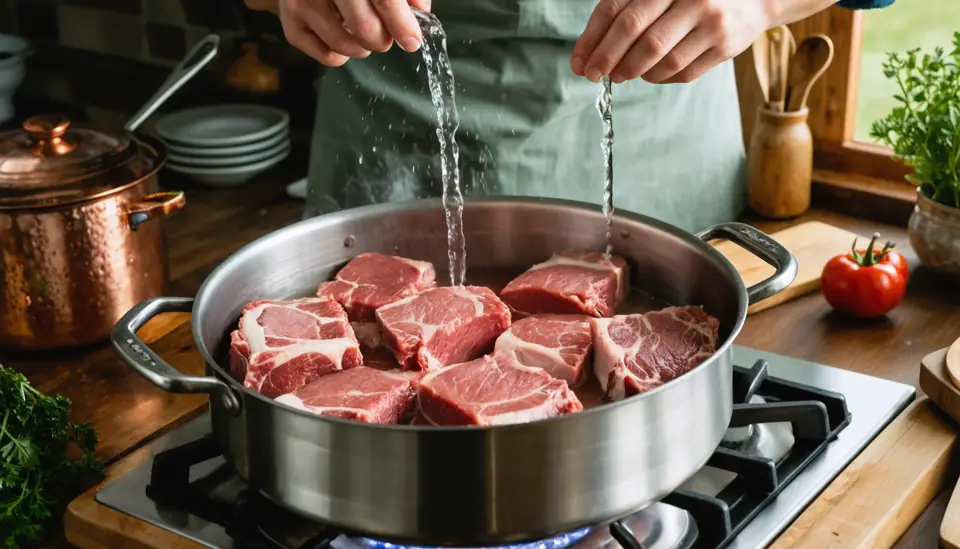
Start the meat in cold water
Put the beef chunks and short ribs into a very large pot and cover with the cold water. Bring slowly to a boil over medium heat without stirring too much; this is the key step that gives a clear broth, because the proteins rise to the surface as foam instead of clouding the liquid.
- 1.2 kg beef chuck or shin
- 500 g beef short ribs or oxtail
- 3 litres cold water
✅ Done when: the water is just starting to bubble and a layer of grey foam has formed on top
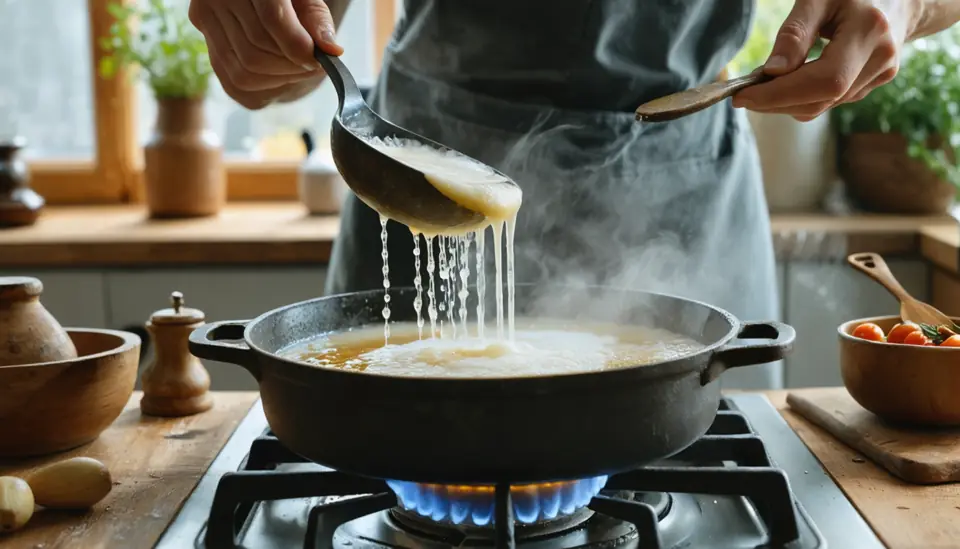
Skim thoroughly
Lower the heat so the liquid just barely simmers, and skim off every bit of the grey foam with a ladle or large spoon, repeating for several minutes until no more rises. Don't skip this; it's what separates a clear, elegant broth from a muddy one.
✅ Done when: the broth looks clear underneath, with only a thin layer of fat visible
Simmer with aromatics
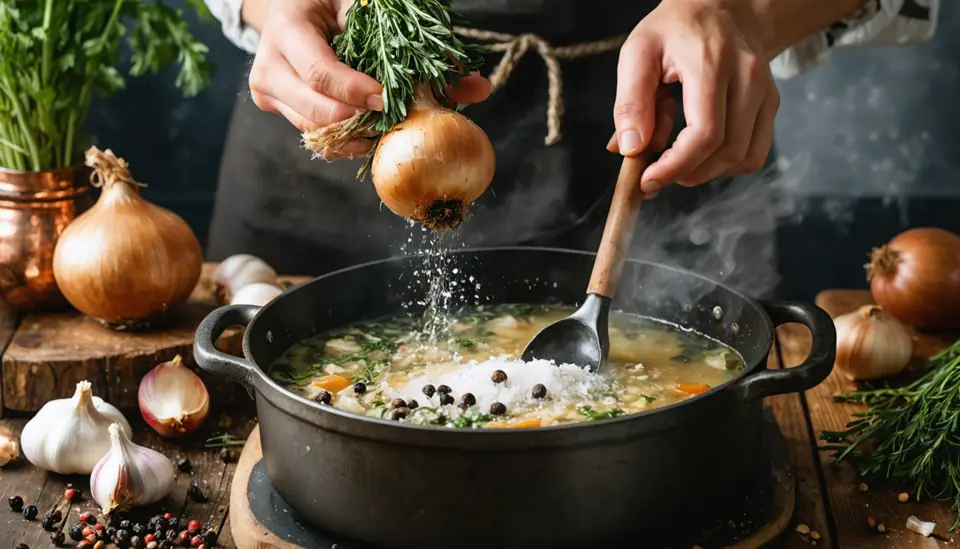
Add the clove-studded onion, garlic, , peppercorns and coarse salt. Partly cover the pot and simmer very gently, with just a few bubbles breaking the surface, for about 2.5 hours, skimming off any fat from time to time.
- 2 onions, one studded with cloves
- 4 cloves garlic
- 1
- 10 black peppercorns
- 2 tsp coarse sea salt
✅ Done when: the meat is tender when pierced with a fork but still holds its shape
Add the vegetables
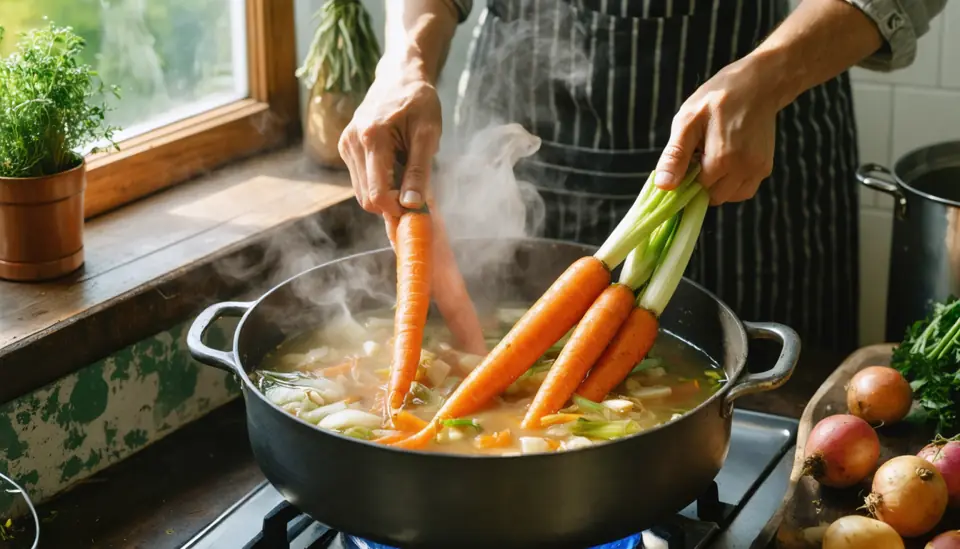
Add the carrots, turnips, leeks and celery to the pot. Continue simmering gently, uncovered, so the vegetables cook through without turning to mush.
- 4 carrots
- 2 turnips
- 2 leeks
- 2 stalks celery
✅ Done when: a knife slides easily into the carrots and turnips
Poach the marrow bones
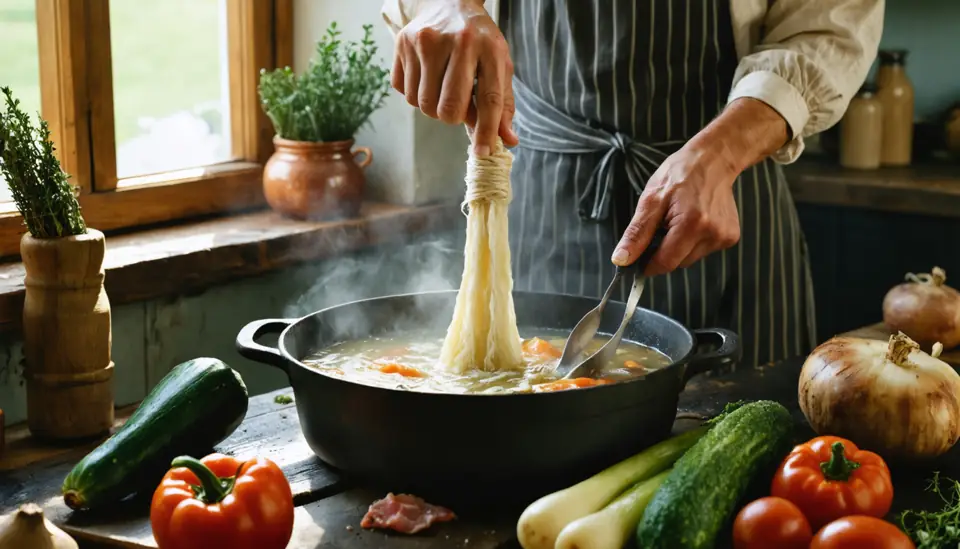
Wrap the soaked in a piece of cheesecloth or tie them so the marrow doesn't fall out, and lower them into the simmering broth for the last 25–30 minutes. This is just long enough to warm and soften the marrow without melting it away.
- 4 pieces (about 800 g) soaked
✅ Done when: the marrow is soft and spreadable when pressed with a spoon
Rest, then serve
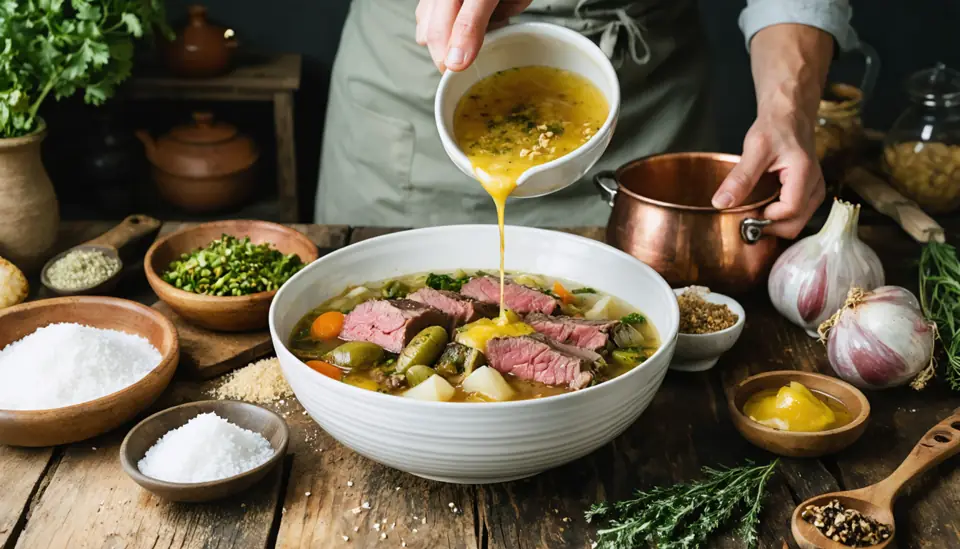
Turn off the heat and let everything rest in the broth for 10 minutes so the meat relaxes and stays juicy when sliced. Lift out the meat, bones and vegetables, discard the , and serve the broth first in bowls, followed by the sliced meat and vegetables with coarse salt, Dijon mustard and cornichons on the table.
- to serve Dijon mustard
- to serve cornichons
✅ Done when: the meat has rested and slices cleanly without falling apart
Soak the marrow bones
Put the in a bowl of cold water and leave them in the fridge while you prepare everything else. This draws out any blood so the broth stays clear instead of cloudy.
- 4 pieces (about 800 g)
✅ Done when: the soaking water has turned pink and the bones look pale
Start the meat in cold water
Put the beef chunks and short ribs into a very large pot and cover with the cold water. Bring slowly to a boil over medium heat without stirring too much; this is the key step that gives a clear broth, because the proteins rise to the surface as foam instead of clouding the liquid.
- 1.2 kg beef chuck or shin
- 500 g beef short ribs or oxtail
- 3 litres cold water
✅ Done when: the water is just starting to bubble and a layer of grey foam has formed on top
Skim thoroughly
Lower the heat so the liquid just barely simmers, and skim off every bit of the grey foam with a ladle or large spoon, repeating for several minutes until no more rises. Don't skip this; it's what separates a clear, elegant broth from a muddy one.
✅ Done when: the broth looks clear underneath, with only a thin layer of fat visible
Simmer with aromatics
Add the clove-studded onion, garlic, , peppercorns and coarse salt. Partly cover the pot and simmer very gently, with just a few bubbles breaking the surface, for about 2.5 hours, skimming off any fat from time to time.
- 2 onions, one studded with cloves
- 4 cloves garlic
- 1
- 10 black peppercorns
- 2 tsp coarse sea salt
✅ Done when: the meat is tender when pierced with a fork but still holds its shape
Add the vegetables
Add the carrots, turnips, leeks and celery to the pot. Continue simmering gently, uncovered, so the vegetables cook through without turning to mush.
- 4 carrots
- 2 turnips
- 2 leeks
- 2 stalks celery
✅ Done when: a knife slides easily into the carrots and turnips
Poach the marrow bones
Wrap the soaked in a piece of cheesecloth or tie them so the marrow doesn't fall out, and lower them into the simmering broth for the last 25–30 minutes. This is just long enough to warm and soften the marrow without melting it away.
- 4 pieces (about 800 g) soaked
✅ Done when: the marrow is soft and spreadable when pressed with a spoon
Rest, then serve
Turn off the heat and let everything rest in the broth for 10 minutes so the meat relaxes and stays juicy when sliced. Lift out the meat, bones and vegetables, discard the , and serve the broth first in bowls, followed by the sliced meat and vegetables with coarse salt, Dijon mustard and cornichons on the table.
- to serve Dijon mustard
- to serve cornichons
✅ Done when: the meat has rested and slices cleanly without falling apart
The Story Behind the Dish
Pot-au-feu means simply 'pot on the fire', and it is exactly that: a pot of tough, flavourful cuts of beef and root vegetables set to simmer slowly over the hearth or stove for hours, needing little attention beyond the occasional skim. It became a symbol of French home cooking in the 19th century, prized and cooked in households of every class, from farmhouses to Parisian apartments.
The dish is built around patience rather than technique: cheap cuts of beef, simmered gently with bones for richness, turn tender and the broth becomes deeply savoury. It is traditionally served in two courses, the broth first, then the meat and vegetables, with coarse salt and mustard at the table.
⭐ Why It's Famous
It is considered the quintessential French family meal, humble, generous, and built on the idea that long, gentle cooking turns simple ingredients into something deeply satisfying.
💡 Fun Fact
The broth from pot-au-feu is often kept and used the next day as the base for soups, or to cook rice, nothing from the pot goes to waste.
France, nationwide
46.60°N, 1.89°E
Related recipes
Comments (0)
No comments yet. Be the first to share your thoughts!