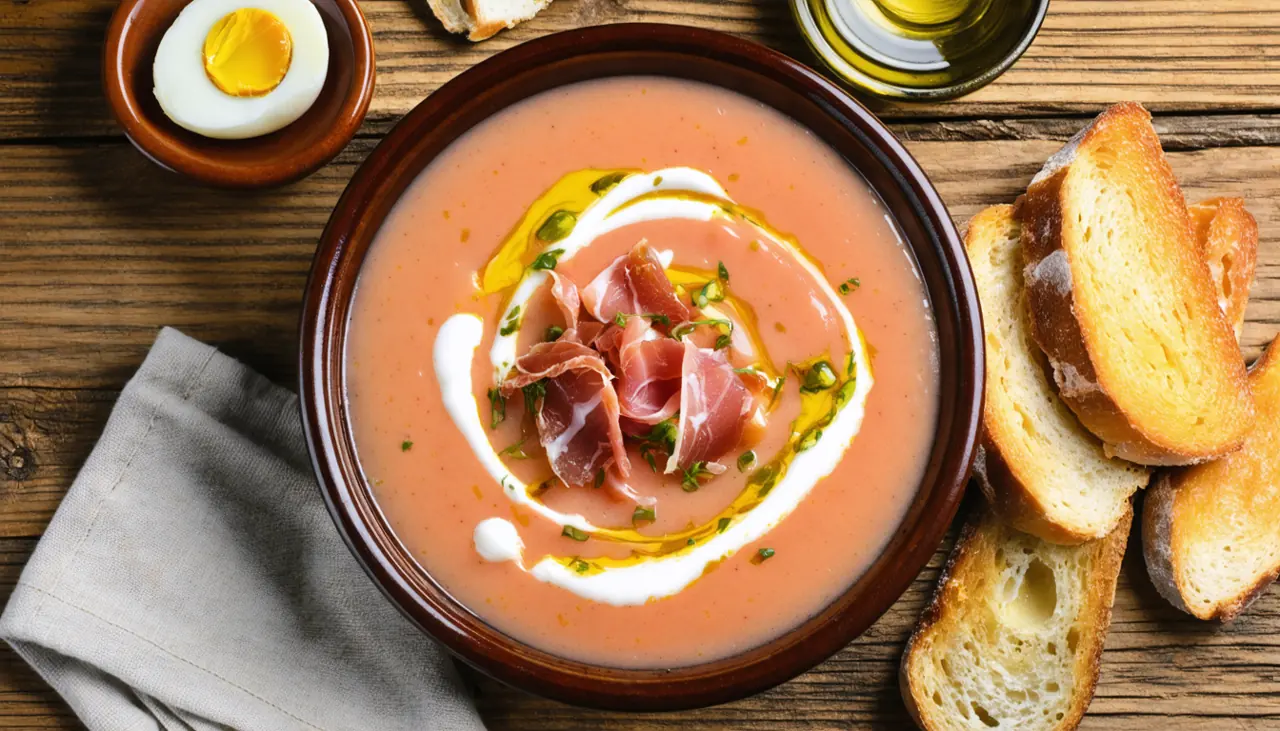
Cold Tomato and Bread Soup (Salmorejo)
A silky, coral-pink Andalusian soup made by blending very ripe tomatoes with bread, garlic and good olive oil, chilled until icy and finished with jamón and chopped egg. Simple, rich and endlessly refreshing on a hot day.
Servings
Ingredients
Nutrition
Per serving
Steps

Soak the bread
Put the torn bread in a bowl and cover with cold water. Let it sit until it is completely soft all the way through, then squeeze out most of the water with your hands. This softens the bread so it blends into a smooth cream instead of leaving gritty lumps.
- 180 g day-old bread
✅ Done when: the bread is soft and squeezes easily between your fingers

Blend tomatoes and garlic
Cut the tomatoes into rough chunks (no need to peel or seed them; the blender and a later strain will take care of that). Blend them with the garlic cloves on high speed until completely smooth.
- 1 kg tomatoes
- 2 cloves garlic
✅ Done when: the mixture is a smooth, bright red purée with no visible chunks

Add the bread
Add the softened, squeezed bread to the tomato purée and blend again until completely smooth. This is what gives salmorejo its thick, soup-like body instead of being just a tomato juice.
- 180 g soaked bread (from step 1)
✅ Done when: the mixture looks thick and creamy, with no bread lumps left

Emulsify with the oil
With the blender running on low-medium speed, pour in the olive oil in a slow, steady stream, the same way you would make mayonnaise. This emulsifies the oil into the purée, turning it pale coral and velvety instead of oily on top. Add the vinegar and salt and blend once more to combine.
- 180 ml olive oil
- 2 tbsp
- 1 tsp salt
✅ Done when: the soup is thick enough to coat the back of a spoon and has turned a lighter, creamy coral color

Strain and chill
For the silkiest texture, pass the soup through a fine sieve, pressing with the back of a ladle to remove the tomato skins and seeds. Cover and refrigerate until very cold, at 4°C (39°F) or below.
✅ Done when: the soup is icy cold and completely smooth on the tongue

Prepare the garnish
If starting from raw eggs, place them in a pot of cold water, bring to a boil, then simmer for 10 minutes. Cool under cold water, peel, and chop. Dice the jamón small so each spoonful gets a bit of both.
- 2 hard-boiled eggs
- 60 g
✅ Done when: the eggs are fully cooked through, with firm, pale yellow yolks

Serve very cold
Ladle the chilled soup into bowls or small glasses. Scatter the chopped egg and diced jamón over the top, and finish with a thin drizzle of olive oil.
- 2 hard-boiled eggs
- 60 g
- 2 tbsp olive oil, for drizzling
Soak the bread
Put the torn bread in a bowl and cover with cold water. Let it sit until it is completely soft all the way through, then squeeze out most of the water with your hands. This softens the bread so it blends into a smooth cream instead of leaving gritty lumps.
- 180 g day-old bread
✅ Done when: the bread is soft and squeezes easily between your fingers
Blend tomatoes and garlic
Cut the tomatoes into rough chunks (no need to peel or seed them; the blender and a later strain will take care of that). Blend them with the garlic cloves on high speed until completely smooth.
- 1 kg tomatoes
- 2 cloves garlic
✅ Done when: the mixture is a smooth, bright red purée with no visible chunks
Add the bread
Add the softened, squeezed bread to the tomato purée and blend again until completely smooth. This is what gives salmorejo its thick, soup-like body instead of being just a tomato juice.
- 180 g soaked bread (from step 1)
✅ Done when: the mixture looks thick and creamy, with no bread lumps left
Emulsify with the oil
With the blender running on low-medium speed, pour in the olive oil in a slow, steady stream, the same way you would make mayonnaise. This emulsifies the oil into the purée, turning it pale coral and velvety instead of oily on top. Add the vinegar and salt and blend once more to combine.
- 180 ml olive oil
- 2 tbsp
- 1 tsp salt
✅ Done when: the soup is thick enough to coat the back of a spoon and has turned a lighter, creamy coral color
Strain and chill
For the silkiest texture, pass the soup through a fine sieve, pressing with the back of a ladle to remove the tomato skins and seeds. Cover and refrigerate until very cold, at 4°C (39°F) or below.
✅ Done when: the soup is icy cold and completely smooth on the tongue
Prepare the garnish
If starting from raw eggs, place them in a pot of cold water, bring to a boil, then simmer for 10 minutes. Cool under cold water, peel, and chop. Dice the jamón small so each spoonful gets a bit of both.
- 2 hard-boiled eggs
- 60 g
✅ Done when: the eggs are fully cooked through, with firm, pale yellow yolks
Serve very cold
Ladle the chilled soup into bowls or small glasses. Scatter the chopped egg and diced jamón over the top, and finish with a thin drizzle of olive oil.
- 2 hard-boiled eggs
- 60 g
- 2 tbsp olive oil, for drizzling
The Story Behind the Dish
Salmorejo grew out of the same tradition as gazpacho: a way for farm workers in the fields of Andalusia to turn stale bread, garlic, oil and salt into a filling meal, long before tomatoes became common in Spain. Once tomatoes arrived from the Americas and spread through Spanish kitchens, they were folded into the old bread-and-garlic base, giving salmorejo its deep red color.
Today it is a signature dish of Córdoba, served ice-cold in bars and homes through the fierce Andalusian summer, always finished with jamón and chopped hard-boiled egg.
⭐ Why It's Famous
It is prized for its thick, velvety texture and the way a handful of simple pantry ingredients become something so rich and refreshing.
💡 Fun Fact
Salmorejo is often confused with gazpacho, but it is thicker, smoother and traditionally does not include peppers or onion, letting the tomato and bread speak for themselves.
Córdoba, Andalusia
37.89°N, -4.78°W
Related recipes

Comments (0)
No comments yet. Be the first to share your thoughts!