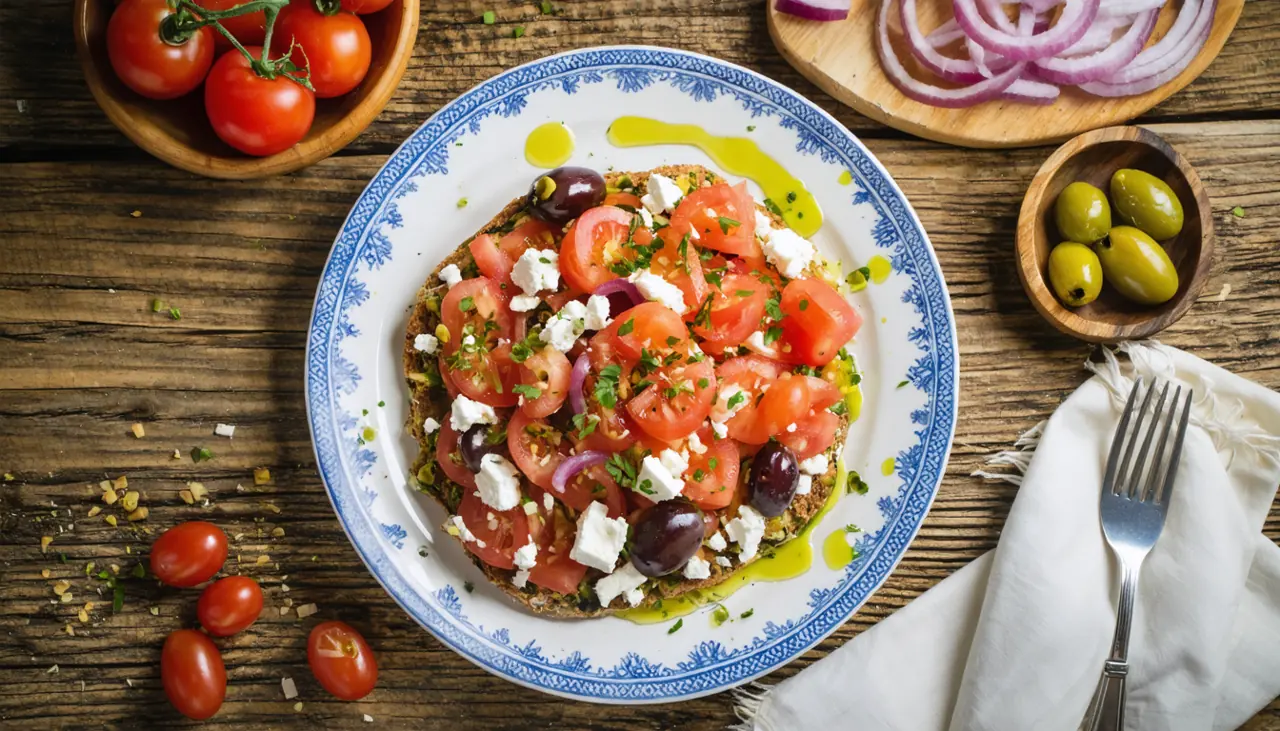
Ntakos crétois
Biscotte d'orge garnie de tomate râpée, de feta et d'olives, arrosée d'huile d'olive.
Portions
Ingrédients
Nutrition
Par portion
Étapes

Grate the tomatoes
Cut the tomatoes in half and grate them on the coarse side of a box grater straight into a bowl, holding the skin side against your palm so only the flesh and juice fall through. Discard the skins. Season the pulp lightly with a pinch of salt and let it sit for a few minutes.
- 4 tomatoes
- pinch salt
✅ C'est prêt quand : you have a bowl of juicy, pulpy grated tomato with no skin left

Moisten the rusks
Place each rusk on a plate and splash it with a little water, just enough to soften it on the surface — too much and it turns to mush, too little and it stays rock hard. Let it sit for 1–2 minutes, then drizzle with a little of the olive oil so the oil soaks in before the tomato goes on.
- 4 rusks
- as needed water
- 1 tbsp olive oil (from the total amount)
✅ C'est prêt quand : the rusk gives slightly when pressed but still holds its shape, like a firm cracker that has softened

Build the base
Spoon the grated tomato generously over each softened rusk, letting some juice run down into the bread. Crumble the feta with your fingers and scatter it thickly on top.
- 4 grated tomatoes (from step 1)
- 200 g feta cheese

Add the toppings
Scatter the olives, capers and chopped red onion over the top, if using. Sprinkle with dried oregano and a little black pepper.
- 16 olives
- 1 tbsp capers
- 1/2 red onion
- 1 tsp oregano
- to taste pepper

Finish and serve
Drizzle generously with the remaining olive oil — do not be shy here, the oil is what ties everything together and keeps the rusk from drying out. Serve right away, while the rusk is still slightly crisp underneath and softened on top.
- remaining olive oil
Grate the tomatoes
Cut the tomatoes in half and grate them on the coarse side of a box grater straight into a bowl, holding the skin side against your palm so only the flesh and juice fall through. Discard the skins. Season the pulp lightly with a pinch of salt and let it sit for a few minutes.
- 4 tomatoes
- pinch salt
✅ C'est prêt quand : you have a bowl of juicy, pulpy grated tomato with no skin left
Moisten the rusks
Place each rusk on a plate and splash it with a little water, just enough to soften it on the surface — too much and it turns to mush, too little and it stays rock hard. Let it sit for 1–2 minutes, then drizzle with a little of the olive oil so the oil soaks in before the tomato goes on.
- 4 rusks
- as needed water
- 1 tbsp olive oil (from the total amount)
✅ C'est prêt quand : the rusk gives slightly when pressed but still holds its shape, like a firm cracker that has softened
Build the base
Spoon the grated tomato generously over each softened rusk, letting some juice run down into the bread. Crumble the feta with your fingers and scatter it thickly on top.
- 4 grated tomatoes (from step 1)
- 200 g feta cheese
Add the toppings
Scatter the olives, capers and chopped red onion over the top, if using. Sprinkle with dried oregano and a little black pepper.
- 16 olives
- 1 tbsp capers
- 1/2 red onion
- 1 tsp oregano
- to taste pepper
Finish and serve
Drizzle generously with the remaining olive oil — do not be shy here, the oil is what ties everything together and keeps the rusk from drying out. Serve right away, while the rusk is still slightly crisp underneath and softened on top.
- remaining olive oil
The Story Behind the Dish
Barley rusks like paximadi go back to a time when Cretan farmers and shepherds needed bread that could survive weeks or months without spoiling. The dry, twice-baked rusk was carried into the fields and revived with a splash of water, olive oil and whatever ripe vegetables were on hand.
Over time this practical farmer's meal became ntakos, a dish now found on nearly every taverna menu on the island, dressed up with good feta, local olives and the island's famously fragrant olive oil.
⭐ Why It's Famous
It captures the heart of Cretan cooking in one plate: humble, dry bread transformed by ripe tomatoes, salty cheese and plenty of olive oil into something vivid and satisfying.
💡 Fun Fact
Crete has one of the highest rates of olive oil consumption in the world, and dishes like ntakos are part of why the island is often cited in studies of the traditional Mediterranean diet.
Crete
35.34°N, 25.14°E
Recettes similaires
Comments (0)
No comments yet. Be the first to share your thoughts!