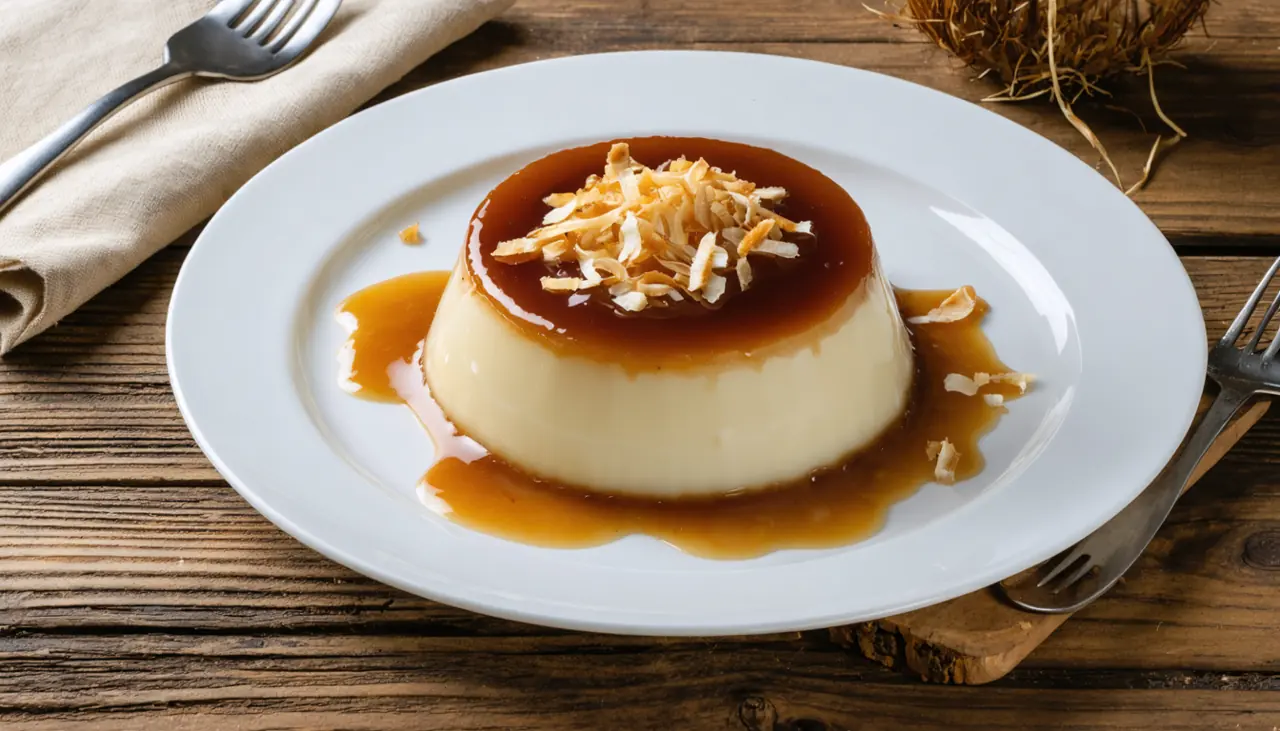
Flan à la noix de coco
Un flan onctueux au lait de coco, nappé de caramel, pour une version tropicale du classique espagnol.
Portions
Ingrédients
Nutrition
Par portion
Étapes

Make the caramel
Spread the sugar in a dry, heavy saucepan over medium heat. Let it melt on its own without stirring, swirling the pan occasionally, until it turns a deep amber like dark honey. Immediately pour it into your flan mold and tilt the mold to coat the bottom and a little of the sides before it hardens.
- 200 g sugar
✅ C'est prêt quand : the sugar is fully melted and deep amber, not pale or smoking

Blend the custard
In a blender, combine the eggs, condensed milk, evaporated milk, coconut milk, vanilla and salt. Blend until smooth, about 30 seconds. Let it rest for a few minutes so the foam rises, then skim it off and pour the mixture through a fine sieve into the caramel-lined mold — this little strain is what makes the flan silky instead of grainy.
- 5 eggs
- 1 can (397 g) condensed milk
- 1 can (354 ml) evaporated milk
- 1 can (400 ml) coconut milk
- 1 tsp vanilla extract
- 1 pinch salt
✅ C'est prêt quand : the custard is pale, uniform in color and free of egg strands
Set up the water bath
This step is part of Foodie Premium. Subscribe to unlock the full method, cooking mode and every recipe in the library.
Bake low and slow
This step is part of Foodie Premium. Subscribe to unlock the full method, cooking mode and every recipe in the library.
Cool and chill
This step is part of Foodie Premium. Subscribe to unlock the full method, cooking mode and every recipe in the library.
Unmold and serve
This step is part of Foodie Premium. Subscribe to unlock the full method, cooking mode and every recipe in the library.
Make the caramel
Spread the sugar in a dry, heavy saucepan over medium heat. Let it melt on its own without stirring, swirling the pan occasionally, until it turns a deep amber like dark honey. Immediately pour it into your flan mold and tilt the mold to coat the bottom and a little of the sides before it hardens.
- 200 g sugar
✅ C'est prêt quand : the sugar is fully melted and deep amber, not pale or smoking
Blend the custard
In a blender, combine the eggs, condensed milk, evaporated milk, coconut milk, vanilla and salt. Blend until smooth, about 30 seconds. Let it rest for a few minutes so the foam rises, then skim it off and pour the mixture through a fine sieve into the caramel-lined mold — this little strain is what makes the flan silky instead of grainy.
- 5 eggs
- 1 can (397 g) condensed milk
- 1 can (354 ml) evaporated milk
- 1 can (400 ml) coconut milk
- 1 tsp vanilla extract
- 1 pinch salt
✅ C'est prêt quand : the custard is pale, uniform in color and free of egg strands
Set up the water bath
This step is part of Foodie Premium. Subscribe to unlock the full method, cooking mode and every recipe in the library.
Bake low and slow
This step is part of Foodie Premium. Subscribe to unlock the full method, cooking mode and every recipe in the library.
Cool and chill
This step is part of Foodie Premium. Subscribe to unlock the full method, cooking mode and every recipe in the library.
Unmold and serve
This step is part of Foodie Premium. Subscribe to unlock the full method, cooking mode and every recipe in the library.
The Story Behind the Dish
Flan arrived in Puerto Rico with Spanish settlers, but island cooks reshaped it with what grew around them. Coconut, abundant across the Caribbean, replaced some or all of the plain milk, giving the custard a deeper, more fragrant body, while canned condensed and evaporated milk made it quick and reliable for home kitchens once they became widely available.
It became a fixture of holiday tables, from Christmas to Three Kings' Day, and of Sunday family lunches, usually made by whoever in the family owns the good flanera, the metal mold passed down for exactly this purpose.
⭐ Why It's Famous
It is denser and more fragrant than a plain egg flan, with the coconut softening the richness of the eggs while the dark caramel cuts through with a pleasant bitter edge.
💡 Fun Fact
Many Puerto Rican households keep one metal flan mold reserved only for flan, often inherited and used by the same family for decades.
Puerto Rico
18.47°N, -66.11°W
Recettes similaires
Comments (0)
No comments yet. Be the first to share your thoughts!