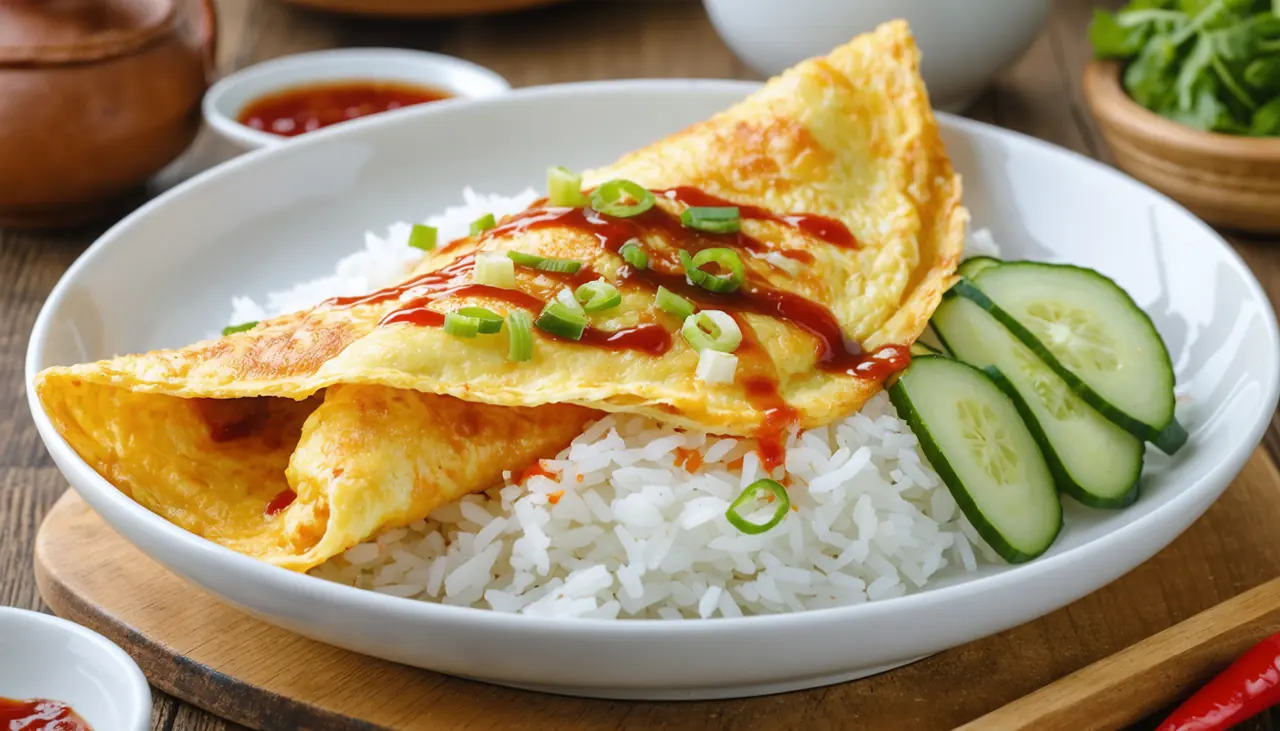
Omelette thaïlandaise (Kai Jeow)
Une omelette moelleuse aux bords croustillants, frite dans l'huile chaude, assaisonnée de sauce de poisson, servie sur du riz.
Portions
Ingrédients
Nutrition
Par portion
Étapes

Beat the eggs hard
Crack the eggs into a bowl with the fish sauce, white pepper and spring onion. Beat vigorously with a fork or a pair of chopsticks for about 30 seconds, not just until mixed, but until the mixture looks pale and slightly foamy — this beats air in, which is what makes the omelette puff up when it hits the hot oil.
- 4 eggs
- 1 tbsp fish sauce
- 1/4 tsp white pepper
- 1 spring onion
✅ C'est prêt quand : the egg mixture is pale yellow and slightly foamy, with no streaks of white left

Get the oil very hot
Pour the oil into a small wok or frying pan, about 20 cm wide, so it's at least 1.5 cm deep. Heat over high heat until it is shimmering and almost smoking, around 180°C (350°F). Test it by flicking in a drop of the egg mixture: it should sizzle and puff instantly.
- 250 ml vegetable oil
✅ C'est prêt quand : a drop of beaten egg sizzles and puffs the moment it touches the oil
Pour in and let it puff
This step is part of Foodie Premium. Subscribe to unlock the full method, cooking mode and every recipe in the library.
Flip to finish
This step is part of Foodie Premium. Subscribe to unlock the full method, cooking mode and every recipe in the library.
Drain and serve
This step is part of Foodie Premium. Subscribe to unlock the full method, cooking mode and every recipe in the library.
Beat the eggs hard
Crack the eggs into a bowl with the fish sauce, white pepper and spring onion. Beat vigorously with a fork or a pair of chopsticks for about 30 seconds, not just until mixed, but until the mixture looks pale and slightly foamy — this beats air in, which is what makes the omelette puff up when it hits the hot oil.
- 4 eggs
- 1 tbsp fish sauce
- 1/4 tsp white pepper
- 1 spring onion
✅ C'est prêt quand : the egg mixture is pale yellow and slightly foamy, with no streaks of white left
Get the oil very hot
Pour the oil into a small wok or frying pan, about 20 cm wide, so it's at least 1.5 cm deep. Heat over high heat until it is shimmering and almost smoking, around 180°C (350°F). Test it by flicking in a drop of the egg mixture: it should sizzle and puff instantly.
- 250 ml vegetable oil
✅ C'est prêt quand : a drop of beaten egg sizzles and puffs the moment it touches the oil
Pour in and let it puff
This step is part of Foodie Premium. Subscribe to unlock the full method, cooking mode and every recipe in the library.
Flip to finish
This step is part of Foodie Premium. Subscribe to unlock the full method, cooking mode and every recipe in the library.
Drain and serve
This step is part of Foodie Premium. Subscribe to unlock the full method, cooking mode and every recipe in the library.
The Story Behind the Dish
Kai jeow grew out of the wok-frying techniques Chinese immigrants brought to Thailand generations ago, combined with the Thai habit of seasoning almost everything with fish sauce instead of salt. The result is a dish that is pure Thai in flavour even though its frying method has Chinese roots: egg, fish sauce, a little pepper, and plenty of hot oil to make it puff and crisp.
It became, and remains, the dish Thai cooks turn to when there's little in the fridge but eggs. You'll find it on home dinner tables, in lunch boxes, and ladled over rice at countless street stalls, sometimes topped with minced pork, crab meat or chillies for a heartier version.
⭐ Why It's Famous
Its crispy, puffed, lacy edges and soft, savoury centre make it one of Thailand's most loved and most-cooked simple dishes, a true measure of a good home cook's wrist and timing.
💡 Fun Fact
In many Thai households, kai jeow is the classic emergency dinner, whipped up in minutes and often dressed up with minced pork or crab meat folded into the egg before frying.
Thailand, nationwide, especially home kitchens and street-food stalls
13.76°N, 100.50°E
Recettes similaires
Comments (0)
No comments yet. Be the first to share your thoughts!