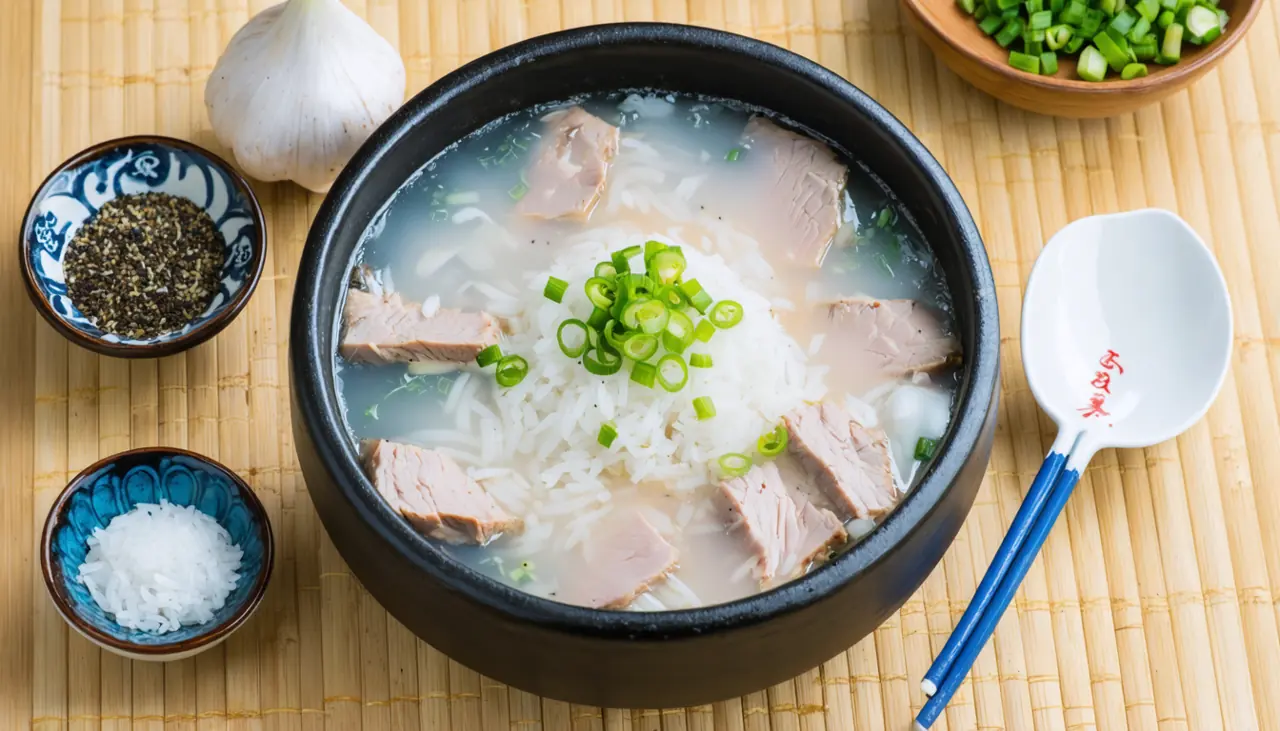
Soupe d'os de bœuf (Seolleongtang)
Un bouillon blanc et laiteux mijoté longuement avec des os de bœuf, servi avec du riz, de la poitrine de bœuf tranchée et des oignons verts.
Portions
Ingrédients
Nutrition
Par portion
Étapes

Soak the bones
Put the ox bones in a large basin and cover with plenty of cold water. Soak for at least 3 hours, changing the water two or three times, until it runs clear instead of pink. This draws out blood and impurities so the finished broth stays clean and milky rather than murky.
- 2 kg ox bones
- plenty cold water, for soaking
✅ C'est prêt quand : the soaking water stays clear, not pink, after each change

Blanch the bones
Drain the bones, cover them with fresh cold water in a large stockpot, and bring to a rolling boil for 10 minutes. Pour out this first water and rinse the bones and the pot well under running water, scrubbing off any grey scum stuck to the surface.
- 2 kg ox bones (soaked)
- enough to cover fresh cold water, for blanching
✅ C'est prêt quand : the water has turned grey and foamy, and the rinsed bones look clean
Start the long simmer
This step is part of Foodie Premium. Subscribe to unlock the full method, cooking mode and every recipe in the library.
Simmer until milky
This step is part of Foodie Premium. Subscribe to unlock the full method, cooking mode and every recipe in the library.
Strain the broth
This step is part of Foodie Premium. Subscribe to unlock the full method, cooking mode and every recipe in the library.
Assemble and serve
This step is part of Foodie Premium. Subscribe to unlock the full method, cooking mode and every recipe in the library.
Soak the bones
Put the ox bones in a large basin and cover with plenty of cold water. Soak for at least 3 hours, changing the water two or three times, until it runs clear instead of pink. This draws out blood and impurities so the finished broth stays clean and milky rather than murky.
- 2 kg ox bones
- plenty cold water, for soaking
✅ C'est prêt quand : the soaking water stays clear, not pink, after each change
Blanch the bones
Drain the bones, cover them with fresh cold water in a large stockpot, and bring to a rolling boil for 10 minutes. Pour out this first water and rinse the bones and the pot well under running water, scrubbing off any grey scum stuck to the surface.
- 2 kg ox bones (soaked)
- enough to cover fresh cold water, for blanching
✅ C'est prêt quand : the water has turned grey and foamy, and the rinsed bones look clean
Start the long simmer
This step is part of Foodie Premium. Subscribe to unlock the full method, cooking mode and every recipe in the library.
Simmer until milky
This step is part of Foodie Premium. Subscribe to unlock the full method, cooking mode and every recipe in the library.
Strain the broth
This step is part of Foodie Premium. Subscribe to unlock the full method, cooking mode and every recipe in the library.
Assemble and serve
This step is part of Foodie Premium. Subscribe to unlock the full method, cooking mode and every recipe in the library.
The Story Behind the Dish
Seolleongtang is said to trace back to Seonnongdan, an altar near Seoul where Joseon kings performed a ritual plowing ceremony to honor the god of agriculture and pray for a good harvest. Afterward, oxen were cooked in large pots and the broth shared among officials and farmers, a communal meal meant to nourish everyone equally.
Over time this simple way of using every part of the ox — bones, marrow, tough cuts — became an everyday dish sold by broth sellers across Seoul. Its plainness was practical: a cheap, filling, deeply nourishing soup that working people could eat daily, seasoning it themselves at the table according to their own taste and budget.
⭐ Why It's Famous
It is famous for its pure, milky-white color, achieved only by hours of patient simmering that pulls marrow and collagen out of the bones, and for the custom of serving it unseasoned so each diner can season their own bowl.
💡 Fun Fact
The soup's name is widely believed to come from Seonnongdan, the royal altar for the god of agriculture, linking a humble bowl of broth to an old state ritual.
Seoul
37.57°N, 126.98°E
Recettes similaires
Comments (0)
No comments yet. Be the first to share your thoughts!