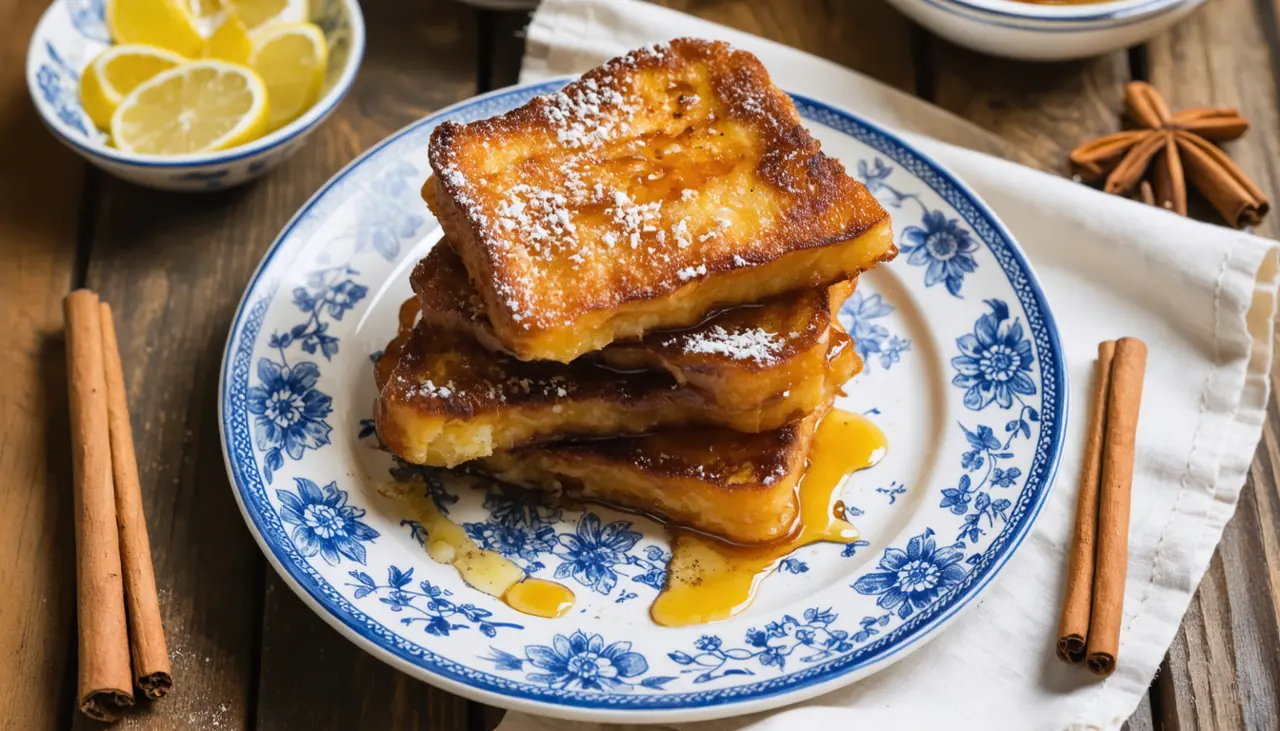
Torrijas espagnoles
Tranches de pain rassis trempées dans du lait à la cannelle, passées à l'œuf et frites, saupoudrées de sucre et de cannelle.
Portions
Ingrédients
Nutrition
Par portion
Étapes

Infuse the milk
In a saucepan, warm the milk with the sugar, cinnamon stick, lemon peel and salt over medium heat, stirring until the sugar dissolves. Heat just until steaming, around 80°C (176°F); do not let it boil, or the milk will taste cooked instead of fragrant. Turn off the heat and let it steep for 10 minutes, then remove the cinnamon stick and lemon peel.
- 750 ml whole milk
- 100 g sugar
- 1 cinnamon stick
- 1 strip lemon peel
- 1 pinch salt
✅ C'est prêt quand : the milk smells strongly of cinnamon and lemon and the sugar is fully dissolved

Soak the bread
Lay the bread slices in a single layer in a wide dish and pour the warm milk over them. Let them soak for 1–3 minutes per side, turning once with a wide spatula, until they have swollen and gone soft but still hold together when lifted. Very dry bread will drink in more milk than fresher bread, so judge by feel rather than the clock.
- 1 loaf (about 500 g) day-old bread, sliced
✅ C'est prêt quand : the slices feel soft and heavy with milk but do not fall apart when lifted

Coat in egg
Lift each soaked slice carefully and let any extra milk drip off for a moment, then dip it into the beaten eggs, turning to coat both sides evenly. Lift it out letting the excess egg drain back into the bowl before frying.
- 2 large eggs, beaten

Fry until golden
Heat the oil in a wide frying pan over medium-high heat until it reaches about 170–180°C (338–356°F); a small cube of bread dropped in should sizzle and bubble right away. Fry the slices in batches, without crowding the pan, for about 1–2 minutes per side until deep golden. The hot oil must seal the egg coating instantly, so test the temperature before the first batch; oil that is too cool makes greasy, soggy torrijas. Lift onto a tray lined with paper towels to drain.
- 250 ml oil, for frying
✅ C'est prêt quand : each slice is deep golden brown and firm on the outside, soft inside

Coat in cinnamon sugar
Mix the remaining sugar with the ground cinnamon on a plate. While the fried slices are still warm, press each side into the cinnamon sugar so it sticks to the surface. Doing this while they are warm, not cold, is what makes the coating cling evenly.
- 50 g sugar, for coating
- 1 tbsp ground cinnamon, for coating

Serve
Arrange the torrijas on a platter and serve the same day, warm or at room temperature, for the best contrast between the crisp outside and the soft, custardy inside.
Infuse the milk
In a saucepan, warm the milk with the sugar, cinnamon stick, lemon peel and salt over medium heat, stirring until the sugar dissolves. Heat just until steaming, around 80°C (176°F); do not let it boil, or the milk will taste cooked instead of fragrant. Turn off the heat and let it steep for 10 minutes, then remove the cinnamon stick and lemon peel.
- 750 ml whole milk
- 100 g sugar
- 1 cinnamon stick
- 1 strip lemon peel
- 1 pinch salt
✅ C'est prêt quand : the milk smells strongly of cinnamon and lemon and the sugar is fully dissolved
Soak the bread
Lay the bread slices in a single layer in a wide dish and pour the warm milk over them. Let them soak for 1–3 minutes per side, turning once with a wide spatula, until they have swollen and gone soft but still hold together when lifted. Very dry bread will drink in more milk than fresher bread, so judge by feel rather than the clock.
- 1 loaf (about 500 g) day-old bread, sliced
✅ C'est prêt quand : the slices feel soft and heavy with milk but do not fall apart when lifted
Coat in egg
Lift each soaked slice carefully and let any extra milk drip off for a moment, then dip it into the beaten eggs, turning to coat both sides evenly. Lift it out letting the excess egg drain back into the bowl before frying.
- 2 large eggs, beaten
Fry until golden
Heat the oil in a wide frying pan over medium-high heat until it reaches about 170–180°C (338–356°F); a small cube of bread dropped in should sizzle and bubble right away. Fry the slices in batches, without crowding the pan, for about 1–2 minutes per side until deep golden. The hot oil must seal the egg coating instantly, so test the temperature before the first batch; oil that is too cool makes greasy, soggy torrijas. Lift onto a tray lined with paper towels to drain.
- 250 ml oil, for frying
✅ C'est prêt quand : each slice is deep golden brown and firm on the outside, soft inside
Coat in cinnamon sugar
Mix the remaining sugar with the ground cinnamon on a plate. While the fried slices are still warm, press each side into the cinnamon sugar so it sticks to the surface. Doing this while they are warm, not cold, is what makes the coating cling evenly.
- 50 g sugar, for coating
- 1 tbsp ground cinnamon, for coating
Serve
Arrange the torrijas on a platter and serve the same day, warm or at room temperature, for the best contrast between the crisp outside and the soft, custardy inside.
The Story Behind the Dish
Torrijas grew out of simple thrift: stale bread was softened in milk or wine, enriched with egg and fried so nothing in the kitchen went to waste. Old Spanish texts mention them as a nourishing dish given to new mothers and to people recovering their strength, long before they became a sweet treat.
Over time they became tied to Lent and Holy Week, when meat was off the table and eggs, milk and bread needed using up before Easter. Today nearly every Spanish bakery and home kitchen makes a batch each spring.
⭐ Why It's Famous
Crisp, golden and soft inside, fragrant with cinnamon and lemon, torrijas are the taste of Spanish Easter and one of the country's most loved uses for day-old bread.
💡 Fun Fact
Torrijas have cousins all over Europe, from French pain perdu to the English "poor knights of Windsor"; all of them turn stale bread into something worth saving.
Spain
40.42°N, -3.70°W
Recettes similaires
Comments (0)
No comments yet. Be the first to share your thoughts!