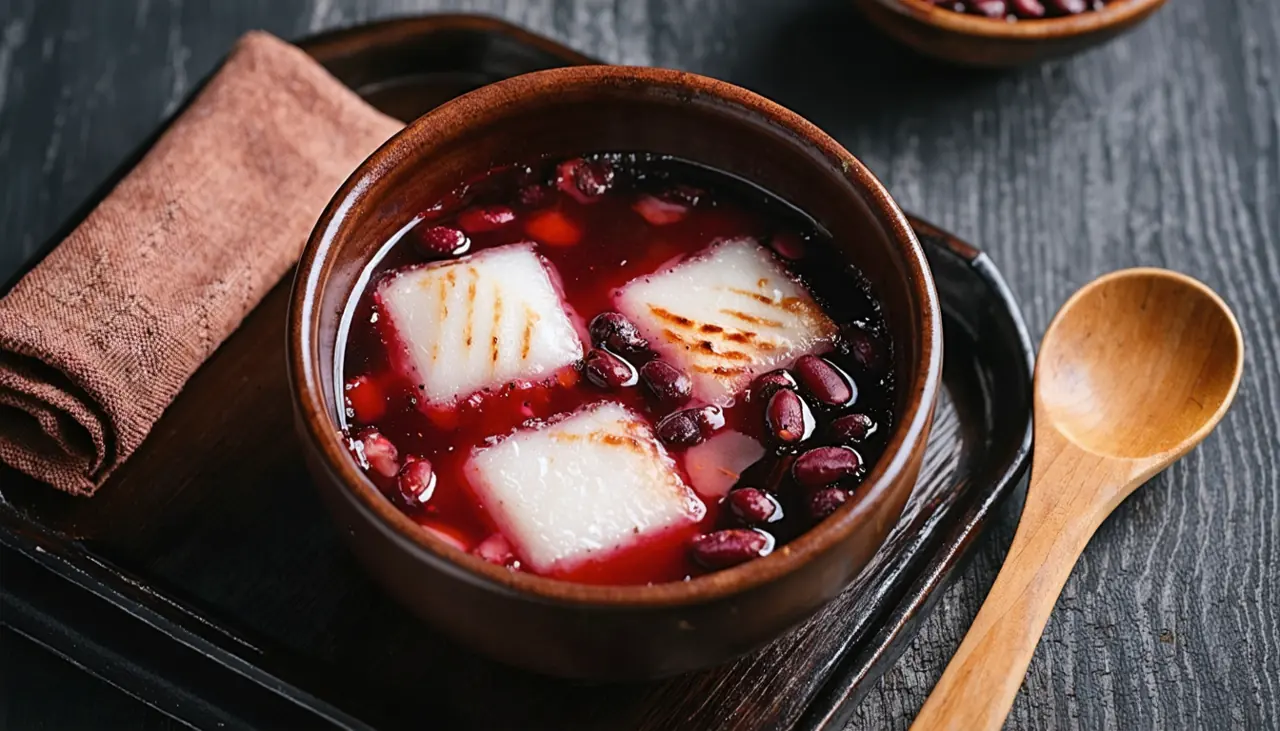
Zenzai (soupe sucrée de haricots azuki)
Haricots azuki mijotés jusqu'à devenir onctueux, sucrés, servis chauds avec des morceaux de mochi grillé.
Portions
Ingrédients
Nutrition
Par portion
Étapes

Rinse the beans
Pick through the dried azuki and discard any shriveled or broken ones, then rinse in cold water. Unlike other dried beans, azuki do not need soaking; soaking can make the skins split unevenly during cooking.
- 200 g dried azuki beans
✅ C'est prêt quand : the beans are clean and free of dust or grit

First boil, then discard the water
Put the beans in a pot with the first 1.2 litres of water and bring to a boil. Let them boil hard for 5 minutes, then drain in a colander and rinse the pot. This step, called shibukiri, removes the slight bitterness in the skins so the final soup tastes clean and purely sweet.
- 200 g azuki beans (from step 1)
- 1.2 litres water, for the first boil
✅ C'est prêt quand : the beans have boiled for 5 minutes and the water is drained away
Simmer until tender
This step is part of Foodie Premium. Subscribe to unlock the full method, cooking mode and every recipe in the library.
Sweeten the soup
This step is part of Foodie Premium. Subscribe to unlock the full method, cooking mode and every recipe in the library.
Grill the mochi
This step is part of Foodie Premium. Subscribe to unlock the full method, cooking mode and every recipe in the library.
Serve
This step is part of Foodie Premium. Subscribe to unlock the full method, cooking mode and every recipe in the library.
Rinse the beans
Pick through the dried azuki and discard any shriveled or broken ones, then rinse in cold water. Unlike other dried beans, azuki do not need soaking; soaking can make the skins split unevenly during cooking.
- 200 g dried azuki beans
✅ C'est prêt quand : the beans are clean and free of dust or grit
First boil, then discard the water
Put the beans in a pot with the first 1.2 litres of water and bring to a boil. Let them boil hard for 5 minutes, then drain in a colander and rinse the pot. This step, called shibukiri, removes the slight bitterness in the skins so the final soup tastes clean and purely sweet.
- 200 g azuki beans (from step 1)
- 1.2 litres water, for the first boil
✅ C'est prêt quand : the beans have boiled for 5 minutes and the water is drained away
Simmer until tender
This step is part of Foodie Premium. Subscribe to unlock the full method, cooking mode and every recipe in the library.
Sweeten the soup
This step is part of Foodie Premium. Subscribe to unlock the full method, cooking mode and every recipe in the library.
Grill the mochi
This step is part of Foodie Premium. Subscribe to unlock the full method, cooking mode and every recipe in the library.
Serve
This step is part of Foodie Premium. Subscribe to unlock the full method, cooking mode and every recipe in the library.
The Story Behind the Dish
Sweet azuki soup has deep roots in Japanese temple and home cooking, where red beans were valued for their color and their mild, earthy sweetness long before refined sugar was common. Over time it became a fixture of the cold months, warming hands and bowls alike at New Year and in winter sweet shops.
The name and style shift slightly by region: in much of Japan zenzai refers to a soup with whole, textured beans, often served over grilled mochi, while in other areas the same bowl, or a smoother version, is called oshiruko. Both share the same comforting idea: beans cooked down slowly, sweetened gently, and poured hot over something chewy.
⭐ Why It's Famous
It turns a humble bean into something luxurious: deeply sweet, silky, and warming, finished with the contrast of soft, lightly charred mochi.
💡 Fun Fact
After the New Year's kagami-mochi display is taken down, the hardened mochi is traditionally broken by hand, never cut with a knife, and simmered into a bowl of zenzai so nothing goes to waste.
Japan, nationwide
35.68°N, 139.65°E
Recettes similaires

Comments (0)
No comments yet. Be the first to share your thoughts!