Tapioca Dumplings (Bánh Bột Lọc)
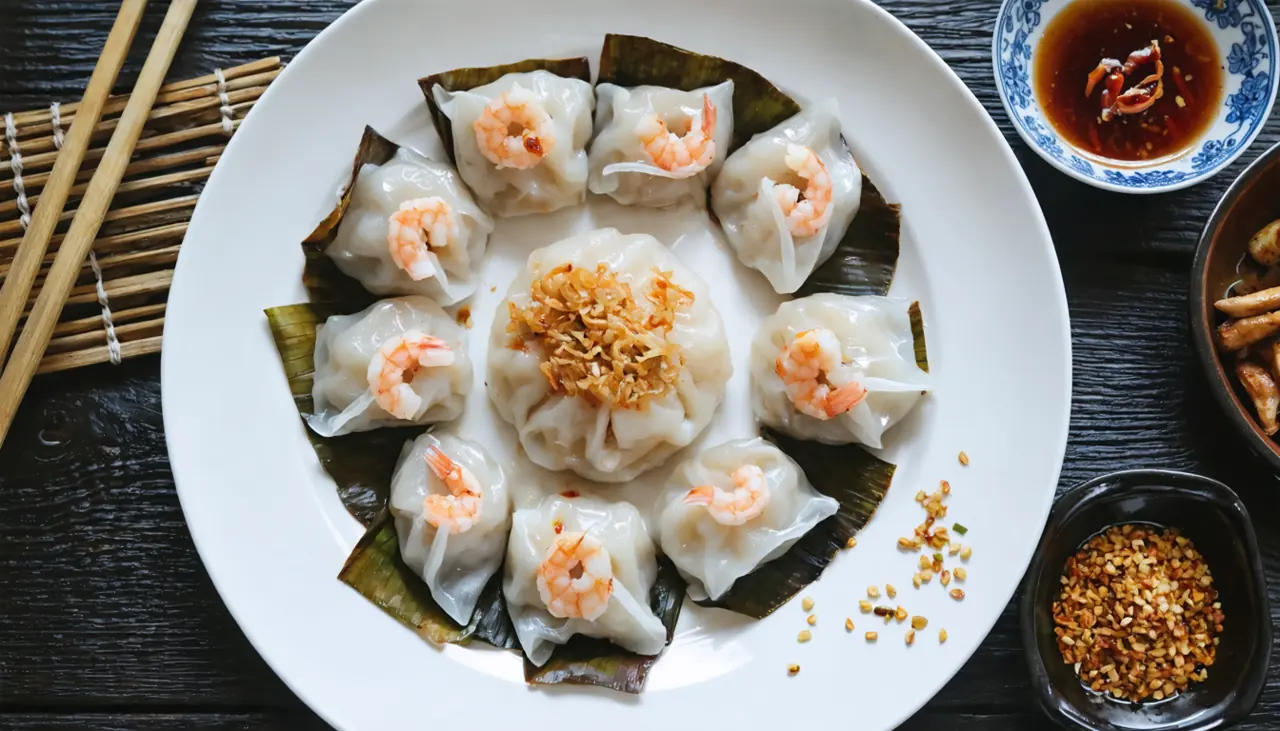
Chewy, glass-clear tapioca dumplings wrapped around a savory shrimp and pork belly filling, steamed in banana leaf. Served warm with fried shallots and a tangy-sweet nuoc cham for dipping.
Servings
Ingredients
Nutrition
Per serving
Steps
Make the tapioca dough
Put the tapioca starch and salt in a bowl. Pour in the boiling water all at once and stir hard and fast with a wooden spoon — the heat of the water is what cooks the starch and gives the dough its stretchy, see-through texture. As soon as it's cool enough to handle, oil your hands and knead for 3–4 minutes into a smooth, soft dough that doesn't stick to your fingers; if it feels dry, wet your hands with a little more hot water.
- 300 g tapioca starch
- 350 ml boiling water
- 1/2 tsp salt
- 1 tbsp cooking oil
✅ Done when: the dough is smooth, pliable and slightly translucent, like soft play-dough
Cook the filling
Heat the oil in a pan over medium heat and fry the shallots until fragrant and golden at the edges. Add the pork belly and cook for 3–4 minutes until the fat turns clear and the meat is lightly browned, then add the shrimp, fish sauce, sugar and pepper. Cook, stirring, for 4–5 minutes until the shrimp is cooked through and the mixture looks glossy and a little sticky, not wet; let it cool before using so it won't melt the dough.
- 2 tbsp cooking oil
- 3 shallots
- 200 g pork belly
- 250 g shrimp
- 2 tbsp fish sauce
- 1 tbsp sugar
- 1/2 tsp black pepper
✅ Done when: shrimp is opaque and cooked through and the filling clings together without liquid pooling in the pan
Prepare the banana leaves
This step is part of Foodie Premium. Subscribe to unlock the full method, cooking mode and every recipe in the library.
Shape the dumplings
This step is part of Foodie Premium. Subscribe to unlock the full method, cooking mode and every recipe in the library.
Steam the dumplings
This step is part of Foodie Premium. Subscribe to unlock the full method, cooking mode and every recipe in the library.
Mix the nuoc cham
This step is part of Foodie Premium. Subscribe to unlock the full method, cooking mode and every recipe in the library.
Serve
This step is part of Foodie Premium. Subscribe to unlock the full method, cooking mode and every recipe in the library.
The Story Behind the Dish
Bánh bột lọc comes from Huế, a city famous for its elaborate, delicate cuisine shaped by its history as an imperial capital. Cooks there turned humble tapioca starch and a little shrimp and pork into small, glossy dumplings that looked as refined as they tasted.
From Huế the dumplings spread south to Saigon and across Vietnam, where street vendors and home cooks adopted them as an everyday snack. Today they're found steamed in banana leaf or simmered loose in water, but the Huế-style banana-leaf version remains the most traditional.
⭐ Why It's Famous
The dish is loved for its contrast of textures: a chewy, almost see-through tapioca skin wrapped around a savory burst of shrimp and pork, finished with fragrant fried shallots and a bright, tangy dipping sauce.
💡 Fun Fact
In Vietnamese, "bột lọc" means "filtered flour," a nod to the traditional process of washing and straining starch from cassava root to get the fine, pure tapioca used in the dough.
Huế, the former imperial capital in central Vietnam.
16.46°N, 107.59°E
Related recipes
Comments (0)
No comments yet. Be the first to share your thoughts!