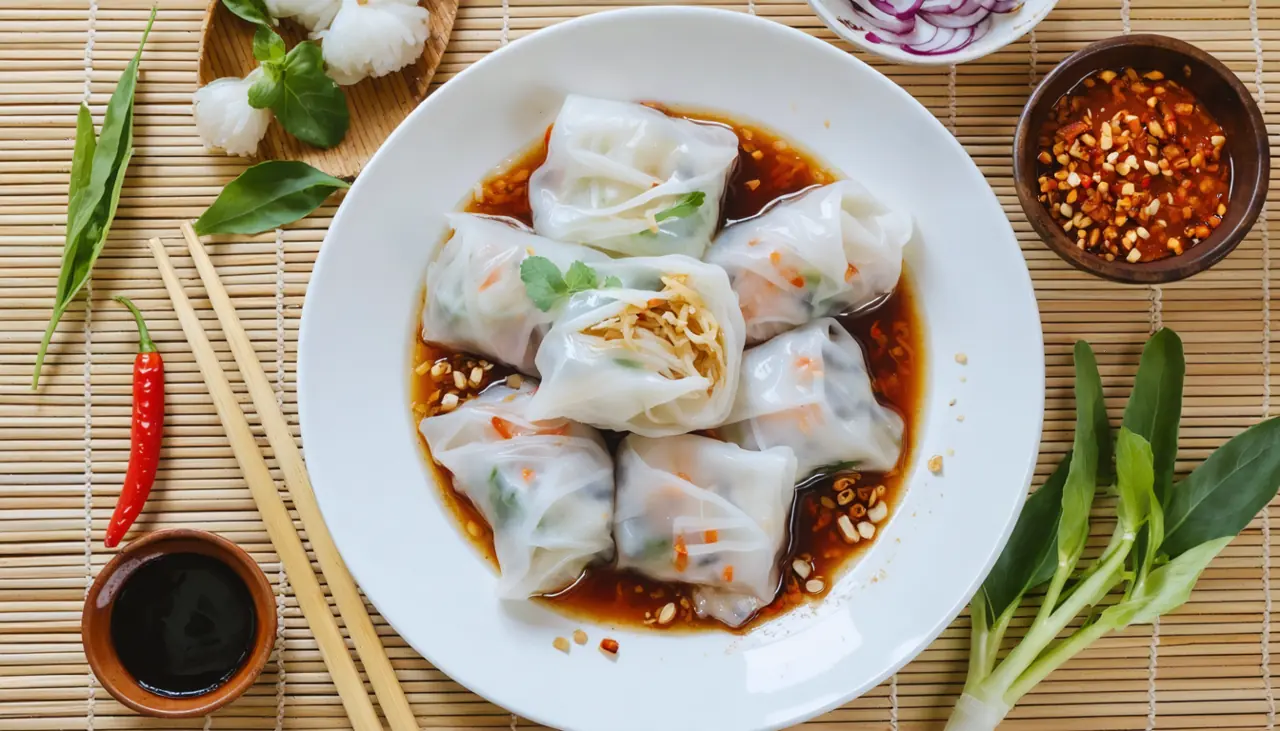
Steamed Rice Rolls (Bánh Ướt)
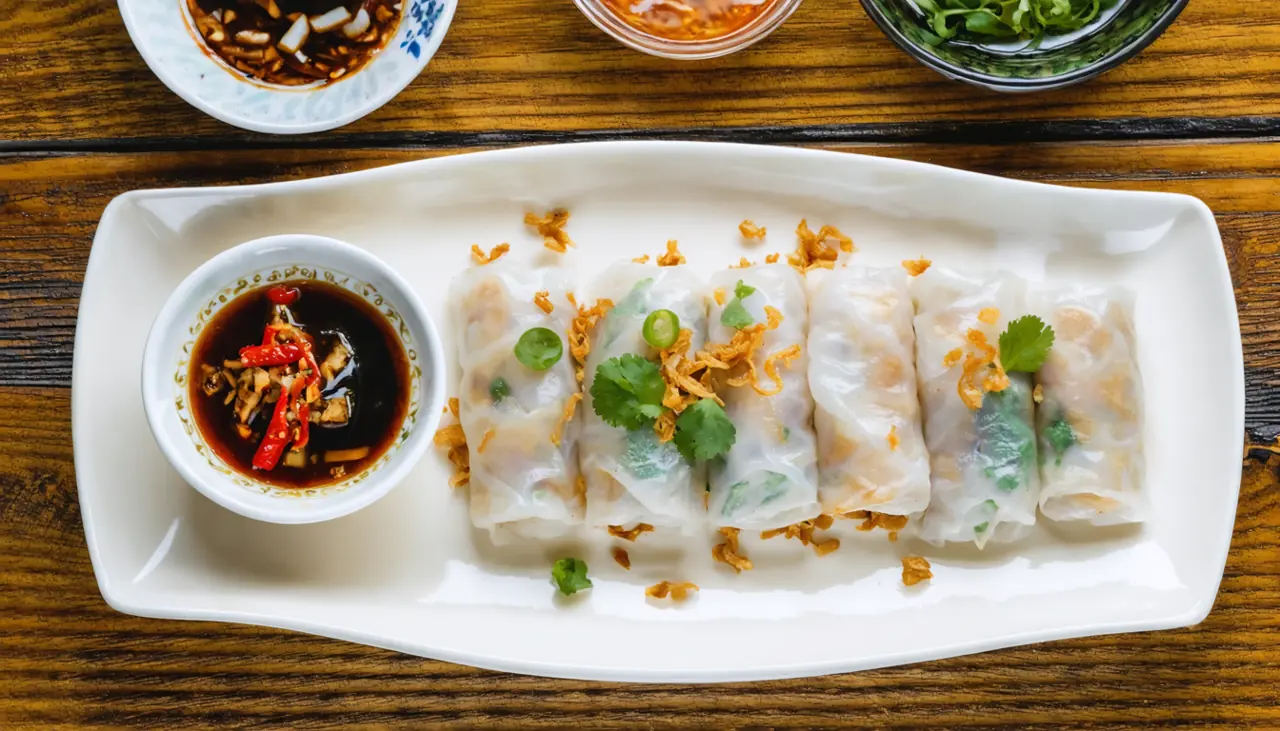
Thin, silky sheets of steamed rice batter, barely set and almost see-through, rolled around bean sprouts, herbs and sausage, then showered with crisp fried shallots and a bright fish sauce dressing. A gentle, fresh way to start the day in Vietnam.
Servings
Ingredients
Nutrition
Per serving
Steps
Make the batter
In a large bowl, whisk the rice flour, tapioca starch and salt with 700ml of the water until completely smooth, pressing out any lumps against the side of the bowl. Stir in 2 tbsp oil, cover and let the batter rest 30 minutes so the starches fully hydrate; this is what makes the sheets silky instead of gummy. Just before cooking, whisk in the remaining 200ml water — the batter should run off the whisk like thin cream.
- 250 g rice flour
- 60 g tapioca starch
- 1/2 tsp salt
- 900 ml water, divided
- 2 tbsp oil
✅ Done when: the batter is completely smooth and as thin as pouring cream
Fry the shallots
Heat 4 tbsp oil in a small pan over medium heat, about 150°C (300°F). Add the sliced shallots and fry, stirring often, until golden and crisp, 5–6 minutes — watch closely near the end, as they darken quickly once golden. Lift onto paper towel with a slotted spoon and keep the fragrant leftover oil for drizzling.
- 80 g shallots
- 4 tbsp oil, for frying
✅ Done when: the shallots are deep golden and crisp, not pale or burnt
Mix the dipping sauce
This step is part of Foodie Premium. Subscribe to unlock the full method, cooking mode and every recipe in the library.
Set up the steamer
This step is part of Foodie Premium. Subscribe to unlock the full method, cooking mode and every recipe in the library.
Steam the rice sheets
This step is part of Foodie Premium. Subscribe to unlock the full method, cooking mode and every recipe in the library.
Fill, roll and serve
This step is part of Foodie Premium. Subscribe to unlock the full method, cooking mode and every recipe in the library.
The Story Behind the Dish
Bánh ướt belongs to a large family of Vietnamese dishes built on rice flour batter, steamed thin over boiling water — the same base used for the dried rice paper known as bánh tráng. Street vendors have long poured the batter over cloth stretched across a steaming pot, lifting each sheet off with a thin stick the moment it turns glossy and set.
Sold warm from early morning stalls in Hue, Hanoi and beyond, it is eaten as a light breakfast or snack, dressed simply with fried shallots, herbs and a sharp fish sauce dip, sometimes alongside slices of pork sausage.
⭐ Why It's Famous
Its appeal is in the contrast: a soft, barely-there rice sheet against crunchy fried shallots, fresh herbs and a sauce that is salty, sweet and sour all at once.
💡 Fun Fact
The name literally means 'wet cake' — a direct contrast to bánh tráng, the dried rice paper made from the same type of batter.
Central and Northern Vietnam, especially around Hue
16.46°N, 107.59°E
Related recipes
Comments (0)
No comments yet. Be the first to share your thoughts!