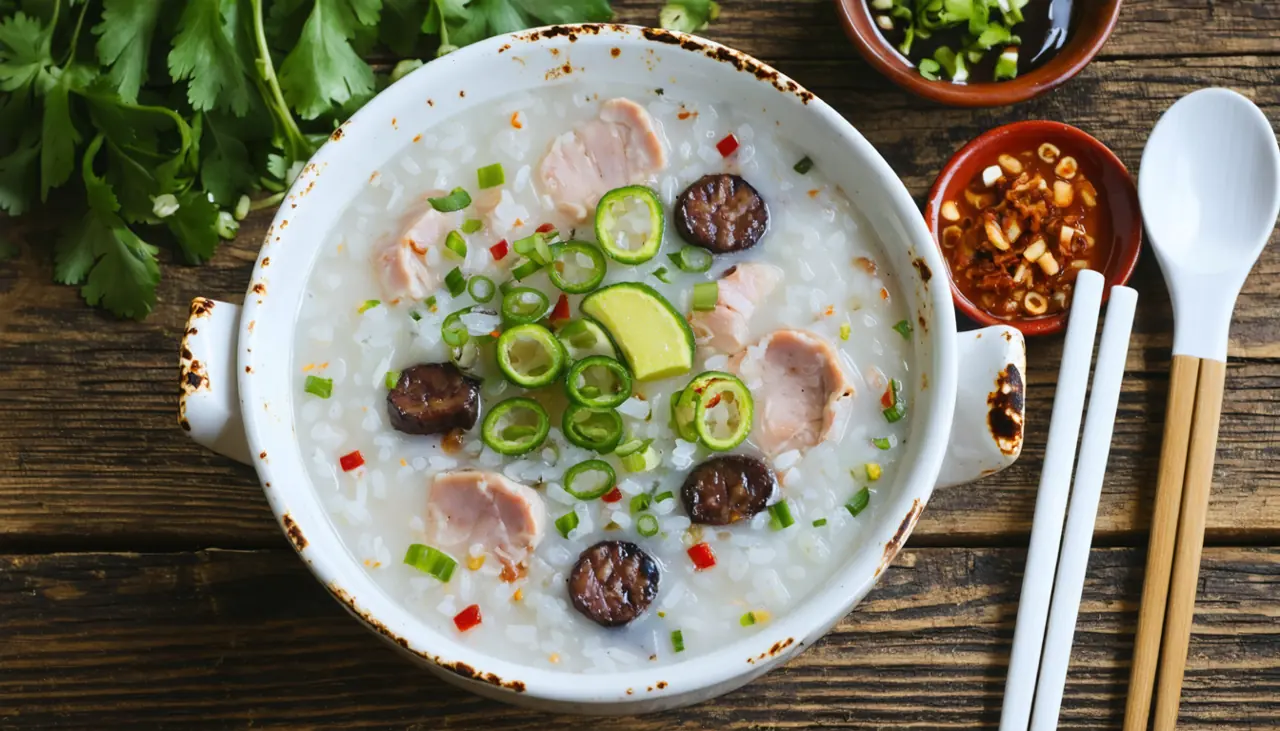
Pork Offal Rice Porridge (Cháo Lòng)
A silky, savory rice porridge simmered in pork bone broth and loaded with tender liver, intestines and blood sausage, finished with herbs, crispy shallots and a squeeze of lime. A beloved street-food breakfast across Vietnam.
Servings
Ingredients
Nutrition
Per serving
Steps
Clean the offal
Turn the intestine inside out under running water, then rub it well with the coarse salt and vinegar to scrub off the mucus and strong smell; rinse several times until the water runs clear. Soak the liver in cold water for 15 minutes to draw out the blood, then rinse. This step is what keeps the finished dish clean-tasting instead of gamey.
- 400 g pork small intestine
- 250 g pork liver
- 3 tbsp white vinegar
- 2 tbsp coarse salt
✅ Done when: the intestine no longer feels slippery and smells clean, and the liver's soaking water looks pale pink rather than dark red
Build the stock
Char the onion and ginger halves directly over a flame or under a hot broiler until blackened in spots — this gives Vietnamese broths their deep, smoky backbone instead of tasting flat. Put the bones, water, charred onion and ginger in a large pot, bring to a boil, skim off the grey foam, then lower the heat and simmer gently, uncovered, for 1 hour.
- 1 kg pork bones
- 3 litres water
- 1 yellow onion
- 30 g fresh ginger
✅ Done when: the stock is clear gold rather than cloudy, and smells sweet, not muddy
Poach liver and intestine
This step is part of Foodie Premium. Subscribe to unlock the full method, cooking mode and every recipe in the library.
Toast then cook the rice
This step is part of Foodie Premium. Subscribe to unlock the full method, cooking mode and every recipe in the library.
Season and add blood sausage
This step is part of Foodie Premium. Subscribe to unlock the full method, cooking mode and every recipe in the library.
Fry shallots and assemble
This step is part of Foodie Premium. Subscribe to unlock the full method, cooking mode and every recipe in the library.
The Story Behind the Dish
Cháo lòng grew out of a nose-to-tail way of cooking pork, where every part of the animal, from the liver and intestines to the blood, was turned into food rather than wasted. Simmering the offal with rice into a soft porridge made it easy to digest and gentle enough to eat first thing in the morning.
Today it is sold at small stalls and markets across the country, often alongside other offal dishes, and remains one of the most recognizable savory breakfasts in Vietnamese daily life.
⭐ Why It's Famous
It turns humble, inexpensive cuts into a dish that is rich, deeply savory and comforting, built on a long-simmered broth and bright fresh herbs.
💡 Fun Fact
Regulars often judge a cháo lòng stall by how clean the offal tastes — a sign that the cook took real care in cleaning and poaching it properly.
Vietnam, especially the north around Hanoi
21.03°N, 105.85°E
Related recipes
Comments (0)
No comments yet. Be the first to share your thoughts!