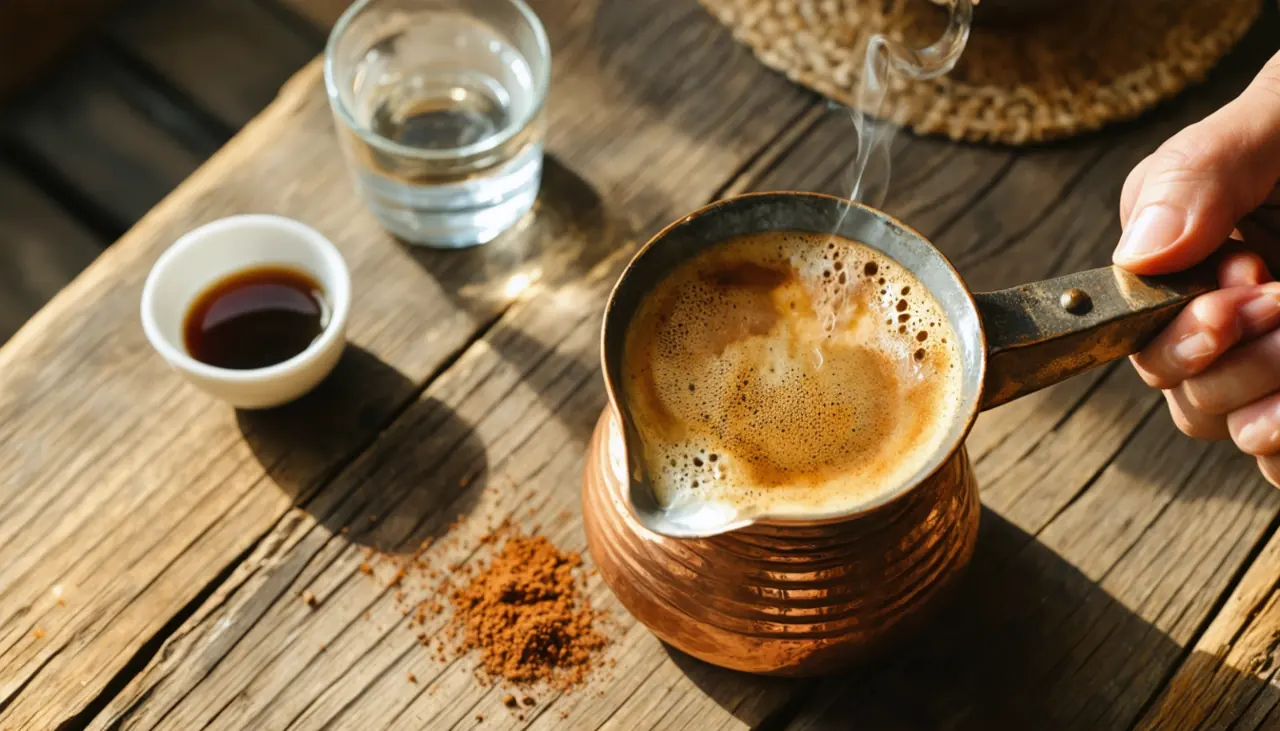
Café grec
Café très finement moulu, cuit lentement dans une petite casserole jusqu'à former une mousse épaisse. Fort et non filtré.
Portions
Ingrédients
Nutrition
Par portion
Étapes

Measure the water
Fill the two small coffee cups you plan to serve in with cold water, then pour that water into the briki (or a small narrow pot). Using the cups as your measure keeps the ratio right.
- 200 ml cold water

Add coffee and sugar
Add the finely ground coffee and however much sugar you like straight into the cold water. Stir well with a small spoon until everything is mixed, before any heat is applied.
- 2 tsp finely ground Greek coffee
- 0-4 tsp sugar

Heat very slowly
Place the briki over the lowest heat on your stove. Let it warm undisturbed, without stirring, so the coffee can build its foam gradually.

Watch for the foam
Watch closely as a thick, pale foam (kaimaki) rises and the coffee just starts to bubble up at the edges. The moment it reaches this point, take it off the heat right away; letting it boil hard will destroy the foam.

Pour and serve
Pour slowly and steadily into the two cups, tilting the pot gently so the foam divides evenly between them. Serve immediately with a small glass of cold water, and let the grounds settle before sipping.
- 2 small glasses cold water
Measure the water
Fill the two small coffee cups you plan to serve in with cold water, then pour that water into the briki (or a small narrow pot). Using the cups as your measure keeps the ratio right.
- 200 ml cold water
Add coffee and sugar
Add the finely ground coffee and however much sugar you like straight into the cold water. Stir well with a small spoon until everything is mixed, before any heat is applied.
- 2 tsp finely ground Greek coffee
- 0-4 tsp sugar
Heat very slowly
Place the briki over the lowest heat on your stove. Let it warm undisturbed, without stirring, so the coffee can build its foam gradually.
Watch for the foam
Watch closely as a thick, pale foam (kaimaki) rises and the coffee just starts to bubble up at the edges. The moment it reaches this point, take it off the heat right away; letting it boil hard will destroy the foam.
Pour and serve
Pour slowly and steadily into the two cups, tilting the pot gently so the foam divides evenly between them. Serve immediately with a small glass of cold water, and let the grounds settle before sipping.
- 2 small glasses cold water
The Story Behind the Dish
Greek coffee shares its roots with the wider Ottoman and Eastern Mediterranean coffee tradition, which spread through Greece during centuries of Ottoman rule. Over time, Greeks made it their own, giving it a distinct name and turning it into a daily ritual tied closely to hospitality and conversation.
Traditionally brewed in a small briki over low heat and never filtered, it remains central to everyday life in Greek homes, cafés, and village squares, where a cup is as much about slowing down and talking as it is about the coffee itself.
⭐ Why It's Famous
It's famous for its thick foam (kaimaki), strong unfiltered flavor, and the slow, deliberate way it's brewed and enjoyed, making it as much a social ritual as a drink.
💡 Fun Fact
The way the foam rises and settles is often watched closely, since a good, even kaimaki is considered a sign that the coffee was made with care.
Greece
37.98°N, 23.73°E
Recettes similaires

Comments (0)
No comments yet. Be the first to share your thoughts!